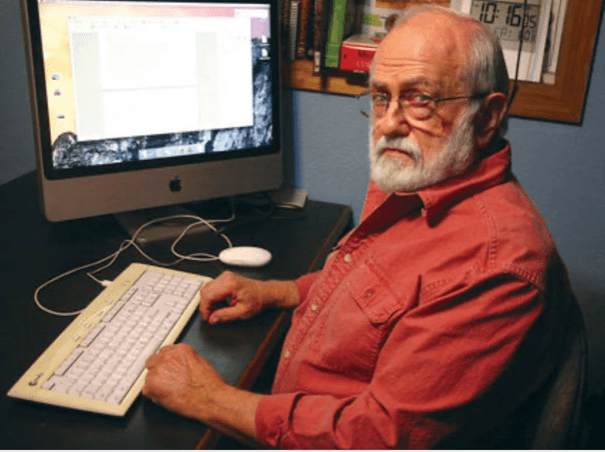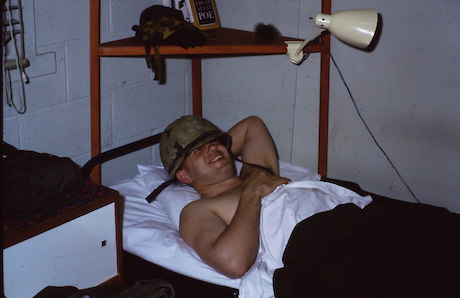
Robert W. Davis, DVM 

D. E. Larsen, DVM

Preface:

Dr. and Mrs. Robert W. Davis Veterinary Anatomy Scholarship (1983)

“For almost four decades, Dr. Robert W. Davis served Colorado State University and the veterinary profession as a professor in the Department of Anatomy. A 1935 graduate of the Colorado A&M’s (now Colorado State University) Division of Veterinary Medicine, Dr. Davis had a distinguished career and his contributions to the College, University and veterinary profession were truly remarkable. He was recognized as an outstanding teacher whose enthusiasm and integrity positively affected the lives of many graduates. During its early history, Dr. Davis helped to place the College at the forefront of veterinary medical education. Dr. Davis was inducted into the Glover Gallery of distinguished faculty and alumni in 1990. The Dr. and Mrs. Robert W. Davis Veterinary Anatomy Scholarship was established by faculty and alumni in their honor.”

***

The snow on the ground from last week’s storm was almost gone, and we had bright sunshine. Everyone’s spirits were improved with this hint of spring in the air. 

I found myself spending more time looking out the window than concentrating on the dissection of the horse’s leg on the table in front of us. Ben and Chuck, my anatomy lab partners, were busy tracing the digital nerves running down the cannon bone.

Doctor Barr sort of jolted me back to the present when he came up beside me.

“Larsen, Doctor Davis is out in the horse barn and would like to spend some time with you,” Doctor Barr said. “He will be waiting for you at the outside stalls, and you can enjoy the sunshine.”

Doctor Davis was small in stature, but the muscles in his forearms showed his strength. The vessels on the back of his hands stood out as he extended his hand to shake.

“Dave, I noticed you looked a little bored in the lab,” Dr. Davis said. “I thought I would give you a change of pace today.”

I was surprised that Doctor Davis had singled me out. We had a class of eighty-four students, and the lab was a beehive of activity.

“It is an old habit,” I said. “I just learn at a different pace than a lot of guys. Looking out the window just gives me a little contact with my world.”

“Let’s look at a real leg on a living horse,” Doctor Davis said. “We will try to instill some clinical significance to all this anatomy stuff.”

***

Doctor Davis had been a veterinarian in the Army during World War II. He served with General Frank Merrill on his march across the jungles of Burma. He had been the veterinarian who cared for the mules used by Merrill’s Marauders. If for no other reason, I had great respect for this man.

***

“Are you used to working with horses?” Doctor Davis asked.

“I have been around them most of my life,” I said. “But, other than riding, I haven’t really worked on any.”

“So there are few things we need to go over about working on a horse,” Doctor Davis said. “The horse is a powerful animal, and it can cause serious injury to the careless handler. The only way to avoid injury from a horse is to be in the right place at the right time, and the only way you can be sure that will happen is to be at the right all the time.”

“That makes sense,” I said.

“The horse strikes with his front feet,” Doctor Davis said. “He strikes straight forward. If you are in front of him, you are at risk. Work from his shoulder if you can. The same thing can be said about the other end. The horse seldom cow-kicks. He kicks straight back, so work from his hip if you can. We put a horse in stocks at the hospital while working with them. That protects both the horse and the doctor. But you will be in situations where you will be working with an unrestrained horse. You just have to learn to protect yourself.”

We got down to the project at hand after that brief instruction. During the next hour, Doctor Davis showed me a roadmap of the horse’s leg. His calloused fingertips followed the path of nerves, vessels, tendons, and ligaments. I learned more in that hour than in the preceding weeks of dissection.

“With practice, you will learn to see with your fingertips,” Doctor Davis said. “In this profession, where you will be without an x-ray in many cases, seeing with your fingertips becomes vital to your success.”

We led the horse out to the paddock and let him run when we were done. 

“I would guess you were in the service,” Doctor Davis said.

“Why do you say that?” I asked.

“You’re older, and you conduct yourself with a bit of military bearing,” Doctor Davis said.

“I was in the Army Security Agency,” I said. “I was at a couple of listening posts on a couple of borders, no major action. I was in South Korea and West Germany. Interesting times and it allowed me to grow up. Nothing like what you went through.”

“That was a long time ago,” Doctor Davis said. “You will do well in this profession. It was fun spending some time with you today.”

“Yes, I learned more about the horse’s leg today than I learned in the lab over the last two weeks,” I said. “Thanks a lot for your time.”

“The freshman year is the hardest,” Doctor Davis said. “There is just so much to learn. It will get better when you get over to the hospital and start working on live animals.”

Photo by Barbara Olsen of Pexels.

Poor Advice can be Expensive 

D. E. Larsen, DVM

The phone jarred me awake. I rolled over and looked at the clock. It was six in the morning. Sunday morning, I liked to sleep in on Sunday morning. I got up and walked out to the kitchen to answer the phone. Amy woke up with me, the meant there was going to be no sleeping in this morning.

“You go back and get in bed with Mom,” I said to Amy as I reached for the phone.

“Good morning, this is Doctor Larsen,” I said, trying to sound wide awake.

“I’m sorry to bother you so early, Doc. This is Jim and Sara,” Jim said. “We are just getting ready to leave from San Francisco and will be getting into Sweet Home around five this afternoon. Sally was hit by a car last night. We took her to the emergency clinic last night. She is doing pretty well, but the doctor said that Sally has radial nerve paralysis in her right front leg. They gave her a steroid injection and said she should have one we get home. We are hoping that you could look at her when we get back to town.”

“That’s no problem, Jim,” I said. “We are going to be around. Just give me a call when you get to town. Is Sally doing okay other than the paralysis?”

“She is a little sore, but everything else looks good,” Jim said. “They took a chest x-ray last night, and they said the heart and lungs look good, and they didn’t see any fractures. They said this leg should return to function with time.”

“I’ll get a look at her when you get to town, Jim,” I said. “But I can tell you one thing right now, I have never seen a leg with radial nerve paralysis return to function.”

“The emergency vet was pretty confident in his advice,” Jim said.

“I will see you when you get to town, and we can look at things then,” I said.

“Who was on the phone?” Sandy asked as I squeezed back into a now full bed.

“It was Jim, from out in Holley,” I said. “Sally was hit by a car in San Francisco, and she has a paralyzed leg.”

“Is there anything you can do for her?” Sandy asked.

“Not much, but that is the least of the problem,” I said. “The problem is the emergency vet down there told them it would return to function. I have never seen that happen. And they are bonafide Californians, they will never believe me after a Californian vet gave the advice contrary to my opinion, but time will tell.”

***

Jim was right behind me, carrying Sally, as I unlocked the clinic door. Sally, a young petite female Irish Setter. I had seen Sally several times before. 

“Set her on the exam table, and I will give her a good exam before we set her down to walk,” I said as I retrieved their file.

Sally looked fine except for an abrasion on the left side of her face. Her right leg hung limply from her shoulder, and the paw rested on the table on its dorsal surface.

“The radial nerve supplies all the extensor muscles of the front leg,” I explained as I closely examined Sally’s leg. “It runs across the lateral surface of the humerus, the upper leg bone, and when she was hit, the nerve was crushed between the vehicle part and the bone.”

“Yes, that is pretty much how the vet in California explained it,” Jim said. “He said with some medication to relieve the inflammation, we should expect it to return to function in a few weeks.”

“Jim, I have no real problem with trying some medication for a while,” I said. “But, I worry that you have expectations of a return to function, and I have never seen that happen.”

“Why would the vet in California tell us otherwise?” Jim asked.

“I don’t know, he maybe reads a different book than I do, or he knew he didn’t have to deal with you for the follow-up. The problem we will have in the immediate future is Sally is going to wear the skin off the top of her paw as she drags it on the ground.”

“How do we deal with that?” Jim asked.

“I guess we could try to keep a wrap on it,” I said. “To be honest with you, I don’t usually deal with that problem. These dogs will do far better with an amputation. People have problems with that consideration, but after a few days, you will have to count legs on her to know she is missing one.”

“I think Sara and I are pretty sure we don’t want to consider an amputation,” Jim said. “Can we set up some medication and see how things go for a while.”

“I have no problem with that,” I said. “I just want you to watch the surface of the paw. We also have a new neurologist in Portland. If you would like to see him, I could make a referral,”

“We will think about that, but for now, let’s see how the next week or two goes,” Jim said.

I got Sally medicated and sent them out the door with pills and instructions to look at Sally every week. And to check her earlier if the paw becomes an issue.

***

It was late Thursday morning when Jim rushed through the door with Sally.

“I know you close on Thursday afternoon,” Jim said. “But could you get a quick look at Sally for us?”

Sally’s paw was a mess. Most of the skin was gone from the upper surface of her toes. The paw was swollen and painful from the infection. The muscles on the leg were already starting to atrophy. Obviously, we were heading for a wreck if this leg didn’t come off.

“Let’s clean up this paw and get a wrap on it,” I said. “Then we need to get Sally on some antibiotics. Have you noticed that her muscles are getting smaller on this leg?”

“Sara and I talked last night, and we think we would like to go see the neurologist in Portland,” Jim said.

We got Sally cleaned up, wrap applied, and started her antibiotics. Then I gave the doctor in Portland a call, and he was delighted with the referral, and I handed Jim the phone to make the appointment.

“He sounds nice,” Jim said. “And he could get us right in. We will go up there tomorrow.”

“Yes, he is just getting started up there,” I said. “He is probably not too busy yet.”

I hated sending a client to a specialist who I had not met personally. But if anyone would set these two straight, it would be a specialist.

***

Several weeks later, Jim stopped by just to update me on Sally’s status.

“He has tried several treatments,” Jim said. “He has continued the anti-inflammatory medication, and he has used some high-frequency sound waves to try to stimulate some healing. There hasn’t been any change in Sally’s leg yet, but we are hopeful. He is planning to do surgery next week to try to free up some adhesions along the path of the nerve.”

“I hope he can help her out,” I said. “But, Jim, remember what I said when I first looked at Sally’s leg. You have to prepare yourself for how you will handle things if he recommends an amputation.”

“Doc, he hasn’t mentioned amputation one time,” Jim said. “He is very hopeful for a recovery. And so are we. Hopefully, this surgery will solve Sally’s problems.”

***

The following week, Jim and Sara came through the door carrying Sally; Sara was in tears. Sally was still not completely recovered from surgery, and her right front leg was amputated.

“He didn’t even call us to let us know what he was going to do,” Jim said as he handed me a folder with notes from the doctor.

I quickly scanned through the papers until I came to his surgery notes.

The notes read: “I was working along the tract of the radial nerve, freeing up adhesions as I progressed, when I finally realized that there was no hope for returning this nerve to function. I proceeded to do a full amputation.”

“Doesn’t sound like the best client relations to me,” I said. “Did he give you any heads up that an amputation was a possible endpoint to the surgery?”

“No, he didn’t,” Sara said. “I was horrified when we returned to pick Sally up today. He didn’t even call last night following surgery. We spent a lot of money up there, and we got nothing in return.”

“I can assure you, Sara, that he will hear from me on how I expect client communication to occur with my clients,” I said. “But, sad as it may seem, he did what needed to be done. When that nerve is crushed against the bone, there is almost no chance of returning to function. If it is a minor blow, maybe you could see some return to function, but that would occur in a day or two, sort of like you bumping your crazy bone in your elbow. The truth is that you got some really poor advice in San Francisco. I would guess that was just from inexperience. But it turned out to be costly advice for you guys.”

“What do we do now?” Jim asked.

“Take Sally home and make her comfortable,” I said. Give her the pain medication you were given, and in a few days, she will be back to her old self. She is a small setter, and the only thing you need to watch as she grows older is that she doesn’t get heavy. She will not miss this leg at all.”

***

And that is how it turned out. Sally healed, and she did wonderfully on her three legs. Sara and Jim came to realize I was their best source of advice. 

I consulted with the neurologist in Portland on rare occasions in later years. Still, I never sent another client to the man. As the years passed, I think he improved in his bedside manner, but I could never trust him again. And in the future, I never referred a client to a specialist I had not met personally.

Photo by Camylla Battani on Unsplash

Run for Your Life, From the Archives

D. E. Larsen, DVM

Joe always wanted Comet checked for one thing or the other. He was waiting for his turn in the exam room with Comet on his lap. Comet was a young Whippet. There was not an ounce of fat on his entire body. I could about define every muscle on him, just looking.

“What’s up with Comet today,” I asked as Joe placed him carefully on the exam table?

“I have been reading about heartworms, Doc,” Joe said. “I thought maybe I better have you check Comet and get him on some medication.”

“We have just completed a statewide heartworm survey,” I said. “One of the drug companies paid for it. Most of the clinics in the state collected blood samples from 100 dogs. They ran all those samples, and they say we have about a two percent incidence of heartworms in native Oregon dogs.” 

“That doesn’t sound like it is too serious,” Joe said. 

“Not too serious at this point, but they claim that is pretty standard for how heartworms invade an area. It will be in low numbers for several years, and then all of a sudden, it is a major problem.”

“Well, even if it is a low-risk thing, I think I want to get Comet on some medication,” Joe said. “You know how I am about him. He means as much to me as any of the kids.”

“I know, Joe, you have him with you all the time,” I said. “The kids come and go.”

“Now, don’t you tell my wife that I said that. She would be upset with me,” Joe said.

“Let me get a blood sample from Comet, and we will see if we can get him on some medication,” I said. “This new drug, Ivomectin, is a little bit of a problem with Greyhounds and Whippets. But the dose used for heartworm prevention is low enough that it is not an issue.”

“Whatever you think, Doc,” Joe said. 

“The risk of the medication causing a problem is very small, Joe. But then, the risk of infection is also minimal. At this point, where you live out on a hillside with few neighbors, I think it is your call.”

“That hillside is one of my concerns,” Joe said. “We are getting into quite a coyote problem. They are getting so brave that they come right down into the yard and bother Comet. I don’t want him catching anything from them.”

Comet tested negative for heartworms, and we started him on a new preventative medication. 

“You give him one of these tablets once a month,” I said. “Try to give it on the same day of the month, but you have a few days leeway if you forget.”

It was several months later when Joe returned to the clinic. He was distraught, and his body odor told that he had not bathed in several days.

“Doc, Comet is gone,” Joe said as he leaned hard on the counter, tears welled up in his eyes. “Those coyotes ate him, I am sure.”

“What happened,” I asked?

“Three of those damn coyotes came into the yard and started to attack Comet. Before I could do anything, Comet took off like a shot. You know those Whippets can run. The coyotes were right on his tail.”

“I doubt that those coyotes could catch Comet. I know of ranchers in Colorado who keep Greyhounds to hunt coyotes. Those Greyhounds just run them down.”

“Maybe a half-hour after they left the yard, the whole pack of coyotes were yipping up a storm. I am sure they got him. And he hasn’t been home, and that was four days ago. I don’t know what I am going to do without him.”

“Joe, you need to go home and take care of yourself. Take a shower and get cleaned up. Maybe have the kids help you build a little memorial in the yard of Comet. Then go out for a good dinner. Comet would want you to have a normal life.”

“Yes, you are probably right, Doc,” Joe said. “I brought this package of pills back. I only used a few, and maybe you can give them to someone who doesn’t have the money to afford them.”

“We are not supposed to do that, but we keep a few things in the cabinet, just for such a client.”

“That poor man,” Sandy said after Joe left. “That dog was his whole life.”

“He will be okay,” I said. “It will just take a little time and some diversion.”

It was only a few days later when Joe exploded through the door. Exuberant, he had a smile from ear to ear. He had combed his hair, and he was well dressed.

“Doc, I want to thank you for your advice,” Joe said.

“You look happy,” I said.

“Let me tell you the story,” Joe said. “I went home the other day and tried to take your advice, but I couldn’t get myself up to it. I laid around another couple of days. Finally, I looked at the yard, and boy, it needed to be mowed. So I went out and started the lawnmower, mowed the yard, and then I took the boys down to Hoy’s Hardware to buy stuff for a memorial. And what do you know, when we got home, there was Comet, sitting in the middle of the driveway, waiting for us. I was so happy. I almost ran the pickup into the house.”

“That is great news,” I said. “I bet that Comet ran so fast and so far that he didn’t know the way home. When you started the lawnmower, you probably gave him some bearings on how to get home. I didn’t think a coyote could catch him.”

“You are probably correct,” Joe said. “This time of the year, I mow the lawn at least once a week, maybe twice, if I get bored. So Comet would know the sound for sure.”

“I would give you those pills back, but I gave them to an old guy this morning,” I said with a smile on my face.

“That’s okay. I will gladly buy some more,” Joe said.

“No,” I laughed. “I will grab them for you. I was pulling your leg a little.”

Photo by Mitchell Orr on Unsplash