Life Saving Adoptions

D. E. Larsen, DVM

Sally rushed through the door with her old cat. 

“Tom has been hit by a car,” Sally said as she stopped at the front desk. “He has been gone for several days and just came home, and he has a big gash on his side.”

Sandy and Joleen ushered Sally and Tom into an exam room and got Tom comfortable on the exam table. I entered right behind them.

Tom’s injury looked worse than it was. There was a two-inch laceration on his left flank. The wound looked several days old and was soiled with dirt and leaves. Tom was oblivious to the wound.

“Sally, this is a nasty wound, but it looks worse than it is,” I said. “It will repair well. I just have to get Tom under anesthesia and make a new wound out of it. I will make a larger incision around the wound and remove all the old contaminated tissue. That gives me a nice new wound to repair.”

“That sounds expensive,” Sally said.

“It will take me a few minutes to give you an accurate estimate,” I said. “But, yes, it will be a little expensive.”

“With all we have going on, I am afraid that we just can’t afford the expense right now,” Sally said. “I hate to say it, but can we just put him to sleep, Doctor?”

“I hate to do that with a superficial wound, but if you can’t afford the repair, I guess that is an option,” I said.

“I think that is what we are going to have to do,” Sally said as she patted Tom on the head. “Goodbye, old boy.”

Sally left the room to take care of the paperwork at the front desk.

“This is terrible,” Joleen said. “If I pay to fix him up, can I take him home?” 

Joleen had just started working for us. She had spent a couple of months at the clinic when she was in high school on a work-release project.

“Joleen, if you try to save every sad case in this business, you will not only spend way too much money, but you will run out of room at home.”

“I know, but this guy will be able to live out his life in my barn with no problem,” Joleen said.

“Okay, but you need to get a signature from Sally,” I said. “Sandy has an adoption form.”

Sally was happy to sign the adoption form, and Joleen was the new owner of Tom. 

Repairing Tom’s wound was straightforward. I got him under an anesthetic and cleaned and debrided the wound, trimming all contaminated tissue and making a fresh skin edge. Then I gave him antibiotics and did routine wound closure with a drain.

“I just want to say again, Joleen, if you adopt every patient with a sad story, you will be overwhelmed,” I said. “Some practices limit the number of animals an employee can adopt out of the clinic. I’ve never done that, but you just need to be mindful of the problem.”

In this case, Tom went home with Joleen and lived out his life in her barn. Many such cats were not so lucky.

***

Several years later, when Joleen and Larry went on their annual elk hunting trip in the Ochoco Mountains of Central Oregon, the next adoption occurred.

It was the third day of the hunt, and there had been several inches of snowfall overnight. Joleen elected to stay in the camp that morning and tidy things up a bit. The rest of the crew went hunting.

As evening approached, everyone was back in camp and tired. Joleen decided to take her rife and walk down a nearby forest road, just in case a stray elk might cross her path.

Joleen was enjoying the walk and not really expecting to see anything. It just felt good to get out of camp and stretch her legs after the day of working around the camp.

She rounded a corner in the road and came upon a parked pickup. The guy in the pickup had set out a litter of eight young puppies along the road. These looked like six-week-old pups, and they were mixed-breed puppies.

“Just what is going on here,” Joleen asked the young man as he stepped out of the pickup with his rifle.

“I can’t get rid of these pups, and I can’t keep them myself,” the young man said. “I am going to shoot them.”

“Oh no, you don’t!” Joleen said. “Not while I am here.”

“Fine then, you can have them,” the young man said as he tossed his rifle back into the pickup. “I’m outa here.”

There was Joleen, standing in the middle of the road in three inches of snow with eight puppies now huddling around her feet. 

“Okay, guys, it looks like we have some work to do,” she says to the pups as she slings her rifle over her shoulder and scoops up three of the smaller puppies.

Down the road she goes, back to camp, carrying an armful of puppies, with five other pups trailing her and tangling in her feet.

Almost everyone was settled into their trailers when Joleen walked into camp. Larry and a couple of guys were tending the fire but only glanced at Joleen.

“Did you see anything tonight?” Larry asked.

“Oh yes, I saw some things,” Joleen answered. “No elk, but some things.”

One of the guys finally got a good look at Joleen, standing in the light of the fire with all her puppies.

“Where in the hell did you get those things?” Bill asked.

“Some jerk was getting ready to shoot them down the road a piece,” Joleen said. “I put a stop to that, and he said they were mine. He got in his truck and left.”

By now, the whole camp was gathered around the fire and starting to play with the puppies.

“So, the first thing we have to do is get these pups dried off and warmed up,” Joleen said. “And then everyone can pick out the puppy you are going to take home.”

“Now, wait a minute,” Bill said. “You are the one who took these puppies. Why are we going to have to take one home.”

“Well then, Bill, you just go ahead and pick out the one that you’re going to shoot,” Joleen said.

“Good one, Joleen,” Jean said. “Bill and I will be happy to take one of these pups.”

Everyone in the camp took one of the puppies. That left Joleen with three puppies to bring home and place them in good homes. That task only took a short week. Not many people could accomplish that task without an organization behind them. 

All the puppies grew up and lived a good life. Far better than the fate they were rescued from on a snowy evening in the Ochoco Mountains.

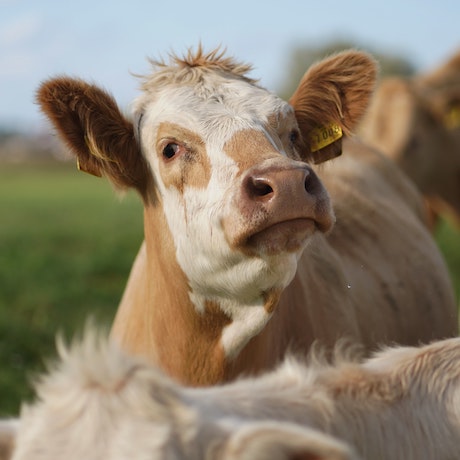
Photo by Daniel Lincoln on Unsplash.

Note to my Readers

D. E. Larsen, DVM

My fourth book, The Daughter’s Horse, is now available on Amazon. It is available in paperback and ebook versions.

If you are interested in an autographed copy of any of my books you can send me an email at d.e.larsen.dvm@peak.org.

A free preview of all my books is available on my home page at docsmemoirs.com.

Free Preview for The Daughter’s Horse: https://a.co/2pTqRUn

Pinkeye

 D. E. Larsen, DVM

I scanned the sky. Not even a hint of cloud. The sun was unmerciful in the Willamette Valley in early August, and today was going to be the same as all the days in the last two weeks. 

I remembered Doctor Craig’s comments about his cattle practice, “It is feast or famine, spring and fall you will hardly have time to sleep some nights. Summer and winter, the damn phone just doesn’t ring.”

I leaned on the handle to the headgate, squeezing it tight against the young heifer’s neck.

“Is she going to lose that eye, Doc?” Albert asked. “I have never seen an eye look like this one.”

“Phone never rings in the summer,” I thought to myself. “Except for pinkeye. At least this call will pay to fill my gas tank.”

“I think you will be surprised, Albert,” I said. “This eye looks pretty bad, but with some treatment, it will clear up just fine.”

I knelt down and examined the eye closely, pulling up both eyelids and the third eyelid to make sure there wasn’t a grass awn hiding from my view. The cornea on this eye with creamy white, with a bright red band of new blood vessels encroaching from the entire margin. The side of her face below her eye is wet and soiled from the excessive tearing. 

“This has been going on for a while,” I said as I waved my hand over the face to shoo the flies.

“I noticed her with the side of her face all wet when I checked the herd several days ago,” Albert said. “Maybe that was last week, but the eye wasn’t white like it is now. I did run her down in the field and squirted some pinkeye powder into her eye. She is still pretty tame, being an old bottle calf, and it doesn’t look like the powder did much good.”

“If you think about it, if you had a really sore eye that was watering down your face, and somebody came along a squirted some dry powder into it, how do you think that would feel?” I said.

“Wow, I never thought about it before,” Albert said. “You go into any feed store, and they have the stuff right there on the counter. Do you think that powder caused all of this?”

“The infection caused most of this inflammation,” I said. “The red ring you see around the edge of the white cornea is caused by thousands of little blood vessels growing out onto the cornea to help with the healing. The powder could have started the ulcer formation, but I see many eyes just like this that were not treated with powder.”

“What do you think about those big patches that they sell to cover the eye?” Albert asked. 

“There is some merit in their use, but you have to treat the inflammation also,” I said. “Using an eye patch glued to the hair surrounding the eye, along with some systemic antibiotics, would be my choice for over-the-counter medication. But that has to be done before the eye looks like this eye. And, maybe as important as anything, is good fly control. The flies that are on this heifer’s face and going to be on the face of her herd mates.”

“So what are you going to do with this eye today, Doc?” Albert asked.

“I treat pinkeye with a subconjunctival injection,” I said. “That is my standard treatment for any pinkeye I treat, the bad ones like this eye and the simple ones like this eye was a week ago. I will do a couple of more things to this eye because it is so bad. But I will show you how to give this injection under the eyelid if you throw away that puffer of powder. If you start using injections, you won’t see another eye that looks like this one.”

“I’m not sure what you mean by subconjunctival,” Albert said.

“Let me grab my nose tongs, and I’ll show how it is done,” I said.

I grabbed the heifer’s nose with my nose tongs and tied her head to the left side of the chute, making her right eye easily accessible and her head immobile.

“Get down here so you can see what I am doing,” I said to Albert as I knelt in front of the chute. “Now, I’m going to do several things, but this first injection is what you want to learn.”

Albert was a little slow getting to his knees beside me.

“I do this standing up most of the time,” I said. “I just want you to have a bird’s eye view of where the needle goes.”

“I hate working on eyes,” Albert said.

“I know, most people can’t look at an eye and tell me what is going on with it,” I said. “It is just something about it, but if you’re going to treat pinkeye yourself, you need to learn how to do this.”

I loaded a three-cc syringe with two ccs of Polyflex. 

“What is that medicine?” Albert asked. 

“This is Polyflex,” I said. “It is a new formulation of ampicillin that is approved for cattle.”

I pushed up the upper eyelid with my left thumb on the upper eyelid. The tissue bulged out from under the eyelid, looking like a bright pink blister.

“If you want to do this the easy way, you can put this injection right into that bulging tissue,” I said as I poked the twenty gauge needle into the bulge.

I pulled the needle out, and the conjunctiva bled.

“Is that bleeding okay?” Albert asked.

“All bleeding stops, eventually,” I said. “With an ulcerated cornea, a little blood in the eye is probably a good thing. I was just showing you where you could put this injection. And in most eyes, that location will work fine. But with this eye, I want this injection right on top of the globe.”

With the bevel of the needle up, I slipped it into the thin conjunctiva that covered the white of the eye.

“Do you see where this needle is located now?” I asked Albert.

“Yes, and I am surprised that she doesn’t seem to mind a bit,” Albert said.

“She is thinking about those nose tongs,” I said. “Now watch as I inject this medication.”

I pushed the plunger on the syringe, and the white Polyflex flowed out under the conjunctiva and made a flat white bubble.

“Now that medication is absorbed locally, and it also leaks out of the hole made by the needle and bathes the cornea,” I said. “I used two ccs today on this eye. I probably would have only used one cc if I had been treating this eye last week. I would have done the injection, sprayed her face for flies, and then let her go. Maybe if I thought it looked bad enough, I would consider using one of those eye patches. Either way, last week, this eye would have healed with just that treatment. Today, I am going to suture her third eyelid over her eye to serve as a patch for her cornea.”

“And that’s all there is to it?” Albert asked.

“One more injection for this bad eye,” I said as I stood up. “Feel this soft spot on the side of her face behind her eye.”

Albert felt the spot I had pointed out to him.

“I am going to put another injection into this spot,” I said. “That goes into the back of the eye and just intensifies the local antibiotic action.”

I plunged the needle into the retrobulbar space with another syringe and injected another two ccs of Polyflex.

“Wow! Aren’t you worried that the needle might hit something in there?” Albert asked. 

“Odds are pretty low of having a problem,” I said. “Sort of once in a lifetime for me. For you, who will only do it a few times, probably once in four generations.”

With the injections completed, I shaved the hair from the heifer’s upper eyelid and cleaned the area with Betadine. Then I sutured the third eyelid up to cover the eye. I used chromic catgut in three mattress sutures, starting at the lateral corner of the upper eyelid and working toward the center.

I scrubbed her face below the eyelid and rinsed it well. Then I sprayed her face and back with fly spray.

“That catgut that I sutured the eyelid with will break down in seven to ten days,” I said. “You need to get her in and get a good look at that eye and pull out any sutures that still be there. This eye should look pretty close to normal by then. Let me know if you have any questions.”

“Okay, and can I pick up one of the bottles of that Polyflex,” Albert asked.

“You can if you would like,” I said. “But the stuff is not cheap, and it has a limited shelf life once it’s mixed. You might find it better to pick it up a dose at a time.”

“And when I need a dose on Sunday afternoon or Thursday afternoon, what then?” Albert said.

“It is all just dollars and cents, Albert,” I said. “If you want to keep a bottle, that is fine. Just using a penicillin injection on Sunday afternoon would probably work fine. You could always pick up some Polyflex to repeat the dose on Monday.”

***

In a couple of weeks, Albert stopped by to let me know the heifer’s eye looked great.

“I had another heifer in the bunch with a runny eye a couple of days after you were out. I just injected a couple of ccs of penicillin into that bulge under the upper eyelid, and it healed up just fine,” Albert said. “I can’t thank you enough, Doc.”

Photo by Fino Tereno from Pexels