D. E. Larsen, DVM
I stood in the barnyard facing a long metal barn. It is about 90 feet long, maybe 30 feet wide with 10-foot walls. The light breeze coming off the Calapoolya River stirs a little dust. Still, it feels cool in the midday heat of July in the Willamette Valley. Not a soul in sight, Ernie had called, saying he needed emergency help with a pig. There was no other explanation. I pondered my next step. The house looked empty, nobody ran to meet me. My guess is they must be in the barn.
Then a hear a very faint, “help.” Where did that come from, it was too weak for me to get a bearing. Then it happened again. “Help,” a little louder this time, or maybe I was expecting it. It came from the barn, probably the left end.
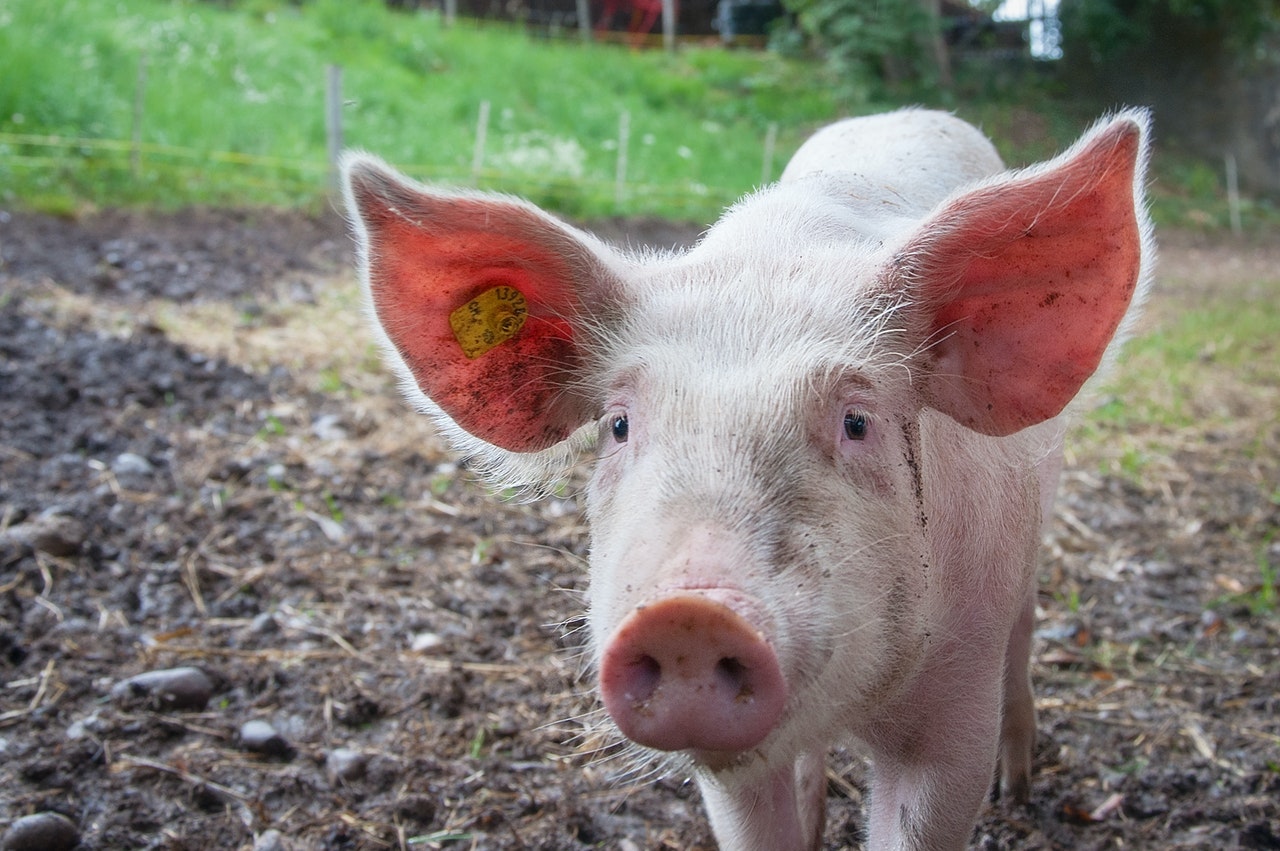
I entered the barn and started threading my way toward the far corner. Now I could see them. Ernie’s son-in-law, a stout young man with glasses and a crew cut, was laying across this 150-pound pig, holding him down. Ernie, a thin, wiry old guy, was lying behind the pig. Ernie was holding a pile of intestines protruding from the rear end of the pig. The floor was loose dirt, and every movement produced a cloud of dust the settled on the men, the pig, and the pile of intestines.
“Thank God you made it, Doc,” Ernie said. “I can’t hold this much longer.”
I walked over to them, trying to not stir up too much dust. They were castrating this pig. They had a big hernia with a pile of intestines that would fill a gallon bucket protruding from the scrotal incision. I looked close, the other testicle remained, that was a good thing. That would allow me to quickly sedate this pig and see if I could clean things up and replace all the gut.
“Hang on just a little longer, Ernie,” I said. “I have to get a few things from the truck, and then I think we have a shot at fixing this guy up.”
I slowly moved away from the group and then ran to the truck to gather things. A drop cloth to put everything on, a plastic bag to put under the guts, an emasculator, surgery pack, scalpel blade, bucket of water with Betadine scrub and solution, suture material, fly spray and antibiotics. One bucket with water, the other full of everything else. I almost forgot the Pentathol. I mixed a 5-gram bottle and drew up 3 grams into a 60 cc syringe, attaching a sixteen gauge, one and one half inch needle to the syringe.
The office was too busy for me to bring anybody to help, I could have used an extra hand right now. I knew that I would probably forget something, so I went over the list in mind one more time before heading back into the barn.
“Just another couple of minutes and I will let you relax Ernie,” I said as I started laying out the drop cloth, moving Ernie a little to the side. Then I slid the plastic under the intestines.
“Now you can let them go, Ernie, we will just let them lay here for a few minutes,” I said. Ernie let go of the guts, and he just rolled away, laying on his back in the dust with his bloody hands in the air.
I washed my hands and swabbed the scrotum over the intact testicle. This testicle was several inches in diameter and over four inches long. I popped the 16 gauge needle into the testicle up the hub. The pig was about as tired as Ernie and only slightly flinched. I injected the 3 grams of Pentathol into the testicle.
“This guy will be asleep in a minute, and you can also rest,” I said to Bill. He had been quiet throughout the whole time.
I opened the surgery pack quickly and attached the scalpel blade. The pig was pretty sleepy now. I incised the scrotum over the testicle and through the tunic. I squeezed the testicle out of the scrotum and clamped the cord with large Oschner forceps.
“You can relax now,” I said to Bill. “I have him under control. Just stay close in case I need you.”
The beauty of this anesthesia in castration is the clamp on the cord. I the pig starts to stir, I release the clamp and let a little more anesthetic into his circulation. When I get the hernia repaired, I will remove this testicle, and he will wakeup pretty quickly.
Now I turn my attention to the gut pile. Covered with dust, but there does not appear to be any tears or other injuries. They are a little purple, but the time frame is such that they should be okay if I can replace them. I rinse the dust off with a good splash of water. Then Betadine Surgical Scrub, a little more water, and a good scrub.
“If you could take this other bucket and fill it with water from the hose in the back of the truck, I would appreciate it,” I say to Bill. He jumps up and grabs the bucket. I think he wanted to have a little break.
“Doc, is he a goner?” Ernie asked as he sat up, mostly recovered from his ordeal.
“I think things look pretty good, Ernie,” I replied. “I get these guts back where they belong and close up this hernia, he should be good to go.”
“I’ll be damned If I am going to try to save a farm call again,” Ernie said. “I am done with castrating pigs.”
“It is a lot easier if you do it when they are under 10 pounds,” I said. “However, you could still have this problem even on the little ones.”
Bill got back with the water. I made a solution with the Betadine solution in the bucket. Port wine color, they always said in school. I don’t think I ever saw port wine. I flushed the guts with a large splash. Then holding the mass up level with the inguinal canal, I began to feed them back into the abdomen. When the guts were mostly back into the abdomen, I freed the tunic from the scrotal tissues. Twisting the tunic like I was closing a plastic bag, the last of the exposed intestines squirted back into the abdomen. Then I placed a clamp across the tunic to hold everything in place while I got the suture ready.
I released the clamp on the testicle for a couple of minutes and watched as the pig made a big sigh. Then, I reapplied the clamp.
I placed a transfixing suture of #2 Dexon on the tunic. Then I palpated the external inguinal ring. I could put 3 fingers into the ring. I placed one mattress suture in the posterior half of the ring and tightened it to close the ring’s size. This done, I emasculated the other testicle. Again on this side, I freed the tunic and closed it up and sutured it closed. The external ring on this side felt normal. I don’t remember ever seeing a bilateral hernia in pigs.
I squirted both incisions with Betadine solution and sprayed the whole area with fly spray. Then I gave a large dose of Amoxicillin SQ in the front quarter. The pig was starting to stir a little.
“He will be on his feet before I have everything back in the truck, “ I said as I started gathering things up.
“Boy, was ever glad to see you, Doc,” Ernie said with a still bloody hand on my shoulder. “I don’t know what we would have done without you, just would have had to butcher him, I guess.”
“Just remember, Ernie, next time do it when they are little,” I replied.
“I am thankful you could come so quickly, I guess I wasn’t even thinking of how much it was going to cost. Just remember Doc, when you are filling out the bill, he is just a pig, can’t be worth much,” Ernie said.
“Well, Ernie, I’ll tell you one thing, he is worth a damn site more today than he was yesterday,” I replied.`
Photo Credit: Photo by mali maeder from Pexels