The Winos

D. E. Larsen, DVM

Our first weeks in Enumclaw, Washington, were busy. Our move from Colorado had been an experience, but that was in the past. I was busy establishing myself in a busy veterinary practice. Sandy was active with the girls, trying to make the house a home.

After just finishing school on borrowed money, our funds were somewhere between limited and nonexistent. And it was another two weeks before my first paycheck. But Sandy was doing well managing the meager funds, and it looked like we would not starve. 

“I asked Jack for an advance on our first paycheck,” I said as I was changing out of my clinic clothes.

“What did he say?” Sandy asked. “We really need to go to the grocery store. My shopping list is getting pretty long.”

“He just handed me a couple of hundred dollar bills and said he would try to remember them when they did payroll,” I said. “They are in my wallet on the bed.”

“Great!” Sandy said as she absconded with the two bills. “You can go with me and the girls when we go shopping after dinner. They have a nice hometown grocery store on the far edge of town. We were there earlier today, but I didn’t have enough money to buy much.”

Dinner in our house was still a time for everyone to sit down together and talk about the day’s events. But the dinner was a little skimpy, from my view. Sandy was doing a masterful job of stretching a near-empty pantry. Tonight, we had spaghetti with just a bit of hamburger in the sauce.

“We are down to our last pound of hamburger,” Sandy said. “So I planned to use half of it tonight in the spaghetti sauce and the other half tomorrow with a box of hamburger helper. Then, before you came home with some cash, we would be down to tuna casserole.”

“If we pick up ten pounds of burger tonight, we should be able to stretch it out to payday,” I said.

After dinner, we washed the dishes, and I called Ralph from the field behind the house. All I had to do was shake the jar of Pet-Tabs, and he would come running. 

Amy gave him his Pet-Tab, and I spooned his last bit of canned cat food into his dish. I took a whiff of the can before depositing it in the garbage.

“If things get bad enough, we could always resort to cat food,” I said. “This doesn’t smell too bad.”

“We are not going to raise these girls on cat food,” Sandy said.

We loaded the girls into our station wagon and drove through Enumclaw’s downtown to the grocery store. The kids had their routine down already when we arrived at the store. Dee rode in the shopping cart seat, Amy hung on the front of the cart, and Brenda helped direct it down the aisles.

“Can we each pick out a box of cereal like you said this morning?” Brenda asked.

“Yes, we can buy cereal tonight, and it’s a good thing,” Sandy said. “I don’t think that last box of frosted flakes would fill all the bowls in the morning.”

After the cereal aisle, we turned the corner and ran into Ed.

“Hi, Ed,” I said. “Do you work here?”

“Oh, hi, Doctor Larsen,” Ed said. “Yes, I am the assistant manager.” 

“That’s great, but what are you hanging around in the aisles for, aren’t you supposed to be doing more important stuff?” I asked.

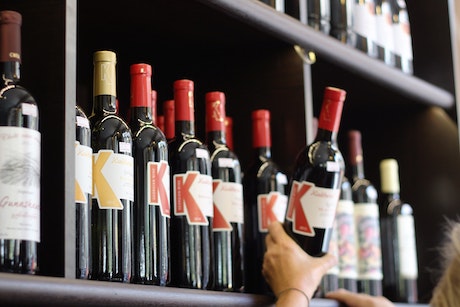
“These two old guys rip us off for a couple of bottles of wine every time they come in here,” Ed said, motioning to a couple of old bums looking over the wine collection. “I call them Red, the one with red hair, and the skinny one, Skelton.”

“If you’re watching them, they surely can’t steal anything, can they?” I asked.

“It doesn’t seem to matter how close we watch them. They always manage to stuff a bottle into those trench coats they wear.”

We left Ed to his surveillance and pushed the cart past Red and Skelton. It was apparent that they spent more time with the wine bottle than in the shower.

Sandy went down every aisle, filling the cart to almost overflowing.

“You know we have to make those two hundred dollars last for another couple of weeks,” I said.

“We are fine. This won’t even take one of those bills,” Sandy said.

As we were leaving the checkout counter after spending eighty-four dollars, Ed was upfront watching Red and Skelton as they walked across the parking lot.

“Ed, just a suggestion, but if you put a coat rack at the door and require those two to hang up their trench coats when they come into the store, it might solve your problem,” I said.

“That’s a good idea,” Ed said. “I will bounce that off the manager in the morning.”

We loaded the girls into the car first then I placed the grocery bags in the back.

“How do you know Ed?” Sandy asked.

“He was in the clinic with a puppy yesterday,” I said. “He seems like a nice young man.”

“Can we have a puppy?” Brenda asked.

“You will have to do with Ralph for now,” Sandy said.

***

A couple of weeks later, Ed came to the clinic for a couple of things for his puppy.

“Say, Doc, I want to thank you for suggesting the coat rack,” Ed said. “Red and Skelton grumbled at first, but they hang their coats up now, and our losses from the wine inventory moved to zero almost overnight.”

“That sounds great,” I said. “Probably makes your job a lot easier.”

“Oh, yes, I was spending five or six hours a week just watching those two,” Ed said.

***

A week later, I was in the grocery store with Sandy and the girls, doing some shopping. We were standing at the checkout, waiting our turn. The lady ahead of us was buying three bottles of wine.

The light was just right for me to get a good look at the bottles. One of the bottles was only half full. I pointed to the bottle.

“Did you notice this?” I asked the lady.

“Did I notice what?” she asked. 

I picked up the half-empty bottle and handed it to her. Her mouth fell open.

“Oh my gosh!” she said. “How did that happen?”

The clerk looked at the bottle.

“Just a moment, and I will get Ed,” the clerk said.

Ed came and picked up the bottle. He looked at me, shaking his head. 

“Red and Skelton,” Ed said.

“I like to watch Red Skelton, but what does he have to do with my half-empty wine bottle?” the lady asked.

“That is s private joke,” Ed said. “We need to get you another bottle. And I need to check the inventory.”

I went with Ed to the wine aisle. Looking through the bottles, they seemed okay until we looked at the bottles on the back of the shelf. Bottle after bottle had been opened and partially consumed.

“Those two bastards,” Ed said. “We stop watching them, and they just come in here and drink the wine in the store. No wonder they don’t complain about the coat rack anymore.”

We took the lady her bottle of wine, and Sandy finished checking out.

“I hope you can solve that problem,” I said to Ed as he passed with a cart full of half-empty wine bottles. Some with only a little missing, but most were half full.

“I’m afraid what the final count will be,” Ed said. “The manager will hit the roof when he sees this in the morning.”

Ed dropped by the clinic in the morning to thank me for finding the problem and update me on the situation.

“We got the chief of police to ban them from the store,” Ed said. “The manager wants to take them to court, but you can’t get blood from a turnip. I think he is going to be satisfied with the ban. The thing I worry about is how many bottles did we sell before the problem was noticed. I pulled three shopping carts full off the shelf last night. We emptied the shelves and checked every bottle. How could they drink that much wine and still walk out of the store?”

“Practice, I would guess,” I said. “A lot of practice.”

Photo by Rana M on Pexels.

The Stone’s Story, From the Archives

D. E. Larsen, DVM

Raymond came through the door with little Sophie cradled in the crook of his arm. Sophie was a really small Chihuahua, and Raymond, her owner, was a large man. It was one of the things that I always found a little odd. Some of the largest men were attached to these tiny dogs.

After he stretched a towel out on the exam table, Raymond placed Sophie in the middle of the towel. Sophie, at four and a half pounds, was overweight. Her spindly legs looked undersized for her round body.

“She has blood in her urine, Doc,” Raymond said. “And she pees a little puddle every 5 or 10 minutes. The wife is getting upset with all the cleaning up after her.”

I looked at Sophie, her gray muzzle told she was past middle age. She should probably weigh two and a half pounds, not four and a half. Her membranes were normal, with normal capillary refill time. Heavy tartar on her teeth and some chronic periodontal disease suggested that she was a good candidate for a heart murmur. That was confirmed when I placed the stethoscope on her chest.

Chronic periodontal disease leaks bacteria into the bloodstream. These circulating bacteria take up residence on the heart valves, in the kidneys, and the liver. Poor dental hygiene, most common in small dogs on pampered diets, leads to all sorts of significant health complications.

She was heavy enough that it was difficult to palpate her abdomen accurately. But when my fingers reached the posterior abdomen, I bumped a hard firm bladder. Sophie immediately squatted and peed a small puddle of bloody urine onto the towel.

“Raymond, we are going to have to pick up the towel so I can get some urine off the tabletop,” I said as I lifted Sophie up so Raymond could remove the towel.

I sat Sophie down and felt her bladder again, more carefully this time. There was a large stone in the bladder. I could feel some movement in the stone, probably a couple of stones. They were large, making the bladder feel full, but there was little room for urine. Sophie squatted again, depositing a small puddle of bloody urine on the exam table.

I drew the urine into a syringe and placed a small drop on a microscope slide. A quick look at the slide under the microscope showed the blood but also many bacteria and struvite crystals.

Struvite stones were the most common type of bladder stones in the dog at that time. Struvite stones in the dog are caused by a urinary tract infection that leads to acidity changes in the urine, crystal formation, and then the development of stones. These stones grow with time. In male dogs, they often cause urinary tract obstruction as the small stones try to pass down the urethra. That seldom happens in the female.

Today there are diets that can dissolve struvite stones in the bladder. That was not the case in the 1970s and 80s. Stones as large as Sophie’s, are best removed by surgery, even today.

“Raymond, Sophie has a large stone, or more likely 2 or 3 large stones in her bladder,” I said. “These are caused by an infection in the urinary tract. She has a lot of bacteria in her urine. We need to do several things. We need to do a culture on her urine, and while we are waiting for the culture results, we will get her started on a good broad-spectrum antibiotic. We need to get an x-ray, so we can see how many stones we are dealing with, if there are stones in the kidneys, or a bunch of little stones also. We need to do some blood work to make sure Sophie’s kidney function is normal. These stones are going to have to be removed with surgery.”

“Doc, you sound like you are talking about a lot of money,” Raymond said. “I don’t have a lot of money. Are there some short cuts we can take.”

“We can shortcut some of the things if that is what you want to do,” I said. “You need to understand, shortcuts are great if everything works out fine. But if things don’t go just right, we end up spending more money than we would have doing things right in the first place.”

“What kind of things are you talking about, Doc?” Raymond asked.

“Looking at her urine, her kidney function is probably okay,” I said. But if it isn’t, and a random urine sample is not the best indicator of kidney function, we might be delayed in finding that out, and we could lose her. If she happens to have an infection that requires a particular antibiotic, we might not know that without a culture. If we have a bunch of little stones along with the big ones I can feel, we could leave a stone behind and have to do a second surgery.”

“She is sort of long in the tooth, Doc,” Raymond said. “Let’s put her on some antibiotics and do the surgery. If things don’t work out, at least we tried.”

“That is fine, just as long as you remember this conversation,” I said as I shook Raymond’s hand.

“Will I be able to take her home tonight?” Raymond asked.

“We are early enough that she should be able to go home tonight,” I said. “We will have her on c/d diet for a time. That will be important, nothing else.”

“You are going to ruin her life and make mine miserable,” Raymond said.

“You know, you are killing her slowly with kindness, don’t you,” I said.

“What do you mean, Doc?” Raymond asked.

“Look at her, Raymond,” I said. “She weighs twice what she should, her teeth are a mess. She should have those cleaned, and there will be many teeth that are not savable. The infection in that mouth could have been what started this bladder thing, and her heart valves are leaking a little. She needs to be eating dog food, period. But we can work on those things after we get this bladder thing fixed.”

I gave Sophie an injection of Amoxicillin and Gentocin. I planned to send her home on Clavamox. We gave her 80 ccs of fluids by subcutaneous injection and placed her in a kennel while we got the surgery room ready. Sophie was unhappy in the kennel, how dare we treat her like a dog.

After anesthesia was induced and the abdomen was prepped for the last time, I draped the incision site, first with towels and then a surgery drape. I made a short incision over the bulge in the posterior abdomen caused by the large stones in the bladder. I was able to squeeze the bladder out of the incision. It was the size of a full bladder but hard as a rock. 

I placed a couple of stay sutures to hold the bladder in position when I incised it and removed the stones. Then I made an incision into the bladder. The bladder wall was thickened from the chronic infection and the mechanical damage from the stones.

I popped the first stone out, then the next. Amazingly large stones for such a small dog. The bladder lining was burgundy red and almost bubbly from the chronic inflammation. I flushed the urethra in both directions and carefully explored the bladder to make sure no small stones were hiding.

Then I closed the bladder in two layers with Maxon and returned it to normal position. I was careful to remove a couple of drops of urine from the incision and flushed the area liberally. Then the abdomen was closed with a standard 3 layer closure.

Sophie recovered quickly and was probably more comfortable than she had been in months. Raymond was pleased with how lively she was when he picked her up.

“I want to see her in a couple of days, just to check the incision and feel her bladder,” I said. “If you get a chance, try to get a look at her urine in the morning. Mainly to see is the blood is cleared up. And Raymond, you have to be strong, c/d diet only for 3 weeks. No bacon off the breakfast table. You understand, we have come this far, don’t ruin it by being weak when she begs.”

“I will do my very best, Doc,” Raymond said.

“I can guarantee you, Doc,” Sue, Raymond’s wife, said. “He has spent our summer trip to the coast, and he will finish the job if he knows what is good for him.”

Photo Credit: d.e.larsen.dvm@peak.org

Willow

 D. E. Larsen, DVM

 I could see Willow sitting in the reception area. As always, she was aloft to all that was happening around her. Willow was a natural hunting dog, a Drahthear, a German wirehaired pointer. She was getting older now and had mellowed with age. She was very self-confident, like all the larger dogs who had a mission in life.

Today she was holding up her right front foot, which must be why she was here. I stepped out to the reception door and motioned Howard to come on back. I took him to the treatment room, bypassing the backlog and the reception desk. Willow followed on three legs.

“Thanks, Doc,” Howard said. “I thought we would be hung up there for an hour, and Willow here has a pretty sore foot.”

“I could see her hold it up,” I said. “What has she done to it?”

“I don’t rightly know, Doc,” Howard said. “She has been gone for a couple of days and just came home this afternoon carrying that foot.”

“A couple of days sounds like a long time, Howard,” I said. “Were you looking for her?”

“No, that is not unusual for her,” Howard said. “I someone is going to take her hunting, she just goes herself.”

I lifted Willow onto the treatment table and laid her down on her left side. I grabbed her sore foot, and Willow just sort of looked away. She was either trusting me or maybe just resigned to her fate.

Looking at the foot, there was a significant wound on the top and bottom of her two central toes. I could see some bone exposed. I leaned down and took a whiff. 

“Wow! This is a rotten wound,” I said. “It looks like Willow was caught in a foothold trap.”

“I was wondering about that,” Howard said. “But how would she have gotten loose?”

“Anyone setting traps is supposed to check them every 24 hours,” I said. “It is likely she was released by the trapper.”

“What do you think is going to happen to her foot?” Howard asked.

“I think she will lose at one of these two toes,” I said. “It is going to take a few days before we will know for sure. I think we will clean this wound and put it in a wrap for a few days. We will have Willow on some antibiotics, but we are going to allow nature to decide what stays and what goes.”

“You mean you are going to let these toes rot off?” Howard asked with a bit of concern in his voice.

“No, not rot off, but we are going to give enough time for nature to show us what would rot off if we did nothing,” I said. “If I take this foot to surgery today, I will be making decisions about what tissue stays and what tissue goes based on several factors. If we wait a couple of days, it will be obvious what tissue is alive and what is dead. Then, when I go to surgery, I can easily save as much tissue as possible. Either way, Willow will lose one or two toes, but when everything is healed, it won’t slow her down much.”

“Okay, that makes me feel better,” Howard said. “What do we do now?”

“Let’s leave her for a few hours,” I said. “I will sedate her, get this wound cleaned up, and trim some obviously dead tissue. Then we will send her home with a wrap on that foot and with antibiotics. We will schedule her for surgery on Friday. At that time, I will do the final removal of all dead tissue and probably a toe or toe. We will keep this foot wrapped for a couple of weeks.”

We put Willow in a kennel and took care of the backup in the reception area. As soon as I could squeeze in a few minutes, we sedated Willow and started cleaning the wound. 

The main thing about cleaning an animal’s wounds is getting all the hair away from the injury. On this foot, that was a challenge. The new clippers do a pretty good job, but I  found that using a straight-edge razor was necessary.

When I removed the hair and some of the rotten tissue, it was obvious that the timeline I discussed with Howard was not going to be necessary. There was no way I could save either one of the two central toes.

“Ruth, would you have Sandy call Howard and tell him that I am going to remove these two toes today,” I said. “Tell him the toes are beyond saving, and removing them now will speed up the healing process and be more comfortable for Willow.”

While Ruth was gone for a few minutes, I finished removing a few bits of dead tissue from the wound.

“Sandy can’t get Howard on the phone,” Ruth said. “What are you going to do now?”

“I will go ahead and take the toes,” I said. “Howard will understand. We will still put a wrap on this foot and bring Willow back on Friday and see if we can do a delayed closure. Willow will be better off this way.”

I removed the two central toes, digits III and IV, by disarticulating their joints with the metacarpal bones. There was no bleeding. I packed the wound with nitrofurantoin ointment and placed a well-padded wrap on the foot. I gave a large dose of cephalosporin by intramuscular injection. Then we moved Willow to a kennel for recovery.

Willow was bouncing around the kennel when Howard returned later in the afternoon.

“She looks a lot better,” Howard said as we let Willow out of the kennel.

“Yes, this wound cleaned up pretty well,” I said. “I did go ahead and remove those two middle toes. There was no saving them, and this foot will be more comfortable for Willow without them. We will still need to bring her back on Friday. I will do a final wound cleaning and remove any dead tissue. I think there will be ample skin surviving, so I can do a complete closure on this wound.” 

***

Willow came through the clinic door on Friday morning with a smile on her face. There were a few dogs, not many, who seemed to be able to equate a clinic visit with their feeling better. Willow was one of those few. She was walking on the wrapped foot, almost normally.

We sedated Willow and removed the wrap from her foot. The wound looked great. I had to trim very little tissue, and I removed the skin edge to make a fresh edge to suture. 

The wound closed up better than I expected. I did go ahead and applied a light wrap to the foot. I figured Howard would be unable to keep Willow in the house through the healing process.

“You need to bring Willow in on Wednesday next week, and we will change the wrap,” I said when Howard came to pick her up. “And one thing I forgot to mention, I have to report this wound to the Dean of the Vet School at Oregon State. It’s a new state law. I doubt they do anything with the information, but just so you know if they give you a call someday.”

“Are you just trying to run up the bill, Doc, or does she really need the wrap?” Howard asked.

“Howard, you should know by now that I don’t charge for surgical follow-ups,” I said. “If you could keep her in the house for the entire healing process, we could probably get by without a wrap. This wound closed up pretty well. But, the wrap is just insurance. This wound will heal much nicer if the sutures hold, and the wrap helps that happen.”

“I was just pulling your leg a little, Doc,” Howard said as he and Willow headed out the door.

I watched as Willow followed behind Howard. She was walking on the wrapped foot. I could see a slight limp, but I’m not sure that Howard’s neighbor would be able to notice the limp.

***

Willow’s foot healed, and she walked normally on that foot. It probably did slow her down a bit when she was hunting and working hard, but she let anyone know.

The one thing that changed with her was summed up by Howard on a visit a year or two later.

“The one thing I have noticed, Doc,” Howard said. “Willow stays pretty close to home these days. She has given up on those hunting trips by herself.”

If only people could learn from experience like a good hunting dog.

Image by EM80 from Pixabay