
D. E. Larsen, DVM
Mom was just setting the table for dinner when I came into the house after doing chores at the barn.
“Dana called a little bit ago,” Mom said. “He wanted you to call him back. He wanted you to come up and stay overnight this weekend. I think they have moved to a house in Broadbent. It would be no problem for me to drop you off this evening after dinner or tomorrow.”
This spring, we moved from our farm out of Broadbent to a dairy on Catching Creek. It would be good to spend some time with Dana again. He will be going to high school this fall, and I will be in the eighth grade.
“Do I have time to call him before dinner?” I asked Mom.
“I think so. Your Dad hasn’t come in from the barn yet,” Mom said.
Mom had written the number down, so I wouldn’t have to look it up in the phone book. I sat on the phone bench and dialed the number. His mother answered the phone.
“This is Dave Larsen,” I said. “Is Dana there?”
“Just a moment,” his mother said. “I think he is outside.”
I waited several minutes before Dana picked up the phone.
“Hi, can you stay overnight this weekend?” Dana asked.
“Sure, Mom said she could drop me off this evening or in the morning,” I said.
“Why don’t you come over tonight,” Dana said. “That way, we can climb Robin’s Butte tomorrow. Maybe we can get Jeanne to go with us.”
“That will be fun,” I said. “I will come over as soon as we finish dinner.”
Robin’s Butte was one of the tallest hills around. I had been up it a couple of times, but not often. There was quite a view from the top. You could see all the way to Myrtle Point and beyond. And it looked right down on our Broadbent farm, just a mile south of the Butte.
“You better get a change of clothes packed if you’re going to climb that Butte,” Mom said. “And you check with Dana’s mother to see if they are bothered by poison oak. That Butte is covered with it; some people will get it from your clothes.”
We took the Old Broadbent Road from Catching Creek instead of going to town and out the highway. It was not far, less than five miles. Dana had moved into a large white house almost across the street from Broadbent school.
I hated our move. Leaving Broadbent in the middle of the school year and attending the junior high school in Myrtle Point meant that I had to make new friends and deal with new teachers. The teachers at the junior high actually thought I should do homework. I had never done that at Broadbent and wouldn’t start now. All my Broadbent friends would be at the high school in Myrtle Point when I got there.
Mom dropped me at the front gate of Dana’s house.
“I’ll be back to pick you up before dinner tomorrow,” Mom said. “They have enough mouths to feed. They don’t need to feed you.”
“That’s okay,” Dana said. “He can eat dinner here tomorrow, Dad and Chuck are gone this weekend, so it won’t be a problem.”
Mom nodded her head, “Okay, I’ll be here about seven then,” she said.
“Let’s drop your things in the bedroom,” Dana said. “I called Jeanne, she is riding her horse this evening, and she is excited to see you.”
Jeanne was a year younger than me. I have known her forever, and she was a special friend. I was probably more excited to see her than I was about seeing Dana.
When we got to her place on the edge of Broadbent, Jeanne was down on the highway with her horse. We had one horse, and Jeanne was riding bareback. Dana and I took turns riding double behind Jeanne.
“We are going to climb Robin’s Butte in the morning,” I said. “Do you want to come with us?”
“Sure, but I have a problem,” Jeanne said. “I am watching my cousin tomorrow. He might be too small to go on that climb.”
“How old is he?” I asked.
“He’s four. Well, he’s almost four,” Jeanne said.
“I was all over these hills when I was four,” I said. “He is big enough to make the trip.”
When I slid off the horse, I realized that the close contact with Jeanne had a significant impact on me.
“Jeanne is going to go with us in the morning,” I told Dana. “She has to bring a little cousin with her. He’s only four but should be able to make the trip.”
We continued to ride, taking turns until the sun was low in the sky.
“I have to go take care of the horse,” Jeanne said. “What time are you going to be here in the morning?”
“Sometime after breakfast,” Dana said. “We will give you a call when we leave the house.”
Dana and I started back to his house on the railroad tracks and then cut across the rough ground to the backyard of his house. Neither one of us spoke on the walk home.
In the morning, after a quick breakfast of cereal, we called Jeanne and headed out. It didn’t take us long to cover the ground to Jeanne’s house, and she was ready and waiting outside with her young cousin.
“This is Matthias,” Jeanne said as she introduced her cousin.
“He’s pretty small,” Dana said. “Are you sure he can make the trip?”
“He’s four. I was all over these hills when I was four,” I said. “He’ll be fine. Uh, Matt? You don’t mind if we call you Matt, do you?”
Matt didn’t say a word. I guess he was shy.
We started out, walking up past the barn and through the pastures behind the barn and then crossed the fence onto Lloyd Lackey’s place. We were aware of the property boundaries but were not concerned with trespass issues. I doubt that we had heard the word. I never saw a no trespassing sign until many years later when the Californians started to arrive in large numbers.
After the Lackey place, we started to climb. When we reached the edge of the timber, Matt had to pee. Jeanne took him into the timber and helped him pee.
“Matt has a second hole where his pee comes out, and he has problems with it sometimes,” Jeanne said. “They will fix it, but they want him to be a little older.”
“How did that happen?” Dana asked.
“I don’t know,” Jeanne said. “I guess it is just one of those things.”
We finally reached the ridge line that ran to the top of the Butte. It was easy walking along the top of the ridge. The timber was on the north side of the ridge, and nothing but grass and poison oak on the south side.
“My great uncle Ern always said that traveling along the top of the ridges was the easiest way to go,” I explained as we traversed the ridge. “He said all the old Indian trails used the top of the ridges.”
It wasn’t long, and we were on top of the Butte. No trees were on the top, and we could see for miles in all directions. Matt sat down for a bit. That was the first time that he showed any hint of being tired.
“On the way home, it’s all downhill, Matt,” I said. “We could almost run the whole way.”
We all sat down with Matt and chatted about nothing stuff. I pointed to all the places on our farm that were in clear view, and Dana showed Jeanne the route we had taken last summer when we crossed Neal Mountain to their old home near Gaylord. Then it was time to go.
The trip down the ridge and back across to Lackey’s place seemed to take no time. I even noticed a smile on Matt’s face as we covered the ground with downhill ease.
When we got back to Jeanne’s, we went in for a glass of water, and then she wanted to show us her horse again. Matt stayed in the house, and the three of us started out to the barn. That is when we jumped a large covey of quail.
“Quail!” I said. “That’s a bunch of them.”
“Do you have a shotgun?” Dana asked.
I am sure that it was Dana who asked for the shotgun.
“Yes,” Jeanne said. “Dad has a shotgun.”
We quickly returned to the house, and Jeanne retrieved the shotgun from the corner of the utility room. We grabbed a few shells from the box on the shelf.
“We only need a couple of shells,” I said. “We will only get one or two shots, and they will be gone.”
We headed back to the barn, and Dana stopped and loaded the shotgun. We carefully approached the barn, and the quail ran out of the open side door.
I am sure it was Dana who put the gun to his shoulder and fired one shot, and took out four birds. The rest flew, and the birds were all gone by the time Dana pumped a second shell into the chamber.
Like a group of triumphant hunters, we gathered the dead birds and returned to the house. We stopped and unloaded the gun, and Jeanne returned it to its place in the utility room.
We took the birds into the house, and that is when Carol, Jeanne’s mom, came to see what we were shooting. She saw the dead quail and didn’t seem pleased with our fresh kill.
“Oh, no!” Carol said. “Those are your Dad’s quail that he feeds every night. He is not going to be very happy. What were you thinking, Jeanne?”
I looked at Dana and motioned with a quick movement of my head.
“I guess we better be going,” Dana said. “We have some stuff to get done down at the river.”
Neither Jeanne nor Carol acknowledged Dana’s comment. We just excused ourselves and left.
I was never sure how much trouble Jeanne got herself into that afternoon. I heard that she had to clean and cook the birds herself. I don’t know who ended up eating them. We did remain friends through high school, and then, as with many young friends, life took separate paths.
Epilogue:
As I think back on that weekend so many years ago, I realize that it was the first time I found myself competing for the attention of a young lady. Dana and I were good friends, probably as close as two boys of that age could be, and we found ourselves pitted against each other for the attention of a girl who had been our friend for years. We both must have been aware of the competition, but we didn’t allow it to come to the surface.
Jeanne never mentioned the quail hunt to me during our high school years.
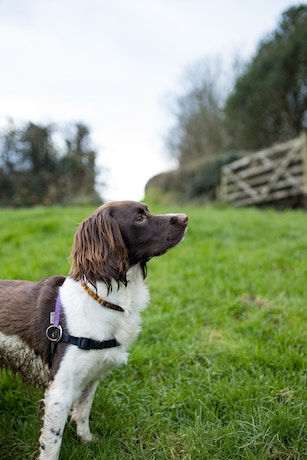
Photo by Frank Cone on Pexels.

 Memoirs of a Country Vet