The Cluttered Desk 

D. E. Larsen, DVM

The bell in the hallway rang, and the class was officially over, but Dr. Benjamin was still standing in front of the class as some of the guys were starting to put their notes away.

“Don’t get in a big hurry,” Dr. Benjamin said. “We still have a couple of things to cover.”

This was Clinical Pathology class in our second year of veterinary school. Dr. Benjamin was a lady who maintained complete command of the class. She graduated from Colorado State Veterinary School in 1954. That fact alone said she was a superwoman.

For a woman to be accepted into a veterinary school in 1950, she had to excel in every aspect of life. If she wasn’t a straight-A student, she would be wasting her time applying in those years. But she had to have the physical capabilities to satisfy the strict criteria of the admissions committee. There were probably few criteria for the male applicants, but veterinary medicine was a very sexist profession, and few women were allowed to enter.

“For lab tomorrow, we will be doing urinalysis,” Dr. Benjamin said. “Everyone is to bring their own urine sample. There is to be no sharing of samples. So pick up a sample jar from the basket by the door as you leave today.”

A bit of laughter filtered through the classroom after that comment.

“The other thing we need to discuss is the clutter in this classroom after you people leave in the afternoon,” Dr. Benjamin said. “The janitors have been threatening me daily. So before anyone leaves this room, I expect all the litter on the floor to be picked up. Desks are to be arranged in the same orderly manner you found when you entered this classroom a couple of hours ago. That said, there will be no discussion or comments about my desk.”

Dr. Benjamin’s office was across the hall from this classroom. To say her desk was cluttered was a gross understatement. It was covered with books and papers in piles nearly three feet high. She maintained one tiny space in the center of the desk that would accommodate a notepad, but that was the only open flat space in her entire office.

Everyone knew her desk was cluttered because her entire office was the same. There were boxes stacked here and there, books stacked in front of the bookcases. It was so bad that she couldn’t close the door, so everyone knew the status.

Dr. Benjamin gathered her stuff and prepared to depart as everyone stood up to tidy their space.

“Now, don’t forget your urine samples tomorrow,” she said as she paused at the door. “If you don’t have one, you will not get credit for the lab unless you can come up with a sample quickly.”

“That will be fun,” I said to Ben and Chuck. “Packing a urine sample around all morning for the afternoon lab.”

This was in 1972. Our class had eighty-four students. There were eight women in our class. That was almost an unheard-of number. The classes before us would have two or three women, four at the most. There could have been a couple of the women who had a B on their record, but all eight were exceptional students. The profession was changing very slowly.

***

When everyone started into the lab, everyone had their little jar of urine. Dr. Benjamin was waiting at the front of the lab as we got situated at our lab tables. 

With eighty-four students, this was a large laboratory. There were rows of lab tables, with four students in each row. There was space between the tables where you moved between rows to look at other students’ samples or microscope slides.

Dr. Benjamin covered the basics of a urinalysis. The dipstick, the specific gravity, color, turbidity, and other components of the process. What she wanted to spend most of her time on today was obtaining and analyzing the urine sediment. 

Everyone was busy getting their urine sample into the centrifuge so we could start looking at the sediment. Suddenly there was a commotion in the row behind us. Everyone’s attention was diverted to the unrest.

While this was happening, one of the guys emptied a vial of bull semen into one of the women’s urine samples. He had got the vial from the bull farm this morning, and the commotion was a planned diversion. When the deed was done, everyone returned to their work.

The guys behind us shared their row with one of the class’s more popular and self-confident gals. They were all quick to share their microscope slides with each other and were waiting for this gal to get her slide under the microscope.

Once she looked at the slide, her face reddened briefly. Then she stood up and let the guys, giggling now, look at her slide. 

“All right, who’s the culprit?” she asked in a stern voice. “I’m no dummy; I know bovine semen when I see it.”

There were laughs all around, and the plot was explained. That was the end of the stunt.

I don’t think Dr. Benjamin was aware of the goings-on. I am sure that today, things would turn out differently. Possibly, even resulting in an expulsion.

Photo by Alexander Grey on Unsplash.

Please! 

D. E. Larsen, DVM

The sun was bright, and not a cloud in the sky as we headed east out of Fort Collins. I was with Dr. Hopkins, a second-year resident, and we were on a farm call to check on a group of cows.

This was the first summer quarter that Colorado State Veterinary School conducted. The plan was to have a quarter of the class on break during each school year term. That way, the student load in the clinic would be reduced so everyone could have more hands-on experience. I jumped at taking this summer and having my free quarter during the spring term. That way, I could start work three months early. I needed the money.

I enjoyed working with Dr. Hopkins. He was a cow doctor, which was my goal in this profession. He was a big guy, probably younger than I was, probably by a couple of years. 

“We have to about ten cows to check today,” Dr. Hopkins said as he turned south onto a country road several miles out of town. “These are all rechecks. This guy had an old veterinarian doing some work for him for the last couple of years. This whole group of cows had retained membranes last fall, and the old guy manually removed those membranes.”

“Dr. Ball says that is something we should no longer be doing,” I said.

“That right,” Dr. Hopkins said. “But you will find out that is easier to talk about than it is to do. All the older practitioners are still cleaning these cows. It is probably a significant income producer for them. You will get a lot of kickback from the older veterinarians and their clients if you try to convince them that it is better not to manually remove those membranes.”

“Anyway, these cows all had uterine infections that were hard to clear up. So here we are in July, and hoping that they are finally pregnant.”

“We have almost lost a year with them,” I said. “I would guess if they are not pregnant at this point, it will probably be best to salvage them.”

“Yes, we are probably at that point already,” Dr. Hopkins said. “Sending them to the sale pregnant increases their value. Otherwise, they are immediately sold as hamburger. They may end up there either way.”

“So, we are nine months into their milking year, and if they are only two months pregnant, that will mean another five months of low-yield milking,” I said. “You can’t afford to feed one of these Holsteins for an extra five months with enough milk to pay their way.”

“Exactly, so we will check these cows; if they are not pregnant, they go to hamburger,” Dr. Hopkins said. “They should also go to the sale barn if they are pregnant. Unless there is some overriding reason to hold them over. Some special genetics, or great milk production, are acceptable reasons to hold a cow over. Being a favorite cow should not be a good reason.”

By the time we finished the discussion, Dr. Hopkins had turned the truck into the barnyard. Ted was waiting for us as we pulled up to the barn.

“I have these gals waiting for you,” Ted said. “But, you know, I’m not sure it is worth checking these gals. They are so late; they are all going down the road anyway.”

“We were talking about that on the way out here,” Dr. Hopkins said. “The only value will be they are worth more than hamburger prices if they are pregnant. They might fit into someone else’s program.”

“Okay, let’s get it done,” Ted said. “I’m a little curious if all your work ended up with pregnant cows anyway.”

Ted had all the cows locked in stanchions, so the pregnancy exams didn’t take long. I went down the line first, and Dr. Hopkins followed along to check my work for the first few cows. I felt a little sorry for those cows. Dr. Hopkins’s arm was much larger than mine. 

Every cow was pregnant. That was pretty good, considering the history.

“I wish I had started using you guys a year ago,” Ted said. “I hate to see this group go down the road, but I guess what’s done is done.”

“You have enough replacements that you won’t notice the loss for long,” Dr. Hopkins said.

“Yes, I know,” Ted said. “My wife wanted you to stop at the house when we were done here.”

We were just getting to the truck to start cleaning up when Ted’s wife showed up with her horse in tow.

“I was hoping I could get you guys to worm my horse while you were here,” Jane said.

“I’m a cow doctor, Jane,” Dr. Hopkins said. “I’m not sure you will want me to worm your horse.”

“I know, but it will take weeks for me to get one of those horse doctors out here,” Jane said. “I trust you with anything.”

“I’m not sure I have the right stuff,” Dr. Hopkins said. He was trying hard to get out of working on this horse.

“Please!” Jane said. “Would you please do this just for me?”

Hopkins looked at me and sighed.

“I tried,” he said under his breath. “I hate this horse.”

We dug around in the truck and came up the stomach tube for a horse and a dose of worm medicine. Dr. Hopkins pulled a twitch out of the back of the truck.

“Oh, could you try doing this without the twitch,” Jane said. “Please! Those things look like the hurt.”

“That is what they are supposed to do,” Dr. Hopkins said. “They keep the horse worrying about their nose and not what I am doing.”

“Please!” Jane said, pleading.

“Okay, we will try, but there are no promises,” Dr. Hopkins said.

I grabbed the horse by the halter and leaned against his shoulder. The horse threw his head up as Hopkins reached over my left shoulder and grabbed his nose. I reached up and grabbed the horse’s ear, pulling his head down. Hopkins held on to the halter and started the stomach tube into the horse’s nostril.

The horse reared a little, lifting me off the ground. As I came back down with my feet on the ground, the horse violently threw his head to the side, striking Dr. Hopkins. 

The blow knocked Dr. Hopkins to the ground, and he rolled a full twenty feet down a slope. He was shaking when he got back up and returned to the horse.

“Get the damn twitch,” Dr. Hopkins said through cinched teeth.

I retrieved the twitch from the truck and grabbed the horse’s nose with my hand through the chain loop. I slipped the noose onto the nose and twisted the loop tight.

“Tighter,” Hopkins said. “I hate this damn horse.”

I took another half-turn on the twitch.

The horse stood still, with his eye watching me, as Dr. Hopkins placed the stomach tube and administered the dose. He pulled the tube, and I released the twitch. I handed the lead rope back to Jane.

“I’m so sorry,” Jane said. “I guess those twitches are for naughty horses.”

“We use them a lot,” I said. “They really keep everyone safer, even the horse.”

We got cleaned up and back in the truck, with Dr. Hopkins not saying much. As we pulled out of the driveway, he relaxed a little.

“That’s why I do cows,” Dr. Hopkins said. “It’s not the horses so much; it’s the women who baby them. The horse is a dangerous animal if it is undisciplined.”

Photo by Elina Sazonova on Pexels.

The Game, From the Archives

D. E. Larsen, DVM

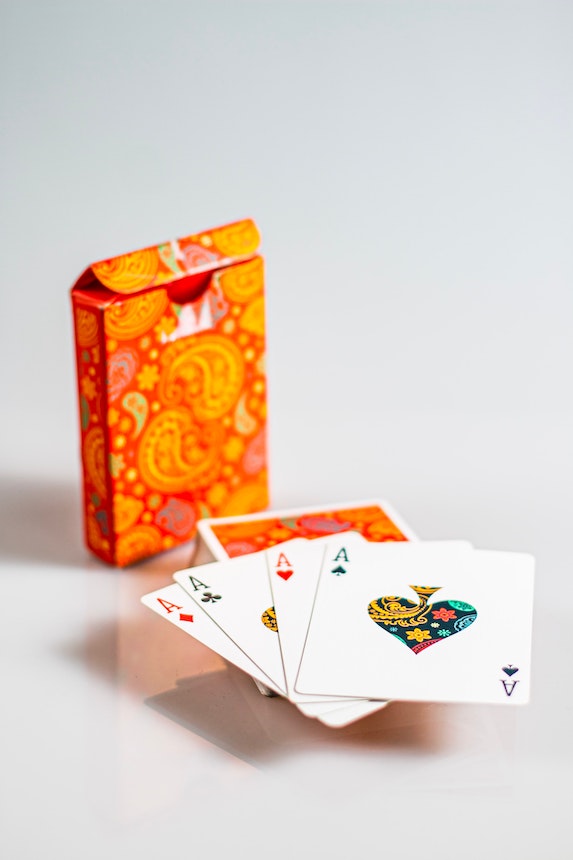
I held my 3 cards firmly and a little cupped, so the 3 aces were out of view to the other players and the crowd of half-dressed GIs watching the game. It was Saturday evening in mid-October, and a poker game was the best entertainment available to our platoon. We were in the middle of basic training at Fort Ord. 

This was 1965, and we were still under restrictions due to the recent epidemic of spinal meningitis that occurred on the post. We were restricted to our platoon area and no contact with the other 4 platoons in the training company. These 39 other guys were my circle of friends for the duration of the 8 weeks of basic training.

I waited anxiously for my draw of two cards. There were 6 of us in this game. We probably had half the platoon watching, all in various states of dress and undress. Boxers were standard attire in the barracks in the evenings. Boxers and a tee-shirt were almost Sunday-go-to-meeting dress. There were a few guys still in their fatigues. I watched as the other players called for their cards. Only Tangerman, a younger kid, sitting across the makeshift table, a couple of footlockers pushed together, drew 2 cards.

I slowly picked up my 2 cards, one at a time. I turned the first card over and stuck it in my hand, a king.  I took a deep breath and picked up the next card. It was an ace. I am sitting here with 4 aces and a king, the only hand that can beat me is a straight flush. It is highly unlikely that Tangerman would draw 2 cards to a straight flush.

I watch as the bet goes around the table, one guy, to the right of the dealer, bets, then Tangerman raises. The next guy folds, the next guy sees the bet. I am trying to decide if I want to raise now. The rules of this game say we are limited to two raises. All of us playing are in the same boat. We need some money to last until payday. We have tried to construct a game that will be fun but where nobody will be hurt. I go ahead and raise the bet.

The group of guys behind Tangerman is excited, which means he hit his draw. The dealer folds, as does the next guy. So there are 3 of us still in the hand and my guess the other guy will fold. 

Then Tangerman makes a fatal error in judgment. He asks if we can suspend the rules. Could it be that he has a straight flush? I can’t believe that. 

I agree. “Bet away,” I say.

Tangerman raises my bet again. The third guy folds. There are a few guys behind me now, wanting to see my hand. I see Tangerman’s bet, and I raise him back. I relax a little and show my hand to the guys behind me. Both groups of guys are going crazy now. There is enough tension in the platoon that you could cut it with a knife. Virtually the entire platoon is watching the game now. Tangerman’s group has more than 20 guys, more than mine, and much more vocal. 

Tangerman sees my bet and only has a few dollars left in front of him. He fingers his dollars as he considers his final raise.

“We have over a week before payday,” I say, “you might want to hang onto a few dollars.”

Tangerman looks at the pot, there must be close to $30.00 in the pot, a half months pay for us. He looks at his remaining $3.00.

“Okay, I call you,” he says.

With a sigh, I lay my cards on the table. Tangerman’s group erupts in a colossal moan.

“Damn,” Tangerman says as he lays his hand on the table. Four queens and a king.

The game is over after that. Tangerman is tapped out, and there is no way the excitement can be matched. I scrape in the pile of bills.

Everyone is dispersing to their bunk area, and as we are repositioning all the footlockers, I grab Tangerman by his elbow.

“If you run short before payday, you let me know,” I say. “This game wasn’t supposed to leave anybody broke.”

“Thanks,” he says. 

That is the only poker game I played in the Army. After basic training, there was either too much work to do or too much fun to be had elsewhere. 

Much later in life, in Sweet Home, I would play an occasional friendly game with a group of guys. Most games were casual, everybody had more money to lose than the guys had during basic training, but is more of a social gathering than a serious card game.

I had been playing in a weekly group with 5 or 6 guys for a couple of months. I considered myself lucky if I broke even, I think once or twice I came home with an extra $20.00, but never anything more than that. Usually, the host would have some finger food on the table, and there was maybe a beer or two on the table.

I got a call one afternoon to castrate and a group of young bulls. This was a purebred Black Angus herd, and this was a group of 12 young bulls who didn’t make the grade for the bull sale. These bulls were all approaching a year of age, or they were just over a year.

This was a pretty routine call, but the candidates for bedroom guards were a little older than the usual crowd. 

The first bull was waiting in the chute when we pulled up to the corral. I used my standard castration technique. I had Helen put pull the tail up over the back to create a good tail pinch on the spinal nerves. I would grasp the scrotum above the testicles and squeeze the testicles into the bottom of the scrotum. I would make a quick incision down each side of the scrotum and squeeze the testicles out of the scrotum. I would grab each testicle and stretch them down until I could feel the cremaster muscle tear. That done, with a clamp on the cord above the testicle, I would remove the testicle with the emasculator, holding firm pressure on the emasculator to ensure a solid crush on the vessels. In small bulls, I would remove both testicles together. Bulls this size, I removed each testicle individually.

With the first set of testicles in my hand, I looked at Debbie.

“Do you want these,” I asked.

“Are you kidding,” she said.

“I don’t know, they tell me they are pretty good eating,” I said.

“If you want them, you are welcome to them.”

“Helen, grab me a few OB sleeves,” I said. “I happen to have a poker game tomorrow evening. These might make pretty good hors d’oeuvres”.

We worked through the remaining bulls similarly. By the time I was done, both OB sleeves were full of prime testicles. I tied the sleeves at the top, and we packed up our stuff.

“You will find that they will all be singing soprano from now on,” I said. “Thanks for the leftovers.”

I had no recipe to follow in cooking these things. I figured I would just imagine the end product and work backward. These were probably a little larger testicles than what one might see in a bar in Colorado. Mountain Oysters were a fall delicacy in many Rocky Mountain areas. Each testicle was over 3 inches long and approaching 2 inches in diameter.

I removed the loose tunic from each testicle, and then with a sharp knife, I sliced the epididymis from the testicles. I then sliced them into rounds, about the thickness one would slice a potato for frying.

With them all sliced, I dipped them in milk, dredged them through a beaten egg, and then flour. Then, each round was fried to a golden brown. Sandy always says I cook things with too high of a temperature, so I was careful to use medium heat. I little salt and pepper finished the process.

When they came out of the frying pan, I let them cool on paper towels and then carefully stacked them on a platter. When finished, it was a pretty impressive plate of mountain oysters, if I do say so myself. I covered them with plastic wrap and put them in the refrigerator overnight.

I took the platter to the office the next day because I was going to be at the clinic until I left for the poker game. The girls in the office were impressed with the appearance of the platter and wanted to taste one.

Helen took a bite and immediately ran to the bathroom. She was embarrassed when she came back. When she bit into the sample, she had gotten a small tubule stuck between her teeth. Needless to say, that ended the sampling at the office.

I arrived early at the poker game, but there were a couple of guys there already. I sat the platter on the table, a little off-center but where it was within reach of everybody. I removed the wrap and didn’t say anything about it.

The group arrived, and we settled into the game. As the evening wore on, guys started picking away at the platter. It wasn’t long, and the plate was nearly empty.

“What are these things?” Jerry finally asked, holding up one of the rounds. “They are pretty good. Who brought them?”

I never said a word and worked hard to maintain my best poker face.

Finally, Gil chuckled and pointed to me. “Larsen brought them,” he said as he continued to laugh.

Of course, the whole table thought they were poisoned for sure.

I quickly fessed up to the truth, “They are just Mountain Oysters. And they are as fresh as you can get anywhere.”

Photo by Mark Williams on Unsplash