Elbow on a Grinder 

D. E. Larsen, DVM

The morning looked like it would be a nice early summer day in Encumclaw. The winter had seemed to run into spring, and anything approaching summer weather was yet to be seen.

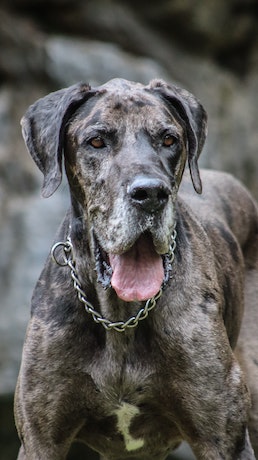
I was at the front counter when young Ed Carter came through the door with Max. A large Great Dane, Max was a good dog. I knew Ed from several farm calls. Ed ran a large dairy with his dad. Max was always by his side on the farm.

“Max got hit by a little car a few minutes ago,” Ed said. “I think the car probably got the worst of the deal, but Max was dragged down the road a piece. He seems fine, but it tore up his elbow a little. I was hoping you guys would have time to take care of him.”

I stepped around the counter to get a better look at Max’s elbow. My approach caused Max to take a step back. His right elbow collapsed with the movement, and Max ended up on the floor.

When I looked closer, it looked like someone had taken a grinder to Max’s elbow. The lateral third of the joint was gone, along with all the soft tissue. There was nothing holding the lateral side of the joint together. 

I placed my hand under the elbow and lifted it from the inside. The joint gapped open. The only way to stabilize this joint would be by fusing the joint.

“Ed, this is a major injury,” I said. “The only way to fix this is by fusing this joint.”

“That sounds a little drastic,” Ed said. “Will he be able to use his leg?”

“It will impair the function of the leg, but there is no other way to fix this injury that I know of.”

“Can you do it here?” Ed asked.

“No, that is way above our capabilities at this clinic,” I said. “I was just at a meeting last week with a veterinarian who is starting a new specialty clinic in Seattle. He is an orthopedic guy. He could fix this leg, but it won’t be cheap.”

“Are there any other options?” Ed asked.

“The only other option would be to take the leg off,” I said. “Most dogs do well on three legs, but an old Dane might not do so well.”

“So, I should probably at least go talk with this guy,” Ed said.

“Yes, and the sooner, the better,” I said. “I need to clean up this wound and get a good wrap on the leg and a little splint to stabilize the joint. I will sedate Max just a little to clean any debris from this wound.”

We moved Max back to the treatment table, and I gave him just enough IV Surital to allow me to quickly clean the wound and get a wrap on the leg.

This wound looked like someone had held the elbow against a grinder. The lateral bone of the joint was coarsely ground away. There were deep striations in the bone, tiny bits of gravel in the bone, and soft tissues around the wound.

I cleaned things up the best I could and applied some Furacin Ointment under a non-stick gauze pad. Then I put a large pressure wrap on the entire leg. Max was waking up as I gave him a dose of IV ampicillin.

Let me call Dr. Willard to see if he can see Max right away. He is just starting his practice, and we will probably have no problem getting in to see him.

Dr. Willard was happy with the call and wanted Max as soon as possible.

“With a wound like this, we need to get it really cleaned up and into surgery as soon as possible after the injury,” Dr. Willard said.

We loaded Max into the front seat of Ed’s pickup, and Ed squeezed into the driver’s seat and headed to Seattle.

About an hour later, Dr. Willard called.

“Dave, this is quite a wound, but it looks like you did a good job cleaning it up,” Dr. Willard said. “I am a little concerned about the radial nerve. Were you able to evaluate it before Max was sedated?”

“Max walked into the office if you can believe that,” I said. “The leg gave out on him as he stood at the counter.”

“It is amazing that he could walk on that leg,” Dr. Willard said. “There is nothing holding that joint together. But I guess that answers my question about the radial nerve.”

Dr. Willard was able to do a good arthrodesis on Max’s elbow joint. The procedure was easy compared to working on an intact joint because the injury gave him total access to the joint. And the flat surface where the bone was ground down by the pavement made fitting the plate on the bone much easier.

Max healed well. He did walk with a limp, but it was much better than being without that leg. Ed was pleased with the repair.

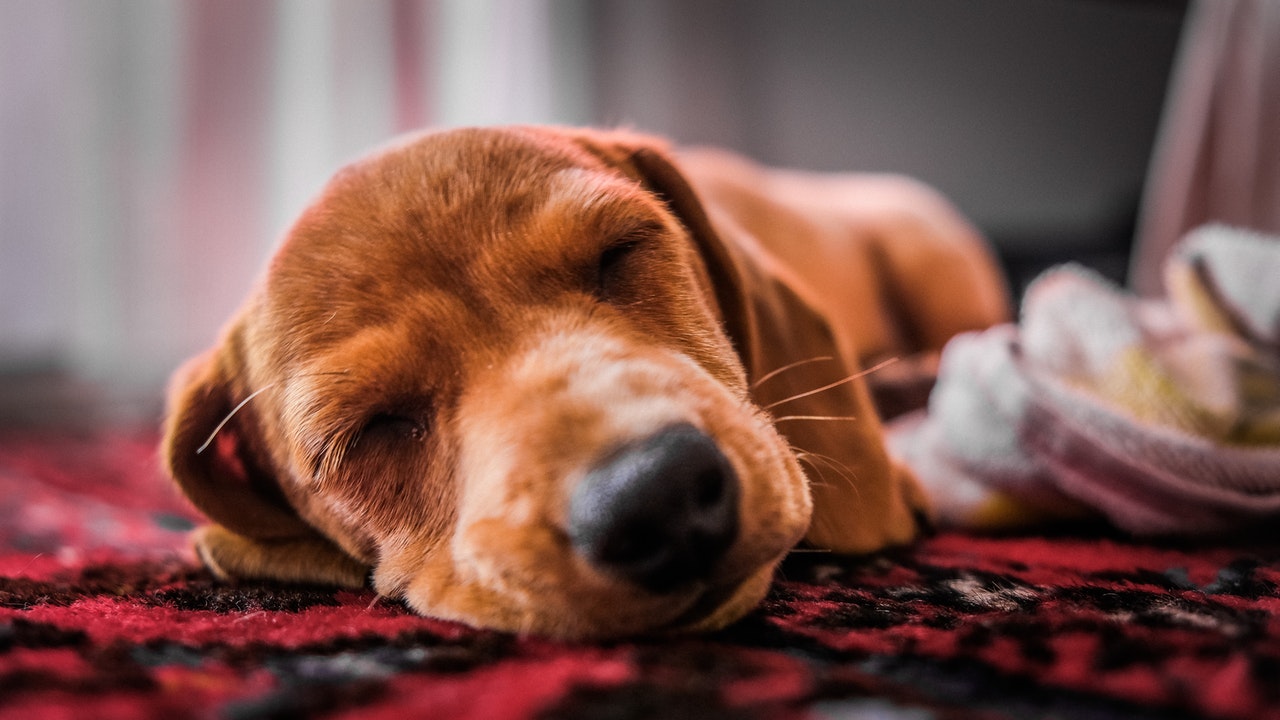
Photo by Christian Álvarez on Pexels.

The Monsoon Rains 

D. E. Larsen, DVM

I went to the door again and opened it just a bit to see if the rain was coming down in sheets. I could see the officer’s quarters across the street.

“Is it still raining, Larsen?” Steve Cross asked from the bar.

“It’s raining harder than I have ever seen it rain,” I said as I sat back on my bar stool. 

We were sitting in the NCO club at Camp Humphreys in South Korea. 

“The good thing is it’s pretty warm out there,” Steve said. “I mean, here we are in the middle of July, and it is raining harder than anything we have seen in Oregon. I hoped to go to the village tonight, but not in this stuff.”

South Korea typically gets most of its rainfall during the monsoon season, which starts in late June and runs through early August. 

“We are both from Oregon,” I said. “You must have learned that if you don’t do stuff in the rain, you just don’t do stuff.”

“Well, you are right there,” Steve said. “Rain never caused me to change plans back home. I guess it shouldn’t over here.”

“Yes, what is it, maybe a mile down to Duffy’s Tavern in the village?” I asked. “A couple of Oregon guys should be able to walk that without worrying about a little rain.”

“This is big rain,” the Korean bartender said. He had been listening to our conversation. “This rain might last all night.”

I have watched some of these rains in the last few weeks. Most of the time, they were during the day. There would be torrential rain for a few hours. The water would cover the ground around our operations building. Sometimes it looked like it was a foot deep. Then the rain would stop, and the sun would come out. Steam rose from everywhere, and a half hour later, all the water was gone. It was absorbed by the porous soil and also ran into the rice paddies that flanked our building.

“Most of the time, these rains only last a few hours,” I said.

“That happens during the day,” the bartender said. “At night, they last a long time.”

“I say a couple of Oregon kids should walk down to Duffy’s,” Steve said as he stood up and pulled on his field jacket. “A little rain isn’t going to hurt us.”

“Okay, let’s go,” I said as I finished my beer and grabbed my field jacket and hat.

We opened the door, and I took a deep breath. The rain was heavier than it was at my last check.

“This is your last chance, Cross,” I said. “You can withdraw from this adventure now if you want. Once we start, there is no withdrawal.”

Steve pulled his hat down so it fits tight. He glanced at me.

“Let’s get going,” he said.

We stepped out into the rain. It was raining so hard we could hardly see the edge of the road. We quickened our pace a little. When we came to the main gate, the MPs were all huddled inside the guard house. They never looked up.

When we walked down the middle of the street in An Jung Ni, we could just make out the front of the shops on either side of the road. Our combat boots kept our feet dry, but we were walking in a couple of inches of water on the street.

Our summer field jackets were not designed to be waterproof for any period of time. By now, water was soaking through our hats and running down our faces. My shoulders were wet to the skin, and I could feel water running down my back.

“I think we are getting wet,” Steve said. “This is no Oregon rain.”

Finally, we came to the ally that led to Duffy’s Tavern. We pushed through the door and were greeted with a near-empty bar. Just a few GIs from our company and the bartender. Even the business girls were smart enough to stay home.

 We stood dripping wet, with a large puddle growing around our feet. We started peeling off our wet things, and Duffy, the tall Chinese owner, came over with a couple of bar towels.

“It’s very wet outside,” Duffy said. “You should stay inside.”

Max got up from his bar stool and came over to help us hang some of our wet things on the back of the chairs. He was noticeably dry.

“Did you two walk down here in this downpour?” Max asked.

“We’re from Oregon,” Steve said. “We don’t let a little rain stop our parade.”

“Look around,” Max said. “Everyone else seems to have the sense to come in out of the rain.”

“That’s not the worse part of it,” I said.

“What’s the worse part?” Max asked.

“We have to turn around and walk back to base in a couple of hours,” I said.

“Not me,” Max said. “I’m staying the night in my hooch.”

“Maybe this will let up before we need to head back,” Steve said.

We stayed and had a couple of Korean beers. OB was the brand. Stood for Oriental Brewery. Actually, it was a pretty good beer. 

The rain did let up, and our trip back to base was a little more comfortable.

In the morning, our field jackets were still wet. The good thing was it was warm enough that we could carry them.

Photo by Egor Litvinov on Pexels.

My First Ellwood, From the Archives

D. E. Larsen, DVM

The pup tried to lift his head as he laid on the exam table, but he just didn’t have the strength to accomplish the feat. He let it settle back to the towel on the stainless steel tabletop, resigned to his fate, whatever that may be.

“I don’t know anything about him, Doc,” Paul said. “I was working on the house I am building in Liberty,  he walked out of the brush and collapsed at my feet. I guessed that meant it was up to me to try and save him. I am just happy that you can look at him on a Sunday afternoon.”

Cachexia was one of those words I was forced to learn in vet school. Dr. Kainer, the freshman nemesis, seldom remarked about the words he heaped upon us. Still, he had indicated that we would rarely need to use cachexia in our records. If anything described the condition of this pup, it was cachexia. He was literally skin and bones, and completely out of strength. He was looking for a place to die, or maybe hoping for a miracle.

“Just off the cuff, my guess is his chances are slim to none,” I said. “We will spend a little money to figure out what is wrong with him unless we get lucky. And then treatment is going to be more expense.”

“I have an extra hundred dollars in my pocket today, Doc,” Paul said. “If that will buy him a new start, that would be great. If not, at least we tried.”

This was something I learned early when I came to Sweet Home in the middle 1970s. If you can save them for a hundred dollars, they will do it. If it was going to much over that, there would be careful consideration of the options.

I opened the pup’s mouth, it was almost dry, the saliva was white and mucus-like. This was from extreme dehydration. His tonsils stood out like bright red grapes hanging in the back of his throat. 

As I ran my hands over his body, I could feel every bone. He was like a skeleton covered with skin. He weighed 12 pounds, and as a young mixed pup, he should be over 40 pounds. Every lymph node was enlarged, noticeable enough that I didn’t have to palpate them. His abdomen was empty but gurgled with my palpation. The mercury in the rectal thermometer was just a little over 95, quite low for a July afternoon. A drop of liquid stool hung on the thermometer when it was removed from his rectum. I carefully transferred that drop to a microscope slide.

“I will take a second to look at this under the microscope,” I said to Paul. “If you would, make sure he doesn’t jump off the table.”

“Surely you jest,” Paul said.

I mixed the small sample with a couple drops of floatation solution and put a coverslip on the slide. Under the microscope, a diagnosis was confirmed with just one glance. Nanophyetus salmincola eggs covered the field. This pup had Salmon Poisoning.

“Paul, this pup has a very advanced case of salmon poisoning,” I said. “Actually, I have never seen a case this advanced. Most dogs are dead before they get this bad. I don’t know if we can help him, my guess is we will be throwing your money down the drain.”

“I said a short time ago, I have a hundred dollars to put into him,” Paul said. “You haven’t had to do any fancy blood testing to find out his problem, lets put the rest of it into some medication and see how he does.”

“Okay, we can wing it from here,” I said. “Ideally, we should check to see how his liver and kidney function is doing, but I will put him on an IV, run some fluids, and give him a couple of miracle drugs. We will see what morning brings.”

Working on this unnamed pup by myself was no problem. He did not move a muscle, not even a flinch when I inserted a catheter in his vein. I started a bottle of fluids at a slow drip. Then I gave a dose of Oxytetracycline as a slow IV injection. 

I drew on the experience of a couple of the men whose shoulders I stood upon. Doctor Annes at Colorado State always said that no patient should die without the benefits of steroids. And Doctor Haug from Myrtle Point always treated his salmon poisoning patients with Oxytetracycline and an equal volume of Dexamethasone. I usually gave a small dose of Dexamethasone on the initial treatment for salmon disease. Still, looking at this guy, he could probably benefit from Doctor Haug’s larger dose. I gave the larger dose of Dexamethasone as a slow IV injection.

Scratching his head, I wished him luck and turned to fill out the records. “Name of Pet” jumped out at me from the top of the paper. 

“So, guy, what are we going to call you,” I asked the pup. He sort of raised one eyelid, the first real response I had seen from him. I pondered the name.

“I think you might make a pretty good Ellwood, At least for the next few hours,” I said. “But, I am telling you, Ellwood, you had better get well quick. The ticket is for a short ride. I will be back and check on you after dinner.”

Anyone who has been around salmon poisoning knows that the odor of the diarrhea is most offensive. I have had clients tell of waking at 3:00 in the morning after their dog has had an explosive event in the hallway. Everyone in the house wakes up with a headache from the odor. The same thing can happen in the veterinary clinic, especially in a patient who is so dehydrated that their diarrhea has stopped. When they get some fluids, an explosive event often follows.

After dinner, I was a little apprehensive about opening the clinic door. I hoped I would not be greeted with a clinic filled with a salmon poisoning dog’s pungent odor. No odor, that was good. Now all I needed was for Ellwood to still be alive.

Much to my surprise, Ellwood was up, resting on his sternum with his head up and watching for me as I came through the kennel room door. He was a completely different pup.

“Will, I’ll be, Ellwood, you might just live after all,” I said as I looked him over. “You are so thin, I wonder if you would eat a bite.”

Because salmon poisoning dogs lose their appetite early in the course of the disease. Many will not eat for several days after treatment is started. And there is often some residual vomiting if food is given too soon. But I opened a can of mild intestinal diet food and placed a spoonful between Ellwood’s paws. It disappeared so fast that I almost questioned myself about if I really put it there.

“Wow, one more spoonful tonight, then we will give you more in the morning it this stays down,” I said. I thought I saw a slight wag of the end of Ellwood’s tail as I placed the second spoonful between his paws. Again it was gone in an instant.

In the morning, the bottle of fluids was empty, and Ellwood was standing up, and wagging is tail. I could almost say he was bright and alert.

“You are a sight, Ellwood,” I said. “How can you stand with those muscles of yours?”

I placed several spoonfuls of the canned food in a small bowl. Ellwood wolfed it down and wagged his tail. I put a small pan of water in the kennel, Ellwood lapped it up in short order.

“I think you’re well, Ellwood,” I said. “Never in my wildest dreams would I expect it today, especially on your budget.”

When Paul arrived at the clinic later in the morning, I think he was worried if he was going to have to dispose of the body or if we would do that for him. He was pleasantly surprised to see Ellwood up and wagging his tail.

“I think he had survived the disease,” I said. “He just needed some fluid replacement and drugs. I think you have a new pup.”

“I didn’t expect him to be alive.  I was thinking I was going to have to dig a hole for him,” Paul said. “Do you think he is going to be okay.”

“I am not sure my opinion means much concerning Ellwood,” I said. “I didn’t expect him to live through the afternoon yesterday.”

“Where did you find his name?” Paul asked. “I looked for a tag, and I couldn’t find one.”

“That is just a name that I thought would fit him,” I said. “He is sort of a fighter, a little like an Ellwood I know.”

We fixed Paul up with a special diet, medication, and instructions for the next week. He stood at the counter, with Ellwood on a leash, while I finished calculating the bill. 

Paul noticed my diploma on the wall behind the counter and held his hand out to shake. “Good job, thanks, Ellwood.”

Photo Credit: Photo by Magda Ehlers from Pexels

Salmon Poisoning Link: https://en.wikipedia.org/wiki/Nanophyetus_salmincola