One Big Hot Spot, From the Archives

 D. E. Larsen, DVM

The early morning air was warm and unusually humid as I loaded into my truck to head to the clinic. This was going to be a hot day, and I just hoped I wouldn’t have some dog with a heat stroke today.

“The good news is there isn’t much going on this afternoon,” Judy said when I leaned over the front counter to look at the appointment book. “We should be able to leave early before the day warms up.”

When Dixie came through the front door, her immediate concern was the daily schedule.

“I’m hoping we have an easy afternoon,” Dixie said to Judy.

“I am trying to keep things open,” Judy said. “They say it will be a hot day, and you know how hot it gets in this clinic.”

“Yes, I am going to get the backdoor open and start the sprinkler on the roof,” Dixie said. “That will keep things cool until two or three this afternoon.”

Dixie opened the garage door in the back of the clinic. With the front door open, it provided a nice cool breeze through the clinic. The sprinkle on the roof kept the clinic from heating up until later in the afternoon. The water running off the roof was hot already.

“I didn’t schedule any surgeries today,” Judy said. “That way, we won’t be stuck here recovering a patient in this hot weather, and we can fill those hours with any clients that call this morning.”

The morning was busy, and Judy did a good job fitting the entire day into the morning.

“I think we will be out of here at one if we work through the lunch hour,” Dixie said. “That will be great. I have plenty to do this afternoon.”

I was finishing the last appointment at twelve-thirty when Georgia came through the door with her Saint Bernard, Nana.

“I know I don’t have an appointment, but something is terribly wrong with Nana,” Georgia said. “I am hoping you can see her.

“We are just finishing up for the day, but I think the doctor has time to look at her,” Judy said.

Dixie showed Georgia and Nana into an exam room. “Something doesn’t smell good with Nana,” Dixie said. “How long has she had a problem?”

“I noticed her smelling this morning,” Georgia said. “I was so hot yesterday, and she suffers in the heat anyway. I just assumed she was just hot when she was scratching yesterday.”

Nana’s odor had filled the room by the time I stepped into the exam room. I took a deep breath.

“Nana is an interesting name,” I said. “Where did you come up with it?” 

“Nana was the family Saint Bernard in the Peter Pan movies,” Georgia said.

“Let’s see if we can find where this odor is coming from,” I said. “How long has she had a problem?”

“I noticed her scratching a little yesterday,” Georgia said. “I just figured it was the heat, but this morning she really smells.”

I knelt down to look at Nana. She was far too large to lift onto the exam table for just an exam. I ran my hands down her back, and her skin was moist over her shoulder blades. 

“I think I have found the problem,” I said as I parted her hair to look at the skin. A large area of infected skin was on the middle of her back. “I think we need to clip some hair to get a better look at things.”

“I hate to have her hair clipped,” Georgia said. “Are you sure that needs to be done?”

“What is going on with Nana is a moist skin infection,” I said. “The hair mats down a little, and the infection just grows. We need to remove the hair and clean up the area. Then with some antibiotics and other medication, things heal up pretty fast in most cases.”

We started clipping Nana’s hair in the middle of her back. The skin was painful, sore, and covered by a thick layer of yellow pus. We extended the area of the clip, looking for the edge infection. Nana was an excellent patient. She never complained through the whole process.

“Look at the size of this hot spot,” Dixie said as she finally reached the edge of the infection, almost up to Nana’s neck and back to the middle of her back. “I don’t think I have seen anything this large.”

“And it looks like it extends down her sides,” I said. “It looks like someone poured a bucket of pus on the middle of her back.”

When we finally finished clipping hair, the area covered looked like the area that a saddle would cover. Several strips of infection extended Nana’s sides, almost to the bottom of her rib cage and down the sides of her legs.

We scrubbed the area with Betadine Scrub. Then after a rinse, we applied some Furacin Ointment and hydrocortisone cream. 

“We are going to send you home with some antibiotics and prednisone. I expect this to heal rapidly, although there are a few spots where the infection is pretty deep, and they might scab over.”

“What caused all of this, Doctor?” Georgia asked. “Was it something that she ate?”

“I could be a food allergy, but the dermatologists say that food allergies are real rather rare, unlike what the dog food companies try to say,” I said. This often starts from a reaction to something, and maybe just a flea bite. Controlling fleas this time of the year is just about impossible. I hear new medications are on the horizon that will help with flea control.”

“How can a flea bite cause something like this?” Georgia asked.

“It is not just a simple flea bite. It is the allergic reaction to the bite,” I said. “Or the reaction to some other allergen, the dog scratches a bite, the skin oozes some moisture, that mats the hair down. A skin infection quickly follows in this heat, and the lesion just grows. This is by far the largest hot spot I have ever seen.”

“So she is going to be okay,” Georgia asked.

“Yes, I think she will feel much better in the morning,” I said. “We should plan to check Nana on Monday, just to make sure everything is coming along okay. Then it is just growing some hair back.”

Nana’s tail was wagging as she went out the door.

“I was so glad we didn’t have to sedate her,” Dixie said. “I could just see our free afternoon melting away.”

“I turned the phone over to the answering service,” Judy said. “I hope everyone has a good weekend. It is supposed to be cooler by Monday.”

***

Nana was a different dog when she came through on Monday afternoon. Bouncing in the door, tail wagging and nuzzling Dixie, she led her and Georgia back to the exam room.

“I think she knows you guys helped her,” Georgia said. “She feels so much better, and there is only one small scab on her back.”

“Looks like we are home free,” I said as I looked at Nana’s skin. “The inflammation is mostly resolved. There is nothing more to do now except finish the medication, and then Nana can grow some hair.”

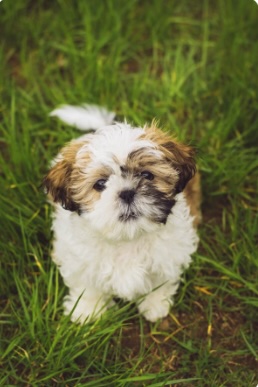
Photo by Olga Dudareva on Unsplash. 

Fast Ball Pitch in the Bullpen, From the Archives

This post is published today to honor the memory of NY Yankee pitcher Don Larsen. Don Larsen died today at the age of 90, he is mentioned in this post, written a couple of years ago as a memory of a from my growing up years.

D. E. Larsen, DVM

     I enjoyed laying in the haymow, resting before evening chores and pondering the mysteries of the world and reliving the day’s events.  The fresh hay was warm and chewing on a stem of grass yielded a pleasant taste. I could lay here, and nobody would bother me as I let my mind wander over the events of the morning before getting to the mysteries of life.

As soon as the barn was cleaned following the morning’s milking I had hurried to the house to change out of my barn clothes. I gathered my willow fishing pole and a can for worms as raced out of the house and off the back porch. That was one of those mysteries. Every home I knew of used the back door to come and go, usually through the kitchen. If the front door was never used and the back door was the main door in life, why didn’t the back door become the front door and front door the back door?

     I ran to the manure pile at the corner of the barn. I was anxious to get to the creek before the sun was on the water. The fish would be biting better early in the morning. I drove the shovel into the ground at the edge of the manure pile and jumped on it a couple of times to drive it deeper into the earth. Then with both hands near the top of the handle, I pulled back with all my weight. After a brief resistance, the shovel flipped over a large scoop of dirt. It was loaded with worms.  Breaking the dirt apart, I filled the worm can quickly.  These worms were large and wiggled a lot.  They had that bright reddish color that the fish seemed to like.  This was going to be a good morning of fishing.

     The run to the creek was several hundred yards, but I covered it in no time. I practiced my moves that I learned watching Crazy Legs at the movie last year. I scrambled over the fence at the wooden section and ran down to the creek.  This first hole was the largest and the best. There was a 4-foot waterfall at the head of the hole. The water was deep under the waterfall. I fished from a rock shelf that ran the length of the hole on this side of the creek. These early summer days were great fishing. The flow was just starting to slow a little, and the water was crystal clear. 

     I put my stuff down and untangled the line on my willow pole. My hands were shaking in anticipation as I threaded a worm on to the hook. The free end of the worm wiggled a lot. I would break this portion off if the worm supply was low, but I liked to leave it on for the first couple of fish. The larger fish would tend the seek out this squirming worm. I dipped the worm in my vial of Cod Liver Oil. I was less than convinced that it made a difference but my Uncle Duke was sure that it did and Dad said that it couldn’t hurt.

     With everything ready, I lowered the worm into the water at the deepest end, just a foot from the foam from the waterfall.  Bam, there was a sharp tug on the line before the worm was halfway to the bottom. I struggled a little, and the willow pole bent with the tip touching the water. But then with the spring in the willow branch and my pull, the fish came flying out of the water. Such a nice fish, probably 14 inches long. I quickly dispatched him with my pocket knife, driving the blade into the back of his neck at the base of his skull.  He didn’t even damage the worm much.

The morning went quickly, I had 20 fish and had only fished 2 of the main holes. I gathered up my stuff and the willow fork of fish and headed back to the house. Mom would have lunch made, and after I cleaned the fish and finished lunch, I could head out to the barn until it was time to do evening chores.

      I cut the heads off the fish with Mom’s large butcher knife.  She was always quick to remind me not to cut a finger off.

     “David, you be careful with that knife,” she would say, “You could cut a finger off before you know what happened.”

     It was good for her to remind me I guess, but you would think she should know that I would remember her warning by now.

     Uncle Duke left the heads of his fish on and cooked them that way, but Mom said she didn’t want them looking at her from the frying pan.

     It didn’t take long, and the fish were cleaned and in the refrigerator. They would make a good dinner tonight, enough for everyone. Mom fried them after dipping them in egg and the flour. They came out golden brown and tasted great. There was nothing better than fresh trout unless it was really fresh trout, cooked over a campfire.

     I washed and sat down with Mom and my brother Gary for lunch. Baloney sandwich and a glass of milk. We ate quickly without a lot of conversation. Gary had not wanted to fish this morning. I bet he regretted that decision after seeing the mess of fish I brought home. Anyway, I finished lunch and headed to the barn.

    The fresh hay was warm and smelled sweet. I pulled a long straw from a bale and casually chewed on it as I laid back and tried to decide if I should take a nap or solve some the mysteries that seemed to bother me a lot these days.

I wonder why girls are so different from boys. I mean the farm girls are not bad, they can do stuff like ride horses and do barn chores. They even fish sometimes. But the town girls, they play jacks and do hopscotch, that’s about it. Last summer when two LA cousins visited and I took them on a hike around the hill, they complained most of the time. They were not impressed with the duck pond on top of the hill, and then when they had to scale down the face of the cliff on the back side of the hill, you would have thought the world had come to an end. I thought we were going to have to turn around and go back the way we came. I ended up taking them down the cliff, one at a time. Almost had to place their every step but we all got down okay. To hear them tell the story when we got back to the house, you would have thought we had climbed down into the Grand Canyon.

     And then, maybe the biggest mystery of all, how does this barn roof shed water without leaking a drop. Laying here I can see cracks between every shake. At night you can see stars through the roof. I asked Mom once, she had no idea how it worked but said that “All barns are made that way.”  When I talked to Grandpa about it, he just chuckled.

     “David, they have been building barns that way my entire life,” he said. “I guess there must be a draft the keeps the water out of the cracks.”

     Grandpas are pretty smart guys, if he couldn’t answer, I was at a loss of who to ask. Then Uncle Ern, Grandpa’s brother who had been listening to the conversation, came up with a reasonable answer.

     “David, the hay is warm, that makes the air inside the barn warmer than outside, the warm air rises and goes out the cracks in the roof, that keeps the water out,” he explained.

     Made sense, but how come the hay was warm? I guess some things in life just are too complex to explain. Answer one question, and it leads to another question.

     I must have drifted off to sleep for a time. When I woke with a start, I could hear the cows coming into the barn for the evening milking. I would have to hurry to change clothes or I would be late for my chores.

     I hurried to the house, passing Gary on the way. He had just brought in the cows and was now trying to practice hitting a baseball. Throwing the ball up in the air and swinging the bat at it when it came down. He actually hit it once in a while. 

     After changing into my barn clothes, I hurried out of the house toward the barn. Just then Gary connected with the ball for a good hit. The only thing wrong was the ball landed in the middle of the bullpen.

     Of all places for it to land. The only place on the entire farm that was strictly off limits was the bullpen. All bulls were dangerous just like all guns were loaded. We were never allowed to touch the bull and even bull calves were off limits. Get caught playing with a bull calf, and your name was Mudd for some time. I never did know why Mudd was such a bad name, but that was the way it was around our place. This particular bull in the bullpen now was a young Hereford bull. The main concern on the local farms was with Jersey bulls. The Jersey bulls had the reputation of being the meanest of all the bulls.

     “What are we going to do now,” Gary said, “we will never get that ball out of there.”

     “Just go in and get it,” I said, “this bull is not mean, and Dad will never know.”

     “Not me,” Gary said, “I am too scared to go into that bullpen. What would you do if he came after you?”

     The bullpen was made with a high fence, two rows of woven wire with barbed wire on top. It was a large square pen, about 100 feet on a side. Right now the bull was standing at the corner near the barn talking to a few of the cows. He wasn’t paying any attention to us or to the ball.

     “I’ll go get the ball for you,” I said to Gary.

     I climbed over the gate and looked at the bull when my feet hit the ground. The bull glanced at me briefly and then turned back to the cows. I walked to the center of the pen and picked up the baseball. Again, the bull glanced at me but did not move and returned his attention to the cows. I started back to the gate. As I walked I made one fatal mistake, I started throwing the ball in the air and catching it as it came down. This caught the bull’s attention. The second toss and bull turned and kicked up his heels. Here he came at a fast trot.

     I first turned to run but immediately realized that being in the middle of the pen, I had nowhere that I could run to and make a getaway before the bull would catch me. I stopped, turned and took my stance. I had watched Don Larsen pitch his perfect game on TV last fall when visiting Mom’s cousin, Margery, and Mid Johnson, in Smith River. I had been practicing my pitching ever since. I concentrated on the bull’s forehead.

     Things were in slow motion now. The bull was closing the ground between us at a rapid pace. I could see Gary coming across the gate with the baseball bat, and I could see Dad jumping off the end of the milk house platform, he would be really pissed. I concentrated on the bull’s forehead. I took my windup and threw the ball as hard as I could. I completed my follow through and immediately assumed an athletic stance, ready to move in any direction if the pitch missed its mark.

     The ball struck the bull squarely in the middle of his forehead. It bounced off hard. The bull stopped in his tracks, shook his head a little, turned and walked back to the cows at the edge of the pen. I quickly retrieved the ball and ran to the gate. Now my next obstacle was Dad. I think I would rather face down the bull.

     “You damn little Buck Fart,” he said as he reached out to bat the back of my head. “What do you think you are doing in the bullpen?”

     I ducked my head just at the right moment to avoid most of the blow to the back of my head. That was from years of practice. “Gary was afraid to get his ball, so I went in after it,” I replied.  “That bull is too young to be mean.”

     “You are just damn lucky. That bull could just as well knocked you down and mauled you to death by the time I got there to help,” Dad said.

     “I hit him with my best pitch,” I said.

     “Your best pitch, I haven’t seen you throw very many good pitches, you are just lucky it hit him.  Now you get your butt in the barn and get your chores done and give some thanks to the fact that you’re lucky to be alive,” Dad said. “You can daydream about you pitching while you work.”

     I tossed the baseball to Gary and went to the barn and grabbed the bucket of milk for the calves. I was thinking while I portioned the milk out into the calf buckets.

     Dad was just like all my teachers, he just thought I was lucky, but just maybe, I am good.

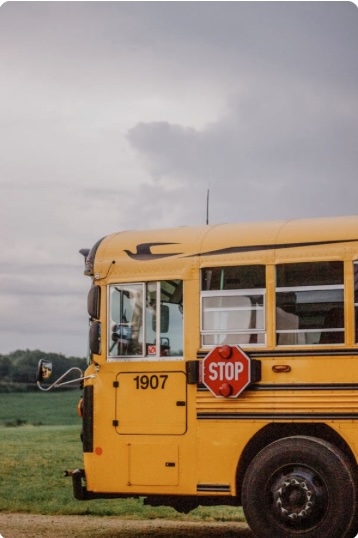
Photo by Damir Spanic on Unsplash


Monday, October 8, 1956, From the Archives

The sun was just breaking through the clouds as we turned off the highway onto the long gravel road to Margery’s house. It had been a long drive to Smith River, and it would be good to get out and stretch my legs.

Mom warned me about the long drive and said I would be the only kid here since it was a school day. Still, I begged to come along to the family gathering to celebrate Auntie Dee’s birthday. I was used to entertaining myself, so being the only kid didn’t worry me.

“Robert wanted me to make sure I got all the information about Mid’s new TV,” Aunt Lila said as Mom steered around the last corner. “He is determined to put an antenna on top of our hill and string the wire all the way to the house.”

“That sounds expensive,” Mom said. “How does he know it will work?”

“He had a guy come out, and he could pick up a station from Eugene at the top of our hill,” Aunt Lila said. “And yes, it is going to be expensive. but David probably knows, after our trip this summer, TV is pretty nice.”

“I don’t know. It just costs a lot of money,” I said from the back seat, remembering the TV sets in some of the motel rooms on the east coast that you had to put dimes or quarters in the box on the side of it to turn on the thing.

“Yes, that is right,” Aunt Lila said. “Ours won’t have a money box on it, but it still will cost a lot of money.”

We pulled into the driveway. There was a large two-story, white farmhouse on the left and a large barn on the right, located about fifty yards from the house. Sparse pasture land behind the barn faded into a series of low sand dunes. I could hear the waves when I opened the car door. The ocean was not far.

The house was packed, and all the women were in the kitchen when we came through the door. 

Auntie Dee hugged me.

“David, what are you doing here today?” she asked. “You should be in school.”

“When he heard we were celebrating your birthday, he begged to come,” Mom said. “I couldn’t refuse.”

With that said, the chatter in the kitchen started, and I headed to the living room, where all the men were in front of the TV set.

“You better watch this, David,” Uncle Rodney said. “The guy pitching is named Larsen, and he might be a cousin of yours.”

“I don’t have any Larsen cousins,” I said. 

“You never know,” Uncle Rodney said. “Your dad doesn’t know that side of his family. Besides, this is the World Series.”

I didn’t know anything about baseball. I had heard about the World Series, but it didn’t mean anything to me. I found a seat and watched for a few minutes.

“You are going to get into trouble for missing school,” Uncle Duke said.

“Mom will write a note and say that I was ill,” I said.

“What does ill mean?” Uncle Rodney asked. “You don’t look very sick to me.”

“That’s what she writes when I stay home to go fishing,” I said. “I don’t need to go to school all the time. I learn faster than the other kids.”

“You skip school to go fishing?” Mid asked.

“I learn a lot when I am fishing,” I said.

“I bet you do,” Mid said. “You keep it up. I like to see a kid who likes to fish.”

I found a seat and watched the game for a couple of minutes. It was really boring. I headed to the barn.

I loved old barns. Every one of them was different but alike in so many ways. Margery, Auntie Dee’s daughter, and Mid had lived here a long time. This barn still had stalls for the workhorses, and they probably hadn’t used horses in the fields since the war.

The harnesses were still hung by the stalls, and unlike Grandpa’s harnesses, these were still soft and well-oiled. They smelled like good leather. 

I looked through the barn and ran a few chickens out of the mangers. I gathered as many eggs as I could hold in the front of my tee shirt and headed to the kitchen.

“Oh, thank you, David,” Margery said when I came through the door with a shirt full of fresh eggs. “I didn’t have time to gather any eggs this morning. You are such a great help.”

Margery unloaded the eggs, and I returned to the barn. After another trip through the barn, I headed out over the sand dune toward the ocean. By the time I got to the top of the hill, I could see the ocean.

“This would be a great place to watch for Russian submarines,” I said as I found a tuff of grass to sit on for a time. After ten or fifteen minutes, I decided that no submarines were nearby, so I returned to the house.

“What have you been up to?” Uncle Rodney asked as I was looking for a place to sit.

“I gathered some eggs from the mangers and looked through the barn,” I said. “Then I walked out to the ocean and watched for Russian submarines for a time.”

“Russian submarines, did you see any?” Uncle Duke asked.

“No, but this would be a good place for them to land,” I said. “There is nobody around to see them for a long way in each direction.”

“You better give up watching for those submarines and watch the end of this ball game,” Mid said. “Your cousin is about ready to pitch a perfect game.”

We all sat and watched the game come to an end. A guy named Yogi ran out and jumped up on the pitcher at the end of the game.

Don Larsen had just pitched a perfect game in game five of the 1956 World Series. The New York Yankees had beat the Brooklyn Dodgers in that game, and they would go on to win the World Series that year. And this was the first sporting event that I ever watched on TV.