I slowed as I made the turn onto Kings Road out of Liberty. Albert had said he had the cow tied to the fence beside the road. I stopped when I came to the cow. Albert was waiting on the other side of the fence.
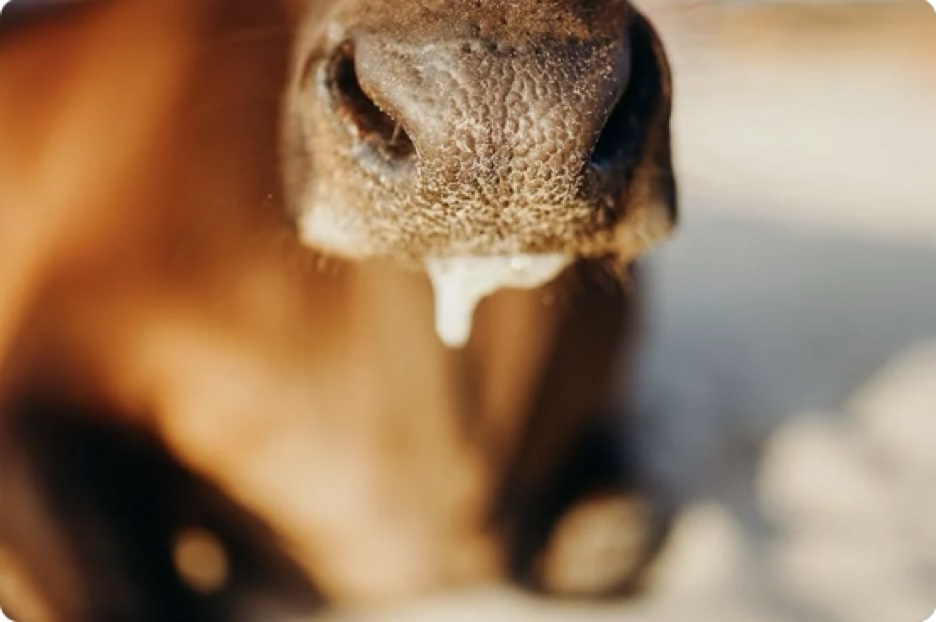
The cow’s nose was a little crusted with blood around the nostrils, and she had some foamy saliva that sometimes reached almost to the ground.
“She looked a lot worse last night,” Albert said as I stepped out of the truck. “I almost called you then, but she seemed okay otherwise. I thought I would give you the night off. Blood was coming from her nose and in that saliva last night.”
Albert held the barbed wire apart with a foot on the lower wire and pulled up on the upper wire. I carefully crawled through the fence.
“I bet that hurts to stretch that wire like that,” I said. “My grandfather would have tanned our hides if we had messed with a fence like that back in the day.” “It’s a lot easier than paying you to drive all the way to the barn and walk back here,” Albert replied.
“Is this cow eating this morning?” I asked.
“Yes, and she was eating last night,” Albert said. “That’s why I figured things would wait till morning.”
“Are the others all okay?” I asked.
“Everyone is normal as can be,” Albert said.
I stuck a thermometer in the cow’s rectum while talking with Albert. Her temperature was just slightly elevated. I put my stethoscope on her chest and listened to both sides.
“She has normal lung sounds and just a slight temperature,” I said as Albert looked over my shoulder the entire time I examined the cow.
I listened to her gut.
“Normal rumen motility and normal gut sounds,” I said. Albert grunted his approval.
“What do you think is going on with her, Doc?” Albert asked.
“I think I better get my nose tongs and get an exam of her mouth and nose,” I replied.
I grabbed her nose with the tongs and tied the tongs to the top of the fence post. The cow was cooperative throughout the process.
I opened her mouth and pulled her tongue from one side to the other. I couldn’t see any problems. There was some dried blood around both nostrils.
“She was bleeding pretty good last night,” Albert said. “I usually don’t check these cows in the middle of the night, but my wife has been worried about this little heifer that will calve in the next couple of weeks. I just came out to check on the heifer when I saw this old girl.”
I untied the rope and lowered the cow’s head. As I released the tongs, I noticed a spot of blood between her eyes. I explored the spot with my fingertip.
“I think I have found her problem,” I said.
I retrieved my clippers from my medical bag and shaved the hair from the spot on the cow’s forehead.
“What’s going on, Doc?” Albert asked as he was trying to see over my shoulder.
“There it is,” I said, pointing to the neat hole. “That’s a bullet wound. By the size of it, probably a twenty-two.”
“She’s been shot?” Albert asked. “Why ain’t she dead, Doc?”
“She’s shot between the eyes,” I said. “That’s too low to hit the braincase.”
“When the mobile slaughter guy comes, that’s where he shoots them,” Albert said. “Those critters just drop like a ton of bricks.”
“Close, but he either shoots a little higher or uses a bigger rifle,” I said. “If you ever have to shoot a cow, the best place is to shoot them in the back of the head. Midline, right on the poll and straight down. You can’t miss the brain that way.”
“How does the mobile slaughter guy do it then?” Albert asked.
“Well, he does it more than once every five years,” I replied. “He is pretty practiced. But if you have to shoot a cow between the eyes, you draw an X from the eyes to the base of her horns or where the horns should be. Then you aim at the center of the X.”
“Then it’s a sure kill if you hit the mark,” Albert said.
“It is easy to miss the mark,” I said. “And then the cow suffers and the people watching suffer. I had to look at a neglected herd of cows once. I went there with a deputy sheriff. There was one cow that was bad enough that we decided it had to be shot. I told the deputy to shoot her in the back of the head. He said he was always told to shoot them between the eyes. He pulled his pistol and shot her between the eyes. She bellowed and shook her head. Blood flew from her nose. He shot her two more times with the same result each time. Then I moved him over behind her head and had him shoot her like I told him to do in the first place. One shot, and she was dead. I think he learned a little that day.”
“So the guy who shot this cow just missed?” Albert asked.
“He was hunting at night,” I said. “You probably almost caught him when you went out to check the cows. He shined a light and shot at the pair of eyes glowing in the beam. So he hit his target. It was just the wrong place to aim. I would guess this old gal made some noise when she was hit. That’s when he knew she wasn’t a deer. He probably left in a hurry.”
“What do we do for her now?” Albert asked.
“I don’t think we have to do much,” I said. “Trying to do anything with the bullet would do more damage than good. I will give her some acting antibiotics, and you will just need to keep an eye on her. As long as she is eating and acting like a cow, we are home free.”
I loaded the cow up with Dual-Pen and puffed some furacin powder into the bullet hole. I felt this was all for the show; she was probably going to heal on her own.
“I have a call out this was on Friday,” I said. “If you have her up in the corral, I’ll stop by and take a quick look at her. My guess, though, is she will be healed by then.”
Albert called the clinic on Thursday evening to say that the cow was doing well, and he didn’t think I needed to stop by to check on her.
The little dog on the table seemed oblivious to his pain. Tuffy’s right femur was severely broken after his adventure in trying to cross the highway. Tuffy was a Hienz 57 crossbreed. He had a little bit of everything, but he didn’t know he wasn’t the biggest and baddest dog on the block.
“Jim, I think Tuffy was pretty lucky,” I said. “Most of these little guys get far worse than just a broken leg when they tangle with a car.”
“Oh, he was lucky, alright,” Jim said. “He almost made it across the road, but the car only gave him a glancing blow. And he has lived up to his name. He hasn’t said a word since it happened.”
“I am going to have to get an x-ray,” I said. “I will sedate Tuffy and give him some stuff to control this pain until I can get him on the surgery table. This won’t take too long. If you could hang around, I can go over the x-rays with you.”
I gave Tuffy a dose of Innovar-Vet. This was combination sedative with fentanyl as the main ingredient. This provided profound enough sedation that I was able to get the X-rays with additional medication.
When I looked at the films, my heart sank. Tuffy’s femur was mostly shattered. Repair would be difficult if I sent him to Dr. Slocum in Eugene. For me, this repair would be close to impossible.
I motioned for Jim to come back to the exam room.
“What did you find, Doc?” Jim asked.
“Tuffy’s femur is shattered,” I replied. “It is probably beyond me being able to repair. Dr. Slocum in Eugene has the equipment to repair it with a bone plate.”
“Doc, I like the heck out of Tuffy,” Jim said. “But I’m just a fisherman, and the season is just getting started. There is no way I can take him to a specialist.”
“That doesn’t leave many options,” I said. “The best thing to do is to amputate the leg.”
Jim stood still, rubbing his jaw a little. He appeared deep in thought. Amputations were always tricky for clients to deal with initially. Maybe I was too casual with the procedure. Dogs were such adaptable creatures. They just wake up after the procedure and get up and go. It might take them a day or two to figure things out, but by the end of a week, you had to count legs to realize they were missing one.
“Do you suppose you could try to fix it, Doc?” Jim finally asked. “If it don’t work, we could always take the leg off then.”
“I do that sometimes, Jim,” I said. “You have to understand that Tuffy’s well-being is the deciding factor in deciding to amputate. That means if I make the decision to amputate in the middle of the repair surgery, it will happen then. If things go bad in the healing process, we won’t put Tuffy through much misery for a low chance of healing.”
“I understand, Doc,” Jim said. “Where do you want me to sign?”
It was a few hours later before I had the time to get Tuffy on the surgery table. He was still pretty well sedated from his earlier Innovar injection.
After anesthesia was induced and the leg prepped and draped, I made an incision on his lateral thigh and made a lateral approach to the femur by separating the muscles.
It was probably an overstatement to say the bone was shattered. Still, the center third of the femur had three large bone fragments and a number of small pieces of bone sort of floating free in the fracture site.
I attached the three large fragments to the proximal shaft with hemi cerclage wires and firmed the structure with two cerclage wires. Then, I seated an intramedullary pin to align the reconstructed proximal shaft with the distal portion of the femur.
The small pieces of cortical bone were discarded. I collected some cancellous bone from the head of the humerus and used it as a bone graft for the larger defects.
Finally, I placed a pin in the distal femur and the greater trochanter for a half Kirschner splint to provide rotational stability and reduce compression forces at the fracture site.
Checking the stability of the fracture site before closure, I was impressed. This might just work, I said to myself.
Tuffy recovered from surgery with no problem. When he went home the following day, he was already touching his foot to the ground. When we took the sutures out at two weeks, he was almost walking on the repaired leg.
“We are pretty pleased with how Tuffy is doing,” Jim said.
“Things look pretty, but we still have a ways to go before we can start celebrating,” I said. If things are going well, we will look at him in another two weeks and remove this extra hardware on the outside of his leg.”
***
Two weeks later, Tuffy was bouncing around on his bad leg. There was a pronounced limp, but that was just because of all the hardware.
“Is he going to have this limp for the rest of his life?” Jim asked.
“No, he is doing great,” I replied. “Once this external splint is removed and we take the pin out in another two to four weeks, he will be back to normal. I sort of wish he had a little more of a limp. He is putting this repair to the test. I will give him a gas with a mask and pull these external pins. He will wake up pretty quick after we are done. You might run some errands or go over to Mollie’s for a cup of coffee. Give me a half an hour and Tuffy will be ready to go.”
I sedated Tuffy and removed his external splint and pins. His leg palpated well, and the fracture site was stable.
Tuffy was bouncing in the kennel when Jim returned.
“He acts like nothing happened,” Jim said.
“It wasn’t much of a procedure,” I said. “Tuffy woke up quickly, and his leg felt fine. I think I will give him another four weeks before I pull the pin out of his leg. I will get an x-ray at that time, just to make sure the bone is healed before I remove the pin.”
***
Tuffy came through the clinic door, as happy as ever. If I didn’t know he had a problem leg, I probably would not think he was limping. He was close to normal on his leg.
“We are really pleased with this job you did on Tuffy, Doc,” Jim said. “For thinking it was over your head, it sure looks like you did a bang-up job.”
“These little dogs make pretty good orthopedic patients,” I said. “They make a surgeon look pretty good sometimes. Today is going to be just like last time. I am going to sedate Tuffy with some gas anesthesia and take a quick x-ray, and if everything looks okay, I will pull his pin. If you drink a large cup of coffee at Mollie’s, he should be ready to go when you get here.”
Tuffy stuck his nose in the anesthesia mask like he knew what was going to happen. The x-ray showed a healed fracture site. I prepped a small area over the head of the pin. I made a small incision over the pin. Grasping the pin with a pin-puller, I made a couple of twists and pulled the pin out. I closed the incision with a couple of buried sutures so it would save Jim from another trip to the clinic for suture removal. I knew that the salmon fishing was getting hot on the coast. He was probably going to be busy in the coming weeks.
Jim was upfront settling up with Sandy when we placed Tuffy in the recovery kennel.
“Tuffy will be awake in no time,” I said as I walked out to talk with Jim.
“Doc, we are catching fish like crazy this year,” Jim said. “I want to give you and Sandy a couple of seats on my boat. We have been catching boat limits on every trip. I don’t know your schedule, but this Saturday would be good for me.”
“That sounds like fun,” I said. “Sandy usually doesn’t get to go fishing, so she will enjoy it. You don’t have to give us the trip. I will gladly pay your fee.”
“No, Doc,” Jim said. “You saved us a bunch over going to a specialist. And Tuffy is doing so well. I just want to do this for you, sort of a thank you tip.”
***
Saturday was a blustery day. It rained all the way on our drive over to Newport.
“That ocean looks rough today,” I said, looking at the bar when we pulled up to Jim’s boat. “Are you sure you want to do this?”
“We came this far. We may as well go fishing,” Sandy said.
Jim was on the dock beside his boat. He was talking with a couple of others who will be fishing with us this morning.
“The Coast Guard has the bar closed due to the rough ocean,” Jim said. “But the bay is full of silvers right now. We might have better fishing in the bay anyway.”
So we loaded into the boat and planned to be fishing in the bay.
“Doc, we are going catch a lot of silvers today, but I would like to rig you up for a chinook,” Jim said as he and his boat hand were getting all the poles rigged. “There aren’t as many chinook in the bay, but I want to catch a couple. If that’s alright with you?”
We got the lines in the water and started trolling towards the mouth of the river. As we approached the bar, the waves were huge. I was glad we were not crossing the bar today.
Sandy hooked a fish. She reeled it in like a pro, and Jim netted it and gave her a high five. They were all smiles as Jim added the fish to the fish box.
We made a turn and started back up the river. The rain was starting to get heavy. I looked at Sandy to make sure she was still game. She smiled.
Sandy hooked another fish.
“This is getting habit-forming,” Jim said as he returned with the net.
“Do you want to change out your rigging?” Jim asked me as he put Sandy’s second fish in the fish box.
“I’m okay with staying with this rigging,” I said. “If we can hook up with a chinook, everyone will be happy.”
“We can party fish today,” Jim said. “Sandy has her limit, but she can still fish. We will just put any more of her fish on your tag.”
Sandy hooked another fish. Now, even the other guys in the boat were getting tired of this.
Jim netted the fish, put it in the fish box, and chuckled a bit.
We made another turn and started down the bay toward the ocean.
Sandy hooked another fish. This was getting tiring, but she seemed happy as a clam.
“Do you guys want her to keep fishing?” Jim asked the other guys on the boat. “We can pass you her rod when she hooks up on a fish.”
Finally, one of the other guys caught a fish. And then Sandy hooked another fish and handed her rod to one guy without a fish (she had already caught mine).
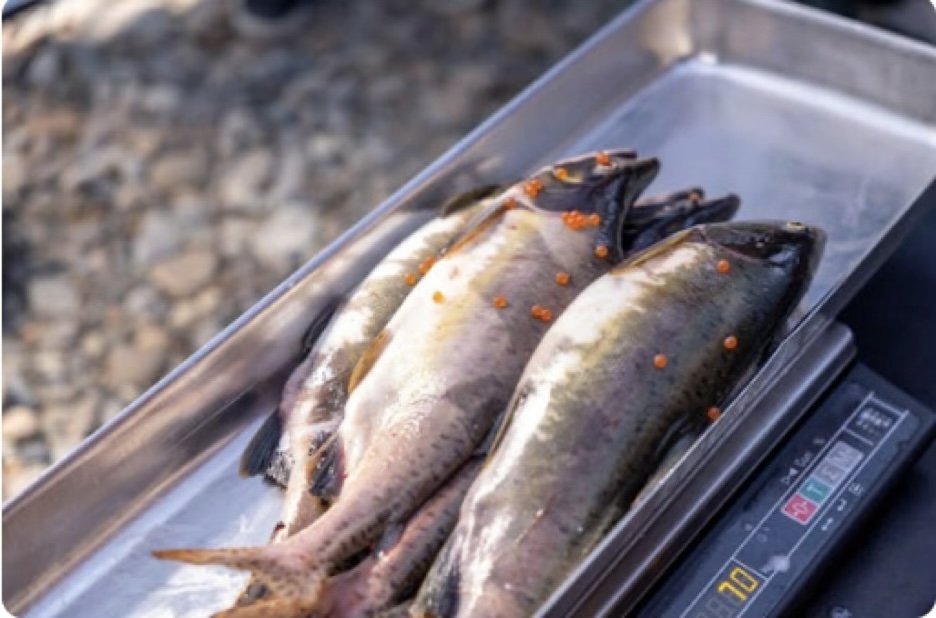
When the boat came into the dock, I sorted out four of the best fish from the fish box and laid them out on the dock.
“Doc, I’m sorry that I let Sandy out-fish you today,” Jim said. “Maybe we can do this again when the weather improves, and you can have better luck.”
“That’s okay, Jim,” I said. “I made the choice; now I have to live with the results. The only problem is I will have to live with those results for the rest of my life.”
We tipped the deck hand and I had to twist Jim’s arm to get him to take a tip. We loaded the fish into our ice chest and headed for home. It was a quiet ride.
It was the best afternoon we had seen in some time. Colorado’s weather had taken a little getting used to, and the sunshine and warm temperatures this afternoon were a welcome relief.
Dr. Bass was shuffling papers at the podium in the auditorium as the class took our seats. Seats were not assigned, but as we started the spring quarter of our freshman year, everyone sat in the same seat that we started with in the fall.
“Today, we are going to dispense with any lecture, and you guys are going to go down to the Student Health Center and get your rabies vaccines. Veterinarians are high on the list of people exposed to the rabies virus in this country. This new vaccine, grown on duck eggs, provides excellent preexposure protection. It is given in three doses, three weeks apart. So, you can expect some escape from the classroom a couple more times this spring. There is no cost; they are using you guys as guinea pigs. But it is wise to take advantage of the opportunity.”
So we all marched down to the clinic in a formation that would make a drill sergeant shudder. There were eighty-four of us, so the line took a bit.
***
The summer following my sophomore year of Veterinary school, I landed a job working in CSU Veterinary Hospital’s necropsy room. I spent the entire summer immersed in pathology. The work provided much-needed income but also provided me with the best learning experience I could have hoped to have.
I became somewhat of an expert at removing brains. I used a cleaver and could take a brain out of any animal in record time.
It was nearly mid-summer when Dr. Norriden came out on the necropsy floor. I pulled us all together for a little lecture. This was unusual for him.
“They are in the process of bringing cow around from the clinic shortly,” Dr. Norriden said. “This cow was treated by our ambulatory service about ten days ago. She was not diagnosed on the farm. On their initial exam, the cow had difficulty eating. They treated her several times, and things only got worse. They hospitalized her three days ago. In the hospital, they diagnosed a neurological disease, probably encephalitis.”
“Now, based on what I have just told you, are there any red flags here?” Dr. Norriden asked.
Bob, the pathology resident, looked around, waiting for one of us technicians to say something.
“Maybe rabies,” I said with little confidence in my choice.
“That’s the big thing,” Dr. Norriden said. “Anytime you deal with an undiagnosed neurological case, you should have rabies at the top of your list. You won’t see it often in your career, rabies is almost rare in our pet population due to the vaccination requirements. But this case is a good example. We will have a real mess if this cow is positive for rabies. The ambulatory crew and the hospital failed to have it on their list of possibilities. We have students who had their arms down this cow’s throat. When you take this brain out, Larsen, you work with your mouth closed. That is probably a good idea for everybody.”
It was not long before the cow was delivered to the necropsy room. Bob quickly examined the head and removed the tongue along with the esophagus and larynx. Then he severed the head and brought it over to the large chopping block for me to remove the brain.
I skinned the upper part of the head and then started removing the bone surrounding the brain. It was not long before I had the brain case exposed. Then, with careful strokes of the cleaver, I shaved the bone away from the underlying brain. A little work with scissors and I had the dura opened, and the brain was carefully lifted out of the brain case.
Dr. Norrdin was beside me as I lifted the brain. He took it from my gloved hands and disappeared into his lab/office.
The rest of the necropsy was unremarkable. The problem was in the central nervous system. Getting a good fixed slide under the microscope would take a day or two of processing. Then, if this was rabies, Dr. Norrdin could make the diagnosis by finding Negri Bodies in pyramidal cells of the hippocampus. Negri bodies are round or oval, sharply demarcated, eosinophilic inclusions within the cytoplasm of the infected neurons. They are considered the hallmark of rabies.
The following afternoon, Dr. Norrdin had the diagnosis. The cow was positive for rabies.
“The good thing is all of you guys have had your rabies vaccines, so you only need one booster,” Dr. Norrdin said. “Put this case in your memory bank. It will be unusual to see another one like this, but keep it in mind.”
***
“What do you think is going on, Doc?” Larry asked as we stood over a dead cow in his pasture.
“I don’t know,” I said. “But we will open her up and take a look.”
I had only been out of school for a few months, but my summer in the necropsy room gave me total confidence in doing a necropsy in the pasture.
Larry had a lot of questions. This was a big investment lying dead in front of us. We stood and talked as I sharpened my knife with a whetstone. By the time we were done talking, my knife was sharper than ever.
I leaned over the cow and inserted the knife under her skin in front of her udder. The knife slid through her skin with no resistance as I ran it forward. My stoke was firm and fast. The knife was so sharp it flew through the skin, and as my arm completed the stroke, it flew out of the skin and buried in the muscle of my lower leg.
“That was smart,” I said.
I took a moment and wrapped the wound on my leg. It was bleeding profusely. Then, I returned to my work on the cow. Once I had her belly and chest opened, the diagnosis was easy. A wire poked out of her reticulum, through her diaphragm, and into her heart.
“Hardware disease,” I said as I pulled the wire out to show Larry.
We had a brief discussion, but I cut it short as I could hear the blood slouching in my boot.
“You can come to the office tomorrow, and I will review everything with you,” I said. “We will need to get some magnets for you for the rest of your cows. But, right now, I think I need to get my leg to the Doctor.”
The nurse at the Doctor’s office got me right into the treatment room when she heard the blood sloshing in my boot with every step.
The Doctor was quick to get the wound taken care of, and he chuckled at my story about how my knife came to be buried in my leg.
“There is one thing that worries me a little, Doc,” I said. “A little over a year ago, I used this knife to do a necropsy on a cow with rabies. This knife has been washed, but it has not been through an autoclave.”
“I don’t know,” the Doctor said. “You wouldn’t think the virus would survive that long, would you?”
We decided probably not, and besides, I had been vaccinated.
And I lived.
***
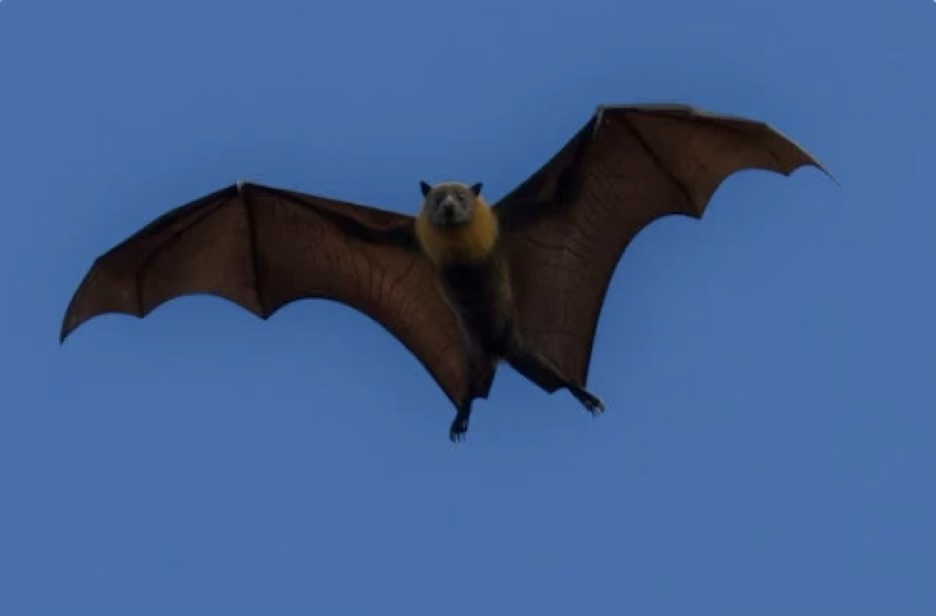
In Oregon, the reservoir for the rabies virus is in the bat population. Of the bats that are tested for rabies in Oregon, about ten percent are positive for rabies.
That does not reflect the incidence of the virus in the bat population because the only bats tested are those submitted by people of veterinarians.
In the early 1970s, rabies was significantly increased across the state, with several cases in pet dogs. This led the state to require rabies vaccination of dogs and to recommend vaccination for cats.
We held rabies clinics in public buildings for a few years. Rabies vaccines were given at near cost. I donated any profits to the humane society for providing labor in writing certificates. They were grueling events. I finally changed to doing the rabies vaccines in the clinic for a week at a reduced cost. That spread the numbers out, so it was such a pain.
Those vaccines solved the problem in the dog population and helped with the cat, but obviously, they did nothing for the bats.
As time passed, public health officials became strict about how they handled exposures or possible exposures.
Because a bat bite could be difficult to see or even feel in some cases, the rule evolved that a bat in a house with sleeping children was considered to have exposed those children to rabies unless the bat was captured and tested negative. The same went for pets in a house with a bat for any period of time.
At first, it was recommended that unvaccinated pets in a house with a bat be euthanized. The other option was to quarantine the pet for six. Vaccinated pets could be given a booster vaccine for rabies, and they were considered okay.
It was about this time that I developed the philosophy that the rabies vaccine probably protected the pet from the system more than the disease.
In my years in Sweet Home, I had several rabid bats. One was found flopping around in the bathtub. Several were caught outside by cats, and a couple were captured flying around in the house.
In the 1970s and most of the 1980s, little attention was given to the finding of a rabid bat. But then there was a change in the state public health veterinarian. I don’t know if it was just that we were going follow the rules now or if it was a cover-your-butt type of thing, but the came about strict enforcement of the rules.
Sleeping children found in a house with a bat were considered exposed to rabies if the bat tested positive for the virus or if the bat escaped and was not tested. Pets were in the same boat.
Vaccinated pets were required to get a booster vaccination. Unvaccinated pets were scheduled for euthanasia. Their only other option was a six-month quarantine with vaccination at the end of the quarantine period. We were not allowed to vaccinate before the end of the quarantine period because the could influence the incubation period, which with rabies was known to be as long as six months.
Euthanasia was strongly recommended the the quarantine rules were arduous enough to make many people to go along with that recommendation.
The reason for the increase in case follow-up was that the consequences for allowing an exposed pet to slip through the cracks would be the exposure of the owner and the public to a rabid animal and a possible human death from rabies.
***
“How long was the bat in the house?” I asked Lynn.
“We are not sure, but at least three days,” Lynn replied. “We saw it on Friday and then couldn’t find it. It finally came out on Monday. That is when Mike was able to swat it out of the air.”
“Are you sure you want to send this in?” I asked. “If it is positive for rabies, the public health folks will get involved. Boo’s rabies vaccine is not current. They will want to put him to sleep.”
“That doesn’t sound good, but I think we need to know,” Lynn said.
“Was there any human exposure?” I asked. “Did you or Mike handle this after it was swatted out of the air?”
“No, I just scooped it into this jar, and here we are,” Lynn said.
So, I boxed up the dead bat and sent it to the diagnostic lab at the vet school in Corvallis via our courier service.
Results came quickly, the next day in fact. The bat was positive for rabies. Within a few hours, I had a call from the state public health veterinarian.
“I have a report here that you submitted a bat for rabies testing, and the test was positive,” Dr. Van said.
“Yes, I got those results a little earlier today,” I said.
“Were any people exposed and kids in the house?” Dr. Van asked.
“No kids, the adults didn’t handle the bat,” I replied.
“What about pets?” Dr. Van asked. “And how long was the bat in the house?”
“There is one cat in the house, and the bat was in the house for at least three days,” I replied. “The cat’s rabies vaccine is a couple years out of date. I was hoping that a booster at this time would be adequate.”
“I’m sorry, but if the bat was in the house for three days, the chance of exposure for the cat is very high,” Dr. Van said. “A booster vaccine at this time would not be approved. Our recommendation is euthanasia for the cat.”
“I am pretty sure that this owner is not going to want to go that route,” I replied. “Is there an alternative for quarantine?”
“Yes, if they can do a six-month quarantine where the cat doesn’t leave the house, the rules allow that,” Dr. Van said. “Enforcement falls on your shoulders, Dr. Larsen. At the end of quarantine, you need to vaccinate the cat for rabies and send me a report. Any failure will result in forced euthanasia.”
“I think that is doable,” I said. “I will let the owner know.
So Lynn and Boo said through the quarantine, and I submitted the report along with a copy of the rabies certificate to Dr. Van.
***
Fast forward to the present day.
Last year, my aortic heart valve went gunny bag. We had been watching it for the last six years, but it went from bad to worse in an acute episode. The Doctor thought I had had a heart attack, but it was just the heart valve.
During the two months that I was waiting for the replacement procedure, I had a conference with the main heart surgeon. He was explaining the procedure to me and the discussion involved the making of the new valve.
“This new valve is made from the pericardium of a cow,” the Doctor said.
“So, what cat you tell me about the cow?” I asked.
“What do you mean?” the Doctor asked.
“What about the history of the cow?” I asked. “I mean, I have known cows that wouldn’t their parts in my body.”
“I don’t understand your concern,” the Doctor said.
“If you look at my record, I’m a retired veterinarian, I worry about things like the rabies virus, among others,” I said. “A number of years ago, maybe twenty, a lady in Idaho died of rabies following a corneal transplant. When they investigated, they found the donor was a forest ranger who had died from an undiagnosed neurological disease.”
“I see,” the Doctor said. “All I can tell you is the tissue is treated in a manner that kills all the viruses and bacteria.”
“That sounds a little reassuring, but one day, you are going to have to worry about mad cow disease and those nasty prions that you can’t destroy, even with cremation,” I said.
“Thankfully, that is not a problem yet,” the Doctor said.