Bill and Mary Jane

D. E. Larsen, DVM

I turned off of McDowell Creek road into the barnyard. I could see only a few cows in the holding pen and a couple of guys heading up the hill to the upper pasture. I looked at the clock to make sure I wasn’t early for the appointment to due the fall pregnancy exams on the herd.

Bill and Mary Jane comes out of the barn to greet me.

“I’m am sorry, Doc,” Bill says. “The boys are having a heck of a time getting the cows down. They smell a rat, I guess.”

“We could reschedule for another day,” I said. “I figured this will take the better part of the morning, and I have some afternoon work to do.”

“I think they will get the rest of them on this trip up the hill,” Bill said. “Maybe we could take you over to look through one of the chicken houses if that would interest you.”

“I have a lunch planned for everyone when the work is done,” Mary Jane said. “That should get you back to the office on schedule.”

“Okay, you twisted my arm just hard enough,” I said. “And yes, I would love to look through one of your chicken houses.”

“We don’t allow many people into these houses,” Bill explained. “It is upsetting to the birds when a stranger shows up. We try to have the same worker to handle each house. That way, there is no upheaval. We will be okay today if we just step through the door and stand and look.”

We step inside. This is a sizeable open chicken house, constructed of steel, it reminded me of the Quonset huts on the Army bases in Korea. These were about 30 feet wide and over 100 feet long. It was all open area on the inside except for a small room for feed and supply storage. The chickens ran free. And there must have been a thousand birds in this house.

“The company owns the birds,” Bill said. “They supply everything, the feed and the medical care. We just supply the house and labor. We get paid when they go to the market. It is to our benefit to have rapid growth and good survival. But if these birds grow to fast, they have heart problems, their hearts sort of explodes, sort of a heart attack, I guess.”

“Chicken medicine is a real specialty in veterinary medicine,” I said. “You just about have to go to vet school in Georgia to get any real education in chicken medicine. Just like swine medicine, you have to go to Missouri or Kansas to get much in the way of swine medicine.”

“If we have any losses, the veterinarian comes by and autopsies a few birds and gives us the answer and directions on what to do,” Bill says.

“Yes, chicken medicine is population medicine,” I said. “I had a virology professor who went to vet school in Georgia. He told a story of his diagnostic lab rotation during his senior year. A group of 4 students would spend a couple of weeks running the diagnostic lab. People would bring in several birds, they would have to fill out a questionnaire, then the students would euthanize the birds and do a necropsy, that way they could come up with a flock diagnosis. Necropsy is the veterinary term for autopsy. His group came up with a plan to finish the work faster so they could have time for a morning cup of coffee. One guy would check in the birds, pass them to the back, and then fill out the paperwork. So by the time the paperwork was done, the birds were euthanized, and the necropsies were complete. This one day a lady brings in a big rooster. The guy up front passes the rooster to the back and the group started the process back there. The guy up front starts going through the paperwork. “What signs of disease do you see in your birds?” he asks. “He has diarrhea,” the lady replies. Noticing this comment, he asks, “How many birds are in your flock?” “One,” replies the lady.” 

“Ops,” Bill said.

“Let’s go see if they are ready to get to work on the cows,” Mary Jane says.

With the cows lined up in the crowding ally and a crew of several young guys pushing the cows, the pregnancy exams go pretty fast. The pregnancies are sort of spread out more than I liked. They ran from 40 days to 5 or 6 months of pregnancy. 

The good thing was that almost all the cows were pregnant. They only had one open cow. The spread was something I would need to talk with Bill about. He was going to be delivering calves for over 4 months instead of the month and a half that I preferred. But getting there was a multi-year project that required increasing your replacement heifer numbers and doing some selective culling. That discussion would need a couple of set down sessions.

The best part of the day was lunch. When the herd was done, we all went to the house. I spent the most time at the sink and was able to get myself mostly clean. Only a small manure stain on my shirt at the left shoulder remained. Had I known lunch was on schedule, I would have brought a shirt to wear for lunch.

Mary Jane set a table that reminded me of the lunches during silo filling when I was young. They resembled Thanksgiving dinner more than lunch. We had roast beef, potatoes and gravy, veggies, and a salad. And then to top it off, apple pie with a scoop of ice cream.

We had plenty of time to talk following lunch. I told a bit about my early days of growing up in Coos County, and how many farms were located in the little valleys. 

“When I was a kid here, the school bus was always full,” Bill said. “There were family farms on the road all the way to town. Those are all gone today.”

“It is interesting, I have been transcribing the journals of my Great Grandfather and my Great Uncle,” I said. “My Great Grandfather talks about selling a bull for 11 cents a pound in 1890. And my Great Uncle sold a bunch of steers for 54 cents a pound in 1952. It just seems like those were pretty good prices for those days. Today, a young person cannot buy a ranch and make a go of it.”

“I think it is pretty sad,” Bill said. “The loss of the family farm has been a major change in society today.”

When the talk was over, I gathered my things, thanked Mary Jane for the super lunch, and headed back to the office to finish my day.

The next morning, I noticed Bill standing at the front counter. He looked a little agitated as he was waiting for his turn to talk with Sandy. I went out and shook his hand.

“Doc, I have got to show you this,” Bill said. “I have been up most of the night after we discussed your Great Uncle’s journals.”

We moved into an exam room, and Bill laid out a crumpled piece of paper that he had been using for a scratchpad.

“If your Great Grandfather sold a bull for 11 cents a pound in 1890,” Bill started, his hand shaking as he pointed to the paper. “The closest figure I could find was a Model T in 1908, it cost $850. Figuring 1100 pounds for a bull approaching 2 years of age, he would have needed 7 of those bulls to buy that car.”

“That’s interesting,” I said.

“Oh, there is more here,” Bill continued. “In 1952, my father went down here to Lebanon and bought the best, top of the line, Buick that they had on the lot. He paid $3200 for that car. If your Great Uncle was selling steers for 54 cents a pound in 1952, figuring those steers were 500 pounds, he would have had to have 12 of those steers to buy that car.”

“I am betting that you are trying to say things have changed a little,” I said.

“Changed a whole lot, I would say,” Bill said. “I could sell every darn animal I have out there, and I wouldn’t come close to being able to buy a decent car.”

“Those are interesting figures, they show the status of the farmer in the country today,” I said. “When I was in dairy practice in Enumclaw, I was told that the guy who delivered milk to the store, got more out of that gallon of milk than the dairy farmer.”

“It is no wonder that a guy goes broke ranching today,” Bill said.

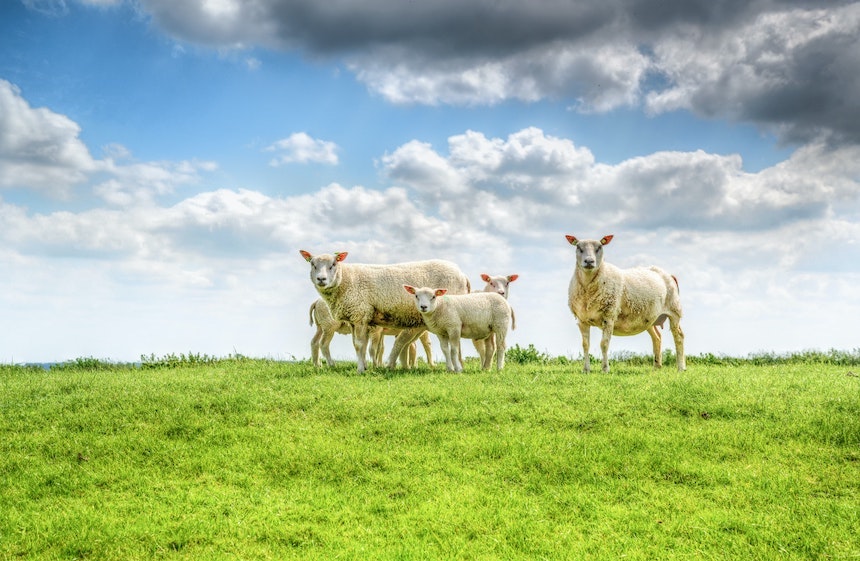
Photo by William Moreland on Unsplash

The Old Sickle Mower

D. E. Larsen, DVM

I hated this hole. I was trying to visualize the perfect shot as I placed my ball on the tee. Standing back behind the ball, I took a deep breath. Even with my slice, I could play this hole. I never understood why it bothered me so.

The 8th hole at Pineway Golf Course was straight away and a little downhill, especially on the second shot. The green was elevated and small, but I could play this hole. I just needed a good tee shot. I needed to block those trees out of my mind.

I addressed the ball, checked my alignment, and started my backswing. Then I swung as hard as I could. The ball flew off the tee, cleared the close trees, and faded to the right around the grove of oaks. I was in great shape, just right of the fairway, but only a six iron to the green.

My Thursday afternoon golf game was a closely guarded escape for me. The phone never rang on the golf course. I was never a great player, but I could beat anyone on any one hole. I loved this game, I just wished I could play well enough to beat my Father someday.

I lined up my second shot and set my six iron on the ground behind the ball. I took a peek at my target, and I swung hard. Typically, a large divot flew in the air. The ball was high in the air when I locked onto it visually. It was right on target, high in the air, it should land softly on the green. 

I followed the ball carefully, it landed on the green, left of center, one small bounce and rolled toward the pin on the left-back of the green. I came to rest two feet short of the pin. 

My heart raced, I slammed the six iron back into my bag and started toward the green. Jim was just making his second shot from the middle of the fairway. Partners in a men’s club game, he would be happy that I had a short birdie putt. Jim’s ball came up just short of the green. Hopefully, he could get up and down for par, making my birdie putt a lot less stressful.

I was just setting my golf bag down on the edge of the green when I saw the golf cart speeding down the 9th fairway, heading right for us. Moments later, Woodberry pulls up beside in the cart.

“You have an emergency, Doc,” Woodberry said. “Bill called and said he has a cow who cut her tail off on a sickle mower. He thinks she is bleeding to death.”

“The tail is a long way from the heart,” I said. “All bleeding stops, eventually.”

“Get in, I told the guy I would send you as soon as I could,” Woodberry said, apparently not impressed with my words of wisdom.

“Woodberry, do you how long it has been since I have had a 2-foot putt of a birdie on this hole?” I said.

“Get in, Jim will give you the putt, we have to go,” Woodberry said.

“You can keep my ball, Jim,” I said as I loaded my bag on the cart.

At least Bill’s place was not far and on the way home. I threw my golf bag into the back seat in the truck and jumped in, not bothering to change my golf shoes. That would give Bill the impression that I had hurried.

I could see both Bill and his wife out at the chute. They had the cow in the chute already. I didn’t see any blood squirting, but the cow’s hind legs were covered in blood, and Bill’s teeshirt and pants were also soaked.

“I am glad they could get you,” Bill said as I got out of the truck. “Sorry I had to ruin your game, but I was running these cows out of the barn, and I had this damn tractor parked here with the sickle bar up. This gal must have switched her tail at the wrong time, and that sickle bar just sliced it off in an instant.”

I walked over and looked at what was left of the tail. It was a clean cut, about a foot and a half from the base of the tail. 

“I didn’t know how long you were going to be,” Bill said. “I figured I better get the bleeding under control, that hose clamp a little way up from the cut end did the trick. I just screwed it down until the bleeding stopped.”

“I see, that was pretty good thinking,” I said. “I will close up this wound, and we will be able to remove the clamp.”

I shaved the hair for about 6 inches above the severed end of the tail. Then I gave her an epidural injection of Lidocaine for anesthesia. After scrubbing the wound, I made a bivalve incision of the end of the tail, so I would have two flaps to suture over the cut end. Then I removed enough bone so I could get the skin to close over the bone with no tension.

“I’m going to have you take that clamp off now,” I said. “I will need some bleeding to make sure I can get all the vessels ligated.”

Bill removed the clamp with the screwdriver that was still in his pocket. The blood started squirting. I was able to get a hemostat on the main arteries, and I ligated those, check again, there was just minor bleeding evident now. Suturing the end of the tail with number 2 Dexon, made for a secure closure, and I would not have to come back to take the sutures out. I sprayed her well for flies, and we turned her out. 

“That should heal with no problems,” I said. “But keep an eye on it and let me know if I need to recheck her. The stitches will dissolve, so we don’t have to take those out.”

“I am sure glad you could get here so quick,” Bill said. “And, I apologize again for ruining your game.”

“The worst thing about that is I left a 2-foot putt for a birdie on the 8th hole,” I said. “I guess I will just have to add that onto your bill.”

“Well, damn! Now I am sorry, I hear a lot of guys complaining about that hole,” Bill said. “I never play the game myself.”

Photo by Timothy Eberly on Unsplash

On the Wheel with a Broken Wheel

D. E. Larsen, DVM

Pat was standing at the counter, clutching a shoebox in her hands.

“I know we impose on your generosity, Dr. Larsen,” she said. “But the class is heartbroken over Blossom. Can you get a look at her?”

“Don’t feel like you’re imposing, Pat,” I said. “I see all the classroom pets in Sweet Home at no charge.”

“I think this is a major injury,” Pat said. “You are maybe not going to be able to fix it.”

“Let’s get a look at Blossom,” I said as I led Pat into the exam room.

I opened the shoebox, and Blossom was huddled in the corner of the box. She was almost in a ball, and her fur was fluffed up. This was definitely a hamster who was not feeling well.

I started to reach into the box to pick Blossom up, so I could get a better look at her.

“Oh, be careful, Dr. Larsen,” Pat said, reaching out for my forearm. “She bites at times, especially if she is unhappy.”

I put my hand over her body, securing her head between my thumb and index finger. I carefully lifted her from the box. As I turned her over, her injury was visible. She had a fracture of her right tibia.

“Is it bad?” Pat asked. She had probably not been able to bring herself to look at the injury.

“Blossom has a fracture of her tibia on her right hind leg,” I said. “I am not sure that it is fixable. There is a lot of displacement.”

“We knew it was bad,” Pat said. “The class is very upset. It was that way when we came to school this morning. If there is anything that can be done for her, you would be their hero.”

“I think I am hearing that replacing her might not be an option,” I said. “Or at least, not if there is any chance of fixing her.”

“I told the class that I was sure you would do everything in your power to fix her, but we might have to talk about what to do if she can’t be fixed,” Pat said.

I looked at Blossom closely and mulled over repair options in my mind. I could possibly fashion a Thomas Splint that would work. That would be difficult to manage in a classroom pet. It would be easy to amputate the lower leg. She might do surprisingly well on three legs, but the classroom would have some difficulty with the decision. Just maybe, I could get an intramedullary pin into this bone. I could attempt to pin it, and if unsuccessful, I could go ahead and amputate the lower leg at the fracture site.

“Okay, Pat, here is my plan,” I said. “I don’t think that trying to splint this leg is a good option. There is a chance that I could repair this fracture with a pin on the inside of the bone. I am not sure about that, my experience base for repairing hamster fractures is zero. But I think I should try to pin this fracture. If I cannot get that done, I will amputate the leg at the fracture site. Blossom needs to stay overnight. That means you will need to bring her cage down, so we are not tearing the clinic apart tomorrow, looking for a fugitive hamster. You also need to prepare your class for the possibility of Blossom losing her leg, She will do well with 3 legs. It is just that some kids might be upset with that option.”

“Okay, I can bring the cage down after school,” Pat said. “We have a cage that the kids take her home in on the weekends.”

“That will be good,” I said. “I have some time this afternoon. We will do this then. I may well be done by the time you get back here with the cage.”  

I put Blossom entirely into a large dog facemask to induce anesthesia. When she was asleep, we secured her head in the smallest cat facemask. This allowed for reasonable control of anesthesia and access to the fracture site.

After prepping the leg, I covered the foot with a sterile gauze. Securing it with a couple of purse-string like sutures around the top and bottom of the foot.

I made a short incision over the fracture site on the inside of the leg. Bending the leg, I could expose both ends of the fractured tibia. Looking at the size of the medullary cavity, I selected a 20 gauge needle to use as an intramedullary pin.

I snipped off the sharp point on the aluminum needle. Then I inserted the blunt needle into the bone of the distal fracture fragment. This needle fits perfectly. And without any pressure applied, I measured the depth of insertion to be 3 mm. My plan was to bury this IM pin. This was something I had done in repairing fractures of the radius in tiny dogs.

I snipped the needle hub off and inserted the needle shaft into the proximal fracture segment. When it was fully seated in the upper bone fragment, I measured and snipped the needle to leave just over 2 mm of the exposed needle shaft.

Now it was a simple task to toggle this exposed needle shaft into the distal fragment. It required a little stretch, but it popped into the distal fragment quickly. The bone ends slid together better than expected. This proved to be an excellent repair. I closed the incision with a couple of sutures of 5-0 Dexon in the subcutaneous tissues and then closed the skin a couple of subcuticular stitches with the same material.

Blossom was placed in her shoebox with a warm towel for her to recover. By the time Pat had returned with the cage, Blossom was up and running around like nothing was wrong with her leg.

“Oh my, she acts like nothing is wrong,” Pat said as we moved Blossom into her larger cage.

“So, I think Blossom is doing well enough that you can take her home tonight,” I said. “You need to drop her by tomorrow just so I can check her over really quick. I want to make sure she is still using the leg and that the incision is okay.”

“Do I need to do anything for her?” Pat asked.

“I would bed her down with a fluffy towel for the night,” I said. “Other than that, I don’t think we need to do anything. I think we are home free.”

“I want to thank you, Dr. Larsen, from the bottom of my heart,” Pat said. “And I am sure the class will be thankful also.

The following week Blossom was in for her checkup with the entire class. We went into the surgery room, where there was room for the group. Blossom was the star of the show, and her broken wheel was healing well.

“She is back to running on her hamster wheel, and she doesn’t even limp when she runs,” one of the little girls said.

Photo by Frances Goldberg on Unsplash