Colleagues, From the Archives

D. E. Larsen, DVM

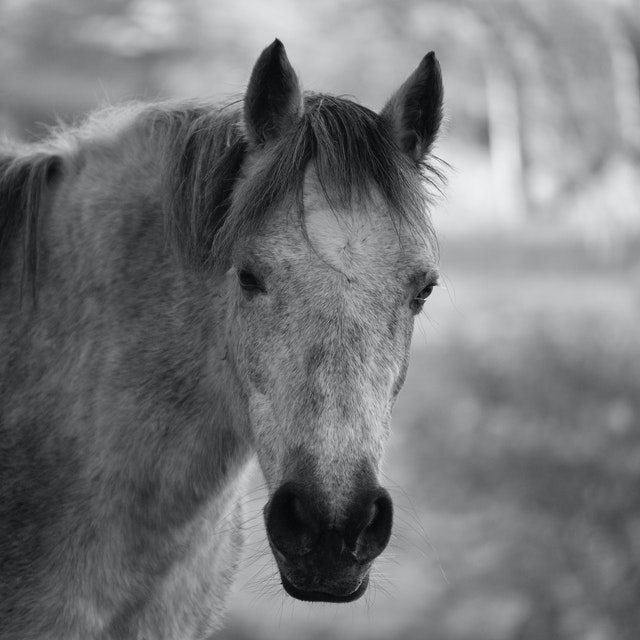
I looked at the large black tumor on Dr. Walker’s old gray mare as I wrapped the tail. It was a good thing that the horse was gentle. There were no facilities, and I was at considerable risk, standing directly behind the mare. This tumor was the size of a small egg and located on the right side of her vulva. The lucky thing was it off to the side enough that I could remove it without disrupting the structure of the vulva.

After doing an epidural for anesthesia, I scrubbed the area and soaked it with Betadine. I had the tail tied to the side with a twin around the mare’s neck. I palpated the tumor to make sure is as superficial as I suspected. 

Removing the tumor was easy. I made a wide elliptical incision and took a sizable, deep margin. I laid the tumor on the surgery tray and closed the wound with two layers.

“I will send this in just to check on its malignancy,” I said. “There is probably not much else we can do, but it will be good for you to know.”

“I know,” Dr. Walker said. “She is an old mare, but we love her.”

“This is a melanoma, for sure,” I said. “Black tumor on an old gray horse is almost a description of a melanoma. I was always taught to cut early, cut wide, and cut deep. In this business, the initial surgery is probably our only treatment for these old horses.”

“How much do we owe you?” Dr. Walker asked.

“No charge,” I said. “I never charge a colleague, something I learned from Dr. Craig.”

“That’s not fair, I can’t make this much up to you,” Dr. Walker said.

“My goal in life is to have others owe me,” I said. “That way, I know that I have been doing good in my life. I have no expectation of repayment.”

The tumor was a melanoma, but not highly malignant. It would not have any influence on the mare’s longevity.

Some months later, Althea brought in a feral tomcat with a rotten mouth. It was a Friday evening, just after we closed.

The tomcat growled and hissed when I looked into the carrier. I could see raw tissue under his tongue and in the back of his mouth.

“How long have you had this guy, Althea?” I asked. “This is a bad case of stomatitis, and he has some teeth about ready to fall out.”

“I have been putting out some canned food for him for several weeks,” Althea said. “His mouth is very painful when he eats. It has taken me this long to get him into a carrier.”

“Maybe I will try to get an injection into him for tonight and have you bring him back in the morning,” I said. “I am not sure I want to keep him in the clinic overnight.”

Feline Leukemia Virus infection was prevalent in Sweet Home. This kind of mouth was one of the presentations we see in cats with FeLV.

“Do you think you can do that without getting bit?” Althea asked.

“We will find out,” I said as I worked a snare around the tom’s neck.

Once I had him snared, I pulled him out of the carrier and gave him an injection of Amoxicillin under his skin.

As I directed his head back into the carrier, he exploded. Up and down and around, he bounced on the end of the snare. When he calmed for a second, I grabbed him by the back of the neck with my left hand to pin him to the exam table. 

Now, the fight was on. There was no way he was going back in that carrier, and there was no way I could let go of my grip on him. The ketamine to sedate him was in the lockbox. I called Sandy to get the key from my pocket and get me a dose of ketamine. 

When she had a dose in a syringe, I let go of the snare for a second to give the injection. Ketamine burns when it is given in the muscle. Before I could drop the syringe and grab the snare again, this old tomcat turned and bit me on my index finger’s knuckle on my left hand. He held onto the bite, just to let me know that he had won the battle. I waited, thinking that one bite wound was better than three. Finally, the ketamine began to soak it. I could feel his muscles relax, and the pupils of his eyes dilated widely.

I carefully removed the rotten canine tooth, his right fang, from the wound on my left hand.

“It looks like I am going to hang onto this guy for the next 10 days,” I said to Althea. “I doubt if he has ever had a rabies vaccination, and if you take him home, he will be gone at the first opportunity.”

“Do you think he is going to be okay?” Althea asked as I started to tend to the bite wound he had just inflicted on my left hand.

“My guess is he is a feline leukemia cat,” I said. “That probably means that he is not going to do well. But I can check him out in the morning. Right now, I am going to take care of this hand. I will give you a call in the morning.”

I should have gone to the doctor that evening. But I flushed the wound several times with saline and betadine. I started myself on some antibiotics off of my shelf.

In the morning, I woke with a throbbing hand. My whole hand was swollen, and a lot of pus was draining from the wound. I called our doctor and arranged to meet him in the ER when he finished his morning rounds at the hospital.

One look at my hand and I was promptly admitted to the hospital. 

I have worked on almost every dangerous critter around, and a damn tomcat puts me in the hospital.

“What am I going to do with that cat?” Sandy asked as they settled me into a bed and started hooking me up to an IV.

“You get Dixie to help you put food and water in his kennel,” I said. “Anything more than that can wait.”

The culture came back as staph, and they moved me into isolation. My hand was feeling a little better with the IV antibiotics. About then, Sandy called on the telephone. Answering the phone is a real challenge when you have a couple of IV lines on one arm and the other hand in a hot pack.

“The cat died,” Sandy said.

“Good,” I said. “I don’t think I liked him anyway.”

“It’s not funny,” Sandy said. “What am I supposed to do now?”

“You call Dr. Walker,” I said. “I am certain she will take care of things. We need to send the head in for rabies testing.”

I had no more than hung up the phone, and Dr. Gulick entered the room.

“The cat died,” he said.

“Yes, I was just told,” I said.

“With you in here, how will we get the cat submitted for rabies testing?” Dr. Gulick asked.

“Sandy is going to get Dr. Walker to take care of things,” I said. “I don’t think there will be any problems.”

By Monday morning, my hand was doing well, and I was released to get back to work. 

I called Dr. Walker to thank her for taking care of things.

“I just wanted to call and say thanks for helping Sandy with that old cat,” I said.

“Are you doing okay?” she asked. “Those cat bites can be bad, and the mouth on that guy was as rotten as I have seen.”

“I was a little worried on Saturday morning,” I said. “But the IV antibiotics and the hot packs did the job, I guess. We will probably hear about the rabies results today. I think that cat was probably a feline leukemia cat.”

“Well, I hope it is not rabies positive, for both our sakes,” Dr. Walker said.

“So, how much do I owe you for your work?” I asked.

“How much do you owe me!” Dr. Walker said. “Are you kidding. You come all the way up to my place and stand behind our horse to do surgery, and you say, “No Charge.” You have to be kidding, you don’t owe me anything. We are colleagues, remember.”

Photo by hermaion from Pexels

The Hornet’s Nest

D. E. Larsen, DVM

The mid-July afternoon sun was hot as Dana, and I headed across the lower field of the Broadbent farm. We were headed to a fishing hole we didn’t often fish because of the brush.

Suddenly, Dana stopped.

“Wow!” he said. “Look at that bee’s nest.”

On the highway side of the field, there was a massive nest hanging in a large arrow wood bush. It must have been a couple of feet in diameter and over two feet long.

We went closer to get a better view.

“Those are black hornets,” I said.

“Dad calls them bald-faced hornets,” Dana said. “He says their sting is nasty.”

We watched the nest for a time. The hornets were coming in and going out at a constant pace.

“Let’s get a bow and arrow and see if we can stir them up,” I said. “We could probably shoot an arrow through that nest from the highway, and they won’t know where it came from if we don’t move.”

So we abandoned the fishing venture and headed back to the house to get my bow and arrows.

“What are you two going to do now?” Mom asked.

“We found a big hornet’s nest down in the lower field,” I said. “We will see if we can stir them up a bit.”

“They are bald-faced hornets,” Dana said. “I’ve never seen a nest like this before.”

“You guys be careful,” Mom cautioned. “Those things sting pretty hard.”

We walked down the highway and found a spot with a clear view of the nest from the road.

“Do you want to take a shot?” I asked Dana.

“No, go ahead,” Dana said. “I don’t want to be holding the bow if they spot us.” 

“I don’t think it would matter,” I said. “They won’t be looking for someone with a bow. I think we will be fine if we just stand still.”

I notched an arrow and took careful aim. I released the arrow, and it made a perfect strike, passing through the middle of the nest.

There was an instant swarm of black hornets coming from the nest. The numbers almost blocked the view of the nest. We stood stark still, and no hornets came toward the highway.

After a few minutes, the hornets quieted and returned to the nest and their other duties.

“Now, I’ll take a shot,” Dana said as he took the bow from my hand.

Dana’s arrow struck the nest a bit higher than mine had, but the result was the same. A massive swarm of hornets, but when they found no culprit, they returned to the nest after a few minutes.

Back at the house, we made plans to take the nest to school.

“We should cut that nest out of that bush and take it to school,” Dana said.

“If you want to do that, you need to wait until winter when those hornets are all dead or dormant,” Mom said.

So that was the plan. We continued to torment the hornets from time to time through the rest of the summer.

***

“I can come down this Saturday, and we can cut the hornet’s nest down,” Dana said.

It was middle October, and there had been a frost. The hornets were surely dead by now.

When we got to the base of the bush with the nest, we watched it for a couple of minutes to ensure there was no activity around it.

“It’s pretty high,” Dana said. “I guess we can cut the main branch at the ground, and you can catch the nest, so it doesn’t break when it hits the ground.”

“Dad says when the hornets build their nest high, it means there will be a hard winter,” I said. “That probably means we will have some high water or snow this year.”

We found the main branch of the arrow wood bush that held the nest, and Dana made a whack with his hatchet. The limb was not completely severed, but it allowed the nest slowly swing toward the ground. I gathered the top branches in my arms, and Dana clipped the nest free with some pruning shears. We headed back to the house, holding the nest between us, suspended from the branch it was built on.

“Can you take me to school with this nest on Monday?” I asked Mom.

“Yes, I will have the car. I can take you,” Mom said. “We can follow the school bus, that way, Dana can help you pack it into the school.”

***

Everyone was impressed when Dana and I packed the nest into the classroom. Seeing a nest of this size was unusual, and most of the kids had probably never seen one like it.

“Okay, that’s enough of the looking. Let’s find a place in the science room for it,” Mr. Jimenez said.

The science room was just a closet in the corner of this shared seventh and eighth-grade classroom at Broadbent school. There was an empty spot on the shelf where the nest fit well.

The nest was at rest in the science room, removed from the disruption of the classroom, and soon, all but forgotten.

It was not long until we had a stretch of several days of bright sunshine and warm temperatures, typical of October in western Oregon.

“What is that sound that I keep hearing,” Mr. Jimenez said as he walked around the classroom, trying to define the source of this buzzing sound that had suddenly occurred.

“I think it is coming from the science room,” Joe said.

Mr. Jimenez opened the science closet door and met with several dozen hornets. He immediately slammed the door shut.

“I think we need to keep this door closed for today,” Mr. Jimenez said.

“Now, what are we going to do to get those out of here?” Gail asked.

“I thought they were all dead,” I said. “What do you think happened.”

“There were probably some still alive and just immobile due to the cold, or maybe some were still to hatch,” Mr. Jimenez said. “We probably should have put it in a freezer for a couple of weeks before putting it in the science room. That would have killed any hornets still alive and also any of the larvae.”

“I guess we better get some DDT,” Dana said.

“We will wait until tonight, and then the janitor can remove the nest and get rid of it,” Mr. Jimenez said.

“Maybe he can find a freezer to put it in,” I said.

“I think it is more likely that he will pour some gas on it and burn it up,” Mr. Jimenez.

That was that, and the nest was never mentioned again. It obviously had been destroyed instead of saved for future learning.

Photo by Public Domain Images from Pixabay.

A Well Placed M-80

D. E. Larsen, DVM

We stepped out of the gym into the growing darkness of a winter evening. It was a clear sky and no rain in sight.

“We are done early,” I said. “Mom won’t be here for at least a half hour. We may as well start walking and meet her on the edge of town.”

We had just finished basketball practice for the eighth-grade basketball team for Myrtle Crest Junior High. Don Miller, Paul Daniels, and I usually rode home with my mother following practice. Most of the town kids walked home unless the weather was bad. 

So tonight, we started with a group of town kids that included Dean Noyes, Bill Brodie, and probably others. The walk went down the street for six or eight blocks to Rotary Park. Bill Brodie left the group there and cut through the park to his home.

We turned to the right at the park and walked past Dean’s house. After Dean left the group, we went by Maple Elementary School.

“Say, something is going on in the school,” Paul said as we walked past it.

“Let’s take a look,” Don said

We walked up the stairs to the front porch and looked through the windows. Maple Street school had been the junior high school until they built Myrtle Crest. It was sort of a Spanish-style building, with a stucco exterior and partially enclosed porches at every outside doorway.

“Just a bunch of old ladies,” Paul said. “It looks like they must be having a fashion show or something.

The gym doors were open to the inner hall, so we had a full view of the gym floor. There were ladies carrying dresses and stuff here and there. The entire gym floor was packed. There must have been fifty or sixty old ladies in there.

As we turned to leave, Paul stopped and set his gym bag down. Paul’s family was well off compared to the rest of ours, and he was the only one with a gym bag.

“I think I have an M-80 in here,” Paul said as he dug through his bag.

Paul stood up, holding a large firecracker in his outstretched hand. 

“We had some fireworks for New Year’s eve, and this was left over,” Paul said. “Let’s set it off on the side porch and make those ladies jump.”

“We don’t have any matches,” I said. “Where is a smoker when you need one?”

“I have matches in here somewhere,” Paul said as he dug in his gym bag again. “Here they are.” Paul held up a book of matches.

We went to the side door the went directly into the gym. It was a much smaller, enclosed porch.

We lit the firecracker and ran.

Kaboom! The massive explosion reverberated from the enclosure, much louder than we had expected. The sound and force of the blast were probably enhanced by the enclosed porch.

“Wow! I bet some of those gals wet their pants,” Paul said. We all laughed at the thought of the chaos in the gym following the explosion.

We were still staggering along, laughing at the success of our stunt, when we heard the siren.

“Oh, shit! They called the cops,” Paul said. 

We ducked behind a hedge as the cop car roared by with lights flashing and siren blaring.

“Wait till he is out of the car,” Paul said. “Then we can run down the back street.”

“We need to hurry, so we can meet Mom on the bridge,” I said. “Otherwise, she will be driving around town looking for us.

We were in good condition, and to run eight or ten blocks to the bridge was no problem. We had to duck into a couple of backyards as the cop car was crisscrossing the town, looking for whoever set off that explosion.

We made it without being spotted. We were mostly across the river when Mom pulled up.

“You guys are panting,” Mom said. “What did you do, run all the way?”

“Yeah, we got delayed at Dean’s house and didn’t want to miss you,” I said.

Mom went around the block and waited to pull out onto the main street as the police car slowly cruised down the street.

“He looks like he is looking for someone,” Mom said. “I wonder what is going on?”

“It’s hard to say. Anything could happen in this town,” I said.

Link to M-80 on Wiki: https://en.wikipedia.org/wiki/M-80_(explosive)

Photo by Shivam Patel on Pexels.