D. E. Larsen, DVM
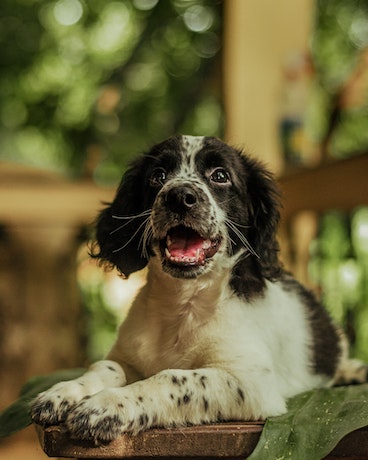
Piper, a small black and white Springer Spaniel, had been a frequent visitor to the clinic since I opened the doors. Grace, her owner, seemed to keep Piper pregnant as much as possible. Grace didn’t operate a puppy mill, but she did use Piper to supplement her income. The good thing about her relationship with Piper was she looked after her well-being and medical care.
Piper was seated on the exam table when I entered the room. She was usually standing and wagging her tail.
“What’s up with Piper today?” I asked Grace will I patted Piper’s head.
“She is nursing a litter of six puppies this time,” Grace said. “They are almost two weeks old and starting to get active. I noticed that Piper was cross with the puppies this morning, and you know, that’s not like her. So when I got to looking, she had a breast that was swollen and hot to the touch. And this afternoon, it is discolored.”
Looking at the record, Piper’s temperature was a hundred and five. I rolled her over on the exam table. She laid there with her hind legs splayed out. I rubbed her belly, and she wagged her tail a bit. I ran my hand down her breasts on the left side, and there was no response. When I did the same thing on the right side, Piper growled as I got to her last breast between her legs. This was entirely out of character for Piper.
I rolled Piper to her left side so I could see the lateral surface of her breast. It was swollen and dark purple on most of the lateral surface, and there was an area the size of a quarter that was dark purple, almost black, and bulging.
“It looks like Piper is cooking a pretty good mastitis in this right inguinal breast,” I said.
“Yes, I see it now, and for her to growl at you like that, it must be pretty painful,” Grace said. “What do we need to do for her?”
Mastitis in the dog runs a pretty typical course,” I said. “We need to get her on some antibiotics and pain medication first off. But this breast will rupture and drain a bunch of bloody pus.”
“Oh! That sounds terrible,” Grace said. “Can we prevent that from happening?”
“Sometimes, in the early stages, we might be able to head off a rupture of the breast,” I said. “But when we have a dark, bulging spot like we see on Piper’s breast, in ninety-five percent of the cases, it is just going to rupture.”
“Are the puppies going to be okay if that breaks open?” Grace asked.
“Actually, the best way to manage this is for me to sedate Piper and open this breast and flush it out,” I said. “That way, it will be a little cleaner for the pups.”
“But, what if it heals without breaking open?” Grace asked.
“I want to be honest here,” I said. “This is going to break open, period. If we put her on antibiotics and some anti-inflammatories, we will make things more comfortable for her. But in the dog, most mastitis cases resolve with a rupture of the involved breast unless they are treated very early in the course of the disease.”
“Let’s put her on some medication,” Grace said. “I will watch it close, and maybe we will get lucky.”
So Piper went out the door on medication and with a hope and a prayer.
“Why don’t they listen to what you tell them?” Dixie asked after Grace and Piper were gone.
“I made the mistake of giving Grace odds,” I said. “If you tell someone there is a five percent chance of complications with a treatment, they will think it will never happen to them. But tell them there is only a five percent chance that the results will be favorable, and they will believe they will be the lucky ones. With mastitis in the dog, they never believe that the breast will burst if they haven’t been through it before.”
“So what’s going to happen when it breaks?” Dixie asked.
“My bet is she will call at three in the morning, hysterical over the mess and wanting Piper looked at right away,” I said.
“And I suppose you will do it,” Dixie said.
“I will try to convince her that she should wait until the morning, but I will probably end up looking at Piper early,” I said. “Money won’t be an object then.”
***
When the phone rang the second time, I looked at the clock, four in the morning. I rolled over and looked at Sandy.
“Piper’s breast just exploded,” I said.
“How do you know that,” Sandy said.
I picked up the phone, “This is Doctor Larsen. How are you this morning, Grace,” I said.
“Oh! Doctor Larsen, you knew I would be calling,” Grace said. “Piper’s breast exploded sometime during the night, and bloody pus is everywhere in her box. I have the puppies all cleaned up, but can you look at Piper now, please.”
“I can look at her, but it will be a whole lot cheaper if you wait until eight,” I said. “And, it will be safer for Piper if I have some help. She will be fine. Just separate the puppies from her.”
“Are you sure?” Grace said. “It looks like it is still draining some bloody stuff.”
“As long as it is not bleeding bright red blood, she will be fine,” I said. “This is how nature solves the problem in the dog. I will clean the wound, remove dead tissue, and pack it with antibiotics. But, I will likely leave that wound open. It will heal better that way.”
“I guess I can wait until eight if it is safer for Piper,” Grace said. “I was hoping that you could close that ugly hole.”
“The problem, Grace, if we close that hole, we might trap some bugs and dead tissue in there,” I said. “Then it will just abscess again. By leaving it open, we can make sure that it will heal from the inside out. Sometimes, I can do a partial closure and place a drain. It depends on how it looks, but puppies tend to pull those drains out or break them off.”
“Okay, I will have Piper at your front door at eight,” Grace said. “I hope we won’t have to wait long.”
“The girls will be checking in a few morning surgeries, but we will bring Piper right back to the exam room,” I said. “I will want to get her taken care of first thing in the morning. She should be able to go home by noon or so.”
“Are the puppies going to be okay?” Grace asked. “I mean, can they be away from Piper that long?”
“They won’t think so, but they will be fine,” I said. “I will discuss some feeding changes for the pups when we see you in the morning.”
Grace was waiting at the door when I pulled into the parking lot at quarter till eight.
Grace’s hair was uncombed, and I think her blouse was on the wrong side out. But Piper was wagging her tail, obviously feeling better following the rupture of her abscessed breast.
“I’m sorry, Doctor Larsen, I’m a mess this morning,” Grace said. “I have been up with Piper since I called last night, and I am worried to death.”
“Piper is looking chipper,” I said. “Once that abscessed breast broke open, she probably started feeling better right away.”
“Yes, I realize that now,” Grace said. “I wish I had listened to you in the first place, then none of this stress would have happened.”
“That’s all behind us now,” I said. “If you can leave Piper with us now, we will sedate her briefly, just enough to allow us to flush this breast out and get all the dead tissue out of there. She will heal fine, and this hole will shrivel up in a few days, and Piper will act like nothing ever happened.”
“So you don’t want to close that ugly hole?” Grace asked.
“It will heal much better and much quicker if we leave it open,” I said. “Remember, you wished you had listened to me before.”
“What should I do with the puppies?” Grace asked.
“When Piper goes home, I think you can put the puppies back with her,” I said. “You might want to start supplementing the pups with a weaning formula. Just mix it up, put it in a low bowl like a pie pan, and let them wallow through it. They will get more on them than into them at first, but if you start doing that now, they will be ready to wean much earlier, and they won’t be after Piper to nurse them all the time.”
“Is this breast going to return to function?” Grace asked.
“I don’t think so, but it won’t be much of a bother to her. She has many others,” I said. “She has had quite a few litters. It might be time to think about getting her spayed.”
Grace looked at Piper for a moment. “Yes, you are probably right. She has been such a good mom, but she deserves some quiet time now. She doesn’t have to be like my grandmother and die pregnant at forty-eight.”
“Some people don’t have that history to fall back on,” I said. “We are only a couple of generations away from very different times in the lives of women. And many dogs are still living in those times. Once Piper is healed up and the puppies are weaned, we should schedule her for some surgery. I will put a reminder in your file.”
We sedated Piper and flushed out a lot of pus and chunks of dead mammary tissue from the open wound on the side of her breast. After cleaning things up, I instilled some antibiotic powder into the wound.
We sent Piper home at noon. She was dancing on the floor when she saw Grace.
“Let me look at this next week and call if you have any concerns about the puppies,” I said as Grace was being pulled out the door by Piper.
***
On her recheck, the breast was almost completely healed with only a tiny area of scab where the large gaping hole had been the week before.
“The puppies are doing great,” Grace said. “I wish that I had supplemented all her litters like I did this one. The pups are happier, and Piper actually gets some time to rest.”
True to her word, Grace presented Piper for a spay as soon as the pups were weaned and her breasts were back to normal.
Photo by Rubinstein Rebello on Pexels.


 Memoirs of a Country Vet