Many Fish to Catch

D. E. Larsen, DVM

Stan pulled into our driveway on his way home from work. I was in the garage and greeted him as he stepped out of his pickup.

“Hi, Stan, what’s up this afternoon,” I said as I shook his hand.

“Dave, you know I have a little fish pond up at my place,” Stan said. “It’s not much, but it grows some pretty good fish. The bunch I have in there now are all about twelve inches long. I am planning to catch a couple of five-gallon bucketfuls Saturday. You are more than welcome if you want to bring your kids up to help catch some fish. It will be pretty hectic. I just throw a small bucket of pellets into the pond, and those fish go crazy. They will bite anything.”

“Sure, Stan, I am sure the kids will enjoy helping,” I said. “What the heck are you going to do with ten gallons of fish?”

“I am going to smoke them,” Stan said. “It takes that many to fill up my smokehouse. It takes as much wood to smoke a small batch as it does to smoke a full smokehouse. Then the problem becomes getting them eaten. I usually put some in the freezer, but my kids are big enough. They can make pretty short work of a bunch of fish.”

“What time do you want to do this?” I asked.

“I was thinking about ten on Saturday morning,” Stan said. “We are supposed to have some light rain later in the morning, but I am guessing we will fill a couple of buckets in less than fifteen minutes.”

“Okay, we will have the girls up there by ten,” I said. “Derek is still too young, but he will enjoy watching.”


When I looked outside on Saturday morning, it was apparent that the weatherman was about as accurate as always. A steady light rain was falling, and it wasn’t seven yet.

I went back to the bedroom to roust Sandy out of bed.

“If we are going to get this crew up to Stan’s by ten, we have to get moving,” I said.

“Have you started cooking breakfast?” Sandy asked.

“I started the coffee,” I said.

“The kids don’t drink coffee,” Sandy said. “I was talking about something for the kids.”

“I’ll make pancakes,” I said. “That is something that they all will eat.”

After getting the girls dressed, I started turning out the pancakes.

“I’m not sure I want to go fishing in the rain,” Brenda said as she seated herself at the table.

“This is going to be a pretty simple fishing trip,” I said. “We will drive up to Stan and Erika’s place, get out of the car and catch a bunch of fish out of Stan’s pond. It won’t take long, and it might be a wild time.”

Amy and Dee were slower to get to the table, but they were there before Sandy came along with Derek. I had taken the kids over the Ames Creek to fish a couple of times this summer. The fish were small and few and far between.

I have always told people that when you teach a kid to fish, you must catch fish. If you are not catching fish, go find something else to do. If the kid asks you what a bite feels like, you have been fishing too long.

“Today we are going to catch a lot of fish,” I said. “And it is not going to take very long. And Susie will be there.”

By the time breakfast was over, I think everyone was on board to go fishing. And Susie had babysat for us, which gave them confidence that they would know someone there.

The entire Walter family was waiting for us when we drove down their driveway and parked by the house. The kids were ready to catch some fish.

Stan was waiting at the pond with a small bucket of pelleted fish food. The rain had stopped, but the grass was still pretty wet. It should be a good day.

This pond was not large. It was rectangular, maybe ten feet across, and thirty feet long. There was a small stream that ran through the pond.

“I dug this out and dumped a load of river gravel in the bottom,” Stan said. “It is eight to ten feet deep, and the fish do really well in it. The stream is not year-round, so we fish it out before the stream drys up. Then in the fall, I order another batch of fish.”

“The banks are pretty steep,” I said.

“Oh, yes,” Stan said. “You wouldn’t want a pond like this with kids the ages of yours. But it works well for us, and we use it just as another farm crop, fish instead of chickens, I guess.”

“So what is the process here?” I asked.

“Ralph and Tina have dug a few worms this morning,” Stan said. “I plan to throw part of this bucket in the pond, and these fish will go wild. It won’t take fifteen minutes to fill those two five-gallon buckets. You and I will have a hard time unhooking the fish and baiting the hooks.”

We got the poles ready and baited the hooks with a small piece of worm. Sandy was holding Derek, talking with Erika, and waiting for the start. We threw the lines in the water, and Brenda had a fish before Stan threw in the pellets. I quickly put Brenda’s fish in the bucket and got her line back in the water.

Stan threw in the pellets, and fish boiled to the surface. The kids all seemed to pull a fish out at the same time. Stan was helping Tina and Brenda, and I took care of Amy and Dee. Ralph and Susie were old pros to the process and caught the lion’s share.

Amy’s pole had a big bend, and she struggled to pull the fish out of the water.

“Do you have any big fish in here?” I asked Stan.

“No chance for a big fish,” Stan said. “These are just put them in and take them out. Most of these fish are the same size. We might see a ten-inch fish once in a while, but most of them will be twelve inches.”

Amy pulled harder, and I helped with a hand on the rod. Out came two fish on the line. One on the hook and one lassoed around the gills with the line.

“That’s pretty good, Amy,” I said. “Catching two fish with one hook.”

It was probably less than fifteen minutes, and the buckets were full.

“That was some event, Stan,” I said.

“There is nothing better than watching kids have fun catching fish,” Stan said. “I am glad you could come and help with the harvest.”

Ralph headed to the house with one of the buckets, and we cleaned up around the pond before heading home to clean up the kids.

“Do you want a handful of these for dinner?” Stan asked.

“Sandy and the kids are much for eating fish,” I said. “I might take a couple, any more than that wound just be wasting them.”

“Pick out what you want,” Stan said.

“Thanks a lot,” I said. “For the fish and for the kids getting a chance to catch them. One of these days, I will have to talk to you about how you smoke them.”

“I don’t do anything special,” Stan said. “Just some salt and brown sugar in a dry brine.”

“I was talking with a guy who said that he would smoke a bunch of kokanees, cut off their heads and tails, and then can them in quart jars,” I said. “He said it worked great.”

“I haven’t tried canning these,” Stan said. “With this crew, we generally just eat them. If that isn’t going to happen, we might stick some in the freezer for a couple of weeks, but that’s all.”

“Well, thanks again,” I said as I loaded the kids into the car. “I will check with you sometime next week.”

Photo by Mateusz Feliksik from Pexels.

Something is Moving in There 

 D. E. Larsen, DVM

Hopefully, this was the last of the summer heat. The thermometer was already creeping past eighty as I returned to the clinic from lunch. I was thankful for the new air conditioner that we had just installed in the clinic. It was a relief to step into the cool air inside the clinic.

“You have Lila waiting in the exam room,” Sandy said. “She thinks that Archie has a odd abscess.”

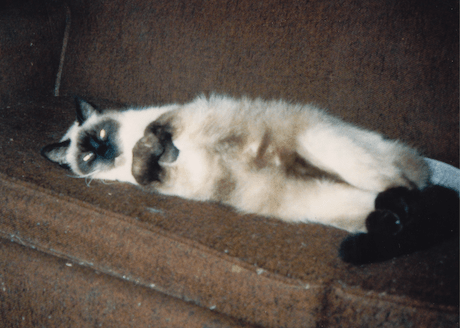
Archie was a large orange neutered male cat who was a frequent visitor to the clinic. Lila had tried to keep him in the house but he insisted that he live outside. And he was protective of his turf. As a result, abscesses were common for Archie.

“What’s going on with Archie this afternoon?” I asked as I entered the exam room. “Sandy said you thought he had an odd abscess.”

“You know Archie,” Lila said. “If any cat even comes close to his yard, the fight is on. But this doesn’t look like his usual abscess. There is something moving in there.”

A lot of cat abscesses are on their hips or their tail head, where they get nailed as they are trying to retreat. Archie didn’t know anything about retreating. His abscess were always on his head, shoulders, or front legs. 

This abscess was on the right side of his abdomen. That was unusual enough, but to have something moving in there, meant this was probably not the typical cat abscess.

“Well, Archie, let’s get a look at this spot on your side,” I said as roughed the top of Archie’s head. He pressed his head up against my hand, wanting a little more attention.

I pressed Archie’s head over until he flopped onto his left side. Then I had a clear view of this odd abscess. 

The lump was almost perfectly round and a little larger than a quarter and it protruded out over a half of an inch. I moved the hair aside from the top of the wound. There was a round hole located on top of the protrusion. There had been some minor drainage from this hole and a small margin of hair loss around the hole. This hair loss only amount to a few millimeters. Unlike Archie’s usual abscesses, this lesion was not painful.

I scratched Archie’s behind his ear as leaned down to look closely at this wound. Sure enough, something moved in there. Lila had her head close so she could see what I was seeing.

“What on earth is going on?” Lila asked.

“I think that some little fly thought that Archie was a rabbit,” I said. “This a Cuterebra larva that is moving in there. There is a surprisingly large grub living and growing inside this lesion on Archie’s side.”

“That’s a big word, Doctor Larsen,” Lila said. “But how did it happen?

“We can call it a warble and be pretty accurate,” I said. “It looks a lot like the warble we used to see on cattle a lot before ivermectin was used. It is a different critter, but the life cycle is similar. This little fly lays its eggs around the burrow of a rabbit or other rodent. The eggs hatch and the little larva enters the host through a body opening or wound. They migrate through the body and in this case, they reach the tissue under the skin where they set up shop. The make a breathing hole and feed in the discharges of the body. They mature and finally drop out and form a cocoon when the grow into a fly. When they find a cat instead of a rabbit or a mouse, it is completely by accident.”

“What are we going have to do to get it out of him? Lila asked.

“I think that Archie is a good enough patient that I can squirt some local anesthetic into that breathing hole and just pull that big old grub right out of there,” I said.

“Oh, that would be good,” Lila said. “Bob and I have an appointment in Corvallis this late this afternoon and Archie would have to stay overnight if you had to sedate him. He would hate that.”

I drew up a half cc of lidocaine into a syringe, removed the needle and just squeezed it into the breathing hole. After waiting a few minutes, the entire lump was numb, probably the grub also.

I grabbed the warble with a pair of thumb forceps. Then with gentle traction, I pulled him out through his breathing hole. This was sort of like pulling a basketball through a knothole. This breathing hole was about the size of the lead in a pencil and the grub was the size of the pencil.

I pulled careful because the book always spoke of an immediate shock reaction was possible if the grub was ruptured in the process of extraction. That was something I had never witnessed and never talked with a colleague who had witnessed such an event. Still, I didn’t want to risk it now.

Lila gasped as I stretched the grub out through the hole and then the larger portion of his body started to balloon out of the enclosure.

“My gosh!” Lila exclaimed. “How big is this thing?”

Just then the whole thing popped out of the hole and sort of contracted its body. I laid it on a paper towel beside Archie on the exam table. It wiggled a bit and Lila recoiled a bit. It was nearly an inch long and like I said before, at its thickest part, about the size of a pencil around, and sort of narrowed on each end.

“I can’t believe it,” Lila said. “That bug has been living inside of Archie and he acted like nothing was wrong.”

“I will flush this wound out and we will put Archie on some antibiotics for awhile,” I said. “He will heal up better than he heals after an abscess.”

“How on earth are we going to keep Archie from getting another one of these?” Lila asked.

“Lila, we have talked about this before,” I said. “You can prevent this the same way you can prevent Archie’s abscesses. All you have to do is keep him indoors.”

“And I have told you before, Doctor Larsen, there is no way we can live with this cat if he can’t go outside,” Lila said. “I guess he is just going to have to take his chances.”

***

It was a couple of weeks later when Lila was back with Archie to recheck his lesion.

“It looks like Archie is as good as new,” I said after examining him.

“Bob and I discussed trying to keep Archie in the house,” Lila said. “Bob is adamant that Archie is hunter and trying to change is life style at this point would cruel. I guess I sort of agree with him. If that leads to a shorter life span, so be it. At least he will enjoy what time he has on this earth.”

“I can’t argue with you on that point, Lila,” I said. “And Archie will have a bigger problem with abscesses than he will have those warbles. I only see a handful of those cases each summer. My guess is he will have to live another couple of life spans before he would have another warble.”

***

Archie continued to live mostly outside until he was twelve or thirteen when he started to slow down a little. He was almost sixteen when he passed away in the mid 1980s. At that time, there were very male cats who lived to sixteen.

Photo by Recep Fatih Kaya on Pexels.

Eperythrozoonosis, From the Archives

D. E. Larsen, DVM

Jack was at the corral gate when I pulled into his upper barnyard. He was opened the gate as I stepped out of the truck. There in the middle of the corral was a young llama lying down and obviously not feeling well.

“Jack, it’s good to see you. How are things going?” I said as I got out of the truck.

“We are doing well,” Jack said. “But this little gal is looking droopy this morning.”

Llama had a strong herding instinct and they rarely showed any sign of ill health until they were in very serious condition. For this little llama to be down in the middle of the morning was a sign she was likely very sick.

“How long has she been like this, Jack?” I asked.

“I guess I don’t know,” Jack said. “I looked at all of them yesterday. I can’t say for sure that I saw her, but I sure didn’t notice her being sick.”

I grabbed my stethoscope and a couple of blood tubes went in the corral with Jack. We had to coax Sugar to stand. I raised her lip and looked at her oral membranes. They were pale, in fact, they were almost white. 

Trying not to get ahead of myself, I took stuck a thermometer into her rectum and listened to her chest and abdomen while I was waiting on the thermometer. Everything was normal except for the obvious anemia.

“Jack, I am going to get some blood out of her. I might need to run it back to the lab before I treat her,” I said. 

I drew a couple of tubes of blood. The blood was almost like water. Obviously, red but it was thin enough that her anemia must have severe. I collected another small amount of blood with a syringe and made several blood smears so they would not have any artifacts from the additive in the purple top tube that keeps the blood from clotting.

“Jack, this is a severe anemia,” I said. “It might even be life threatening, this blood is very thin.”

“What can cause that to come on so fast?” Jack asked.

“I probably didn’t come on so fast,” I said. “These llamas will hold out until they are near death before they will show any signs of illness. It just got to the point where she could not cope with it any longer. I don’t know what it can be. I have seen anaplasmosis in cattle that were this anemic when I worked in the feedlots in Colorado. I haven’t seen anaplasmosis here, but I guess it is possible.”

“Do you think she is going to be okay while you run to the lab?” Jack asked.

“That’s a good question,” I said. “I think with how this blood looks that I should treat her with some tetracycline now. In cattle, prompt use of tetracycline will reduce mortality. Blood transfusions are sometimes necessary, but I need some supplies from the office to do that. I will be able to tell from the initial blood results if a transfusion is needed. I will be sending this blood to the diagnostic lab in Corvallis to check on the diagnosis, but I will look at it in my lab first.”

I gave Sugar a dose of intravenous tetracycline and also some dexamethasone. The dexamethasone was probably controversial, but I always remember Dr. Annes saying, “No patient should die without the benefits of steroids first.” I would at least help to slow the immune response if a blood parasite was the cause of this anemia.

“Jack, I have some time today,” I said. “I will run back to the lab and get this blood looked and also get it on the way to Corvallis and then I will come back here in an hour or two if Sugar needs any additional treatment today. Either way, I will give you a call.”

Back at the clinic, I ran a quick complete blood count. Sugar’s packed cell volume was eighteen percent. Values below fifteen percent were considered to require a transfusion.

My next step was to stain one of the blood smears I had prepared from the  blood collected with the syringe. Under the microscope it always took me a moment to adjust my thinking when looking a llama blood. All the red blood cells were elliptical. 

This slide showed a lot of basophilic strippling. This was indicative of an anemia and was often seen in anaplasmosis in cattle. There was no evidence of any anaplasma organisms on the red blood cells. But there was something there that I couldn’t identify. I would have to send the blood and the smears to the lab.

“Jack, I think the Sugar is okay for today with the treatment that I did earlier,” I said when I called Jack. “I am sending the blood to the lab with a currier, so they will get it this afternoon. She is anemic, but not bad enough to require a transfusion. There is a blood parasite there, or some infection on the red blood cells. We will have to wait for the lab results. I will drop by in the morning to give her another injection and to recheck her blood.”

“Are you sure about not needing a transfusion?” Jack asked. “These little gals are pretty valuable, you know.”

“Her blood is above the line that we draw,” I said. “That said, it’s man that draws the lines, in nature, everything is a continuum. But if we do a transfusion too soon, the bone marrow gets the message that it doesn’t have to work so hard. Sometimes a transfusion given too soon, does more harm than good.”

***

I was in the corral looking at Sugar when Jack came out of the house.

“I thought you said it would around nine when you got here this morning.” Jack said.

“I probably said that, but in this business, I have to to do things when the time becomes available,” I said. “I’m sorry if I hurried you. Sugar is looking better this morning.”

“I thought she was up and about when I watched her out the window this morning,” Jack said. “Did you get any results from the lab yet?”

“The diagnosis is eperythrozoonosis,” I said. “Does that help you out any?”

“Doesn’t do a thing for me,” Jack said. “Does it come with a common explanation.”

“This is an infection of the red blood cells,” I said. “A small organism, a mycoplasma, infects the blood cells and the body removes those cells because they infected. It is sort of a number’s game. If enough red cells are removed, the patient becomes very anemia.”

“How did she get it?” Jack asked. 

“I don’t know that we know for sure,” I said. “Biting insects and ticks can spread it. Also using non sterile needles and surgical instruments can spread it. I am not sure if she could have gotten it from her mother. But that is a possibility. This treatment will make her better and she will unlikely have any more problems, but it is unlikely to eliminate the bug from her system. You just need to remember that she could be carrier for the rest of her life.”

“Do I have to do anything more for her?” Jack asked.

“I am going to come by every morning for another few days, just to give her an injection,” I said. “If you leave her here, you don’t need to be here. I will just run by and give her an injection. After that I will repeat the blood, and if it looks like it is needed, I will fix you up with some oral medication for another week. That will be some powder to put in her water. I think the injections will clear things up her.”

Sugar recovered with no complications and became a part of Jack’s llama herd for the next several years. That was when the llama market collapsed and Jack sold his herd, twice. The final time, for pennies on the dollar.

Photo by Erik McLean on Pexels.