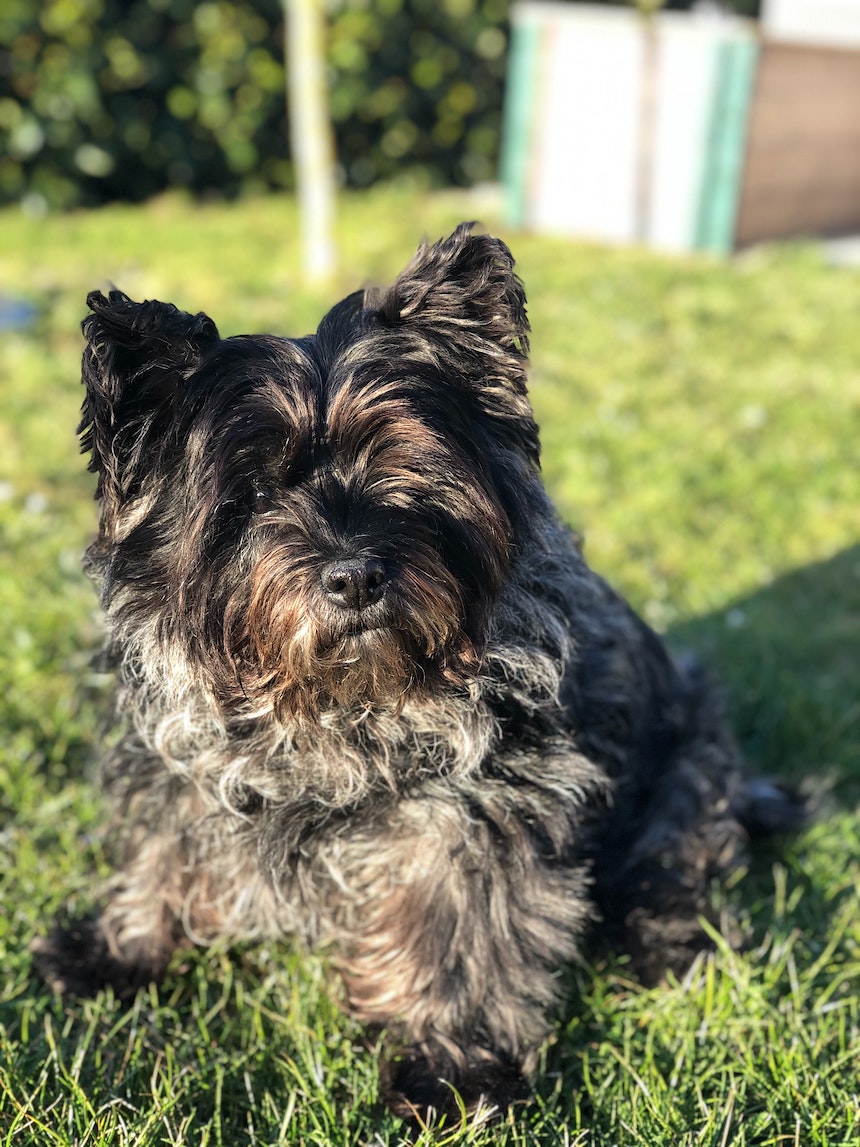
Edith and Coco, from the Archives

D. E. Larsen, DVM

Edith was an older lady who you would see walking down the street in Sweet Home daily. I don’t think she drove, but maybe she just preferred to walk. Her hair was always curled but not what you would call well kept. Some would call her petite, and I am sure she was at one time, but I would say she was matronly petite. In any case, the most important thing about Edith was she was always happy. We would notice that happiness in the clinic, and when you saw her walking, she always had a smile on her face. She could definitely enjoy the simple things in life.

For the first 5 years that we were in Sweet Home, Edith visited the clinic often. In fact, there was not a single month without a transaction on her account. This was unusual in that the average client might have three to five transactions per year. She would come into the clinic with Coco always in tow. Coco was a mutt, many people would call him an ugly mutt. He weighed about 20 pounds and had a gray, straggly coat. His lower jaw protruded well past his upper jaw, and when you looked at him, he would often smile, but it looked like a snarl.

Coco’s monthly trips to the clinic were more of a social event than a medical one. Coco was healthy as a horse, but there was always something that Edith wanted to be checked. I can’t remember finding anything wrong with Coco.

One Saturday morning, we were planning our day and hoped to take the kids to a movie in Albany, when the phone rang. It was Edith, and she was sure Coco had a problem. My initial thinking was Coco never has a “real” problem.  This was going to disrupt our entire weekend to go to the clinic and reassure Edith that everything was fine with Coco.

“Edith, are you sure this couldn’t wait until Monday?” 

But Edith persisted.

“Doctor, I know there is somewhat dreadfully wrong. Coco is just not himself this morning!” she replied.

I was stuck, but it should only be a brief visit. I arranged to meet Edith at the clinic in 15 minutes. Paul was home and could drive her and Coco to the clinic, so that would work.

Edith was smiling but concerned when she came through the clinic door. She thanked me profusely and reassured me that there was indeed some wrong with Coco. Coco groaned a little when I picked him up and put him on the table. Maybe he has hurt his back, I thought to myself. His temperature was normal, but Coco was not wagging his tail and was not acting his usual happy self on the table. His heart and lungs were normal, and the oral exam was normal. Then I got to the abdominal palpation. Coco tensed his abdomen from discomfort. His bladder was distended and uncomfortable.

I had almost made Edith and Coco wait until Monday.  And here we have Coco with a urinary tract obstruction. He could have been dead by Monday

.

“Edith, when was the last time you saw Coco pee?” I asked.

“Well, he was outside this morning and lifted his leg several times, but nothing happened.” 

“Edith, Coco can’t pee. Most likely, he has a stone blocking his urethra. If so, I will have to do surgery to remove the stone. I need to do some x-rays first to see if there are stones, how many stones, and where they are located. Most of the time, there is just one stone blocking the urethra, the tube from the bladder to the outside, and the surgery involves opening the urethra and removing the stone. If there are more stones in the bladder, we will need to do abdominal surgery to remove them also.” I explained.

“Surgery!” She exclaimed. “Shouldn’t that wait until Monday?”

“No, we can’t wait that long. Coco might be dead by Monday if we don’t do surgery now. At the very least, he would have some major complications by then.”

“You do whatever you need to do, Doctor,” she said. “We have the money in the bank to pay for it, and we can’t give Coco up.”

“I will get some x-rays and call if anything changes in my thinking after the x-rays. Otherwise, I will call following surgery, and we will arrange to send Coco home sometime this weekend.” I said.

We were going to have to get lucky to able to take the kids to a movie today. I took the x-rays, and sure enough, there was a stone stuck at the base of the os penis. The dog, like many animals, has a bone in his penis called the os penis. The urethra narrows slightly as it passes through a groove on the underside of the os penis. Most stones that cause obstruction are lodged in this location. Coco had no other stones visible in his bladder or elsewhere in his urethra. This would be an easy surgery.

I called Sandy and had her get the kids ready and come down to give me a hand. All the kids had observed many surgeries, so this would just be one more. I started getting Coco and the surgery suite ready, so we would be prepared to go the minute Sandy and kids arrived. The plan was to do the surgery, recovery Coco and then run to the movie while he was resting in the kennel. We should be able to send him home when we return from Albany.

When Sandy arrived, we got started with the surgery. I induced anesthesia with IV Pentathol and then put Coco on gas anesthesia. With him on his back, I clipped and prepped his posterior ventral abdomen. I could feel the stone. This should be a brief procedure. 

I inserted an 8 French urinary catheter. It came to a stop at the stone. I made a one-inch incision in the skin of the prepuce over the stone. Then I dissected through the soft tissues to the urethra. I pushed a forceps through the tissues on the dorsal surface of the penis to stabilize the area. Then with a careful incision, I opened the urethra over the stone. This incision was just long enough for me to grasp the stone with forceps and remove it. I immediately plugged the hole with finger pressure. I advanced the catheter into the bladder to empty it and avoid leakage of urine into the surgery site.

After emptying the bladder, I left the catheter in place to ensure my closure did not narrow the urethra. I closed the urethra with interrupted 4-0 Maxon sutures. Then with the same suture material, I closed the subcutaneous tissue with a continuous suture pattern. Finally, I closed the skin with 4-0 nylon interrupted sutures. I infused a small amount of Lidocaine for pain control and turned off the gas to start waking up Coco. Maybe 15 minutes had elapsed. Since he would be unattended in a kennel after he was awake, I gave him fluid under his skin on his back rather than IV.

Recovery was pretty rapid, and Coco was up and about. He would be fine and should be able to go home when we got back from Albany. I gave Edith a call and reported favorable results. We arranged to meet her and Paul at the clinic when we returned from the movie.

The kids enjoyed the movie, Indiana Jones in Raiders of the Lost Ark. Sandy had tried to cover Derek’s eyes in the spider scene, but he was able to fight her off. The kids had been worried they would miss the movie because they had seen family plans set aside more than once by a phone call.

When we pulled up to the clinic, Edith and Paul were waiting out front in their car. They were talking and laughing. Here was our happy little gray-haired lady who adored Coco, sitting in the car outside the clinic, passing a whiskey bottle back and forth between her and her husband. Now my only concern was them driving home.

Photo by Julian Hauffe on Unsplash.

The Grand Tour

July – August 1956, Part 2

D. E. Larsen, DVM

Note: These accounts are from my memory, with some help from my Grandmother’s notes she kept in a small tablet. My memory and her notes conflict slightly, and it is probably obvious which account is the most reliable.

Updates for Part 1: The 1956 Calgary Stampede ran from Monday, July 9 through Saturday 14th. According to my Grandmother’s note, first-day attendance was 97,000, and the cabin and room in the home out of Canmore, where we stayed the night before attending the Stampede on July 12, cost six dollars.

***

We did stay the night in Canada following our visit to the Stampede in Cochrane, out of Calgary. That cabin cost eighteen dollars. My memory says that we crossed into North Dakota, but my Grandmother’s notes say we stayed in Chester, Montana. There was a terrible electric storm with rain in sheets and hail. I remember the storm, and the owner’s wife was there alone. Her husband was out of town. She felt the motel sign should be turned off, but she was afraid to do it. Robert went down and turned the sign off for her. We tagged along to watch the danger.

The hotel with the rope fire escape and the soda water was in Williston, North Dakota. Most of eastern Montana and North Dakota was worthless country, in my opinion, but Grandma’s notes say good farming country.

From Williston, we traveled to Thief River Falls, where we rented a cabin for seven dollars. We spent most of the following day visiting Robert’s cousins, Mr. and Mrs. Tom Webster, somewhere in northern Minnesota. That visit was difficult. I couldn’t spend any time outside because the mosquitos would eat someone alive. It wasn’t much better in the house.

After that visit with the cousins, we stayed in a cabin by a lake. My main memory was of a gallon jar full of leeches on the drugstore counter.

“What are these things in this jar?” I asked the clerk.

“Those are leeches,” the clerk said. “We use them for sucking the blood out of bruises and things like that.”

My only knowledge about leeches came from Humphrey Bogart in The African Queen. 

“My bruises heal just fine without any blood-sucking,” I said. There was no way they would ever put one of those things on me.

From Minnesota, we drove to the Devil’s Lake Region of Wisconsin. We had to go late into the night before finding any vacant cabins, and these were in Wisconsin Dells. We had to take two cabins at six dollars each and with no kitchen. I remember lunch in a park in Wisconsin Rapids. After lunch, we headed for Chicago.

Coming into Chicago, at one of the first stop lights, a couple of young African American guys pulled up alongside us in an old Model A Ford. They laughed and gunned the motor. Robert was quick to respond, and when the light turned green, we were off like a shot.

The Model A caught us at the next light, and everyone laughed. This went on for three or four lights.

“Robert, you stop this,” Lila said. “You are going to get those boys in trouble.”

That was probably my first exposure to any thought that those boys would be in any more trouble than Robert. Coming from southwest Oregon, my exposure to anything racial was meniscal. But Robert gave the guys a salute and a laugh, and they took off ahead of us.

We drove past the chapel where Uncle Ernie and Linnea were married. It was a small chapel under a new overpass, not far from Lake Michigan. We had a double cabin on the far side of Chicago for $9.00 but no kitchen.

After Chicago, we headed east. Our distention was Ithaca, NY, where my oldest cousin and his young family lived. Ken Haughton was in a Ph.D. program at Cornell.

Going through Ohio, Phillip seemed to sleep in the back seat a lot. The countryside was flat and unremarkable to us Oregon boys, and he woke up when we stopped for gas.

“Ohio is all city,” Phillip said. 

Lilia corrected him, saying he slept through the farm country.

We drove along Lake Erie, staying in Wickliffe, Ohio, on the east side of Cleveland. The following morning we were up early and visited Niagara Falls. 

I wanted to take a boat ride out under the falls, but I had to settle for scrambling on the rocks near the bottom of the falls. The heavy mist created by the falls. I was impressed with the grandeur of the falls.

After leaving the Falls, we arrived at Ken’s at about 7:00 pm. They were living in an apartment complex, which we found quickly, but finding their apartment took a little luck. We spotted their oldest son, Kelly, riding his peddle car on a sidewalk in the complex. Phillip and I were dispatched to catch him.

“Kelly, we are your cousins from Oregon,” I said. “Take us to your house.”

Kelly was about four, and I had never seen him before, but he took us home. We spent a couple of days in Ithaca, staying in a motel not far from Ken’s. The motel cabins were fourteen dollars a day, a significant increase from the usual six dollars in the West. We had a couple of big electric storms with heavy rain there.

From Ithaca, we headed to New York City. We stayed one night in Dover, NY, and then entered NYC relatively early in the day. We had rooms in the Statler Hilton Hotel. My memory says we were on the thirtieth floor, but looking online now, I think the hotel only had fifteen floors.

There was no air conditioning, and I found that if you leaned out the window, and spit, the spit would fall for six or eight floors before being sucked into an open window below. That was entertaining for a time.

We took a bus tour of the city. My Grandmother’s notes say we “took a tour trip around the town. Saw lots of landmarks, such as The Little Church around the corner, then across to the Statue of Liberty. Then back to the UN building and the Rockefeller building. We had our supper in this place.”

My best memories of the tour were the whole plucked chickens hanging in the window of a meat shop, heads, feet, and all. A bum passed out on a doorstep with a bottle of whiskey tucked under his belly and climbing up to the head of the Statue of Liberty.

The next day, we went up to the top of the Empire State Building for twelve dollars and fifty-seven cents plus tax. It took three different elevators to get up the hundred and ten floors, and it was quite a view.

After the Empire State Building, we headed south out of town and stayed in New Castle, Delaware. When we stopped for gas in Delaware, there was quite a discussion when Grandma and Lila returned to the car after using the lady’s room. They had encountered a Bidet in the lady’s room. A bidet was difficult to figure out for a couple of ladies, not far removed from the outhouse days. Robert said it must be to just stand over a pee. I am sure they didn’t have it figured out then.

From Delaware, we continued south, turning west at the corner of Georgia. That will be covered in Part 3.

The Grand Tour – July – August  1956, Part 1 

D. E. Larsen, DVM

There were several events that strung together in 1956 that had a significant impact on my life.

“If you are coming with me to Aunt Lila’s, you had better get in gear,” Mom said as I was finishing up my breakfast. Bacon was somewhat of a luxury for us, and I savored every bite.

I finished eating and took my plate to the kitchen. As was expected, it was clean as a whistle. I could always hear Dad’s voice in my head as I ate.

“You clean your plate! We don’t waste any food when there are kids in China who are starving.” Dad would always say.

I ran upstairs to get dressed. Today, Uncle Robert said we could go up the hill with him to watch the logging. Logging was a big part of our lives in western Oregon. Dad, and most of the other fathers in Broadbent, worked in the woods. We always heard stories but seldom had a chance to actually see the sites where they worked.

The drive to the Ochletrees was not far, and Robert was waiting at the jeep when we pulled into the driveway.

The jeep was crowded when everyone was loaded. Robert drove with a friend of his in the passenger seat. Mom and I shared one side seat, unpadded, and Aunt Lila and Phillip shared the other. We pulled out of the driveway and onto the logging road up Endicott Creek.

We drove several miles up the creek before coming to the logging site.

“We will have some extra money when this is done,” Robert said. “Stumpage is forty dollars a thousand, and there are several hundred thousand board feet on this hillside.”

A lot was going on, but it was all cat-logging. I had hoped to see a donkey working. That was what Dad did in the woods. He was a donkey puncher.

***

“You need to hurry, David. Our appointment is in a half hour,” Mom said. “We are meeting Grandma and Grandpa at the hospital, and you and Phillip are getting your polio shots.”

“I don’t know why I have to get a shot in the summer,” I said.

Uncle Ern’s son, Ross, died from polio,” Mom said. “Grandpa says that if you and Phillip are going on this big trip this summer, you will get this new vaccine.”

Mom and I jumped in the car and drove to the Mast Hospital in Myrtle Point. Aunt Lila, Phillip, Grandma, and Grandpa were waiting for us when we arrived in the waiting room.

The nurse took us back to a small room that smelled like alcohol. She had the needles laid out already.

“They had some problems with this vaccine last year. Have they fixed that now?” Mom asked the nurse.

“Yes, that was with one batch of vaccine from one manufacture,” the nurse said. “That has been fixed. This vaccine is fine. We have been using it for several months now.”

With that, I rolled up my sleeve and looked out the window as the nurse swabbed my arm and poked me with the needle. 

“Now, that wasn’t so bad, David. You were pretty brave,” Grandma said.

“They will need a booster dose in three or four weeks,” the nurse said.

“That’s good. That way, they will have their booster a couple of weeks before our trip,” Aunt Lila said.

“What kind of a trip are you taking?” the nurse asked.

“We are going to go up to the Calgary Stampede and then on back to New York, down to Mississippi, and then home through our daughter’s homes in California,” Grandma said.

“Oh my! That is quite a trip,” the nurse said.

***

Departure day finally came on July 8, 1956. We all piled into Uncle Robert’s 1954 Cadillac. Robert is driving, Grandpa Davenport is in the passenger seat, and Aunt Lila and Grandma are in the back seat. It was decided that my cousin Phillip and I would trade off, riding in the middle, one day in the front, and then one day in the back. That was the seating for the entire trip.

The first day was a short trip to Cottage Grove to stay with Uncle Ernie and his family the first night. They lived next to the drive-in movie theater.

“You and Eric can climb over the fence and turn up the volume on some of those speakers so we can watch the movie tonight,” Ernie said.

Everyone sat in lawn chairs in the backyard and watched the movie that night. We were up pretty early and hit the road. 

This was an entirely new adventure for me. At that time in my eleven years, I had rarely been out of Coos County, Oregon. Only a few trips to visit family from Fortuna, California, in the south to Cloverdale, Oregon, in the north. The largest towns I had been in were Eureka, California, and Coos Bay, Oregon.

We traveled over the McKenzie Pass and encountered red pavement where they were using volcanic rock in the pavement. After lunch in Madras, we settled into a motel at Boardman.

The motel was a series of small cabins in a gulch overlooking the Columbia River. To me, it looked like a worthless river, with no bank access and far too large fish with a willow pole. Phillip and I experienced our first night of sleeping on the floor. That was to be our typical situation for the entire trip. I can only remember a night or two when I had a bed. 

From Boardman, we went to Sandpoint, Idaho, stopping at McNary dam along the way. And there was an eleven-mile trip down the hill into Lewiston, Idaho. The shingled cabin must have been only a few feet from the railroad track.

“That train kept us awake half the night,” Robert told the owner when we were loading the car.

“A lot of people complain about it, but you know, we have lived here since the war, and I never hear the train at night,” the owner said.

From Sandpoint, we went to Calgary with a stop in the mountains to visit Lake Louise. When we came out of the mountains, some thirty miles from Calgary, traffic came to a stop, and we finally pulled into a motel.

“You aren’t going to find any motels with a vacancy from here to Calgary,” the owner said. “I know of a hunting lodge back in the mountains, not too far from here. They probably have cabins this time of the year.”

So off we went to the hunting lodge. It was located at the end of a long road, and I don’t know the elevation, but in the second week of July, it was nearly freezing when we arrived. We had a nice cabin, and Phillip and I even had a bed, and Grandma and Grandpa had a separate room in the main house. The only downside was the bathroom was in a separate building, and it was just one notch above an outhouse. There was a long trough for a urinal, and on the trip before bedtime, there was ice in the urinal.

The good thing was the lodge was happy for the business in their slow time and served a late dinner of soup with bread, and the breakfast they put together was one of the best of the entire trip. All the pancakes you could eat.

We were on the road to Calgary early. The traffic was heavy but moving. We parked in a massive parking lot and walked to the stampede grounds. I was an old hand at the Coos County Fair. The carnival associated with the rodeo was larger than I had ever seen. I was limited in the money I had in my pocket, so I visited a couple of sideshows but never did any rides.

The stampede rodeo was larger than any rodeo I had seen before. The grandstands were packed. On one trip to the bathroom, I had some lemon-lime soda spilled on my back by some old guy with too many drinks in his hands.

When the rodeo was over, we toured the beef barns briefly. We stayed in Canada one more night and then headed for Montana. 

We stopped at the first small town we encountered. We stayed at an old hotel with a knotted rope for a fire escape. That would be no problem for me, but I’m not sure Grandma could make it down the rope. Phillip and I were allowed to climb down the rope several times.

The other thing about this little town was soda in the water, and it was mostly undrinkable. I know because I drank a glass and I was sick all night.

Since we arrived late, the hotel served us soup and bread for dinner. We went to bed early so we could get up and on the road. It would take us a couple of days to make it to Minnesota. Robert had cousins in Minnesota that we were going to visit. 

Aunt Lila gave me a dose of Pepto Bismol before bed. I hated the stuff. Dad always wanted me to take some when I complained of a stomach ache. But this time, I took it because that water had done a number on my stomach.

Photo by D. E. Larsen, DVM, Booklet from Amy Davenport.