Cate’s Turkey

 D. E. Larsen, DVM

There was nobody around when I pulled into George’s place. I started to get out to knock on a door when I spotted everyone out at the barn. We pulled around the hillside to the barn.

This was great, all the cows were under cover, and the chute and crowding alley were set up in the barn. There would be no working in the rain today.

“This is great, George,” I said as I got out of the truck and shook his hand. “I was thinking that I would be working in the rain today.”

“Yes, this makes life a lot easier for everybody,” George said. “We set this up a couple of years ago. It has proved to be one of my better decisions.”

“I think we have a lot to do today,” I said. “You have made me hit the books a bit. I don’t often see a diagnosis of Johne’s Disease.”

“When the USDA started this program of Johne’s free herds, we decided that it would be a good thing to get in on the ground floor,” George said. “If we are one of the few purebred herds in the state that can advertise as being Johne’s free, that will have to feather in the hat.”

“You’re probably right on that count,” I said. “This is a brand new program, and I am not confident they have all the bugs worked out of the system. But we can at least get the initial herd test done. That will give you a big head start.”

“What do you know Johne’s Disease, Doc?” George asked.

“Not much, George,” I said. “I have no memory of it growing up. But those were different times. Most of the herds were small, and most were closed herds. If anyone bought a replacement heifer, it usually came from a neighboring herd or from another herd in the extended family. There wasn’t a lot of movement of cattle through the sale barns except for cows being sold from the farm. I can’t remember a cow coming onto the place from a sale barn.”

“They say it is becoming more of a problem,” George said.

“I am sure it is,” I said. “I think it is a bigger problem in dairies. My understanding is that it is transmitted to calves at a very young age. That is more likely to happen in a confinement situation than in an open pasture.”

“What about in people?” George asked.

“I was talking with the state veterinarian the other day,” I said. “He was saying that they have tried to link it to Crohn’s Disease for years. The problem they run into is with people like you and me. We have been exposed to cow manure since day one, and most of us have no problem. As far as I know, there is no definite link to people.”

“Well, I want to get certified anyway, so let’s go ahead and get these samples,” George said.

We worked through the herd in a relatively short period of time. Official identification of registered animals is not much of an issue. I only had to collect a tube of blood and a fecal sample from each cow. 

When we were finishing up, this large wild turkey suddenly landed in the middle of the barn. 

“Where did that guy come from?” I asked.

“This is our resident tom turkey,” George said. “He showed up a couple of years ago, and he seldom leaves the barn. He roosts in the rafters, then flies down to clean up the managers after we feed the cows. I have to admit that I throw a little extra grain out for him once in a while. He can’t get around very well. He has a pretty bad bumblefoot.”

“Boy, I could use one of those tail feathers if he ever sheds one or two,” I said.

“If you only want one or two, I can grab them,” George said.

George walked over and made a grab for the tail on the tom. He missed the first try, and the turkey sort of jumped a squawked a little. But on the second try, George came away with two prime tail feathers.

“What do you use these for?” George asked.

“I tie flies,” I said. “These make great Cate’s Turkey flies. I go through quite a few of these in the spring, up on the high lakes.”

“Well, if you need any more, just let me know,” George said.

“These will last me a long time,” I said. “One of these feathers with tie four or five dozen files.”

We worked George’s herd through the certification process, and he was one of the early beef herds in the state to gain Johne’s Free status.

George told me sometime later that one of the guys he worked with had bought his grandson a shotgun and asked if he could bring his grandson up to shoot the old tom turkey. George consented.

The guy brought the grandson up, and they shot the turkey. Then they took it to some sporting goods store and had it measured. Having lived a few longer than he would have lived in an actual wild situation, the old tom turkey scored very high on the Boone and Crocket chart.

Some Turkey group out of Ohio purchased the bird to have it stuffed.

“The guy never said how much they paid,” George said. “But if I had known that, I would have had one of my grandkids shoot the old guy.”

Photo by D. E. Larsen, DVM

New Note, New e-book

Just a quick note to let everyone know that the e-book of Book # 6 is now available on the Amazon Kindle store.

My time has been stress lately as my wife Sandy is in the hospital with a serious infection. My blog might return to Archive post for another week or two, we will see.

Clyde

 D. E. Larsen, DVM

We were still getting organized in our garage as we waited for the clinic to be completed. It almost looked like a mini clinic, although it would not measure up to any current standards. But it was looking like we were stuck here for a few months.

Betty pulled into the driveway and looked a little stressed. There were no appointments scheduled, as we were still a long way from having a full schedule. In those months, I appreciated everyone who found us. We hadn’t done any advertising. Stan Ego at the feed store had been great at sending people our way. His efforts were probably life-saving for our struggling bank account.

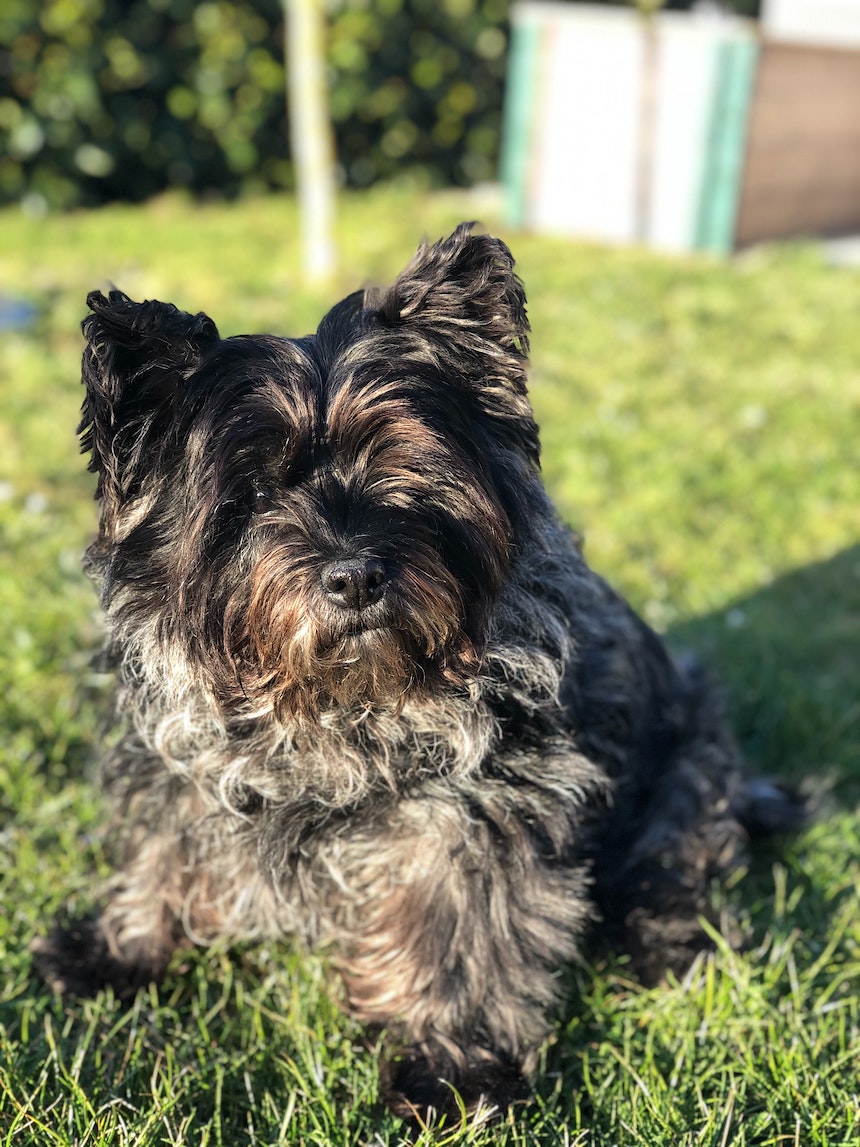
I had met Betty when I was on a farm call at her father’s place up the Calapooia River. She had a dog, Clyde, who was best described as a mutt. His usefulness was debatable, especially when we were trying to work cows.

I went out to help Betty with Clyde. 

“What’s up this morning?” I asked.

“I don’t know, Doc,” Betty said. “Clyde is all swollen up around his private parts this morning, and he is really painful.”

I picked up Clyde from the backseat and carried him to the exam table in the middle of the garage. There was a significant swelling around his scrotum and prepuce. With some drainage on my arm, there was an open wound somewhere.

When the thermometer read one hundred and four, I knew we had an infection. I laid Clyde on his side and rolled him up on his back. Clyde snarled when I moved his hind leg to allow me a better view.

“He is pretty painful,” I said. “I’m going to put a muzzle on him for a couple of minutes while I get a closer look.”

With Clyde muzzled, I looked closely, and someone had put an elastrator band on Clyde.

“Betty, someone has put one of those castration bands on Clyde,” I said. “They work on young calves and lambs, but on dogs, they just cut into the skin and cause a massive infection. That is what is going on with Clyde.”

“We never use those on calves,” Betty said. “I wonder who would do that to Clyde?”

“My guess is you have a neighbor with a dog in heat,” I said. “They probably have taken exception to Clyde’s attention to their dog.”

“That is terrible, and I bet I know who did this,” Betty said. “What do we need to do with Clyde?”

“I am afraid Clyde will have to be neutered,” I said. “There is no saving those testicles now. He will also lose his scrotum. Once with get things cleaned up and put him on some antibiotics, things should heal fine. I will leave some open wounds for drainage, and I might have to place a couple of drain tubes. If everything goes as planned, Clyde should be able to go home this afternoon.”

“That would be great,” Betty said. “We have talked about neutering him. It just never seemed to be the right time. He will be much happier if he doesn’t have to stay overnight.”

When I got Clyde under anesthesia, I clipped and scrubbed the area well. I could see the elastrator band cinched around the testicular cords about a half inch under the skin. I carefully severed the band with a scalpel. Once the band was removed, I removed the scrotum. That was easy, as most of its attachments were already severed.

It is a wonder that Clyde had not chewed things off already. Then he would have had a real mess.

I routinely removed the testicles. Leaving the tunics intact, I ligated each cord separately. I allowed them to return to their normal position in the groin. After finding no pockets of fluid, I stretched the opening left by the removal of the scrotum and loaded Clyde up on antibiotics.

When Betty arrived to take Clyde home, most of the swelling was already gone.

“I talked with the neighbor,” Betty said. “He wouldn’t come right out and admit that he had done it, but he said enough that I know who did it. Do you think I should report him for animal abuse?”

“With no proof, it becomes one of those he said, she said things,” I said. “I doubt if the sheriff is going to do anything about it. But you might just tell the neighbor you are thinking about reporting him. It might make him worry a bit.”

“They say the animal abusers often progress to become people abusers, or worse,” Betty said.

“That is probably the case,” I said. “He would probably have a case that would prevent a charge of aggravated animal abuse. He would say that it was done in anger and he was trying to protect his dog. It would be little different from someone abusing a dog for the pure enjoyment of it.”

“Do you need to see Clyde again?” Betty asked.

“There are no sutures, just a large hole for drainage,” I said. “If you have any problem getting the pills into him, I should hear from you. It would probably be good for me to glance at this wound in three or four days, but the swelling is already down. I think we are home free.”

Clyde went home and healed up with no problem. Betty did have another conversation with her neighbor, and it worried him enough that he gave me a call.

We discussed appropriate ways to deal with neighbor conflicts when dogs are involved. It is grossly unfair to the dog to make him suffer because people can’t settle a disagreement. I think he learned from the conversation.

Photo by Damian Barczak on Pexels.