Old Three Toes, From the Archives

D. E. Larsen, DVM

When I was growing up in Coos County one rarely encountered a Coyote, except on the high ridges. We didn’t think much about it at the time. That was just the way it was. I remember the first coyote I saw, on the top of Sugarloaf Mountain, on a cold morning Jeep ride with Uncle Robert.

    Twenty years later coyotes had moved into the valleys and were heard regularly and encountered with little effort if hunting them. They had become a significant problem to sheep ranchers, and an occasional brave one would come close enough to the barnyard to snatch a chicken.

    My Uncle Duke’s explanation for the change was probably the most accurate. I didn’t have a full understanding at the time but would later come to appreciate his wisdom.  In my younger years, 1940s and early 1950s, all the creeks in the area were full of spawning salmon and steelhead in the fall and winter. Dead, spawned out, fish were present on the riverbanks and all the creek banks. Later in the 1950s and 1960s, commercial fishing for salmon moved from the steams to the ocean.  Spawning fish numbers decreased and dead fish were only occasionally encountered on most streams.

    Duke’s opinion was that when the streams were chuck full of fish the coyotes would have easy access to salmon and would die from the disease. The only viable populations thus existed on the high ridges far removed from the spawning streams.

    Salmon Disease (or Poisoning) is a complex disease of all canines. It occurs approximately 7 days after a dog (or coyote) consumes infected raw salmon, trout or steelhead. The fish carry a larva of an intestinal fluke. The fluke causes only mild disease and can infect a number of species, but the fluke also carries a rickettsia. It is this rickettsia that makes all canines ill and is the cause of Salmon Disease.

    Salmon Disease is treatable if it is caught in time. Ninety percent of dogs (and coyotes) will die within 7 – 10 of becoming sick if they are not treated. Survivors may be immune for long periods if not for a lifetime although there are exceptions to this immunity.

    I was on a farm call, talking with Dick Rice. Dick owned a ranch on the Calapooia River. His ranch was one of the early pioneer ranches in the area. 

“Doc, I have been having a heck of a problem with coyotes the last couple of years,” Dick said. “It seems to be the same coyotes most of the time. He has only three toes on one foot.   He catches any lamb left out of the barn overnight. Can’t trap him, he is too wise.”

  Dick was at his wits end on how to deal with this bandit.  I related my Uncle Duke’s opinion on the shift of the coyote population into the Western Valleys. He listened with interest but just seemed to take it in as a story. I finished with the calf we were treating, loaded up and returned to the clinic. 

    I never gave the conversation much thought after that until I bumped into Dick outside of Thriftway one afternoon. Dick had hurried to catch up to me in the parking lot. It was apparent that he wanted to talk.

    “Hi Doc, how have you been?” he said, a little out of breath.  “I have wanted to talk to you about that Old Three Toes.”

    “Aw, yes, I remember you talking about him,” I replied.

    “You know, I got thinking about the story you told about Salmon Poisoning. One night after work, I stopped in here and bought a hunk of salmon tail. I have an old burn pit and garbage pile on the far side of the pasture behind the house. I took that salmon out there and put it on the edge of that pile.  It was gone the next morning.” 

    “And Doc, that was a couple of months ago. I have had no more coyote problems, and Old Three Toes is gone. I have not seen his tracks anywhere. Can’t thank you enough for that story.” 

    “I’m glad it helped you, Dick. You can thank the observation skills of an old farmer for the information. I am not sure that I would have ever put that information together to come up with that conclusion,” I replied.

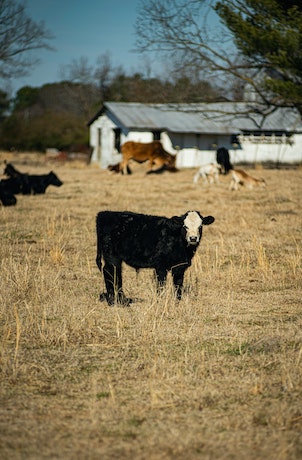
Photo by DAVID NIETO on Unsplash

The Wolf Hybrid

D. E. Larsen, DVM

Sandy and I had a dinner meeting with the local group of veterinarians in Albany. It was always a hassle to go out. First, we had to get out of the clinic on time, and then the babysitter had to show up on time.

When Sandy and I were finally dressed and in the car, we glanced at each other and stifled a laugh. We were escaping for a few hours by ourselves.

Pulling out of the driveway, we headed toward Albany. We were almost to Bauman mill, halfway to Lebanon, when the red light came on, and the car was overheating. We pulled off the road, and I looked under the hood. Unlike many of my high school friends, I was never a car guy. In this case, even I could see the remains of a fan belt. 

I looked around and saw a house a couple hundred yards down the road. I told Sandy to sit tight and headed down the road to the house.

Knocking on the door, an older lady, probably in her fifties, answered the door.

“It looks like I lost a fan belt, and I was wondering if I could use your phone to call a tow truck?” I said.

“Where are you at?” she asked.

“We are at the pullout, a couple hundred yards back up the road.”

“My husband has a shop at a service station in town,” the lady said. “We are just finishing dinner. He and my son will come tow you to town in a few minutes.”

“That is far more than I would expect,” I said.

“It’s no problem,” she said. “They will be happy to help.”

I walked back to the car. Sandy was glad to see me. 

“I hate sitting alone in a car beside the road,” Sandy said. “I am scared that some idiot will come and run off with me.”

“Well, we are in luck,” I said. “The guy at that house has an auto shop in Lebanon, and he and his son will be here shortly and tow us to the shop. Hopefully, they can put on a new belt.”

It wasn’t long before Adam and his son Dan pulled up with a pickup. Adam checked under the hood at confirmed it was a fan belt.

“These Chevys are notorious for losing this belt,” Adam said. “We will tow you to town, and I will get a new belt on that in a jiffy.”

“That would be great,” I said, not wanting to ask how much this would cost. Whatever it costs would be fine.

They hooked a tow line to the car, and Adam reviewed the procedure with Dan.

“Dan will drive your car,” Adam said. “We have done this before, and it is better that way.”

We loaded up, and Adam pulled out onto the highway. It wasn’t long, and we pulled into the service station where they had their shop. Dan unhooked the car while Adam grabbed a fan belt. Five minutes later, we were ready to go.

“How much do I owe you?” I asked.

“We are fine, you were in need, and we were glad to help you out,” Adam said. “You don’t owe us anything.”

“You can’t make a living giving everything away,” I said.

“No, I’m serious. You don’t owe us a thing,” Adam repeated.

“I should at least pay for the fan belt,” I said.

“When you need some work done, just remember where we are located,” Adam said.

I reached for my wallet and pulled out a business card. 

“Listen, I have started a new veterinary clinic in Sweet Home,” I said. “If you need any services, just give me a call, and I will return the favor.”

“Fair enough,” Adam said, handing my card to Dan. “We have a few critters. We might be able to take you up on that if you remember who we are.”

“I have a good memory,” I said. “If you have any needs, just call and ask for me.”

We pulled out onto the highway and probably drove too fast, trying to make it to our dinner meeting before we were left out.

We had a reserved room upstairs at The Hereford Steer. We were the last to arrive but made it in time for dinner. This was a small, almost informal group of local veterinarians. I would guess that we fell under the auspices of the Oregon Veterinary Medical Association, but there was no formal origination to this group.

The Reid brother, Bob and Dick had organized this meeting. We had a medical doctor give a program on his trip to Nepal to climb a mountain. I forget the mountain, but I think it was K-2.

Other veterinarians in the group included Roy Craig, Don Myrtue, and Fritz Kaiser. The wives were all in attendance, but most of their names were lost to my memory.

Other local veterinarians who occasionally attended meetings were Phil Brittain and Ben Bratt. They were not in attendance this evening.

After dinner, we had the program. The mountain climbing was interesting, but we would never be doing it any time soon. 

The doctor ran into some interesting ethical issues on the trip. Their group traveled through the back country of Nepal. Most of the villages were very poor and had virtually no access to medical care. When the word got out that a member of their group was a medical doctor, there were always people waiting to see him in every village.

He had brought a small inventory of medical supplies and antibiotics, in case the climbing party ran into a medical problem. It was soon apparent that the villagers’ needs were going to deplete those supplies. Should he treat the lady with a life-threatening infection with antibiotics that could be needed by the climbing group? Of course, he gave the antibiotics to the lady, thus saving her life via a chance meeting for an exam.

***

Weeks, then months, flew by, and the events of that evening faded into my memory when there was a phone call from Dan.

“This is Dan,” Dan said. “Do you remember when we towed you to our shop in Lebanon?”

“Yes, I remember,” I said. “What do you have going on, Dan?”

“Well, we have this wolf hybrid and also a little chihuahua. She is in heat, and he is going crazy because they just don’t match up, size-wise.”

Great, I thought. Wolf hybrids were illegal in the county then, and I had refused to treat several of them. Now I was stuck. I couldn’t refuse Dan.

“I was wondering if you could spay her while she is in heat?” Dan asked.

“It’s not the best practice, but I have done that before,” I said. “People think that solves the problem instantly, and that doesn’t happen. It takes several days for the odors and swelling to go away. But several days are better than a couple of weeks.”

“That would be great,” Dan said. “When can we get it done?”

“It just happens that we have some time in the morning,” I said. “Can you bring her in about eight? Make sure she doesn’t have anything to eat or drink at night or in the morning.”

“Thanks,” Dan said. “I will have her there in the morning.”

I hung up the phone with a sour look on my face.

“That look tells me you didn’t like that call,” Dixie said.

“A few months ago, we lost a fan belt in the car,” I said. “Dan and his father towed us to Lebanon and replaced the belt at their auto shop. They wouldn’t take any money for it, so I told them when they had a dog problem to bring it to me, and I would take care of it.”

“That sounds like a good way to get even,” Dixie said. “So, what is the problem?”

“The problem is they have a wolf hybrid in heat, and they want her spayed,” I said.

“Oh, no,” Dixie said. “Do they know they are supposed to have one of those in this county?”

“I didn’t get into that,” I said. “I couldn’t renege on my offer. They really got us out of a pinch that night. They saved our night out. I am really in their debt, so I need to do this for them. I just hope we can handle the dog.”

“I hear some of those hybrids are really hard to handle,” Dixie said.

“If she is a problem, I guess we could get a dose of Rompun into her before Dan leaves,” I said.

“Now, you are going to have trouble getting to sleep tonight,” Dixie said.

***

Dixie had been right on the problem of getting to sleep. I lay awake half the night, worrying about all the issues we would face in the morning.

The legal issue was not a big concern. There was little enforcement of such ordinances. As long as nobody got bit, it would not be a problem. The problem would be if the people with other hybrids learned that I would work on them, they would flood the clinic.

Not only that, but it was spaying a large dog in heat. There were more possibilities of complications that would require a recheck. By the time I got to the clinic, I was sick with worry.

I busied myself setting up the surgery room. I was glad that we had a slow morning. I could bring the dog right into surgery without putting her in a kennel that we might have trouble getting her out of. I was running everything over in my mind. I was sure there would be a problem somewhere.

Dixie interrupted my struggles.

“Dan is here with our spay,” Dixie said with a smile.

I dropped what I was doing and walked to the reception area to greet Dan. There he was with his Chihuahua sitting on his lap.

I laughed at myself out loud.

“What’s the matter?” asked Dan, somewhat confused by my laugh.

“I was planning to spay a wolf hybrid,” I said. “I guess I got the sexes mixed up when you told me your problem.”

“Oh, I am sorry about that,” Dan said. “I guess it would have been the same problem the other way around.”

“Who do we have here?” I asked.

“This is Roxy,” Dan said. “She is pretty hungry. She was upset that her dish was empty this morning.”

“The day is set up so we can go right into surgery with her this morning,” I said. “She should be ready to go home any time this afternoon.”

“Good, I have some stuff to do this evening, so I will be here right after lunch,” Dan said. “How much am I going to owe for this?”

“You’re going to owe just what I had to pay for that fan belt,” I said.

Dan smiled, “That’s good, thanks a lot.”

Dan left and Dixie and I took Roxy into an exam room to get started on the day.

“I was never so relieved to see a Chihuahua in my life,” I said.

Photo by Steve on Pexels.

Ebooks priced at $1.99

The first 5 of my books are priced at $1.99 on the Kindle store until 8:00 AM on Feb 16.

Book 6, It’s a Hard Job Being a Kitten, ebook will be free on the Kindle store Sunday, Monday and Tuesday. It will make a great Valentines gift.

Links to each of the the books are available on my blog’s home page at docsmemoirs.com. Scroll to the bottom of the page. You can preview each book also.