Fetotomy on Whiskey Butte

D. E. Larsen, DVM

Jack had called first thing in the morning. He had a wild little heifer with a calf half hanging out of her. His directions sent me over the top of Whiskey Butte into some country I had not been through before. By the time I made the turn to his place, I was close to Cascadia. It would have been quicker to have come up the river on the highway.

Jack was talking from the moment I stepped out of the truck. He wanted me to know he could take care of this if he wasn’t so damn old. He also wanted me to know that he didn’t think much of that last vet he had out here from Albany.

“That guy was afraid of cows,” Jack said. “He didn’t even look at her, just handed me a little medicine and told me to give her a shot. Charged me forty dollars for nothing. Why I would shoot her before I called that guy again.”

We stood at the edge of the corral, and I flinched as the heifer charged the fence. Jack was watching me with a wary eye. It didn’t look like we were going to get much accomplished standing here watching her. I started over the fence with my lariat in hand. Jack stood by, watching, with a sly smile on his face.

Jack was a big man, standing well over six feet and weighing close to three hundred pounds.  His large belly would shake when he laughed. Jack had a large pointed nose and thinning grey hair topped his weathered face.

“I have a squeeze chute, but it is at the corral in the lower meadow,” Jack said, in a voice that matched his size.

I swatted the heifer on the nose with the lariat as she charged the fence as I was climbing down. That changed her attitude enough to allow me to get on the ground and throw a quick loop over her head. I took a wrap around the nearest post and slid out to the end of the rope. I snubbed her close to the post. Jack was watching open-mouthed as I reached through the fence for the second rope. I put the second rope on the heifer with a loop across her nose to fashion a halter. She was already choking herself on the rope around her neck. I tied her with the second rope giving her ample slack if she needed to lay dow. Then I released the tension on the first rope.

With her safely tied, I jumped back across the fence for my equipment.

“My God, where did you learn to handle cows like that, Doc?” Jack gasps as I hauled my OB bag and bucket over the fence.

“It just comes from growing up around them,” I said. “I get surprised by one every once in a while, but most of the time, I know what they are going to do before they do it.”

This heifer had a dead calf hanging halfway out of her. She was actually in pretty good shape, considering this calf had been hip locked for most of the morning.

“What are you going to do, just yard it the rest of the way out?” Jack asked as I started cleaning up the heifer. “I used to just hook on to em with a tractor and pull em out,” Jack continued. “If that’s the only thing you can do, I know some of em never get up again.”

“No, Jack. This calf is long since dead, there is no sense making it any harder on her than necessary. We are going to do this the easy way,” I explained.

Jack is quiet, thoughtful, rubbing his chin as he ponders what I am up to.

“So what are you figuring to do, Doc?” Jack finally asked as I begin assembling the fetatome.

“This rig here, that looks like a little Trombone is a fetatome. I am going to use it to cut this dead calf into several pieces so we can get it out of there without damage to the heifer,” I explain.

Jack is quiet, but quite watchful now. I thread a length of OB wire through the tubes of the fetotome, leaving a large loop hanging from the front end of the fetatome. I worked the loop over the head the feet of the dead calf and worked it down to the mid-abdomen. 

I ran the fetatome along the side of the calf to the leading edge of the hip bones. Then I hooked the T handle on the side of the fetatome to the chains on the front feet. This would hold the end of the fetotome in position as I made the right angle cut through the calf’s body.

Jack’s son Gene arrived just in time to lend a hand with the sawing.

“This will work a lot better if you can give me a hand with the saw as I hold the fetotome in position,” I say to Gene as I encourage him to climb into the corral.

After getting everything in position, I clamp the handles on the OB wire and instruct Gene on how to saw with long, slow, but strong strokes.

Holding the end of the fetotome against the calf’s hip to stabilize it, Gene starts sawing with the OB wire. The heifer has been pretty still through all of this. Concentrating on pulling against the rope tying her to the fence. The OB wire makes a rapid cut through the calf, and the front part of the body falls out of the heifer in short order. Gene is not prepared for that event and drops the handles as he moves to the far corner of the corral.

“Don’t take off on me now,” I kid Gene. “The real mess is still to come. We still have to the hips out,” I explain.

“I’m O.K,” Gene replies.

Jack snickers, enjoying the whole scene.

“I’m still not sure how you’re going to get the butt out,” Jack says. 

“Well, I’m going to split the thing in two, Jack, and it will slide right out,” I explain as I tie the OB wire to a long OB chain. I had the chain in a bunch in my left hand, and I reach in passing my hand over the rump of the calf. My arm is into the heifer to my armpit. I drop the chain over the back of the calf, reach along the belly between the hind legs, fishing for the chain. Finally, my fingers find it. I retrieve it pulling it out between the calf’s legs. I pull the chain out with the trailing OB wire around the rear end of the calf. I quickly thread the fetotome and position the front end of it against the severed end of the calf’s backbone.

“O.K. Gene, here we go again!” I say.

Gene begins sawing as I hold the fetotome. This is a difficult cut, cutting through a lot more bone. But the bone is soft, and after a brief rest by Gene, the OB wire slides through the last of the fetal pelvis. I removed the fetotome, reached in with my left hand, and pulled out one leg and half of the pelvis. When I pulled the second half out, the fetal membranes followed with a gush.

“I’ll be damned,” Jack said, shaking his head. “I been around cows my whole life, I’ve heard about this kind of stuff, but I never seen it before.”

I cleaned the heifer up and placed 5 grams of Tetracycline powder into her uterus. Then I gave her a dose of extended-release sulfa boluses. I knew that when we turned her loose, it would be some time before she let anybody on this ranch catch her.

“She should be fine,” I told Jack as I turned her loose. “You might want to send her down the road, Jack. She won’t provide you any production for another year.”

“Aw, she’s a big heifer, she’ll be fine next year,” Jack said.

From that day on, Jack would always tell everyone within earshot about my ability to handle cows and how I cut that dead calf out of that heifer, not hurting her a bit in the process. He always spoke in a loud voice and seemed unaware of who might hear him. He proved to be one of my best advertisers, often calling to me in his loud distinctive voice across crowded restaurants or meeting halls.

It never failed; right after the greeting, he would start explaining to anybody close to him.

“Best damm vet I ever did see. I tell you what, you should see him handle a cow. I had the wildest cow ever trying to have a calf, and he just crawled down into that corral and roped and tied her just like that,” he would say, snapping his fingers. And in a voice about as loud as the greeting.

That Horrible Trip to the Vet

D. E. Larsen, DVM

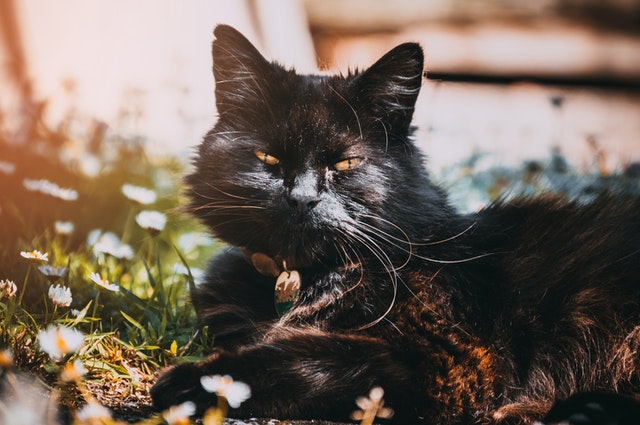
Many dogs and cats hate to go to the veterinary clinic. This is probably a learned experience. Clinic staff makes every effort to make the visit enjoyable, but something unfavorable happens sooner or later. They get a shot, or they are forced to take a pill.  Worse still, they are thrown in a kennel and left for God knows what. 

Those memories are always present. Just ask a cat owner what happens when they get the cat carrier out of the closet. The cat hides in the deepest crevice, and it takes them forever to get him into the carrier. It makes no difference how one disguises the process of getting the carrier out, the cat seems to know what we are going to do before we do.

Dogs are easier to trick because they love to ride in the car. But when the car turns toward the clinic, the dog is looking for someplace to hide.  Some do a better job of hiding better than others.

One good example is Rocky. Rocky was a little short-legged dog, probably part Dachshund. He was black and tan and had the personality traits of a Dachshund, always thinking he was the biggest dog on the block. Rocky belonged to an old man, Henry, who tended to drink a lot. A couple of large neighbor dogs chewed up Rocky one day. His wounds were severe. He lost a lot of skin and some muscle over his back and right hip. He was in the clinic for several days following his initial wound treatment. After surgery, Rocky had to come back to the clinic every two days to treat his wounds.

After a couple of trips to the clinic, Rocky had the routine down. After that, when Henry would pull up to the clinic, Rocky would dive under the car seat. It became a struggle to dig him out from under the seat. Finally, we learned that if Henry would call when he was on his way and park over at Safeway. Jolene would meet him there and quickly open the car door and grab Rocky before he could get under the seat. One day Henry was too drunk to get Rocky to the clinic, and his wounds were overdue for treatment. Jolene accompanied me to Henry’s apartment to pick up Rocky. The look on Rocky’s face when we walked into his apartment. “Oh no, now they know where I live,” must have been what he was thinking.

Another example was a little brown hound pup. On his very first trip to the clinic, his owner had trouble getting through the door. The reception room was packed with people. He stood in the open doorway with the pup on a leash for a short time and finally found a spot where he and the puppy could fit. As he started to move toward the open place, he let the door close. The pup was slow to move and was not entirely through the doorway. 

A loud “Yip” was heard when the door closed on the tip of the pup’s tail. Luckily, there was not any damage to the tail. The damage was to the pup’s physic. On the next trip to the clinic, 4 weeks later, the puppy balked at the door. Finally, the owner had to pick him up and carry him into the clinic. The pup continued to grow, of course, and soon was too large to pick up. Finally, it got to the point where it was easier to take care of simple things in the car than fight getting him through the door. For more severe visits, we found that he would come through the back door with no problem.

Erma talked with me about spaying or neutering their barn cats. These cats were strictly barn cats and close to being feral. They didn’t know what sex they were because the cats were so skittish that they were never handled.

“Erma, if you get them in a carrier, just bring them into the clinic,” I said. “We will be able to get to them at some point, it might take a day or two, but that will only help tame them down a little.”

It was probably a few weeks from that conversation that Bob and Erma managed to get the two cats into a box. With the cardboard box seemingly secured, Erma loaded the box, with the cats, into the pickup.

Of course, these two cats had never been off the farm. They probably had seldom been out of the large old barn that they call home. The barn offered them everything they needed in life. 

Besides the food and water delivered by Erma daily, there were more mice than any ten cats could catch in a lifetime. Birds would routinely fly into the barn to clean any spare grain from the managers or the floor. These always presented a challenge to the young cats. But cats thrive on a challenge. The scavenging birds were literally risking life and limb for their occasional morsel of cracked corn.

These two cats were obviously terrified at being in a box. Then taken from their barn, and placed in the pickup. When Erma gets in the truck and starts it up, The box rattles a little.  She speaks in an attempt to settle the cats as she secured the box with her right arm.

Of course, the box’s hysteria only increases as the pickup pulls onto the highway and picks up speed. Now distressed yowls are coming from the box, and the box rattles even more. Again, Erma attempts to settle the troops. They were having none of it.

They are franticly scratching and digging at the soft cardboard. A hole appears at an upper corner of the box. With a little more scratching, a head pops out of the hole. The world is zipping by at an unfathomable speed, pure panic happens now. The cat springs from the box, immediately followed by his companion.

Making every effort to escape the confines of this carriage to hell, they start their circles around the cab of the truck. They begin frantic laps around the inside of the pickup cab. Around and around they run, desperate for an escape route. Across the dashboard, then the back of the seat, behind Erma’s head, and back to the dashboard. The speed of the circuit increases with every lap.

Just precisely what went on then is lost to history. But finally, the pickup runs off the road on a slight curve. It runs down a hill at near highway speed and slams into a tree. The doors fly open, and the cats have considered their mission accomplished. They make their escape. 

With luck, Erma was secured with a seat belt, so she escaped significant injury. She did have a severely sprained wrist. The pickup did not fare so well. Being an older farm truck, the insurance folks were quick to declare it totaled.

Bob and Erma made multiple trips to the site of the accident, and they were able to find and capture one of the cats. They brought her to the clinic. She stayed for a spay. A young female, she would have been increasing the cat population of the barn soon. Staying in the clinic for several days following surgery allowed her to tame down. But she was delighted to return to her barn.

The second cat was long gone. None of the nearby houses had seen him. I would guess they probably should have been looking for him a couple of miles to the East.  

Photo Credit: Photo by Tina Nord from Pexels

Don’t Give that Injection

D. E. Larsen, DVM

I looked at the clock, 5:30 in the morning. I have no idea how long the phone has been ringing. I roll over and stretch to lift the receiver.

“Good morning,” I say.

There is an old lady on the line, she sounds frantic, it takes me a couple of minutes to collect my thoughts. I finally sit on the edge of the bed.

“I’m sorry, it is early, and I didn’t catch much of what you said,” I said.

“This is Opal,” the lady said. “I live in Albany and go to a veterinary clinic here. Julie works at this clinic, but she takes her animals to you. Mucho has diabetes, and the doctor here has been having trouble getting him stabilized on a dose of insulin. Julie told me yesterday that this doctor didn’t know what he was doing and that I needed to get Mucho in to see you.”

“I know Julie,” I said. “I am a little surprised that she would suggest that to you.”

“She said the Mucho will die if I don’t get him in to see you right away,” Opal said. “He has been having little seizures all night long. And I am supposed to give him another injection at 6:30.”

“I could probably see Mucho if you have at the clinic at 8:00 this morning,” I said. “But if you are going to bring him to see me, you do not give that injection this morning.”

“But those are the instructions that I have from my doctor here,” Opal said.

“This is what I am telling you, Opal, if you give that injection, I will not see Mucho,” I said. “If you give that injection, you go to see your doctor this morning. And if Mucho has been having seizures all night, you probably better call him before you give that injection.”

“Okay, I will not give the injection, and we will be at your clinic at 8:00,” Opal said. 

“Do you know where we are located?” I asked.

“Yes, Julie gave me directions,” Opal said. 

“Okay, I am going to try to get an hour of sleep, I will see you and Mucho at 8:00.”

Julie was a good client, and we had talked about her situation several times. She knew that she could get her veterinary services at much-reduced fees at the clinic in Albany, but just preferred coming to me. I am sure that she would lose her job if her clinic knew she was actively sending clients to my clinic.

Opal and Bill were waiting in front of the clinic when I arrived at 7:45. They were an older couple in their mid-70s. They were both short and slightly built, some would call them trim. Bill’s hair was thin on top and gray in color, and he had a well-trimmed mustache. Opal’s hair was white. Opal was the commander of the group, Bill followed and carried things.

Mucho was a white poodle, immaculately groomed without a hair out of place. He looked older and somewhat heavier than he should be, but I would stop short of calling him obese.

“Good morning, Doctor,” Opal said as I unlocked the door.

I held the door open as Opal and Mucho entered. Bill took hold of the door and motioned me to go ahead of him.

“It is going to take a few minutes for everyone to get here and set up to see you,” I said. “You can make yourself comfortable, and we will get you looked at as soon as possible. Do you have any records?”

I knew that was a mistake as soon as I said it. Opal pulled out a folder that was an inch thick.

“These are my records,” Opal said. “I didn’t want to ask our doctor for records because I didn’t know if Julie would get in trouble or not.”

I took the folder from Opal. “I will glance through these while we are waiting for the rest of the staff to arrive.”

At about the same time, Ruth came through the door, and Mucho stiffened in Opal’s arms and pull his head back, and then started twitching.

“On second thought, maybe we should take Mucho and get a look at him immediately,” I said.

“He has been doing this for most of the night,” Opal said.

We got Mucho into an exam room and collected a blood sample for a blood glucose level. The test would take a little time.  While we were waiting for the test result, we got an IV catheter in place and started a slow drip of D5W. I was sure that his glucose level was going to be quite low.

Just how low was the question, his blood glucose was 42. Had Opal given the prescribed dose of insulin at 6:30, Mucho would have never made it to Sweet Home.

Talk about an instant cure, with a small dose of 50% glucose, Mucho was up, and wagging is tail.

“That is amazing, Doctor,” Opal said. “What did you give him?”

“I just gave him a little glucose,” I replied. “You see, the insulin dose you have been giving has been too large. It just kept making his blood glucose a little lower each day, then finally, it is too low. So we have to do a couple of things. Number 1, we need to get him through today. And then, number 2, we need to start him back on a low dose of insulin and adjust it slowly every couple of days until we get him where we want his blood level.”

“How will we keep this from happening again?” Opal asked.

“I will do things a little different than your doctor in Albany,” I said. “I go slow, making sure his diet is the same every day, and adjust his insulin dose, so his symptoms are relieved. That means we will adjust his glucose to a level that you and Mucho can live with, not what some book says it should be.”

“That sounds a little complicated,” Opal said. “I want you to know, I won’t leave Mucho here. We will have to do this at home.”

“Except for today, that should be no problem,” I said. “It might mean that you will need to travel back a forth every couple of days, but we can do most of this as an outpatient.”

“You said, except for today,” Opal said.

“We need to keep Mucho for a couple of hours anyway,” I said. “Just to make sure he is not going to have a seizure on your way home. We need to know that he is out from under the insulin dose from last night. You guys could probably go eat breakfast. If you eat slowly and talk to each other a little, that would probably be long enough.”

And so it began. Opal and Mucho were nearly constant clients for a time. That first day went well, and we let Mucho go home without any insulin for a couple of days so we could get a fresh start on stabilizing his dose.

Mucho did prove to be quite a challenge. We ended up having to use a split dose of Regular Insulin and NPH Insulin.  He did very well for many years, giving his insulin every 12 hours, and eliminating all the little goodies from his diet pretty much did the trick.

This entire time, I worried about Julie’s job status. If Opal’s previous veterinarian knew she had sent Opal over here, he would not be happy. The problem was solved in a couple of months when Julie informed me that they had purchased a small farm in upstate New York and would be moving shortly. Things just worked out fine.

Photo Credit: Photo by Goochie Poochie Grooming from Pexels