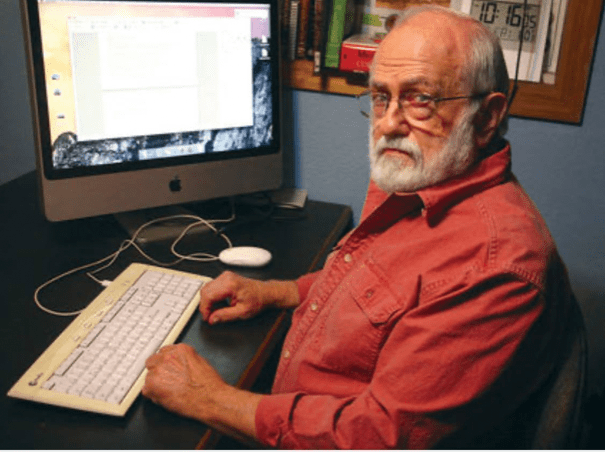
Charlie and Betty Land, Breeding Mares, From the Archives

D. E. Larsen, DVM

 I pulled the fingers off a plastic OB sleeve and pulled it on my left arm. After the fingerless sleeve on my left arm was in place, I pulled on a latex exam glove. Then I pulled on a second OB sleeve, also with the fingers removed. This would allow excellent protection from the ‘elements’ and still all for excellent sensitivity at my fingertips. I applied a good squeeze of KY to my hand and arm. I struggled to maintain a safe position behind this large quarter horse mare. She moved from side to side as I eased my gloved hand into her rectum. Standing at her right hip, I held her tail with my right hand and lean hard on my elbow firmly planted on her rump. It was apparent who had the most muscle as we danced from side to side in the stall.

 “How many times have you bred this mare?” I asked Charlie as I advanced my arm into her rear end.

 “This is the third visit for her this year. I had problems with her last year and didn’t get her pregnant. The owner really wants to get her in foul with Carbine,” Charlie answered.

 Charlie had related the problem when he stopped by our house on Ames Creek yesterday. I was out front with the kids, picking some corn in the garden, when Charlie pulled into the driveway in his old blue Chevy pickup. He was on his way home from work when he saw us out front.

 “Hi, I’m Charlie Land, I have a little horse ranch up the creek. I just wanted to introduce myself and ask if you had time to look at a mare for me this weekend,” Charlie said as he walked across the lawn with his hand outstretched.

 “Dave Larsen,” I replied as we shook hands. “We are going to be home on Saturday, I could run up and look at her in the morning. Not terribly early, I am not much of a morning person and like to sleep in when I get a chance.”

     “This is a mare that I have been trying to get pregnant for a couple of years,” Charlie explained. “I lease this big quarter horse stud, Carbine. He is a pretty valuable horse and has a great record on the quarter horse track. I generally have mares lined up all spring. This mare didn’t get pregnant last year, and I only get paid for a pregnant mare.”

 My hand reached the brim of the pelvis, and I swept from side to side to find the uterus. I carefully ran my hand along the length of the uterus, starting at the tip of the right horn and continuing to the tip of the left horn. 

 “Not pregnant, and the uterus feels pretty normal,” I said, almost to myself as I reached the left ovary. “Normal left ovary,” I said, returning to the right ovary. “The right ovary is normal, and a large follicle is present, this mare should be in heat very soon,” I said as I pulled my arm out and peeled the OB sleeve and gloves off.

 I breathed a sigh of relief as I pushed myself away from the mare. I was always told the only way to be safe around a horse was to be in the right place at the right time. To be in the right place at the right time, you have to be in the right place all the time. Doing a rectal exam on a poorly restrained horse was one of the most dangerous positions to be in, both for the horse and for the examiner. It is easy to receive a kick, and ruptured colons are also possible for the mare.

 “If she doesn’t get pregnant with this breeding, she goes home,” Charlie said. “What do you think we can do to get her pregnant?”

 “Well, Charlie, I will be honest with you. I am much more of a cow doctor than I am a horse doctor,” I said as I pondered the problem in my mind. “The horse guys like to culture a mare and treat any infection according to the culture results. That procedure takes almost a week to complete if we start today. She is going to be in heat in the next day or two.”

    “This heat is her last chance this year,” Charlie said. “She goes home after her next cycle.”

    “In the cow, I do a post-breeding infusion,” I explained. “The day after breeding, I infuse the uterus with an antibiotic that is easily absorbed by the uterine lining. This clears any infection in the lining of the uterus and gets it ready for the fertilized egg, which reaches the uterus usually 3 days following breeding. My guess is if you call a horse vet, he will shudder at that strategy. I don’t know why it might be a money issue. Their procedure runs up quite an expense. Might just be that they listen to the experts more. In the cow, we are working a herd, not an individual.” 

    “You make sense to me,” Charlie answered. “I will breed her when she cycles and give you a call. Or just stop by your house. I thought, how lucky can a guy get when you came to town, then I thought I had died and went to heaven when you moved in down the road.”

    “Whatever works, you are more than welcome to stop by the house anytime. We haven’t been in town too long, people are just now learning I am around, so I am not too busy just now,” I said. “The clinic won’t be completed until this fall.”

   Charlie pulled into the driveway on his way home from work on Tuesday. I recognized the old blue Chevy pickup and stepped out of the garage, where I had been putting things away.

    “I bred that mare last night after work,” Charlie said as I walked up the driveway toward his pickup. “I was hoping you could come up this evening.”

    “It will take me a couple of minutes to get things ready,” I replied. “If you get home and get her in a small stall, I should be there by then.”

 It didn’t take long, I just needed to make sure everything was in the truck. I ran through a checklist in my mind as I looked through the back of the vet box. Plenty of water, a vial of IV Ampicillin, infusion pipettes, tail wrap, OB sleeves, bucket, boots, coveralls, Betadine scrub and solution, and plenty of lube. I ran into the house and told Sandy that I would back before dinner. Charlie’s place was only a couple of miles up the creek.

    Charlie was waiting in the stall with the mare haltered when I stepped through the open barn doors.

   “Push her over against the wall on her left side,” I instructed.

    I wrapped her tail, and the did a preliminary scrub of the rectum and vulva with Betadine surgical scrub. After mixing the 3-gram vial of Ampicillin, I did another scrub of her rear end and then flooded the area with Betadine solution. I drew up the Ampicillin in a 60 cc syringe and stuck it in the chest pocket of my coveralls. I held the infusion pipette in my teeth as I pulled on an OB sleeve and applied ample KY.

    Again, standing on her right hip, I eased my left hand into her vagina. She tensed a little but tolerated the intervention far better than the rectal exam the other day. I moved more behind her now, took the pipette in my right hand, and directed the tip into the palm of my left hand. I advanced my left hand and arm into the vagina until I encountered the cervix. Holding the pipette steady, I attached the syringe to the pipette with my right hand. With my index finger in the cervical orifice, I advanced the pipette into and through the cervix. Then I slowly infused the Ampicillin solution into the uterus.

   That accomplished, I withdrew my arm and pipette, moving out from directly behind her as I did this maneuver. I rinsed her off thoroughly and removed the tail wrap.

    “That’s all there is to it,” I said to Charlie. “Now we wait to see what the next couple of months give us. Since there is no rush to make a pregnancy diagnosis, I would wait at least 60 days before checking her. Obviously, if she continues to cycle, she is probably not pregnant.”

 “I doubt if the owner will be able to wait that long before a check for pregnancy. But that is his problem, she is going home this week. I will let you know when I get the news either way,” Charlie said.

    “Everybody is in a hurry for an answer, but if it doesn’t make any plans change, time will give you the same answer as an early pregnancy exam,” I said as I loaded things into the back of my truck. “I will be as anxious as everybody to hear the news, you let me know either way.”

     It was just short of 50 days later, and Charlie’s pickup skidded to a stop in our driveway. Charlie jumped out and ran to the door, getting there before I could navigate the way across through the toys scattered around the living room.

    “Good news,” Charlie said as soon as I opened the door. “You are my hero now, that mare is pregnant, and the owner is happy as can be. I think I like the way you treat cows.”

    Charlie pulled a wad of bills out of his front pocket and peeled two bills off the roll. He reached out his hand with two 100 dollar bills. “This is for your good work,” he said.

    “No, Charlie, I am no damn lawyer, I charge for what I do, I don’t take from your profits resulting from my efforts,” I said. “You just call me next time, that is rewarding enough.”

   “Call you next time!” Charlie said, “I am thinking that next year we should be infusing every mare. You will make me a lot of money if we can speed up the process and get more mares serviced and pregnant.”

    “That might be overdoing it a little, but we can work out the details next Spring,” I said.

 As time went by, my relationship with Charlie grew with every mare we treated. This was a simplified procedure but worked well. Mares were seldom bred more than one time, and the pregnancy rate was very high. Charlie remained a happy and loyal client.

Charlie and Betty Land continued tomorrow, #2 At the Track

All On Number One 

D. E. Larsen, DVM

We welcomed our first spring in Colorado. The Rocky Mountain winter had been hard for us Oregonians. Spring term gave me a light schedule in school since I already had taken the microbiology course while at Oregon State. And we had a few extra dollars since I was working at the University dairy.

“How do you bet when you go to the dog track?” I asked the janitor, Bob, as I was helping him tidy up after anatomy lab.

“There are a few guys who have a system, and then there are those who pick the dog who takes a dump going to the gate,” Bob said. “Actually, the dogs are worse than the horses. I think you have a chance on the horses, but with the dogs, it is all the luck of the draw.”

“My wife and I haven’t been out since school started,” I said. “I have a few extra dollars, and the neighbor lady said she would watch the kids. I thought I would take Sandy to the dog track.”

“If you want an evening of fun, and you aren’t worried about making a thousand dollars, there are a couple of strategies to use,” Bob said. “The one that I think works the best is to pick the top three dogs according to the sheet and bet two dollars to show on each of them. Doing that will give you the best chance of not running out of money. You won’t win a lot, but you should win a few dollars.”

***

The parking lot at the Loveland dog track was packed, and we had a long walk to the grandstands. A woman from Denver had won seventy thousand dollars last week, and everyone must think they can repeat the process.

Sandy and I were both a little excited. This was our first date night in some time. We worked our way through the crowd and found a relatively empty section of bleachers that was close to the starting boxes and close to the betting windows.

The first dogs for the first race were just starting their parade as I returned with a couple glasses of beer. Sandy had been scanning the cheat sheets and had the three dogs for us to bet on all picked out.

Our budget was limited. If we wanted to have anything left over for dinner, we needed to be careful with our betting. Otherwise, we were going to have a short night out. 

I took the list and headed to the betting window. There was no line, but the lady in the booth seemed rushed, and I stammered and had trouble getting the information out. She was spitting tickets out faster than I was talking, or so it seemed.

“That will be eighteen dollars,” the lady said.

“Eighteen dollars?” I said. “I only wanted to spend six dollars on this race.”

“There are no refunds,” the lady said. “That will be eighteen dollars.” She pushed the pile of tickets out toward me.

I paid her eighteen dollars. That was just about our entire budget for the night. We had set the babysitting money aside but had hoped to have some cash for dinner.

I was quiet as I seated myself on the bench beside Sandy. I carefully looked through the tickets the lady sold me. I had nine tickets, and they were all the same. They were two-dollar tickets for the number one dog to win, and the number one dog was not even on the list that Sandy had given me.

“I’m excited,” Sandy said. “And you’re sitting there like all gloomy.”

“It looks like I sort of mess up at the ticket window,” I said.

“What happened?” Sandy asked.

“I’m not sure how I did it,” I said. “But I put all our money for the evening on the number one dog.”

“The number one dog was not even on my list,” Sandy said. “What do you mean by all our money?”

“We have eighteen dollars on the number one dog to win,” I said.

“Look at the odds,” Sandy said. “The number one dog is way down the list. I guess we had better drink up and get ready to go home.”

“We need to watch the race first,” I said. “You don’t know. They say that those odds don’t really mean a thing in the dog races.”

They brought the dogs back down the track to load them in the starting boxes. We stood up on the bench to get a better view. The number one dog looked like the biggest dog in the group.

“I don’t know, Sandy,” I said. “I like the looks of that number one dog.”

“Sure you do,” Sandy said. “You put all our money on him. You are bound to say he is a good-looking dog.

Sandy grabbed my hand to quiet her excitement as they loaded the dogs into the boxes. The mechanical rabbit was on the inside rail of the track. The doors flew up, the rabbit took off, and the dogs bounded out of the boxes.

The number one dog came out of the box with half a link lead. By the time the pack hit the first corner, the number one dog was clear of the main group. He was almost leaving the other dogs in his dust. Sandy was starting to jump up and down on the bench. 

When he entered the final turn, the number one dog was running entirely by himself. I had a flashback to that sixth horse race in Boston where my horse almost came to a standstill and lost just such a lead.

But the number one dog was running strong. Sandy was in danger of breaking the bench now. She was jumping up and down so hard it almost made me jump a bit without even trying.

The number one dog finished the race a full two seconds ahead of the second-place dog. I jumped off the bench and helped Sandy down to the solid ground. We rushed to the ticket window to collect our fortune.

The odds paid out at nine to one, so we collected $162.00. That was no minor figure in the spring of 1972 for a struggling college student who got $212.00 a month from the GI Bill. We felt rich.

“I don’t think we are going to do anything but spend money if we stay here,” I said. “The chances of hitting another winner is slim to none. Let’s go find a good restaurant and then go to a movie.”

“That sounds great to me,” Sandy said as we started pushing through the crowd toward the exit.

We found a nice restaurant in downtown Loveland. We had a candlelight dinner with prime rib and all the trimmings. A treat we would not have dreamed of a few hours ago.

As we walked out of dinner, people lined up across the street to go to the movie. The marquee said Sometimes a Great Notion. I just glanced at Sandy.

“We have plenty of time,” Sandy said. “Judy said she was fine as long we got home before midnight.”

So we went to the movie. I would guess we were the only ones in the theater with any real connection to the logging industry in western Oregon or to the setting on the Siletz River.

What a great time we had, and entirely by accident. Or by design, as I liked to kid Sandy. After all, I worked with greyhounds in anatomy lab. 

Photo by Jannik Selz on Unsplash

Cancer Eye

D. E. Larsen, DVM

The old cow groaned a little as I plunged my arm deeper into her rectum. Dixie pushed a little harder on the squeeze handle. I always hated pregnancy exams on old fat cows. Their uterus was often difficult to reach, and any pregnancy over three months was out of reach until six or seven months.

Finally, I grasped the cervix and retracted it enough to feel fetal membranes in the body of the uterus. Based on cotyledon size, this cow was about five months pregnant. 

“Tom, this cow is about five months pregnant,” I said. “That is a pretty rough estimate, and it could be a couple of weeks either way.”

“Doc, I called you out to look at this eye, not to do a prep check,” Tom said.

This was an older Hereford, and her left eye was gruesome. There was a bulge of tissue the size of a large egg, bulging from the inner corner of her eye. The entire left side of her face was soiled from the chronic drainage. This was probably the worse case that I had seen since returning to Oregon.

“I know, Tom, but I needed to know her pregnancy status so I could recommend the right course of action for this eye,” I said. “This is a pretty ugly-looking eye. How long has it been a problem?”

“I noticed it sometime last year,” Tom said. “I guess I can’t be sure just when it was that I first noticed it. But by the end of August, I put a couple of puffs of pinkeye power in it, and I figured it was just pinkeye. But I have never seen a case of pinkeye look like this.”

“This is cancer eye, Tom,” I said. “We don’t see many cases of cancer eye around here. When I was in school in Colorado, we would see a lot of cows with cancer eye. Colorado has a lot more elevation and more sunshine. Just like this cow, Herefords account for most of the cases. That white face doesn’t reduce the glare from the sun.”

“What do you do for it?” Tom asked.

“We need to take the eye out,” I said. “That is why I needed to know her pregnancy status. If she is five months pregnant, we can take the eye out and expect her to live long enough to raise the calf to weaning. Many cows will live for several years after we remove the eye. It just depends on how far the cancer has spread.”

“She is a registered cow, and she was artificially inseminated, but I am not sure she is worth the expense of the surgery,” Tom said. “Can I send her to slaughter?”

“If she goes to an inspected slaughter outfit, they will condemn the head,” I said. “And if they find that the cancer has spread beyond the head, they will tank the whole carcass.”

“You’re saying that there is a possibility that she might not be worth anything,” Tom said.

“If she goes through a sale ring, those cattle buyers will probably not want to bid on her,” I said. “They know there is a possibility that she might be tanked. Selling her to an inspected slaughterhouse on condition that she passes inspection, and you might get something out of her. But you assume the risk of her not passing the inspection.”

“I think I will go that route,” Tom said. “She is nothing special, hardly more than a commercial cow. By the time I pay for the eye removal and treatment and then lose everything at the sale. The profit margin on the calf is not worth the trouble.”

“You’re the one making the financial decisions,” I said. “Often, the best medical decision is not the best financial decision.”

Dixie and I cleaned up and repacked the truck. 

“Tom, you give me a call if you change your mind or if you have any questions,” I said through the open window as we started out of the barnyard.

Dixie was deep in thought. She usually was full of questions, especially when we had treated an unusual case.

“Do you think it would be a mistake for me to make an offer to Tom for that cow?” Dixie asked.

“I thought you were trying to figure something out,” I said. “You want to buy the cow for a song, remove the eye and get a registered calf to start your herd.”

“What do you think of the idea?” Dixie asked.

“For Tom, that might be his best option,” I said. “With that eye looking like it does, he is not going to get much for her. And if they buy her on condition of her passing the inspection, and she doesn’t, that is going cost him the slaughter fee plus the transport fee.”

“So I shouldn’t make a big offer?” Dixie asked.

“For you, I would guess the cow will live long enough to wean the calf,” I said. “And she might live several more years. If you can get her for a hundred bucks or so, you just about can’t go wrong. We could take the eye out without much of a problem.”

“I am going to talk with Blain about this deal,” Dixie said. “I have been wanting to get some cows on our place, and  this will allow me to get a start with some registered stock.”

***

The following week, Dixie wanted to schedule surgery for her new cow.

“I know we have been busy,” Dixie said. “But this cancer eye on Della is really getting to be a mess, and I was hoping we could come up with some time to get it taken care of this week.”

“Have Sandy look at the appointment book,” I said. “If nothing else, we could do it right after lunch on Thursday. That would just mean I would get a little late start on the golf course.”

“I have already looked,” Dixie said. “I was hoping you would volunteer Thursday afternoon. I don’t have a chute. Do you think you can do it without one?”

“Della seemed like a mild-mannered cow,” I said. “We can probably get it done with her tied to a post.”

***

On Thursday afternoon, I pulled the truck into the middle of Dixie’s pasture. Della seemed unconcerned, even a little interested. Probably, thinking there was something good to eat.

She never flinched when I threw a rope over her head. 

“The plan is to tie her to my bumper, and then I will get my other rope and throw her,” I said as Dixie watched. “Should be a piece of cake if I can get her to fall on her right side.”

I tied the rope to the bumper of my truck with enough slack to allow her to fall away from the truck. That proved to be an error.

I went to the back of the truck to get my second rope. Della discovered that she was tied and immediately started fighting the rope. She pulled back and shook her head. Then she swung around like a pendulum and crashed into the passenger side door on the pickup. This made a massive dent in the door.

I came back to settle her down, and Dixie was talking to Della in a stern voice.

“I think you have just earned a dose of Rompun,” I said to Della as I drew up a dose of Rompun.

Rompun was a horse tranquilizer. It had a profound, almost anesthetic, action in cows.

In less than a minute, Della settled to the ground. We blocked her up, so she stayed on her sternum. I removed the rope from her neck and pulled her head to the right with my nose tongs. This gave us good access to her left eye.

We clipped the hair from the left side of her face and around the eye. The chronic drainage from the eye had soiled and matted the hair on the side of Della’s face. Under all the matted hair was a lot of inflamed skin.

There was nothing pretty about removing the eye. There was so much cancer that the eye was almost hidden in the mass of tissue. 

I removed the eye and dissected all the cancerous tissue from the socket. I had to make a sliding flap of skin on the lower side of the eye to adequately close the wound.

We rinsed the area well, sprayed for flies, and gave Della a dose of long-acting penicillin.

“Well, she looks like she came through this better than the truck,” I said.

“I am so sorry about that,” Dixie said. “Do you think the insurance will cover it?”

“I think so,” I said. “And I think I learned a lesson or two today. We can schedule us to get back out here in about three weeks to get the sutures out. You need to check every evening, just to make sure there is no drainage from the incision.”

*** 

Della healed well and gave Dixie several calves before she was done. Jack Wright fixed the truck, and the insurance covered the expense. And I made it to Pineway golf course in time for the evening game.

Photo by Khamkhor on Unsplash