Samson the Goose, From the Archives

D. E. Larsen, DVM

It was almost comical to watch Tom struggle to get through the front door with both arms wrapped around a large white goose who had no intention of coming inside. The goose was squawking, and in trying to bite an ear, it had knocked his hat off. Finally, Mary rushed over and held the door open as Tom half fell through it into the waiting room.

“That was a struggle,” Tom said, almost out of breath.

“It is a little too early for Thanksgiving,” I said. “What’s up with the goose.”

“This is Samson, I ran over him with the tractor a few minutes ago,” Tom said. “His one leg is broken or something. He can’t stand on it.”

“Tom, I don’t do birds,” I said. “Maybe I can find some place to send him.”

“Now listen,” Tom said, “you are good enough for my cows, you are going to damn well be good enough for my goose. Samson makes me more money than any of my cows. He’s the top breeder in the area. The money from his stud fees sends the old lady and me to Reno every year.”

“Sounds like I better get a look at that leg,” I said. “Let’s get Samson in on the exam table.”

The exam table was an excellent thought unless you are a barnyard goose. Samson had no intention of being put on a table, much less holding still for an exam on a messed up leg.

“Tom, we are going to have to sedate Samson to get an exam,” I said. “It might take 20 minutes or so. Do you want to wait?”

“Doc, I have a bunch of heifers waiting for their morning feeding,” Tom said. “I want you to fix the leg. You give it your best shot. I have every confidence in you. If it turns out that it can’t be fixed, will so be it. I don’t want a bunch of phone calls. I will be back in the morning after my chores.”

Tom left us with Samson who could not stand, did not want to be here, and had no thought about being cooperative. 

“How do you want to handle this?” Mary asked. “You are supposed to be out to Elliot’s right after lunch. They will have their heifer calves caught for vaccinations.”

“You need to give them a call and let them know we have an emergency, and I may be late,” I said. “I don’t want to sedate Samson more than once. We will give him an injection, do the exam, probably will need to get an x-ray, and then go right to surgery, if that is required. That probably means we work through the lunch hour so I can get out to Elliot’s.

My experience working on birds was almost non-existent. We got an estimate of Samson’s weight by Mary holding him and standing on the scale, then subtracting her weight. I gave him a good dose of ketamine for anesthesia. It only took a few minutes, and we could lay him down on the exam table.

I was surprised that Samson was relatively free from any other injury except the left leg. The leg was a mess. It didn’t feel like any fractures were present, but the knee was totally ruined. There was a definite rupture of the anterior cruciate ligament and also the lateral collateral ligament. We took an x-ray to make sure there were no fractures.

With Samson still under anesthesia, we started plucking feathers and prepared the leg for surgery. I incised over the lateral stifle (or knee). It looked more like a turkey drumstick at Thanksgiving than anything I had looked at before. I carefully dissected to where I could reflect the knee cap to the inside of the leg and expose the knee joint.

It looked better than I was expecting. The lateral collateral ligament was torn, and that fact allowed me to examine the joint a little easier. I spread the joint open, the cartilages were intact, and the anterior cruciate was completely torn.

 “How do you repair this in a goose?” I said to myself.

Samson would put far less stress on this knee than a dog, so a repair should have a better prognosis. I decided to use a modified Paatsama procedure. I looked for a good strip of fascia to use to replace the cruciate ligament and found a suitable piece of lateral fascia that would work. I could leave one end attached near the knee. I drilled a hole with an IM pin through the lateral condyle of the femur, exiting at the location of the cruciate ligament and continued it through the tibia to come out on the medial side of the tibia tuberosity. I thread the strip of fascia through this hole and placed anchoring sutures on each end of the strip of the fascia. I was a little surprised at how stable the joint felt when I was done.

I repaired the lateral collateral ligament with stainless steel sutures. Then I returned the knee cap to normal position and closed the joint. I used Dexon sutures for all the closures and a subcuticular suture for the skin closure.

We placed Samson in a kennel for recovery. I was surprised when I returned from my farm call. Samson was up standing on the repaired leg like nothing happened. I glanced at the clock. With any luck, I could get Tom in here to take the goose home this evening.

“Tom, can you pick up Samson this afternoon,” I said into the phone when Tom answered.

“Is he okay?” Tom asked.

“We did surgery and repaired the leg,” I said. “He is fully recovered and walking well. He will probably be better off in his barn than here tonight.”

“I will be right there,” Tom said.

“I told you that you guys were good enough for my goose.” Tom beamed as he scooped up Samson and headed for the door. “Remember that when you fill out the bill.”

When the breeding season came, Samson was in shape and functional as ever. He paid for another trip to Reno for Tom and his wife.  

Samson had learned to avoid the tractor, and I had learned that I would be stuck working on farm birds for the rest of my life.

Photo by Eric Muhr on Unsplash

A Change of Pace

 D. E. Larsen, DVM

Lt. Bernard came into the maintenance shop with a piece of paper in his hands. Glancing up from the work we were doing, we could see that something was official in that letter.

For the last ten months, I had been the NCOIC (non-commissioned officer in charge) of maintenance at Wobeck, the small Army Security Agency on the border with East Germany. I had been promoted to specialist-six shortly after taking charge of the shop. The Army was less than impressed with the fact that I was not planning to re-enlist. And I didn’t play the role of a real NCO.

“I have something for you, Larsen,” Lt. Bernard said as he held out the paper for me. “Here are your orders for your early out. It looks like you will be leaving us in a couple of weeks.”

I had applied for admission to Oregon State University, and I applied for an early release from the Army at the same time. With this approval, my discharge date changed from September 15 to June 15, 1969.

I wore a short-timer’s chain through the buttonhole on my fatigue shirt. There were several of us in the shop with a similar chain. We would clip a ball and smash it on the floor with a hammer every morning. Now I cut ninety balls off my chain, and with the help of a couple of others, we smashed them all.

The following two weeks were a whirlwind of activity as I prepared for departure. I had to fit my worldly belongings into an army duffle, B-4, and overnight bags. That meant I had to make a trip to Kassel to our main base to turn in as much of my uniform as they would allow. Other stuff I gave away. I withdrew money from my savings account in Kassel. That was eleven thousand dollars, all the benefit from seventeen months of TDY pay at Wobeck. I wanted to take it all in a check, but the banker said I should take some cash because I would have trouble cashing a cashier’s check.

After a late-night party on the 13th, my friends Marsden and Elka picked me up in Marsden’s Porsche, and we took a fast trip to Frankfurt. I processed out of Europe and caught my flight to New Jersey. I arrived at Fort Dix close to midnight and slept in an unmade bunk. 

On Sunday morning on June 15, being an NCO, I was charged with supervising the lower ranking guys to pick up things on the company street before breakfast. After breakfast, we processed out of the Army. The master sergeant overseeing uniform returns chewed me out for all the items I turned in before leaving Germany. I just smiled and said, “Yes, sergeant.”

After discharge, I caught a bus to the airport. Registration at Oregon State started the morning of Thursday, June 19. I had a lot to do in the next few days. Travel across the country, secure transportation, find a place to live, and make it to registration.

Air travel was not bad. If you were in uniform, you could fly for half price on a standby basis in those days. I caught a flight to Chicago with no problem, and I had checked my large luggage to Portland. Getting on a plane to Portland was a little more complicated, but I arrived in Portland in the early evening.

I figured I could rent a car and drive to Myrtle Point and make plans from there. I made my way through the airport to the Hertz Car Rental booth.

“I would like to rent a car for a few days,” I said to the young lady at the counter.

“Fine, will you be returning the car to this site?” she asked.

“It would be better if I could return to Coos Bay or Corvallis,” I said.

“Do you have any preference for the type of car?” she asked.

“Just one with wheels,” I said.

“Okay, I think we can manage to get you a car with wheels,” she said. “Can I see your credit card?”

“What’s a credit card?” I asked. This was 1969, and I had been in the Army for the last four years, most of that time overseas. I had no idea what she talking about.”

“That is a card that allows us to charge your account for the rental,” she said.

“I have the cash to pay for the car,” I said.

“We require a credit card,” she said.

“I have a military ID card,” I said.

“I’m sorry, you can’t rent a car without a credit card,” she said.

That ended that conversation. I took a cab to a downtown hotel, ate dinner, and went to bed.

In the morning, I bought a car. The bank wouldn’t cash my check, but the car dealer took the check but would wait for it to clear before giving me change.

I drove to Myrtle Point to say hi to the folks. My brother was going to be at Oregon State for summer school. They invited me to share their two-bedroom apartment. They had three kids, ages seven, four, and one, and I would share a bedroom with the kids.

I don’t precisely remember the rental agreement. I probably paid about two-thirds of the rent and bought most of the groceries. But it gave me the summer to find my living arrangements for the following year or two.

We got moved in, and I made it to the arena registration. I had been declared a major in Zoology when I applied to school. I gave the lady at the desk my name, and she went to stakes of files behind her.

“Here you are,” she said as she handed me my papers. “You can sign up for your classes inside the coliseum.”

“Can I change my major?” I asked.

“That is no problem. I can do it right here,” she said as she took my papers back. “What would you like me to put down for your major?”

“Let’s change it to Pre-Veterinary Medicine,” I said.

“Done,” she said as she handed my papers back to me.

Registration was easy this time. I took one course, one year of Organic Chemistry, in the eleven-week summer session. 

Talk about a change of pace in my life. Less than a week earlier, I was drinking beer in a German Gasthaus and carousing until the wee hours of the morning. Now I was thrust into the middle of family life and studying organic chemistry at a rapid rate.

It had been four years since I sat in a chemistry class. The visiting professor from Idaho had the entire class on slides. We had several hours of class every morning to cover the course material. During the second day, one guy raised his hand.

“Can you go back to that last slide? I didn’t get it all,” he asked the professor.

“Get yourself a camera, Buddy,” the professor said. “We don’t have time to wait for anybody.”

I was approached by a couple of guys in the class to join a study group. I joined. There were four or five of us guys and a couple of girls. I quickly found the organic chemistry just required good recall. I didn’t need to study with my memory, but I stayed with the group anyway.

After a few weeks of school, I was bored enough that I needed something else to do with my time.

“I think I will get a job this afternoon,” I told Kathy as she was cleaning up the kitchen following lunch.

“Those are probably pretty hard to come by in this town,” Kathy said.

I took the phone book and wrote down the addresses of the power company, the telephone company, and the TV cable company. I walked into the Consumer Power office first and was granted an immediate interview. They liked my resume and would offer me an apprenticeship, but they had no part-time jobs. Next, I walked into the TV cable company. It was just down the street from the power company.

“Are you the guy that the employment agency sent?” Karen asked.

“No, but I’m here, and this is my resume,” I said. “I am not looking for full-time work. I just got out of the Army, and I’m in school right now. I can pretty much work afternoons this summer, and I can work full time during the break between summer and fall term, and it will just depend on my schedule next fall.”

It took a few minutes and a short interview, but I was hired. I could start tomorrow afternoon.

With a job and school, summer went fast. I did a little fishing with my nephew, Aaron. 

And I survived the chemistry class with good grades. The TV cable job lasted for over an entire year. I found a trailer house to purchase and lived in it for the two years I was at OSU.

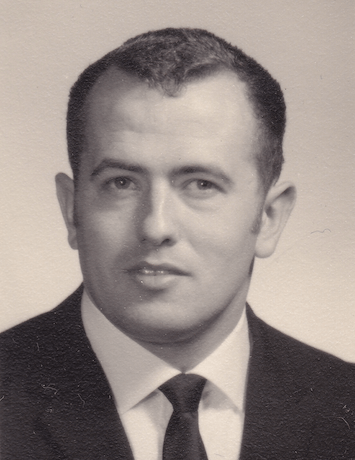
Photo by Kathy Larsen.

Raw Milk, Benefits and Risks

 D. E. Larsen, DVM

I stopped in front of the house on North River Drive and double-checked the address on my sheet. This was the address, but there were only houses around, no sign of a place for a cow.

 Mary came out of the house as I checked my notes, I rolled down my window.

“Hi, Mary,” I said. “Where is the sick cow?”

“If you go down this driveway,” Mary said as she was pointing out the driveway to the cow. “The milking shed is on the left, just past the trees. There is a gate there, and the cow is in her stanchion. You go ahead, and I will be along shortly.”

The driveway was long, but after going about a quarter of a mile, I could see a pullout and the gate. I pulled over, making sure I was out of the way of any traffic. 

The cow was standing quietly. She was probably wondering why she was there, well before milking time.

I didn’t have any specific information other than the cow was sick. But I grabbed my things and squeezed through the gate.

The cow was content to stand as I started looking her over. She was a friendly little Jersey cow, my favorite breed. Of course, I was partial since I grew up on a Jersey dairy.

Exam-wise, nothing seemed to jump out at me. She was standing quietly and not eating, but other than that, her front half looked pretty good. I put my stethoscope on her abdomen and checked her gut sounds, and there was no abnormal ping on the left side. Her rumen motility was reduced, which would go along with her not eating.

I checked her temperature with a rectal thermometer, which was slightly elevated. I checked her udder, and there was no evidence of mastitis.

I pulled a plastic sleeve on my left arm and stepped behind her to do a rectal exam. After squirting some lube on the sleeve, I grabbed her tail with my right hand and started to insert my left hand into her rectum.

She humped up and started to pee. The urine hit the wood floor of the shed and splattered. Her urine was bright red. I immediately jumped back, trying to avoid the splatter.

“Lepto,” I said to myself. I recalled Doctor Craig’s story about when he and a partner had worked a herd, and they both contracted Lepto. Roy noticed blood in his urine in the morning, and he went to the doctor and started antibiotics. His partner waited a few days, and he ended up dying.

Mary came through the gate about that time. 

“Are you finding anything?” she asked.

“Bloody urine,” I said. “Have you noticed that before?”

“I thought it looked bad last night when I milked her,” Mary said. “But this morning, it was really red. That’s why I called. What causes that?”

“It could be several things, but Leptospirosis is highest on the list,” I said. “Are you using her milk in the house?”

“Yes, that is all we use,” Mary said. “You’re not going give me a lecture on the evils of raw milk, are you.”

“I grew up drinking raw milk,” I said. “But that was a different time and a different place. I wouldn’t drink it today or give it to my kids. But that is all beside the point. The point is that this cow likely has Lepto, and she could be passing that disease in her milk, and she is definitely passing it in her urine. In an open milking situation like this, it is possible to contaminate the milk with her urine. You should discard what milk you have in the house.”

“I don’t know why I should throw out good milk,” Mary said. 

“It is not perfectly good milk,” I said. “It could make your family very sick, and someone could die from drinking it.”

“We are fine,” Mary said. “Nobody is sick. Raw milk enhances our immune system.”

“You should at least pasteurize it. The county extension office could help you with information about that process,” I said. “Today, I am going to draw some blood from this cow to send to the lab. Then I will put her on a high dose of antibiotics for a week. You should discard her milk while she is on antibiotics and for seven days from the last dose. It would be okay to feed the milk to a calf, but you shouldn’t use it in the house.”

“Do you understand how much money you are asking me to dump out on the ground?” Mary asked. “I wouldn’t think a little antibiotic would hurt much. You say it is okay to feed a calf, which we don’t have now. That must mean that it won’t hurt the kids much, either.”

“Well, I can’t force you to do anything,” I said. “I will write down my recommendations and have you sign the note, and you can do what you want with the milk. I will have the county environmental health department contact you to see they can be of any help for you.”

“Okay, we have that resolved,” Mary said. “Do you think Betsy is going to be okay?”

“Is she bred?” I asked. “Lepto does cause abortion sometimes.”

“No, we were going to get a friend’s bull next week,” Mary said. “She should be coming into heat in a couple of weeks.”

“That will probably be okay,” I said. “But you should tell your friend. Cows will sometimes shed this bacteria for some time after treatment. As long as they have clean water and a dry pasture, there would be a major exposure. However, there is mention of rare venereal transmission of Lepto in cattle. I would guess if it is after the antibiotics are completed, the risk to the bull would be low.”

I secured Betsy’s head with my nose tongs and drew a tube of blood from her jugular vein. I also placed an official ear tag in her left ear. This wasn’t required, but with the reluctance of Mary to heed my advice on discarding her milk, I wanted an official identification on the cow.

I gave Betsy a large dose of Polyflex, a new ampicillin suspension formulated for livestock. I left the bottle with Mary with instructions for daily dosing.

“What happens with the blood?” Mary asked.

“I separate it and send the serum into the lab,” I said. “They will do titers on it. Lepto is one of those diseases that have many varieties. They are pretty similar, but each is a little different. If those titers are negative, then I can rethink my diagnosis.”

“You seem pretty sure of your diagnosis,” Mary said.

“Sure enough that I am going to use a lot of soap and water to scrub myself before I get back into the truck,” I said.

***

Betsy’s titer came back positive for Leptospira grippotyphosa. This was a relatively new strain for western Oregon. 

Betsy recovered uneventfully, and Mary’s family squeaked by without an illness. Although, I believe they were fortunate.

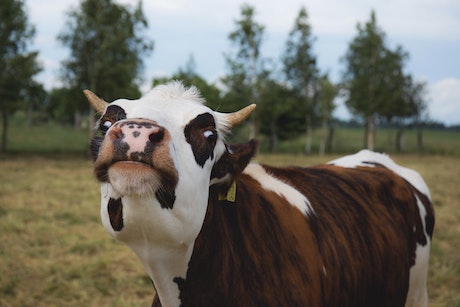
Photo by Luke Stackpoole on Unsplash.