Dehorning Calves on the End of a Rope 

D. E. Larsen, DVM

Don had the calves in a small area on one side of his barn. The good thing was they were all only four or five months old. The bad thing was there was no squeeze chute or headgate. I would be working these calves all on the end of the rope, and that would make an easy job a lot harder.

***

Just before I left Enumclaw, I talked with another veterinarian in the area. He was older and had learned the ropes, so to speak.

“Dave, a couple of years ago, I told all my clients that I was throwing my ropes away,” Doctor Jim said. “That was the best decision I made in life. My job was so much easier. Clients now all have the animals caught and restrained when I pull onto their place.”

I thought that sounded like good advice, but when I would mention it to other cow doctors, I would get a range of opinions. 

When I went to continuing education class at Colorado State, I mentioned it to an older veterinarian who looked like he had spent many years working on cattle.

“A veterinarian friend of mine in Washington told me that the best thing he ever did was to throw away his rope,” I said.

“Throw away his rope!” the old vet said. “If I threw away my rope, I would starve to death. And there is no doubt about it.”

***

“I have them all in the barn,” Don said as I stepped out of the truck. “They are in a small area, so it should go pretty well.”

I put my small Barnes Dehorner and my forceps for pulling arteries into a bucket of warm water. I squirted a lot of Betadine in the water. I placed three twelve cc syringes of lidocaine into my left breast pocket and a handful of needles in the pocket of my coveralls. 

“Let’s go get to work,” I said to Don as I grabbed my rope and headed to the barn.

The calves knew something was up as soon as I came through the gate of their holding pen. There were only six of them, so it should go pretty well.

They were all crowding into the far corner, trying to figure out which one of them was going to be first.

The one looking at me out of the bunch was an easy target, and I threw a loop of the rope over her head. I took a dally on the post in the feed rack and pulled her up close to the rack.

This was probably going to be easier than I thought. She planted her feet and pulled straight back against the rope. I put a needle on a syringe and injected the nerves at the base of each horn.

I retrieved the dehorner from the bucket and scooped both horns off before the calf knew what was going on. Calves this size didn’t have the frontal sinus growing into the base of the horn, so only a smooth wound resulted from the dehorning. I pulled the single artery at the bottom of the wound and then applied antibiotic powder and sprayed the wound for flies.

“One down and five to go,” I said to Don as I released the calf to go back to the corner.

The other calves went along well. The procedure was the same. The only problem was getting a rope on the next calf as the target selection became harder to pick out of the bunch when most calves were dehorned.

Then came the last calf. It always seemed the last one was the problem child. I fitted a new needle on the remaining syringe of lidocaine and stuck it in my pocket. Then I moved the crowd around enough to get a rope on the last calf. She bellowed and bucked and ran circles around me as I leaned my weight against the rope and worked myself over to the feed rack to take a dally on the post.

I struggled to maintain my position as the calf continued to buck and bellow. She acted like she knew something terrible was going to happen. I wrapped the rope around the post and decided to take a second dally. I just about had it done when the calf lurched one more time and pulled the slack out of the rope, trapping my ring finger under the dally. I could feel the flesh tear. I pulled a little slack and freed my finger from the wraps of the rope.

I looked at my finger. A tear on the end of my finger was longer than the nail on the outside edge. It would obviously need stitches, and it hurt just a little bit, still somewhat numb from the injury. 

I hated sutures because the doctors were not very good at it, and the lidocaine hurt like hell. 

I took the syringe out of my pocket, pulled the needle cap off with my teeth, and injected the wound with a good dose of lidocaine. 

I left the calf tied with a long rope, went to the truck to wash my wound, and I put on a surgical glove to finish the dehorning. 

I pulled the calf close to the feed rack and retied the rope. After choking herself while I tended to my finger, she had settled down a bit. I considered not giving her any lidocaine for the dehorning, but that would have been a bit abusive. 

I headed back to the clinic when the work was done and the finger on my surgery glove filled with blood. 

I cleaned and wrapped my finger as Sandy called the doctor’s office. I was in luck, and Doctor Toffler could see me right away.

I was shown into the treatment area of the local clinic in Sweet Home. The nurse carefully removed the wrap from my finger and scrubbed it slightly. 

“This looks really painful,” she said. “You must be pretty tough, not to be bothered by my efforts. I don’t want to hurt you, so I will leave most of the scrubbing until the doctor numbs this wound with some lidocaine.”

I didn’t say anything. I thought I would just leave her with the illusion that I was tough.

Doctor Toffler came in and looked at my hand.

“Ouch!” he said as he held my finger up for a closer look. He took a little wire probe and started poking around on the end of my finger.

“What are you doing?” I asked.

“I just want to see if there is any nerve damage before I put any lidocaine into this wound,” Doctor Toffler said.

“That ball game is over,” I said. “I had a syringe of lidocaine in my pocket when this happened, and I injected it while it was still a little numb from the initial injury.”

Doctor Toffler looked at me and shook his head. “The things you guys do,” he said. 

They finished scrubbing the wound, and Doctor Toffler placed several sutures and then put a large, cumbersome wrap on the finger. My tetanus shot was up to date, so they gave me an appointment for suture removal and ushered me out the door.

The wound healed well, as did the dehorning wounds. When it was time for suture removal, I did that at my clinic. I had Sandy call the doctor’s office and report good wound healing. That probably gave Doctor Toffler one more reason to shake his head.

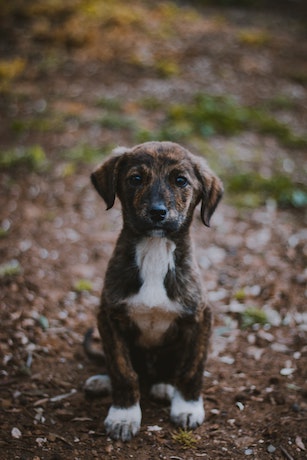
Photo by Gaspar Zaldo from Pexels.

Columbus Day Storm, Oct 12, 1962

D. E. Larsen, DVM

The day started like any other Fall morning in Western Oregon. The sky was mostly clear with just a few clouds. There was no wind, and there was no major concern about the weather as I headed out the door to school. My 1955 Chevy started with no problem, and I put my work clothes in the back seat and my stack of books in the front seat. I always brought books home from school. But I never did any homework or reading. I guess I just wanted to look like the other kids leaving school.

I had Physics class right after lunch each day. This day, Mr. Oglesby came to class late this afternoon, and this was unlike him, and he was a little excited. 

“We will be leaving early this afternoon,” Mr. Oglesby said. “There is a big storm coming, and I have to get home and secure my roof.”

This was the first time we had heard any information on a storm. He had no sooner told us the news than the principal came on the intercom and said they were dismissing school and everyone should go directly home. School buses would be out front shortly. This was great news. I would get out of school early, but I could go to work rather than home.

Mr. Oglesby had his stuff together and was heading out the door. 

“You guys go home like the man says. This looks like it will be a big storm,” he says as he heads out the door.

I take things to my locker and put on my light jacket. No books this weekend as it is hunting season, and I don’t have to look like I am going to study. It seemed like everyone was leaving the building at once. I was glad that I had parked on this side of the street this morning, and I didn’t have to turn around. I jumped in the car, started it up, and was one of the first to pull out. It was a short trip to the cheese factory.

Working at the cheese factory was a great job, and it provided good money and about as many hours as I could work. This was my second year working there.

I had quit football this year when the coach was upset that I went pigeon hunting on Labor Day and missed practice. It was better for my knees anyway. A good off-shoot of that action was I could work for another couple of months at the cheese factory after school and on weekends. We were generally laid off in the winter when the dairies dried up most of their cows. Then when spring calving started, we were back to work. My brother could work a summer and pay for his year at college, and we didn’t have to work in the woods. I hated pitch on my hands.

When I got to the cheese factory, most of the work had been done. All the cheese was made, which meant that milk production was falling. Often there would be a vat of cheese to be made when I got there after school. Jim Taylor, the late shift foreman, said they held a lot of the milk in the holding tanks because of the storm coming. I guess they got the news also. I changed clothes quickly and helped finish cleaning up. We had just finished when the lights began to flicker.

We opened the large garage door in the front receiving area to have some light in the building if the lights went out. Standing in the open doorway, we could see that the wind was much stronger than earlier. 

There were four of us standing there, Jim Taylor, a young guy not long out of the Navy. Jim had long dark hair that he wore in an Elvis style, and he was thin and muscular. 

Ray Sturdivant is a big guy with short-cropped hair. I believe Ray was from Pound, Virginia, and he had some southern attitudes that I had never heard before.

 Roger Gary was the last guy in the group. Roger was a couple of years older than I. He was about five feet ten inches, very muscular, and he had a large square head that made him look even stronger.

The wind started to pick up pretty strong. We watched as it slowly peeled off the aluminum sign off the building across the street. Then another sheet of metal came blowing down the street like a tumbleweed. The tall fir trees in the city park on the north side of the cheese factory were bending over in the wind.

About this time, Mom came driving down the street, heading home. Her car, a 1961 red Chevy, was bouncing from the wind. When she saw us standing in the doorway, she stopped behind my car and rushed inside.

Mom was a short but nice-looking woman. I considered her old. She must have been almost fifty. 

“Do you think I will be able to make it home?” she asked, no one in particular.

Jim was the first to reply, “I think you better wait for the worst of the wind to be over.”

She stood by me and said she was in town to help my brother, Larry, and his wife, Maggie, get to the hospital. “It looks like the baby will come tonight, with or without electricity.” (Nephew, Don Larsen, was born that night.)

Now the trees in the park started to fall. It was a slow fall, uprooting their large root wads and hitting the ground. One tree followed the other. Not all of the trees fell, but probably 20 out of 30 fell in five minutes. There was not even a flicker of lights anywhere.

Finally, the wind slowed to a gusty wind after nearly an hour. We changed clothes and waited outside as Jim closed the large door and found his way to the front door with a flashlight.  

“Follow me home, and don’t get out of the car on the road,” I said to Mom. “There might be downed power lines.” 

We had about a mile and a half along the river to the ranch. Only a couple of trees could be a problem along that road, so if we were lucky, it should be no problem.

After getting Mom home, I opened a can of tuna fish and made a couple of sandwiches for dinner. Dad was finished at the barn. There were little branches everywhere but no significant damage. There was no power, and Dad had had to finish milking using the vacuum from the tractor. Most of the cows were dry or in the process of drying up, so that was not a big issue. The milking chore was much reduced. I told Mom I should return to town. Some of the guys would probably be thinking about cutting trees out of the roads.

I put the power saw in the trunk and went back to town. A group of us went around the roads out of town. Some roads had almost no trees, and other roads had many trees down. 

The first road we cleared was Stringtown Road. It ran in a loop, out across the river from the cheese factory, then along the hillside for a mile before turning back to the river road. The part that ran along the hillside had a bunch of trees across the road. We had three or four power saws running all the time, and we cleared a path in a short time. We had to worry about the power line in only one spot, but being careful and working on the far side of the road, we got it open.

The next road was the road to Arago. This was about 6 miles, but most of that was across open country, only a couple of areas through the trees. We cleared that road pretty quickly. We had a string of cars following us on this road, and they were pretty thankful for our efforts.

After Arago, we went out Gravelford Road and back down the North Fork Road. Like Arago, these roads only had a couple of small sections through trees, and we only had to cut a couple of trees out of the way.

That was enough for us as the evening was getting long. We bumped into a couple of older guys, and they were happy to furnish us with a half case of beer, Blitz, I believe. It put a good ending to a night’s work. The rest of the trees could wait for the highway crews or the power company.

The aftermath of this storm left some tremendous damage to Western Oregon. Friends working in the woods told stories of salvage logging stands of timber that were blown down in all directions, a big tangled mess.

“I was bucking trees, standing on logs that were forty feet in the air,” Jim Lhurs told me.

The City of Myrtle Point had salvaged the trees that blew down in the park across from the cheese factory. By Halloween, there were only limbs left in the park. 

Many limbs were scattered in the park. As we were looking for trouble to cause on Halloween,

“Let’s stack those limbs on the highway,” someone said.

What a neat project. The group of us, maybe 20 guys, pulled those limbs out of the park and made a pile in the middle of Highway 42 beside the cheese factory. This was no small pile, probably 15 feet high or more, and it covered the better part of both lanes of traffic. Cars could still get through by using the parking lanes. We were proud of ourselves.

It didn’t take Mr. Dietz, the city cop, long to figure out who had done the job. Dietz was a massive man with a large nose and a large belly. He talked fearsomely but controlled us with a gentle disposition. Mr. Dietz found the whole group of us down at the corner ice cream shop, gloating over our recent project. He pulled up and slowly pulled himself out of the car. It almost looked like he would never quit coming out of that car until he finally stood and took a deep breath.

“He looks pissed,” Dick said.

“Damn you, little Yahoos, I give you every break in the book, and you go and do something like that,” Mr. Dietz said in a gruff voice, pointing down main street. “You can’t shut done a state highway! Now you guys get your butts down there and clear out that pile of limbs, or I will run the whole damn bunch of you down to City Hall.”

We didn’t have to be told twice. We all knew when a man was mad. We loaded into our cars and headed down to the pile of limbs. We pulled the limbs off the stack, dragged them through the park, and piled them up on the street on the other side of the park. It didn’t take long for the job to be done, and we thought we got the last laugh. As it turned out, the City was pleased with our work. They could load the limbs much easier than had they been scattered in the park.

Photo by Benjamin Elliott on Unsplash.

A Load of Firewood, From the Archives

D. E. Larsen, DVM

John slid through the front door and leaned on the front counter. He waited for the reception room to clear and then leaned over to talk with Sandy.

“I have been out of work for 3 months now,” John said. “I hate leaving my bill unpaid, but with the new baby, we just haven’t had any spare money.”

“I know things have been tough for a lot of people,” Sandy said. “If you could pay anything, we could keep your account current and not turn it over to the collection people.”

“Do you guys have any need for firewood?” John asked. “I  just got access to a downed maple tree that I am going to be cutting up. It’ll make good firewood.”

“That would be great, John,” Sandy said. “We can always use some firewood, and Doctor never has the time to get it himself.”

“I could cut you a pickup load, split and stack it at your house, all for a hundred dollars on my bill,” John said, hoping Sandy would not think the price was too high.

“If it is a large load, I will give you full credit on your bill,” Sandy said. “That will be a hundred and thirty dollars.”

“Great, I can do it tomorrow,” John said. “I know where you live, just tell me where to stack it, and I will get it done.”

“We are in the process of building a woodshed up by the pump house,” Sandy said. “But for now, you can stack it under the eves on the backside of the house.”

***

It was about two in the afternoon when John popped through the front door. His heavy wool shirt was wet from the light rain and covered with sawdust and moss.

“I have your wood all split and stacked under the eves of your house,” John said. “That little black dog of yours was none too happy about it either.”

“That’s good John, I can credit your account and give you a zero balance,” Sandy said.

“Well, there is just one little problem that I need to talk to you about,” John said. “I broke a tooth when I was cutting the wood.” John lifted his lip with a dirty finger so Sandy could see the broken tooth.

“Ouch, that doesn’t look good,” Sandy said.

“My problem is the dentist won’t look at me without a payment,” John said. “I was hoping I could sell you the wood instead of putting it on my account. I could probably get by giving him a hundred dollars.”

“I guess we can carry your bill a little longer,” Sandy said. “I will give you what we agreed on when we made the deal. I will put five dollars on your account and give you a hundred and twenty-five dollars. That will keep your account from being turned over for collection, and it will give you a few extra dollars to spend on the new baby.”

***

It was over a month later when John came through the door again. A little more confident that he could get a deal out of Sandy, he quickly started a conversation.

“I have a deal on some red cedar,” John said. “It is a big old windfall, excellent stuff. It makes great kindling.”

“You know how the last deal turned out,” Sandy said. “I still hear about that deal from the Doctor.”

“I’ll be more careful this time, and the ground is much better,” John said. “I can drive right to this log.”

“We have our woodshed completed. You could stack it in the woodshed,” Sandy said.

“Yes, like last time, cut, split, and stacked,” John said. “But this is pretty valuable stuff. If I own a hundred and a quarter, that will be just over a half of a pickup load. That will be enough kindling to last you for several years.”

“When you’re done, you drop by the office, and I will give you a receipt of some kind,” Sandy said. “I don’t think I want to pay taxes on firewood for an old bill.”

“We will drop by, and we don’t need a receipt. Doc always says he prefers to do business with a handshake. And my Sandi wants to show you the baby since you gave us some extra money the last time.”

***

It was late in the afternoon when John and Sandi came by the office. Unlike the day when John delivered the maple, today, he was showered and shaved. Sandi had their baby in her arms. The little girl was approaching 3 months of age.

“I wanted to make sure you had a chance to meet our Josie before she is all grown up,” Sandi said as she lifted the baby up to the counter. “I can’t thank you guys enough for the help you have been.”

Of course, Sandy went around to the reception area to hold Josie. All mothers are the same, and they remember how it was when their baby was shown off.

“We were more than happy to be able to help,” Sandy said. “You two have been good clients, and with the spotted owl business going on around here, times are hard for a lot of folks.”

“Yes, we know that, but you paid for the wood without any hesitation,” Sandi said. “That is what was special. Do you think Doctor would like to peek at Josie?”

“I’ll ask if he has a minute,” Sandy said. “But you know men, one baby is the same as another.”

Sandy, of course, didn’t ask if I had a minute. She instructed me to step out front and say something nice about the baby. 

I stepped out and looked from behind the counter.

“Looks like you did good, John,” I said as I reached across the counter and shook John’s hand. “And you must have had a part in the process also, Sandi.”

“I have a bunch of red cedar stacked in the corner of that new woodshed of yours,” John said. “It will be several years before you will need any new kindling wood. This is really choice stuff.”

“Thanks a lot, John,” I said. “I think Sandy has zeroed out your account. I hope things pick up around here pretty soon for everybody.”

“This red cedar windfall that I am cutting on now will make a big difference for us,” John said. “It will be a good supplement to unemployment probably for a couple of months. Maybe by then, I can come up with another job.”

“John, if you need a reference, we are just a phone call away.”

Photo by Austin Wehrwein on Unsplash