The Burrito

 D. E. Larsen, DVM

The rain stopped as I turned off the highway onto Wiley Creek Road. I was disappointed that the twilight was fading fast. I would cross the creek at the falls where the old Wiley mill had been located.

A short distance up the road, I turned onto the side road that crossed the creek just above the old mill site. The bridge was narrow and had no guardrail, and I drove across slowly.

I pulled up to the barn that had lights on. There, in a small pen, I could see a Hereford heifer, standing up and straining, with a couple of feet visible at her vulva.

Angie was there, clutching her small pup to her chest.

“Hi, Angie, this must be the heifer you called about,” I said as I stepped out of the truck.

“Yes, she has been like this for a couple of hours now,” Angie said. “Nobody else was home, and I didn’t know what to do, but it just didn’t look right to me. So I gave you a call.”

Calving difficulties in heifers were as close to routine for me as anything I did. But to these hobby farmers, with only a few cows, calving problems might be a once-in-a-lifetime experience.

“Well, it looks like you did the right thing in calling me,” I said. “If she has been at this for two hours, it is time to give her a little help.”

I poured a bucket of warm water, grabbed my rope, and crawled over the fence into the calving pen. This was a tame heifer, and my presence distracted her enough that she turned around, licked at my arm, and sniffed the bucket of water. Her contractions relaxed for a moment.

I slipped the rope over her head and fashioned a halter with a loop over her nose. Then I walked her over to the fence and tied her to a rail. I left enough rope that she could fall down with no problems. That was something that usually happened if they were not already on the ground.

I tied her tail out of the way with a piece of twine and scrubbed her rear end and my arms. I inserted my left hand into her birth canal and bumped into the calf’s nose. With two feet out and a nose close to the vulva, this will be an easy delivery. I stuck a finger in his mouth, and he sucked on it. He was alive.

“This should be an easy delivery,” I said as I climbed back over the fence to get my OB bag and the calf puller. 

“What’s wrong?” Angie asked.

“Not much, just a young, first-time delivery and a calf that is a little too big for her,” I said. “If we left her through the night, I would guess she would deliver this calf on her own. But sometimes, that takes five or six hours of labor, and the calf may or may not survive. It is better this way. Give them two hours, then give them a little help.”

I put a nylon OB strap on the calf’s feet and positioned the calf puller. I hooked the strap to the puller and started cranking. The vulva stretched as the nose appeared. Then the head popped out. A couple more cranks on the puller and the chest of the calf was in the birth canal. The heifer strained, stiffened, and fell onto her right side.

I pulled the calf puller down toward her hocks and cranked fast. The chest cleared the vulva, and then the rest of the calf followed with a gush. The calf raised his head and shook it. 

“It’s alive!” Angie said.

“He is doing fine,” I said. “A little bull, he will be up before mom.”

I treated his navel with iodine and gave him an injection of BoSe to prevent white muscle disease. He was struggling to stand by the time I was done with him.

Since Angie was home alone, I stripped a few swallows of milk from the heifer and gave it to the calf with an esophageal feeder. Then I untied the twine on the heifer’s tail and removed the rope from her neck. 

After I picked my stuff up and got it over the fence, I swatted mom on the butt with my rope. She jumped up in a flash. She was slow to look at the calf but finally sniffed him as he stalked her on wobbly legs.

“What do I have to do with her now?” Angie asked. 

“I would leave her in here until you are sure she is getting along with the calf and he is nursing,” I said. “Sometimes these heifers take some time to figure out just what is going on, but they do fine most of the time, after a day or so.”

“Well, it’s a relief to see him on the ground,” Angie said.

“What going on that you are here by yourself?” I asked.

“We were on a mission, helping build a church in Mexico,” Angie said. “I had to come home early because everyone down there was calling this little pup of mine Burrito. Everyone said they were teasing me but just had to come home.”

Angie tightened her grip on the pup as she told me the story.

“They were teasing you, I’m sure,” I said. “But when I was in the Army in Korea, I am sure that dog meat found its way to the dinner table. If you read the Lewis and Clark Journals, they ate a lot of dog meat on their trip across the country.”

“I know. I just felt better when we got home,” Angie said. “And I’m glad I was here to get help for this little heifer.”

“Yes, and I think she will be fine,” I said. “But if you have any questions about how things are going, you give me a call.”

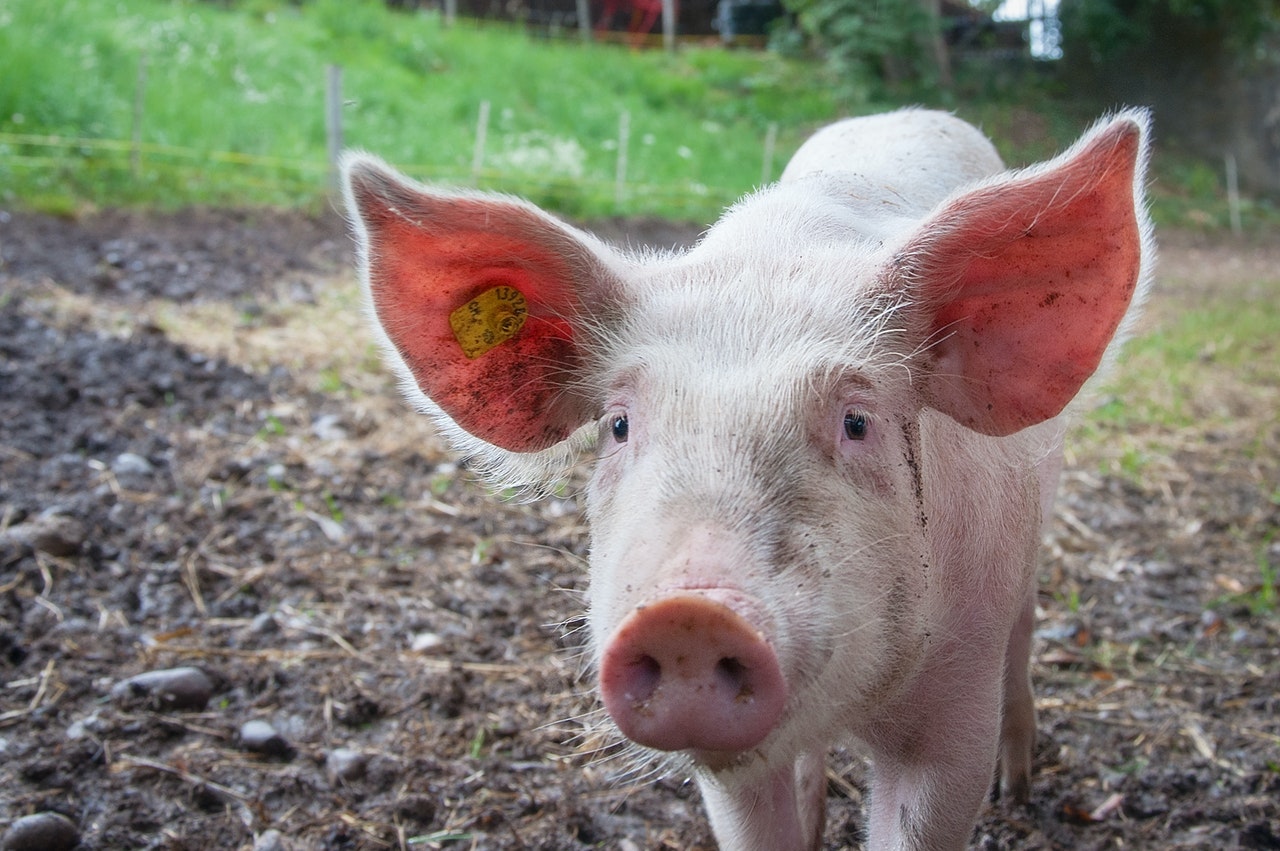
Photo by WKN on Pexels.

The Grand Tour, July – August 1956, Part 3

D. E. Larsen, DVM

We left Delaware and crossed the Blue Ridge Mountains.

Robert had to stop early because he had a headache from driving the mountain roads. That is saying something for someone from the Oregon coast in the 1950s. We stopped at Mundy’s Motel, just out of Elkton, Virginia. We had two adjoining cabins for twelve dollars.

Fireflies were all over the lawns each night we stayed in Virginia. Phillip and I chased them with a jar, and we filled the jar in no time. An interesting bug that I had never heard of before.

We had breakfast in Harrisonburg for three dollars for the six of us and lunch at Radford for eighty cents each. I don’t remember too many restaurants, but when we ate breakfast out, I always had my fill of pancakes.

Grandma noted seeing all the “real southern homes.” That says something, as their house was a pretty good Oregon home.

I think we skirted into West Virginia just to say that we had been there. Because the days were getting hot, Aunt Lila took Phillip and me into a shoe store and bought each pair of sandals.

I had never had two pairs of good shoes to wear at a time in my life before this point. And the only thing I ever had that was close to a pair of sandals was when we cut down an old pair of barn boots. Cutting the toes out, leaving just a rubber strap across our foot, and cutting the top of the boot off at the ankle. Leather sandals were a luxury that I had never dreamed of before.

After West Virginia, we drove through Pound, Virginia. We had a lot of families in Myrtle Point who were from Pound. It was not much of a town. It seemed to be built on a hillside, and I remember a fog which I wonder now if it was coal dust.

We crossed into Kentucky through the Pound Gap. Daniel Boone called the gap, Sounding Gap. We spent the night in Whitesburg, Kentucky. We had a cool morning following an electric storm but the heat returned in the afternoon.

From Whitesburg, we drove down the eastern edge of Kentucky, crossed Tennessee, and just the corner of Georgia, stopping in Trussville, Alabama, just outside Birmingham.

We had an air-conditioned cabin with two beds for eight dollars. Phillip and I slept on the floor, as usual. But this was my first experience with an air-conditioned house.

The plan was to get up early, so we could miss the heat. I distinctly remember Robert closing the suitcase and handing it to me.

“Take this to the car,” Robert said. “Then come back, and I will have another one ready for you.”
I stepped out the door at 5:00 A.M. It was like stepping into an oven. It was nearly eighty degrees at five in the morning. What was it going to be like by noon?

We had a quick breakfast at a nearby restaurant. Robert tried some grits and was not impressed, and he had almost had me tempted to try some, but I stuck with pancakes.

We stopped at a country store for gas when heading for Columbus, Mississippi. When we went to the restroom, the owner was working on the toilet in the men’s room.

“You guys can use the lady’s room as soon as your women folk are done,” the man said.

“What about that one?” Robert asked, pointing to the restroom in the back labeled “Colored Men and Women.”

“That one is colored,” the man said.

“I don’t care about that,” Robert said. “Is it clean?”

“Oh, yes,” the man said. “It’s clean, but it’s colored.”

“We will use that one,” Robert said as he turned and headed for the restroom in the back.

This restroom was in what looked like a lean-to, added to the back of the store. It had a concrete floor that was poorly finished. A long urinal made of tin hung along the back wall with a slope so the small child could use the far end. There were five commodes along the other wall. No stalls or partitions, just open commodes.

We used the urinal and headed back to the car. Lila and Grandma were already back in the car. The man finished filling the gas tank and took our money, but he had nothing to say to us.

“I guess we must have bruised his feelings a bit,” Robert said as he pulled out onto the highway.

We drove through Columbus, Mississippi, and discussed trying to find the Shooks, my sister’s new in-laws, but Robert wanted to get as close to Texas as he could. We drove on through Mississippi and Arkansas, stopping in Texarkana. We had a nice room with two beds, six blocks from Texas. The room was nine dollars.

Our first stop in Texas was at a ranch in Quinlan. Robert wanted to look at their English shepherd dogs. An old man sitting on the porch of the old ranch house in a rocking chair didn’t offer to move when Robert and I got out of the car to talk with him. My memory says it was 106°, but Grandma’s notes say it was 102° on the store’s porch in Quinlan.

“We haven’t had rain in over six months,” the old man said. “John is over by the barn. He can show you some of the dogs. If you are from Oregon, you might want to watch out for those rattlesnakes. They are just about everywhere in this heat.”

Robert looked at the barn. It was probably over a quarter of a mile away.

“I think I’ll pass for now,” Robert said. “That’s way too far to walk in this heat.”

We got back to Quinlan and just got settled into our motel room when the rain came pounding down.

“That old guy will be happy that we brought him some Oregon rain,” Robert said.

The following morning, when we went through Dallas at 10:45 A.M., it was 94°. We stayed in Abilene. The motel had two beds and a sleeper sofa, so Phillip and I didn’t have to sleep on the floor. It also had a swimming pool. We hit the pool first thing and then again just before bedtime.

Driving across Texas was pretty boring. From Abilene, we went to El Paso. The only thing of interest was a tornado thirty or forty miles north of us. I was amazed when Robert said the distance, and there was no way one could see thirty miles in western Oregon.

At El Paso, we stopped at looked at the bridge to Mexico. Still, nobody was interested in going across the bridge. We stayed that night in Las Cruces. It was hot when we stopped and didn’t cool off much at night. The good thing was it rained most of the night.

Our last night in motels was in Wickenburg, Arizona. Grandma’s notes say they could only sleep with a sheet, but there was a swimming pool. We had breakfast at Quartzsite and then drove up to visit Hoover Dam. Since we were headed to South Gate to stay with Lois and Elton, Hoover Dam was a major detour. We arrived at South Gate at one in the morning, and Robert had trouble finding the address, but we finally arrived.

The rest of the trip was all with family and was a relaxing twelve days.

Elton took us for a ride in his airplane. I was amazed at the number of houses with swimming pools in their backyards. We even flew over Disneyland. I think it had just opened the year before.

We had a whirlwind visit, hitting all the hot spots, Marineland, Disneyland, Knots Berry Farm, and a large Arboretum. I am unsure how many days we were there, and Grandma’s notes mostly come to a close when we are back with family.

At Disneyland, I wanted to drive on their little race car track, but I was an inch too short. Robert told the attendant that I drove tractors and trucks all over the farm I wouldn’t have any trouble with those little cars. The guy let me drive.

We went to San Francisco from Lois’ place to visit another aunt. Audrey and Bev lived on the north side of San Francisco. Visiting with cousins Jim, Phyllis, and Beverly was a welcome break. We took a long ferry ride on San Francisco bay.

Then it was on to Fortuna to visit another family. Aunt Mary and her husband Des with Lorrene, Harold, and Ardyce. I think I was just about traveled out by then. We drove through the redwoods, but I don’t remember much else.

We departed Mary’s on August 14 with a speedometer reading of 70,946. We drove across the mountains to visit Uncle Vern’s widow in Shasta City, which would have added about 460 miles to the trip.

Total mileage was a little over 9,100 miles in thirty-seven days. A grand tour indeed.

Edith and Coco, from the Archives

D. E. Larsen, DVM

Edith was an older lady who you would see walking down the street in Sweet Home daily. I don’t think she drove, but maybe she just preferred to walk. Her hair was always curled but not what you would call well kept. Some would call her petite, and I am sure she was at one time, but I would say she was matronly petite. In any case, the most important thing about Edith was she was always happy. We would notice that happiness in the clinic, and when you saw her walking, she always had a smile on her face. She could definitely enjoy the simple things in life.

For the first 5 years that we were in Sweet Home, Edith visited the clinic often. In fact, there was not a single month without a transaction on her account. This was unusual in that the average client might have three to five transactions per year. She would come into the clinic with Coco always in tow. Coco was a mutt, many people would call him an ugly mutt. He weighed about 20 pounds and had a gray, straggly coat. His lower jaw protruded well past his upper jaw, and when you looked at him, he would often smile, but it looked like a snarl.

Coco’s monthly trips to the clinic were more of a social event than a medical one. Coco was healthy as a horse, but there was always something that Edith wanted to be checked. I can’t remember finding anything wrong with Coco.

One Saturday morning, we were planning our day and hoped to take the kids to a movie in Albany, when the phone rang. It was Edith, and she was sure Coco had a problem. My initial thinking was Coco never has a “real” problem.  This was going to disrupt our entire weekend to go to the clinic and reassure Edith that everything was fine with Coco.

“Edith, are you sure this couldn’t wait until Monday?” 

But Edith persisted.

“Doctor, I know there is somewhat dreadfully wrong. Coco is just not himself this morning!” she replied.

I was stuck, but it should only be a brief visit. I arranged to meet Edith at the clinic in 15 minutes. Paul was home and could drive her and Coco to the clinic, so that would work.

Edith was smiling but concerned when she came through the clinic door. She thanked me profusely and reassured me that there was indeed some wrong with Coco. Coco groaned a little when I picked him up and put him on the table. Maybe he has hurt his back, I thought to myself. His temperature was normal, but Coco was not wagging his tail and was not acting his usual happy self on the table. His heart and lungs were normal, and the oral exam was normal. Then I got to the abdominal palpation. Coco tensed his abdomen from discomfort. His bladder was distended and uncomfortable.

I had almost made Edith and Coco wait until Monday.  And here we have Coco with a urinary tract obstruction. He could have been dead by Monday

.

“Edith, when was the last time you saw Coco pee?” I asked.

“Well, he was outside this morning and lifted his leg several times, but nothing happened.” 

“Edith, Coco can’t pee. Most likely, he has a stone blocking his urethra. If so, I will have to do surgery to remove the stone. I need to do some x-rays first to see if there are stones, how many stones, and where they are located. Most of the time, there is just one stone blocking the urethra, the tube from the bladder to the outside, and the surgery involves opening the urethra and removing the stone. If there are more stones in the bladder, we will need to do abdominal surgery to remove them also.” I explained.

“Surgery!” She exclaimed. “Shouldn’t that wait until Monday?”

“No, we can’t wait that long. Coco might be dead by Monday if we don’t do surgery now. At the very least, he would have some major complications by then.”

“You do whatever you need to do, Doctor,” she said. “We have the money in the bank to pay for it, and we can’t give Coco up.”

“I will get some x-rays and call if anything changes in my thinking after the x-rays. Otherwise, I will call following surgery, and we will arrange to send Coco home sometime this weekend.” I said.

We were going to have to get lucky to able to take the kids to a movie today. I took the x-rays, and sure enough, there was a stone stuck at the base of the os penis. The dog, like many animals, has a bone in his penis called the os penis. The urethra narrows slightly as it passes through a groove on the underside of the os penis. Most stones that cause obstruction are lodged in this location. Coco had no other stones visible in his bladder or elsewhere in his urethra. This would be an easy surgery.

I called Sandy and had her get the kids ready and come down to give me a hand. All the kids had observed many surgeries, so this would just be one more. I started getting Coco and the surgery suite ready, so we would be prepared to go the minute Sandy and kids arrived. The plan was to do the surgery, recovery Coco and then run to the movie while he was resting in the kennel. We should be able to send him home when we return from Albany.

When Sandy arrived, we got started with the surgery. I induced anesthesia with IV Pentathol and then put Coco on gas anesthesia. With him on his back, I clipped and prepped his posterior ventral abdomen. I could feel the stone. This should be a brief procedure. 

I inserted an 8 French urinary catheter. It came to a stop at the stone. I made a one-inch incision in the skin of the prepuce over the stone. Then I dissected through the soft tissues to the urethra. I pushed a forceps through the tissues on the dorsal surface of the penis to stabilize the area. Then with a careful incision, I opened the urethra over the stone. This incision was just long enough for me to grasp the stone with forceps and remove it. I immediately plugged the hole with finger pressure. I advanced the catheter into the bladder to empty it and avoid leakage of urine into the surgery site.

After emptying the bladder, I left the catheter in place to ensure my closure did not narrow the urethra. I closed the urethra with interrupted 4-0 Maxon sutures. Then with the same suture material, I closed the subcutaneous tissue with a continuous suture pattern. Finally, I closed the skin with 4-0 nylon interrupted sutures. I infused a small amount of Lidocaine for pain control and turned off the gas to start waking up Coco. Maybe 15 minutes had elapsed. Since he would be unattended in a kennel after he was awake, I gave him fluid under his skin on his back rather than IV.

Recovery was pretty rapid, and Coco was up and about. He would be fine and should be able to go home when we got back from Albany. I gave Edith a call and reported favorable results. We arranged to meet her and Paul at the clinic when we returned from the movie.

The kids enjoyed the movie, Indiana Jones in Raiders of the Lost Ark. Sandy had tried to cover Derek’s eyes in the spider scene, but he was able to fight her off. The kids had been worried they would miss the movie because they had seen family plans set aside more than once by a phone call.

When we pulled up to the clinic, Edith and Paul were waiting out front in their car. They were talking and laughing. Here was our happy little gray-haired lady who adored Coco, sitting in the car outside the clinic, passing a whiskey bottle back and forth between her and her husband. Now my only concern was them driving home.

Photo by Julian Hauffe on Unsplash.