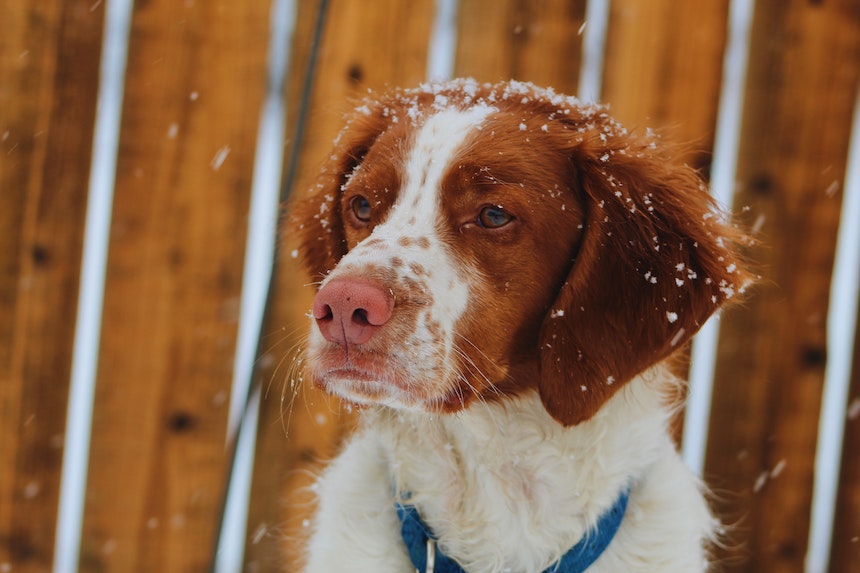
The Pointed Quill

D. E. Larsen, DVM

“Doc, my old Tank dog, just came home tonight with a few porcupine quills in his mouth,” Ed said into the phone.

I wonder why they either call at dinner time or 3:00 in the morning, I thought to myself as I listened to Ed, hoping I could get back to the table before everyone was done eating.

“I hear that I should be able to pull them out myself,” Ed continues, “what do you think of that idea.”

“Some guys do it,” I said. “I don’t know how they get it done. Most of the time the dog is going to get real tired of the process pretty quick. I just put them under an anesthetic before I start. It’s a lot easier that way, and you don’t end up with a lot of broken and buried quills.”

“He is not too bad,” Ed said, “I might try to pull a few tonight and see how he does. If I have any problems, I will just bring him into the office in the morning.”

“That will be okay,” I said. “Try to get Tank there early, right at 8:00, and I will have some time to take care of him. I have a farm call scheduled for 10:00, and it is going to take me a few hours.”

“If I’m coming, I will be waiting for you at 8:00,” Ed said as he hung up the phone.

Ed was waiting at the door with Tank when I pulled up to the clinic. I could see from the truck Ed’s assessment of quill numbers was a bit off. He said a few quills, old Tank’s mouth, and face was a mass of quills. Probably 200 quills. Just like with eyes, you could never trust a client to evaluate the number and severity of porcupine quills.

“I would say that Tank has a few more quills than a few,” I said to Ed as I was unlocking the front door to the clinic. “I am going to have to get started on him right away, or I will be behind schedule all day.”

“I pulled a couple of quills out last night, and Tank said that was enough, in no uncertain terms,” Ed said as Dixie took Tank and headed for the treatment table.

“We will get him taken care of right away,” I said. “It will take him some time to wake up, and I will want to check him when I get back from the farm call. We will have him ready to go home anytime after 3:00.”

With that, we had Tank on the table, and I gave him a dose of IV Pentathol. Placing an endotracheal tube in a dog with a mouth full of quills can be a painful experience. My usual procedure was to hold the mouth open with a mouth gag, pull the tongue forward with my left hand and hold the epiglottis down with my index finger of the left hand. I could then guide the tube in place, with the whole procedure taking only a few seconds. With a mouth full of quills, there was no way I could stick a hand in that mouth. I would have to use a laryngoscope, it would work okay, just a little more cumbersome.

Tank was under anesthesia, and we started pulling quills. The porcupine quill is sort of barbed. Under the microscope, the tip of the quill sort looks like a shingled roof. When they are pulled, it takes slow, steady pressure, or you will break the tip off. I always hear from clients that it is easier if you cut the backend of the quill off, allowing the air inside the quill to escape, and pulling them is easier. I have never found that to make any noticeable difference.

I pulled the quills with a forceps, holding the skin in place with a finger so as not to bury any small quills in the area. Pull a quill, place it in a pan of water to facilitate getting it off the forceps and easier cleanup. With this many quills, the whole process takes an hour. I have to hurry to keep on schedule.

I would see most porcupine quills in the fall. I think this was because the porcupines were forced to come down out of the trees for water since we were at the end of the dry period. 

Most of the time, one episode was enough to teach the dog that he didn’t want to mess the critters. One time in Enumclaw, I saw 3 dogs, daily for 3 days. Each day there was a different dog with the majority of the quills, and the other two would only have a couple of quills. On the third day, the owner confessed that he was going to have to go porcupine hunting.

Jack was the one exception to the rule.  Jack was a Cocker Spaniel. Like all Cockers, his activity level often exceeded his judgment. I pulled porcupine quills out of Jack at least 5 times, maybe 6.

I have seen a couple of cows with quills in their nose. I have never seen a horse with quills. One cat came in with quills completely through his front legs. It looked like he must have jumped on the porcupine.

Sandy and I were just starting to get ready for bed one Friday evening when the phone rang. It was Cathy, one of their pups had porcupine quills.

“Hello, this is Cathy, the pups have been gone since dinner time, and they just came home,” she says. “Kirk has porcupine quills. Could you take care of him tonight. I would hate for him to have to suffer until morning.”

“I could probably meet you at the clinic,” I said. “Did you check Spock? Many times if one has a lot of quills, the other one will at least have a few.”

“Sam checked them both over pretty well,” Cathy said. “Kirk is the only one with quills. It will take us half an hour to get to the clinic.”

“I will meet you there,” I said.

Looking at Sandy, I said, “I hope this isn’t an all-night affair. People are just not able to make a good judgment call on porcupine quills.”

Both Sam and Cathy were waiting when I pulled up the front of the clinic. They came up behind me when I started to unlock the front door. Kirk was standing with his head sticking between them. He looked at me with his mouth open, tongue hanging out, and panting. Kirk was probably still excited about the hunt and the ride to town. He had 2 quills stuck in the end of his nose.

I hooked a finger behind his canine tooth and raised his nose so I could get a good look to make sure there weren’t any quills in his mouth.

“Is that all he has?” I asked Sam.

“That is all I could find,” Sam said.

I put my door key in my pocket and, with one quick motion, grabbed both quills and plucked them out of Kirk’s nose. I brushed the blood droplets that sprang from the holes with the heel of my hand. Kirk stood there with his tail wagging.

“Let’s go home. Do you want these?” I said, holding the two quills out to Sam. “They are sort of interesting if you can get them under a microscope.”

Sam took the quills, looking a little confused at how fast the problem was handled.

“Do we owe you anything?” Cathy asked. 

“I didn’t have to open the door, I think we are square,” I said.

Photo by Free Nature Stock from Pexels.

The Elk Hunt

D. E. Larsen, DVM

We worked to stay concealed in the sparse cover as the 4 elk cows came down to the flat in front of us. We could see the bull hanging back, very cautious, and unsure if the apples were worth the risk. He is a large bull, a 5 point, with beautiful antlers. Finally, he slowly came down the hill and moved out onto the flat.

Frank stepped out and took the shot. Pop! It was a good shot with the dart buried into his hip. The bull jumped but returned his attention to the apples quickly. 

“It won’t be long,” I said. “This new drug should have him under control in a few minutes.”

Capture guns were just becoming available in the 1970’s. These guns used Nicotine Sulfate as an immobilizing agent. Nicotine Sulfate was a drug with a very narrow margin of safety and no antidote. It was, in fact, dangerous to both the target animal and the people doing the shooting.

One of our favorite drug salesman, Fred, told a story involving his experience with a capture gun using Nicotine Sulfate. Fred had stopped at a clinic on his routine rounds. The veterinarian was just getting ready to go on a farm call when Fred arrived. The veterinarian was going to castrate a 600-pound hog. He had just purchased a capture gun, and this was going to be the first time he used the capture gun. And he was using Nicotine Sulfate. He invited Fred to go along with him on the call.

They got to the farm, and the people had the hog in a small shed. The veterinarian loaded the gun with a 600-pound dose of Nicotine Sulfate. This shed had a couple of doors and a window. The veterinarian was at one door, and he sent Fred around to the other door to move the hog into a better position. The veterinarian aimed and fired the dart. The dart glanced off the hog and hit Fred in his lower leg. Luckily, Fred was wearing a pair of cowboy boots. The dart stuck in his boot near the top, discharged and shot the dose into his boot.

Had that dose been injected into Fred, who was probably 150 pounds if he was soaking wet, it would have undoubtedly killed him. Rapid emergency care probably would have been to no avail. On the trip back to the clinic, they stopped at a dumpster behind a restaurant.  The veterinarian dumps the capture gun into the dumpster, and nothing more is said.

Today we are using Sernalyn, a new drug for us, with this capture gun. Sernalyn is a disassociative anesthetic, twenty times more potent than Ketamine, the commonly used drug in this class. Because it can be used in a small dose, it works well in a capture gun dart. It is a very useful immobilizing agent. It’s problem; because of its concentration, it has a very high street value and is on the chopping block to be discontinued.

Today we plan to cut the antlers off this bull. Last week when this guy started to rut, he killed one of the small Sika Deer bucks in his pasture. One swipe with the antlers, and he pierced the little buck’s chest, putting an antler tine through his heart.

The bull continues to eat a few apples after being darted. Then he staggers slightly and turns in a tight circle. As he stumbles around the flat area, he notices the 5-gallon steel bucket that had been used to carry the apples. Frank had set the bucket down in the pasture after spreading the apples around the area.

The bull approaches the bucket and turns his head as he tries to get a good look at the bucket. Then, with a flick of his head, he pierces the bucket with his antler and picks it up. Walking around now with a 5-gallon bucket on top of his right antler. He staggers toward the small group of cows.

The cows recognize that things are not right with the bull, and they quickly trot back up the hill. The bull stumbles and goes down to his knees, then he settles to the ground. He stays on his sternum briefly and then flops to his side.

I approached the bull with caution. Kicking him on his butt to make sure that he is completely immobile. I remove the dart and pluck some hair around the injection site. It looks fine, but I flush it with Betadine just to be sure there is no infection.

Moving to his head, I apply a hefty dose of ointment to both eyes. This class of drug suppresses the blink reflex, and the ointment is needed to protect the surface of the eye from drying. 

Then I do a clinical exam, check his teeth, heart and lungs, gut sounds, testicles, and penis. Everything is normal. Then I hold off the jugular vein with my left hand and draw blood with my right hand. There are few lab normals for most of Frank’s animals, and we routinely ran blood samples through the lab every time we captured one.

I cut a 4-foot length of OB wire to use to saw the antlers off. Antlers have no blood supply after the velvet is gone. This makes the procedure much easier than dehorning a cow. I cover the eyes, not because he is seeing anything but to protect them from dust from the saw.

I attach saw handles to the wire and seat the wire saw at the base of the antler. Starting with slow, long strokes, to ensure the proper placement of the cut, I begin the removal. Dust flies, and the typical odor of burnt bone rises from the base of the antler. I increase the speed of the saw as smoke rises from the cut. The base of these antlers are nearly 2 inches in diameter and are solid bone. It doesn’t take long, and both antlers are on the ground. The wire saw is white-hot and curled from the heat.

The antler is an interesting structure in nature. In elk, they start to grow, nourished by the velvet that covers them, shortly following the time they are shed. They grow rapidly, you would think that you could almost see them grow if you could corral a bull long enough. They are solid bone. Can you imagine the benefit to mankind if we could understand and harness the process of that much bone growth in that short of time? Applying that process to fracture healing would be a game-changer.

We position the bull elk on his sternum and put more ointment into his eyes. He is already starting to come around. 

Frank and I chat a bit as I put things away in the truck. His biggest concern is the potential loss of Sernalyn.

“It is probably not a potential loss, I hear it going to be discontinued,” I say. “Ketamine has become a popular street drug. There are multiple names for it on the street, Special K is probably the name you hear the most. Sernalyn is 20 times more powerful than Ketamine, it apparently has tremendous value on the street.”

“What are our options?” Frank asks.

“Rompun is always there,” I say. “It is not the best, but we will always have it. Using a combination of Rompun and Ketamine might work on these elk pretty good.”

“What about the drugs you see on the wildlife shows?” Frank asks.

“M-99 is what is used most of the time on those shows,” I say. “It is currently a Class I drug and not available for practitioners. It is costly. I don’t know what that means but expensive. And in reading, it is not as good as it looks on TV. Those shows have the advantage that they can edit the disasters out of the show.”

It doesn’t take long, and the bull is up. He is a little confused initially, but it only takes a few minutes for him to be back to normal. He heads up the hill to the cows, and I head back to the clinic.

Ralph

D. E. Larsen, DVM

I arrived in Enumclaw, Washington, in early February for a two-week externship. I was close to completing my final year of veterinary school at Colorado State University. It was nice to be back in the Pacific Northwest, with its mild winter temperatures.

Since we would be moving to Enumclaw when I graduated in March, one of my chores was to find a house to rent. That proved an easy task. I rented a 3 bedroom house that had been vacant for a couple of months. It was a neat little house and would seem like a mansion to Sandy and the girls. We had been living in a small 2 bedroom apartment while in school.

A couple of classmates helped me load our entire household into a rented truck for our trip from Fort Collins to Enumclaw. Another classmate wanted a ride to visit his sister and brother-in-law in Portland. That worked out great for both of us, he was able to do most of the driving of the car, and I drove the truck.

My bother came to Enumclaw and helped unload the truck and set up the house. After everything was put in place, our two families gathered around the dining table for a meal of takeout pizza. 

Bam! The sound made everyone jump. There, hanging on the patio screen door was Ralph, not yet named. Sandy went to the door, and Ralph dropped to the ground and stood, waiting for the door to open. The kids were all excited, Sandy opened the door, and Ralph came in, looking like he had been waiting for someone to live in his house.

Ralph was a young tomcat. He was a typical tabby cat with black stripes on a brown coat. If he was hoping for a happy future of fathering kittens, he came to the wrong house. Ralph found himself on the kitchen table, under anesthesia, and under the knife. We neutered him the second evening.

It turns out that Ralph was left at the house when the previous renters moved out. He had been living in the neighborhood since the middle of December. He had some help in his survival, but not much. There was a lady several houses down who fed him tuna every night. Otherwise, his hunting skills kept him well fed.

There was a large open field behind the row of houses. We were located on the very edge of town at the time. Ralph hunted mice in the field much of the time. When temperatures warmed a little, Ralph would perch on another neighbor’s patio roof. He would jump from this high perch and catch birds as they flew across the lawn to the bird feeder in the middle of the yard.

Ralph was a great family cat. He loved the kids and made himself at home, sleep at the foot of Amy’s and Dee’s bed. He had lived outdoors long enough that hunting was very much a way of life for him, and he was at the door every morning after breakfast.

As the months went by, other cats came to our house. That was the way things were for a young veterinarian and his family. We had two female cats show up, both pregnant. So by the time we were ready to move to Sweet Home a year and a few months later, our family had grown. We had three girls, a new son and now, three adult cats and five kittens.

The apartment we lucky to rent in Sweet Home did not allow cats. So Ralph and the rest of the cats ended up spending a couple of months in Myrtle Point at my folks. We had a little concern about how they would cope with the upheaval, but that was our only option. The whole bunch did very well.

Ralph, in particular, was happy when we moved into our first house on Ames Creek. He could sleep on the girl’s bed again, and he had plenty of hunting grounds to patrol.

One morning I watched him walking down the hill across the road from the house. He seemed to be having a lot of trouble walking. My first impression was he must be injured, but as he got closer, I could see that he was dragging a quail. Holding the bird by its neck, the bird was dragging between his front legs. He brought it down to the front steps where is settled down to his dinner, scattering feathers everywhere. 

In those years, Feline Leukemia was rampant in the cat population. In my early years of practice, there was no testing available for the disease. I would see cats, weekly, come to the clinic with profound anemia, who would seizure and die on the exam table, just from the stress of the trip to the clinic.

We could buy some time for a few of these cats. Sometimes a transfusion would provide a few weeks, medications would help for a few weeks, but in the end, all of these cats would die. 

There was one week when I saw three yellow tomcats, all about 6 months of age, come to the clinic, and die. It was when questioning the owner of the third cat that we discovered that all three of those cats were from the same litter. 

In the years before the release of the Feline Leukemia Vaccine in 1984, losing entire litters from an asymptomatic mamma cat was commonplace. Sometimes that would happen before birth, sometimes shortly after birth, sometimes a year or two later. 

The virus was also transmitted through bite wounds and close communal contact for an extended time. I would see households of cats with a high incidence of infection. I would also see cats lost to immune failure, sometimes resulting in extreme infection following surgery or what should be a routine abscess.

This all came to an almost screeching halt with the introduction of the Feline Leukemia Vaccine in 1984. That vaccine has fallen into disfavor. There are few veterinarians practicing today who witnessed the carnage of the disease before 1984.

Ralph was unfortunate to have been born in the 1970s. That fact, coupled with his lifestyle, destined him to become a victim of the Feline Leukemia Virus. I noticed he was reluctant to leave the top bunk one morning. I looked close, his membranes were pale, his lymph nodes were swollen. 

I felt sick. Ralph would become the first of our pets that I would have to put to sleep. Sandy suggested I see if Dr. Craig would do it for me, but I knew it was my chore. I would do it at the house, sparing Ralph that final trip to the clinic.