It’s Her Job

D. E. Larsen, DVM

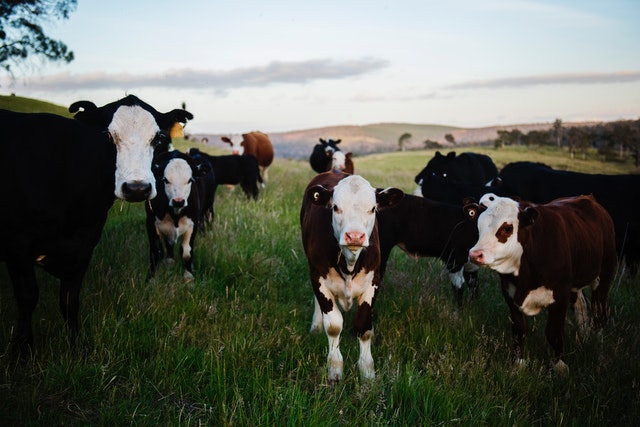
I stepped out of the crowding ally quickly as Ervin released the cow that I had just checked. The next cow was charging down the alley with Ella right on her heels.

Ella was a middle-aged Border Collie. She had been on the farm enough years to know her job well. When one cow left the chute, Ella had another one heading down the ally. The cows also knew Ella. If they failed to follow her instructions, they would have her biting at their heels.

“You trained her well,” I said. As Ervin caught the next cow in the headgate.

“Wasn’t any training involved,” Ervin said. “She watched my old dog a couple times when she was a pup. The rest was just instinct. She loves these days or the days when we change pastures. The rest of the time, she is just waiting for me to head for the pickup. She likes to go to town in the back of that thing. Bouncing from side to side as we go down the road and then guarding the truck with her life when I go into the store. It is only different when I pull into your parking lot. She knows that place, and she doesn’t like it much.”

“I see a lot of working dogs,” I said. “Most of them live to work. And most of them are pretty good at what they do. But Ella has to be one of the best. I think she has the cows trained. They just know what she wants them to do.”

I had been to Ervin’s place many times before, but usually just for one or two cows. This was the first time that we were working through the entire herd, checking for pregnancy status. At most places, it was a job to keep the crowding alley full and have the next cow ready to go into the chute. Not so with Ella here, she was in total command of the herd, and she worked hard at her job.

Ervin was one of the older ranchers in my practice. He was tall and thin and always looked like he shaved about four days ago. His face was long and accented by a somewhat pointed nose. The few tufts of gray hair on his head were covered with an old beat-up cowboy hat, and he always wore cowboy boots. That told of his roots coming from Montana. He was probably the only true cowboy in my client base.

We worked through Ervin’s herd in about three hours. Ella was resting at the back of my truck as I was cleaning up and putting things away. Her tongue was hanging out, and she was panting a lot, but I think she was hoping that there was something else to be done.

Two days later, Ervin pushed through the clinic doors with Ella following with very guarded steps. Ella stood close to Ervin’s leg as he waited at the counter. She was a little hunched up in her stance.

“What’s going on with Ella this morning?” I asked as I opened the door to the back.

“I don’t know, Doc,” Ervin said. “She was a little slow yesterday, and I just figured she was tired from working those cows. She is getting a little older, you know. But this morning, she doesn’t want to move. And she wouldn’t jump into the bed of the pickup. I loaded her into the cab for the trip into town. I figure she must be close to death for her to want to ride in the cab.”

Ella tensed when I started to pick her up to put her on the exam table.

“Do you think she could have been kicked the other day?” I asked.

“That is what I was thinking,” Ervin said. “But if she did, I didn’t see or hear it happen.”

I ran my hands down her back and along the muscles of her back and hind legs. There was no indication of any pain. Then I palpated her belly. She tensed at my initial touch. When I palpated her abdomen, I immediately detected a large tumor in the middle of her gut. This tumor was the size of a cantaloupe. That is a massive mass for a dog of Ella’s size.

Ervin, she has a large tumor in her abdomen,” I said. “We need to get some x-rays and see if we can determine what it is and to check the status of her lungs.”

“Can you do anything to help her, Doc,” Ervin asked.

“It all depends on what it is,” I said. “We might not really know until we get in there and look. And then with a tumor of this size, if it is malignant, we might not buy Ella much time.”

“Okay, I want to try to give her a chance,” Ervin said. “I don’t want to sell the farm, but let’s see what we can do.”

We took a set of x-rays of Ella’s chest and abdomen and drew some blood if we were going to be doing some surgery. When the films were developed, I put them on the viewer for Ervin to see.

“The good thing here is the lungs look clear,” I said. “But look at the size of this mass in the middle of her belly. This could be just about anything. I think the only thing to do is to go in and look. If we can get it out of there, we will do that. If we can’t get it out, then you have to decide if you want to wake her up or not.”

“When can you do this, Doc?” Ervin asked. 

“We can do her the first thing in the morning,” I said. “You can leave her overnight if you like.”

“Oh no,” Ervin said. “You give her something to make her a little more comfortable, and I will take her home. If this is her last night, she will be on the farm and beside the fire in the house tonight.”

“I am amazed at her grit,” I said. “She worked those cows the other day just like nothing was wrong.”

“Well, Doc, that’s her job,” Ervin said. “It’s just like the old farmer out in the field hoeing his corn. A fancy city slicker comes up and asks him what he would do if he was told he was going to die tomorrow. The old farmer thinks for a minute and looks around at his cornfield. Well, he says, I guess I would hurry up and get my hoeing done. No different with Ella, she just figured it’s her job.”

I was amazed at the size of the tumor when Ella’s abdomen was opened the following morning. With exploration, it was determined to be the right kidney. Her left kidney appeared normal, and her kidney numbers were normal in her preoperative blood.

I carefully isolated the renal artery and triple ligated it first. Then with careful dissection and ligation, I removed this mass. It was a full 10 inches in diameter.

Ella recovered well and bounced out of the kennel when Ervin came to pick her up. She is an excellent example of why the closure of the incision is so vital in these dogs. I doubt that she is going to restrict herself much.

“What do you think, Doc?” Ervin asked.

“Surgery went well, and the rest of her abdomen looked good,” I said. “We will just have to wait on the report from the pathologist on what type of tumor this is and what kind of a prognosis we can expect.”

“I guess it doesn’t really matter,” Ervin said. “We are not going to put her through any of the stuff that they put you and me through. That stuff probably doesn’t buy much time anyway.”

A couple of weeks later, Ervin and Ella bounded through the door. 

“Doc, I want to thank you,” Ervin said with a broad smile on his face. “That tumor most have been bothering Ella for a long time. She has been like a puppy ever since the surgery.”

“I would bet that if you or I walked around with a mass the size of a small watermelon in our gut, we would be slowed down a little,” I said. “Let’s get Ella up on the table and get those stitches out, and then I will go over the pathology report with you.”

Ella’s incision was well healed. It has always amazed me how well dogs, cats, and cows tolerated abdominal incisions. When I had an appendectomy, I didn’t walk up straight for a month. Ella has probably been running around the barn and the pastures for over a week now.

“The pathologist says Ella’s tumor was an Embryonal Nephroma,” I explain. “This is a rare kidney tumor in the dog. But for the most part, it is considered benign. So maybe we have dodged the bullet. Let’s hope so, at least.”

“That good, Doc,” Ervin said. “But you know, at my age, and Ella’s age, we just take what the world throws at us when we get up in the morning.”

And in Ella’s case, the world did throw her a curveball. She was fine for the next 6 months. She worked and enjoyed life right to the very end. Then one morning, as if that final straw was thrown onto the camel’s back, Ella could hardly catch her breath.

Ervin rushed her to the clinic, and we took a set of x-rays of her lungs. Those lungs were full of cancer. 

I didn’t have to tell Ervin a thing when I went out front to discuss the films with him.

“I guess that pathologist didn’t know what he was talking about,” Ervin said.

“That’s right, but we probably can’t blame him much,” I said. “He has probably seen about as many of these things as I have. And that is only in Ella. He was just reading out some book for us.”

“I don’t want her to suffer no more than she has already,” Ervin said. “I think it is about time for her to buy that last lotto ticket. I have a place next to the corral that will be perfect for her.”

Photo by Aloïs Moubax from Pexels

Where is the Volar Pouch

D. E. Larsen, DVM  

Dr. Adams was a massive man, both in his physique and in his professional reputation. He was not tall, less than six feet, but very muscular. His rugged facial features made him appear to have a scowl on his face in the best of times. In those moments, when he was mad at a horse or a student, some would say he was fearsome.

There was a story while we were in school about Dr. Adams attending a meeting of equine veterinarians. The first presenter was doing a ground-up portrait of the perfect equine veterinarian to lighten the audience. 

He started with the feet, then the legs, on up to the chest and arms. The picture was that of a cartoon gorilla. In actuality, it portrayed Dr. Adams pretty close. Dr. Adams was in the front row and was becoming red in the face because it seemed everyone except the presenter recognized the similarity to Adams. I have no idea if the story was true, but it was told a lot in those years.

However, he was a great teacher. When I was assigned to him for my senior rotation in large animal surgery, I was thrilled. That thrill did not last long.

On the first Monday morning of my two-week rotation, the Junior student and I waited in front of the large animal surgery room. Finally, Dr. Adams arrives at 8:00 AM sharp.

“Good morning, Guys,” Dr. Adams says. “You two are lucky. We have a busy couple of weeks coming up. I want to get off to a running start here.”

He throws up an x-ray of the lower leg of a horse on the viewer.

“Where is the Volar Pouch, Larsen?” Dr. Adams asked. 

“Um,” I stammer.

“Jon, same question?” Dr. Adams says to the junior student.

“I guess I don’t know,” Jon replies.

“Okay, let’s get started on the day,” Adams says. “But, you two have an anatomy test in my office at 1:00 PM on Wednesday. If you fail that test, you fail the rotation.”

And if the rumors of Adams’ power were correct, we will play hell graduating if we fail the rotation. This was not only intimidating, but it was also damn scary.

When the casework was done for the day, Jon and I were in a rush to get home. I had managed to get through the first 3 years of Vet School with little studying outside of the classroom and clinic. Now, I had a couple of nights to review the anatomy of the horse in exquisite detail. 

Dr. Adams was the author of Lameness in Horses and enjoyed the reputation as the leading authority on the horse’s legs. That gave us a clue. Make sure you know every detail of the anatomy of the horse’s legs.

For the next two nights, I reviewed my anatomy notes from my freshman year. I committed the equine section of Sisson’s book, The Anatomy of Domestic Animals, to memory. My memory is pretty much photographic. I can save pictures in my mind, but not text. On occasion, I can save captions to the photos for a brief time.

Finally, Wednesday came. We had surgery scheduled for the morning. Dr. Adams was a skilled surgeon. In this jumper, there was a chip fracture of a carpal bone. A significant amount of the time involved getting the horse under anesthesia and positioned on the surgery table. The surgery was brief in Dr. Adams’  hands. The chip was removed, and Dr. Adams left the closure to his intern and senior student, me.

“Don’t forget the test in my office at 1:00,” Adams said as he pulled off his surgery gloves.

“We’re looking forward to it,” I replied with an unseen smile, but I am sure it reflected in my eyes.

Adams smiled and departed the surgery room. 

When the horse was recovered, and back in the stall, Jon and I had a full hour and a half for a final review.

“I am going to take Sisson and go grab a coffee and a sandwich over at the MU,” I said.

“That might be good,” Jon said. “I will join you, but I think I have had my quota of coffee for the week.”

There was no real conversation at the table. We ate a quick sandwich, and both did a final review of Sisson. My pages turned much quicker than Jon’s. When the time came, we got up and walked back to the hospital. 

Dr. Adams’ office was on the second floor of the hospital. When we turned the corner to his office, we ran into a crowd of classmates. Word of our test had spread through the classes, and everyone wanted to watch. It must be like a crowd viewing a hanging. We worked our way through the crowd and took our seats in the office.

These professors all tried to present themselves as intimidating as possible. I found it almost laughable. In my last year in the Army, it was common for me to make presentations at general staff meetings, for generals with 2 or 3 stars on their collars. They were much more formidable than any professor. So in this situation, I was pretty relaxed. Jon was not so much.

Dr. Adams wasted no time. He started firing questions, some oral, some with x-rays on the viewer, and some with pictures from slides projected on to the wall. Like all tests, they are easy if you are prepared. I think the fact that both of us didn’t miss a question was getting to Dr. Adams. 

“You haven’t asked about the volar pouch,” Jon said.

“I figured that would be the question you studied first,” Dr. Adams said. “But since you mention it, why don’t you tell where it is located and what it is, and why it is important on that x-ray I had Monday morning.”

“The volar pouch is an extension of the joint capsule and is located between the cannon bone and the suspensory ligament, just above the sesamoids of the fetlock. If it is distended, it indicates inflammation in the joint.”

“That’s a good answer, Jon,” Dr. Adams said. “You should not overlook that on an x-ray.”

“If you did an adequate clinical exam, you should know it is distended before the x-ray is ever taken,” I said.

“That’s a good point, but in this business here, I am often looking at x-rays of horses that I didn’t examine,” Dr. Adams said.

Finally, he puts a picture on the wall. This was a picture of the two planter nerves on the lower front legs of a horse. There is a nerve that communicates between these two nerves. It crosses the leg at an angle. . You could tell which leg you were looking at by the directing that this nerve was running between the two primary nerves. This was a picture right out of Sisson.

“Larsen, what leg is this?” Dr. Adams asked.

“The left leg,” I said. “The left front leg,” I added.

“How do you know that?” Dr. Adams asked.

“That is the picture out of Sisson,” I said. And then, looking at a blank wall, I used my finger to trace the words in the caption of that picture as I read the caption.

The hallway audience erupted in laughter.

Adams shook his head and smiled. “That’s all I have, I can’t top that.”

That could have been the only time I ever saw the man smile. There was never a mention of the test in the remaining time days of the rotation. We learned a lot, and even though I was not fond of horses, I learned everything I could from the man.

Photo by Laila Klinsmann from Pexels

Several Days in February

D. E. Larsen, DVM

I looked for a spot in the trunk for my bag. There were six of us stuffed into the sedan for our trip to Nebraska. My bet was, I was the only one who had been in the military. You didn’t need to bring your entire wardrobe for a one week trip. 

We were going out to spend a week helping a progeny test herd of 600 heifers during the calving season. The herd belonged to Diamond Labs. They were collecting ease of calving data on their bulls to be used for their semen marketing. Six of us would drive out on this Sunday morning, and the 6 guys out there would take the car and drive home. Diamond Labs had a house on the place for us, and we took meals in a restaurant/bar in the small village near the ranch.

The drive out of Fort Collins was away from the mountains and out across the prairie. It was a four-hour drive across some for the flattest land in this country. I settled into a corner of the back seat and tried to catch a couple of hours of sleep.

“Larsen, how can you sleep when we are driving through some scenic country?” Mike said.

“One thing you learn in the Army is to sleep anywhere,” I said. “You go up on the mountains out of Fort Collins, Mike, and you can watch the riverboats on the Mississippi River.”

“That can’t be right,” Mike said. “That can’t be right, can it, Jim?”

“He is toying with you, Mike,” Jim said. “He doesn’t have much to say about this flat country.”

It was going to be a cold week. Daily high temperatures were 20 below zero. Overnight lows were pushing 40 below. This will be a great learning experience, but we will pay for it by enduring some harsh temperatures.

The group that was going home was glad to see us pull up to the little house. The housekeeper was just finishing up getting the place ready for the new crew. We discussed instructions as briefly as possible, and they were off. The ranch foreman came over to make sure we were settled into the house.

“Here are the directions to the restaurant where you take your meals,” the Foreman said. “It is time for you all to go get lunch. You can take the old crew cab pickup. When you get back, you need to decide on your groups of two. The herd needs to be checked every 2 hours. You pull any heifer who was in labor on your last drive trough. Bring them into the barn, diagnose the problem, and take care of it. That means you pull the calf, do a C-Section, or do a fetotomy, Whatever is indicated.” I will be around in the morning. You go for breakfast at 7:00, Shift change is at 8:00 AM, 4:00 PM, and Midnight.”

Using my military experience again, my first priority was picking out my bunk. When the others realized what I was doing, there was a mad rush to stake their claims.

The restaurant was in what one would have to stretch to call it a town. It was more like a congested area with maybe a dozen buildings. But the food was good, and they appreciated the business that the ranch was giving them.

“Look at that picture on the wall,” I said to Jim as we were setting down. It was a poster of W. C. Fields with one of his quotes.

“During one of my treks through Afghanistan, we lost our corkscrew. We were compelled to live on food and water for several days,” W. C. Fields.

“Bob and I are going to take the first shift,” Mike said. That will mean we will have a short shift today.”

“A short shift today, but also a short shift next Sunday before we leave,” I said. “It all catches up with you sooner or later.”

“Dave and I will take the midnight shift,” Jim said. “That will be the coldest, but also probably the quietest.”

“I guess that leaves the 4:00 to midnight shift to Bill and me,” John said as we finished lunch. “I guess we better get back so Mike can go to work.”

Midnight came sooner than I thought. John was up waking us up about 11:30.

“You guys get dressed, and we will have time to go over our notes,” John said. “Make sure you put on your long johns, it is just damn cold out there tonight, and that little heater in the pasture truck doesn’t keep up.”

“Make sure you check the corners of the pastures,” John said. “There is a heifer in labor in the corner by the creek. If she doesn’t have a calf, you should bring her in for help. We didn’t have any deliveries to help. Maybe you will get lucky.”

The pasture truck we had to check the herd with was an old Army ¾ ton. It had a canvas top and probably no insulation anywhere. With a light wind blowing, the 30 below temperature was brutal. The heater in the truck seemed to take forever to warm up and then blowing full blast, it failed to keep the ice from forming on the inside of the canvas top.

“There is the heifer John was talking about,” Jim said as he turned the truck so the headlights would fall on her. “We get lucky on this trip. She already has a calf.”

“How do these calves survive in these temperatures?” I asked, thinking that Jim would have some experience with this cold since he was from Wyoming.

“Some don’t, and a lot of them lose the tips of their ears,” Jim said. “I guess it takes a good momma cow to get them dried off and up nursing.”

Most of the herd was in a hollow in the middle of this ten-acre pasture. Grouping up kept everyone a little warmer, and the hollow provided some protection from the wind.

“Looks like we get to drink some coffee,” I said. “Not seeing any heifer in labor on this trip means we don’t have any work to do on the next trip.”

“I think you spoke too soon,” Jim said as the headlights caught the eyes of a heifer in the far corner of the pasture. He pulled the truck closer.

“It looks like we should watch her a few minutes,” I said.

The heifer was straining hard, and just the tips of the toes were visible at her vulva. Her straining did not let up as we watched, and there was no progress in the fetus’s position.

“What do you think?” I said. “I don’t think we want to leave her for another two hours with that straining.”

“I agree,” said Jim. “She would have to be in the farthest corner from the barn.”

We both got out and got her on her feet and headed for the barn. She seemed to know that it would be warmer there.

“You keep her going,” Jim said. “I will go and make sure we are set up in the barn, then I will come back and follow you with some lights.”

It was a long slow walk to the barn, and while I was expecting some warmth when we got there, I was disappointed.

“Why do suppose people would settle in this part of the country?” I asked Jim. 

“This is great cattle country,” Jim said.

“My bet is, they had a broken wheel on their wagon and couldn’ go any further,” I said.

We got the heifer in the chute and started the propane heater. The heater was going full blast, and you could hardly feel it.

I tied the tail out of the way, and Jim washed her up and did a vaginal exam.

“I think we can pull this one with no problem,” Jim said. “It might be a tight fit, but I think it will come. You might want to check her.”

I washed up, the water was warm, but my wet hands and arm were instantly freezing. The only warmth was inside the heifer. 

We hooked up the calf puller and haltered the heifer so we could release her head from the chute in case she went down during the delivery. It was a hard pull, but the calf was fine when it hit the ground. We move them into a holding pen for the night.

“This guy is a lucky one,” I said. “He gets to spend the night in a warm barn.”

We set up the chute so it would be ready for the next cow. I noticed the water on the ground from where we worked on the heifer was frozen solid.

The thermometer continued to dive as the night grew long. On our third trip through the herd, it was 40 below. One quit trying to stay warm, you just tried to keep from getting frostbite.

Jim noticed the heifer in the corner by the creek.

“We better check that one,” Jim said.

Blowing in my hands and reflecting my breath onto my face, trying to keep some feeling in my cheeks, I looked up and noticed this was the heifer that had calved earlier.

“No, she has been there for several days,” I said.

“Several days!” Jim remarked. “This is our first night.”

This is going to be a long week.

Photo by Chris F from Pexels