Mann Lake Trip

D. E. Larsen, DVM

“Good morning, this is Leroy at Fields Station,” Leroy said as he answered the phone with a gravelly voice. “What can I do for you?”

“I have a family group coming over to fish at Mann Lake for a couple of days. We were hoping to get a place to stay that would be a little closer than Burns,” I said.

“We have an old desert house that we fixed up. We call it the hotel. It has several bedrooms and a couple of hide a bed couches. That would probably accommodate your group.”

“Does it have a kitchen,” I asked?

“Not really a kitchen, but there are an old microwave and a toaster,” Leroy said. “There is no refrigerator. Most folks just bring their ice chest. We have ice over here at the store.”

“That sounds pretty good,” I said. “We do have a couple of ladies coming with us, but they won’t want to be doing any cooking.”

“Our restaurant is still operating on winter hours,” Leroy said. “If you are fishing at Mann Lake and want to eat dinner with us, you will probably need to be on the road down here before 4:00.”

“That’s fine; we can figure all of that out when we are there. Do you have any word on how the fishing is at the Lake?”

“It is always good this time of the year,” Leroy said. “We don’t have many fishermen stay with us, but a lot of guys run up there to fish. And you know if a cowboy drives somewhere to fish, it has got to be good fishing.”

“There is a good chance that we will be rolling in there late,” I said. “How do we go about getting a key?”

There was a long pause as I waited for Leroy’s answer. Finally, he gave a carefully worded reply.

“Buddy, there ain’t no key,” Leroy said. “You just give that door a little push, and it will open. Then you can come over to the store or the restaurant in the morning, and we can settle up the bill. We cook a pretty good breakfast if you are interested.”

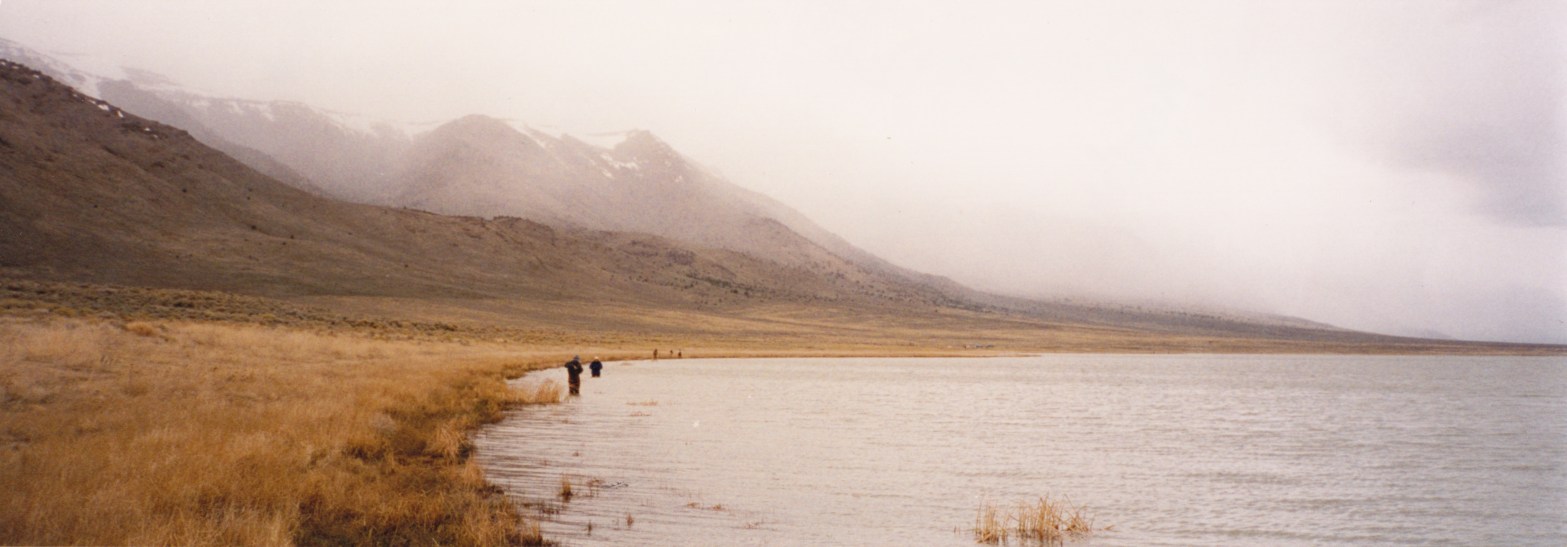
Mann Lake was a small alkali lake located on the eastern side of Steens Mountain in Southeastern Oregon. Fields Station was about 40 miles south was the closest accommodations, other than camping in the parking area.

Known for its fishing for Lahontan Cutthroat trout, Mann Lake was a popular fishing spot in Oregon’s far corner. If one wanted to avoid the rattlesnakes, fishing in the early spring was the best time. Often cold and with high winds, you had to dress appropriately. It was scenic only for the desert and the majestic Steens Mountain.

We pulled up to the small desert house about 10:00 PM after a long 6-hour drive from Sweet Home. The house was unpainted, and the wood siding was weathered to steel gray. I stepped out of the truck, and the cold wind bit my face. As Leroy instructed, I just gave the door a firm shove, and it opened. Even the doorknob didn’t work.

The heat was on, and it was warm on the inside, a welcome relief. I switched on the lights, and everyone bailed out of the truck and brought our stuff into the house.

Everybody was ready for bed, tired out from the ride. We filtered through the little house to lay claim to the bedrooms. Sandy and I ended up with the back bedroom. 

It came with a couple of advantages. It was close to the bathroom, and two, it was away from the crowd and the noise. But we learned quickly; it did have a disadvantage. It was also furthermost away from the heat. It made for a cozy night under a couple of large quilts.

Breakfast in the little restaurant at the store started the day. Pancakes, eggs, and bacon right off the grill served up with a running dialogue from Leroy. Leroy was obsessed with the EPA that morning. Apparently, they had found a little chub fish in the waters of the area and sought to protect it at the expense of a lot of the area’s water supply.

That would have been no issue under most circumstances, but Mike, our soon-to-be son-in-law, was working for the EPA at the time. His was just in a temporary job between schools, but when our son mentioned it to Leroy, you could see smoke from more than the grill.

The fishing was excellent, of course. There were fish everywhere, just waiting to be caught. The weather, at times during the day, would be extreme with snow flurries and biting wind. I don’t know how cold it was, but it was cold.

For the most part, we released all the fish we caught. But at the end of the day, Mike wanted to take a fish home. The limit was two fish over sixteen inches.

When Mike had his fish, I suggested we clean it right there. The only problem was my pocket knife was in my pants pocket back at the hotel. I was wearing fleece pants under my waders.

We looked around on the ground. I had noticed that there were many obsidian chips all over the bank of the Lake. This had obviously been a fishing spot of the Peyote tribes in the areas also. It only took a minute to find a nice obsidian chip, and it was sharper than any knife blade that I owned.

In the late afternoon, the drive back to Fields Station provided good viewing of many mule deer and a few bighorn sheep. We arrived in ample time for dinner, a giant hamburger, and one of Leroy’s specialty milkshakes. Leroy had calmed down since breakfast, thinking that a few extra dollars in the cash drawer were worth putting up with an EPA kid.

After a few card games, everyone was ready for bed early. Exhausted from combating the weather extremes all day. 

The plan for tomorrow was to check out, eat breakfast, and fish for a couple of hours before heading home. If we left early enough from the Lake, we could get across the mountains before dark.

On the way to Lake, we stopped to look at a couple of bighorn sheep rams, basking in the morning sun on a high ridge overlooking the road. One of the ranch ladies stopped and offered us permission to walk up a canyon adjacent to us.

“There are always a lot of bighorns up at the end of the canyon,” she said. “It’s private property, but you guys can walk up there if you like.”

We declined the invitation. The lure of a few more trout on the end of the fly line was much stronger than looking at some bighorns.

Photo is the Western shore of Mann Lake and the Eastern slope of Steens Mountain.
A Surprise Visit

D. E. Larsen, DVM

     “Dave, I am flying from San Francisco to Seattle this weekend,” Marsden said on the phone. “If it works out for you, I could stop off in Eugene, spend the weekend and then catch a flight out of Portland.”

    “What a surprise,” I said. “That will work great. I can pick you up in Eugene, and we can drop you off at the Portland Airport.”

      Marsden had been in the Army with me. We had both been in Company D at Fort Devens, a duty company, while we were waiting for class spaces to become available.

     After Fort Devens, I went to Korea for 13 months and then went to West Germany. Marsden was at Wobeck, a small outpost out of the village of Schöningen when I arrived. We worked together in the maintenance shop for the 17 months that I was there. We worked well together, and along with a few others, we became quite a team.

In the early summer, Marsden stepped out onto the ramp of the small commuter airplane at the Eugene airport. My seven-year-old daughter, Amy, had made the trip with me to pick Marsden up. Her hair was whipping around in the stiff breeze. 

“I bet you had a bumpy ride in that little puddle jumper,” I said as I extended my hand. Marsden had not changed any in the 10 years since we had seen each other. Still tall and slim with thinning rusty red hair. At least taller than me, but that is pretty easy to accomplish.

“It wasn’t bad until we came down to approach the airport,” Marsden said.

“I was hoping I could identify you,” I said. But you haven’t changed a bit.” 

We had both returned to school after the Army. I became a veterinarian, and Marsden got a Ph.D. in Geography. He was working for a German company now and living some in the US and some in Germany. His wife, Elke, was from Schöningen.

“How long do you have to stay,” I asked. 

“Not long, I have a flight out of Portland on Sunday evening,” Marsden said. “I hope that doesn’t inconvenience you much.”

“No problem at all,” I said. “We can find something to do on Saturday and take the back road to Portland to give you a flavor of Oregon.”

The only complication we had was my folks were staying with us this weekend. That made sleeping arrangements a little tight. We put my folks in Brenda’s bedroom and Marsden in Derek’s bedroom. Kids are adaptable enough that they can sleep anywhere.

Finding something to do on Saturday in a veterinarian’s house is not difficult. The phone rang early. I had a cow to look at in Cascadia. She was down after calving the day before.  She was out in the brush, so we would have to walk a bit. What an opportunity to show Marsden a slice of Oregon that few visitors get a chance to see.

“The only problem,” Marsden said. “I don’t have any old clothes to wear. I probably don’t want to wear a suit out there.”

“I think you will sort fit some of my stuff,” I said. “What size of shoes do you wear?”

“I wear a size 10,” Marsden said. It looks like I could probably squeeze into an old pair of your shoes.”

So I decked Marsden out in an outfit that would fit right in at Cascadia. Old pair of Levis, they could have used another 3 inches on the legs, but at least his pants legs wouldn’t get wet. I found a shirt that fit and a wool shirt to keep him warm. We would be fine if the weather held.

The drive up the river was a pleasant one. In the early summer, the streamflow was still vigorous, and everything was green. Marsden was quiet. I was hoping he wasn’t regretting his decision.

“I am impressed,” Marsden said. “Your life is just what you said you wanted when you left Germany.”

I hadn’t thought much about that, but I guess he was right.

We pulled onto the place at Cascadia and were greeted by an old gray-haired lady and her son. The cow was down in a little thicket of brush. We gathered my stuff and followed the son out to the cow. Turned out to be a milk fever. I gave her some IV calcium and a couple of other shots, and we were done.

“Since we are halfway to Mountain House, I will take you up and show you a big tree.”

We continued our drive up the river and turned up Soda Fork Creek, right before we got to Mountain House. A couple miles up the creek, I pulled over, and we got out to look at a massive old-growth Douglas Fir. This solitary tree was located between the road and the creek. I am not sure of its height, but it was 10 to 12 feet in diameter at the butt.

“Are there any others like this one,” Marsden asked?

“Over the hill, on the Middle Santiam, there is a whole hillside.”

“Can we go there,” Marsden asked?

“Sort of, to get into the trees, we would have to cross a massive slide,” I said. “We are not really dressed for that trip. But we can get a look at the hillside. There is a big struggle going on right now, trying to make that entire area a wilderness area.”

“I would like to go look,” Marsden said.

“It is a little bit of a drive. We should go down to Mountain House and get some gas first. I could probably make it on what we have, but it is just a good idea to drive with a full tank in the backcountry.”

We drove back down the road to Mountain House and entered the rustic combination, store, restaurant, and rest stop. They did have a gas pump.

“We need some gas,” I said to the unshaven guy behind the counter.

“I am out of gas. If you come back on Tuesday, I can sell you all the gas you need,” the guy said.

Marsden chuckled at that.

“We won’t be around on Tuesday,” I said.

“You might be able to get some at old man Totman’s down at Cascadia,” the guy said.

We drove back to Cascadia. The old man was in the cluttered station. I motioned Marsden to look at the stuffed bobcat on the high shelf. It took some idle conversation and a couple of stories, but we got our gas tank full and headed back to Soda Fork.

The road over the ridge to the Middle Santiam River followed Soda Fork for several miles and then climbed the hill to Cool Camp. Cool Camp was probably once a logging camp location, but now it was just a large intersection of logging roads. 

From Cool Camp, it was all downhill to the banks of the Middle Santiam River. The road passed through timber and areas of regrowth on the harvested ground. There were many twists and turns in this road, so the 5 or 6 miles seemed much longer.

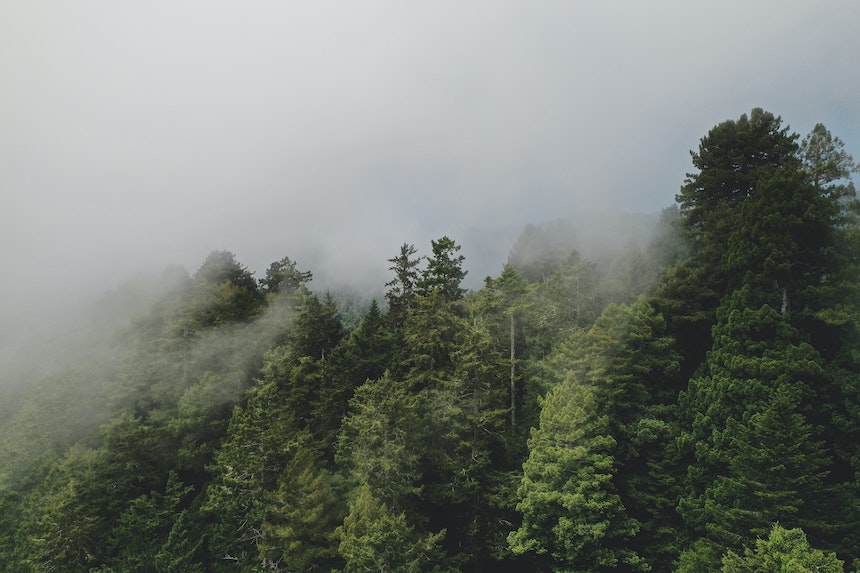
We came to a stop at the large slide. I had hoped that Marsden would have the panorama of the Middle Santiam’s old-growth forest in full view. Unfortunately, the drive was somewhat in vain as the forested hills were shrouded in fog. 

We spent some time here and then returned home for the remainder of the day: dinner that evening and some idle conversation over a beer. Sunday morning, we took Oregon Highway 213 to Oregon City. This provided a much better slice of Oregon than the drive along the freeway. I was trying to show the best of Western Oregon, and Marsden was most impressed with the old car bodies in the back yards along the way. Those don’t exist in the east, where salt is used on the highways in the winter.

From Oregon City, it was a short trip to drop Marsden off at the Portland airport. A handshake and we parted ways again, almost the same as in Germany, but this time it was Marsden catching the plane.

For Marsden’s information, the area we spent those few minutes on the Middle Santiam is now located well within the Middle Santiam Wilderness Area’s boundaries.

Photo by Dan Meyers on Unsplash

From the Archives, one year ago

Charlie and Betty Land, At the Track

https://docsmemoirs.com/2020/03/17/charlie-and-betty-land-2-at-the-track/