The Last Ditch Effort
D. E. Larsen, DVM
“Bob, this is the third time I have checked this heifer,” I said. “Everything I feel is normal. Are you sure you’re not messing up with the breeding? I mean, your semen tank has adequate liquid nitrogen?”
“We are using the same semen on all of these heifers, and everybody else is pregnant,” Bob said, shaking his head a little. “I have Erma and Cara both watching every move I make when we A-I one of these heifers. If something was being done wrong, I would be told about it.”
“I have checked her 3 times, and the active ovary has been the right ovary every time. It could be that she has a segmental aplasia in her ova duct, and I’m just not feeling it. Or it is too small of a defect for me to feel.”
“Can you fix that sort of thing?” Bob asked.
“No, I don’t think you can fix that in the cow,” I said. “Maybe a fancy surgery over at the college, but I don’t think so. The other problem is that sort of a defect is probably heritable.”
“But you could probably have an ova duct that was plugged from an infection or something,” Bob said.
“Yes, I guess that sort of thing is possible. I’m not sure how you fix that sort of thing. And then you get back to the inherited defect possibility. You don’t really want to perpetuate that sort of thing in your herd.”
“I really want this heifer pregnant,” Bob said.
“Have you tried breeding her with a bull?” I asked.
“I have a good A-I match for her. Do you think there is anything we could do?”
“If the right ovary is the dominate ovary, and it is the one that ovulates every cycle, and she doesn’t get pregnant. The one simple way to make the left ovary active would be to remove the right ovary.”
“Do you think that would work?” Bob asked.
“It would work, but the better question is, do we want to go to that extent. I have told you before if you work hard to get a slow breeder pregnant, you have her to work on her and a couple of her daughters in a few years. Infertility is very heritable.”
“Okay, let’s do it,” Bob said. “If it doesn’t work, nothing is lost. Maybe you will be able to see if there is a defect when you do the surgery.”
“Maybe I would be able to see a defect. But if it is big enough to see, I could probably feel it. We could send it in for histopath. It might be helpful to know if it is an inherited problem.”
***
A few days later, I returned to Bob’s place to do an ovariectomy on the problem heifer. I had done it once in school on a mare. That procedure was done with a flank incision. We used a tool called an ecraseur that cuts the ovaries off and controls bleeding with a tissue crush, similar to an emasculator.
The are many procedures for spaying heifers as a herd procedure to enhance weight gain when on pasture or feed. Some of these are done with special instruments through a vaginal incision. On this heifer of Bob’s, my plan was to use a short flank incision on the right flank and ligate the ovarian vessels and the oviduct at its attachment to the uterus. There would be no need for speed because there are not a hundred heifers waiting behind her.
***
“Are you ready to do this, Bob,” I asked as I unloaded my stuff from the truck.
“As ready as ever, I guess,” Bod said. “Even if the right ovary is not the problem, she should still be functional with the left ovary. Am I correct in my thinking on that point?”
“You are correct. My thinking is that she will get pregnant on the first breeding after this surgery. We will see if my guess is correct.”
“Guess!” Bob said. “Are we doing this on a guess?”
“An educated guess,” I said. “At times, that is the best we can do in this business.”
“Okay, I understand the situation. Let’s just get it done.”
With that discussion completed, I clipped and prepped the right flank. I had never approached the ovary in a heifer, but in the mare, it was right there at the incision.
I made a short incision, less the six inches long, high on the right flank. I carefully incised the peritoneum. that last thin layer of tissue before entering the abdomen. Air rushed into the abdomen, and the intestines settled into the lower abdomen. There hung the right ovary.
If I was using an ecraseur, I would be done in a couple of minutes. I ligated the ovarian pedicle. Then I ligated the oviduct at its attachment to the uterus. I removed the right ovary. There was no rethinking the decision at this time.
“What do you think?” Bob asked as I was closing the incision.
“I don’t see any abnormalities. That is a good thing. That means there is no inherited segmental aplasia. It will be interesting to see what the pathologist has to say.”
“Yes, I been thinking about that,” Bob said. “I don’t think it matters. It will just be another expense, and what’s done is done. It will either work, or it won’t.”
“You are right there,” I said. “But five years down the road, if another question pops up on one of her offspring, it might be good information to have.”
The histopath report showed extensive scarring in the oviduct. That was good news for Bob, even if the source of the scarring was unknown.
***
“Has it been two months since we did the surgery?” I asked Bob as he was running the heifer into the chute.
“She cycled only a few days after her surgery. There must have been some prostaglandin release with the surgery. Anyway, I bred her on that cycle, and she hasn’t cycled again. I am hoping you were correct in that educated guess. It’s been forty days since I bred her. I guess I might be a little anxious.”
We secured her in the chute and started a rectal exam. I carefully retracted the uterus and palpated the left ovary.
“She has a nice large CL on the left ovary. That is the first activity on that ovary that I have felt.”
“What about the pregnancy?” Bob asked impatiently.
I ran the length of the left uterine horn through my fingers. A forty-day amnion slipped through my fingers.
“Yep, right at forty days,” I said. “Looks like I don’t get fired this time.”
“I could have lived with an open heifer,” Bob said. “Your thought processes just sort of amaze me at times. I wonder how many heifers get sent down the road because they have a dominant ovary and an occluded oviduct?”
“This wouldn’t be a practical procedure on a commercial heifer. They have to fit in the producer’s program, or they go down the road. I would never recommend anything different.”
***
This heifer delivered a nice bull calf almost 8 months later. She remained a productive cow in Bob’s herd for many years.
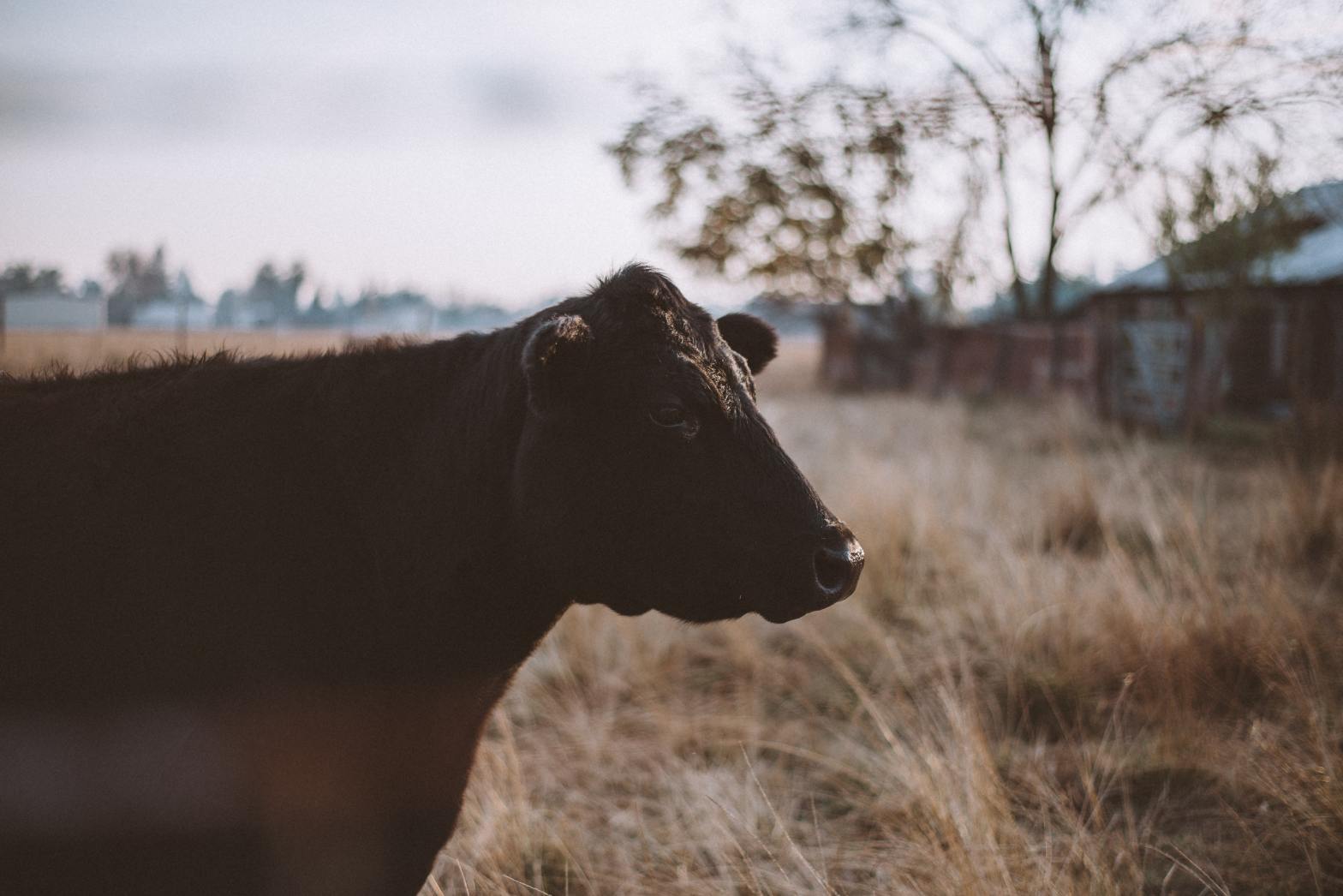
Photo by Spence Selover from Pexels

 Memoirs of a Country Vet