Jack

D. E. Larsen, DVM

Sandy and I were standing in the garage talking when Robert pulled into the driveway with his load of boxes. Robert was our UPS delivery guy and was a regular visitor to our clinic in the garage.

Robert dropped the boxes on the table in the back of the garage and returned waited for a signature.

“Did I hear you two talking about getting a puppy,” Robert asked?

“We are just getting settled into this place, and we figured it was about time for a puppy.”

“I just happen to have a litter of Springer Spaniel pups who are ready to go next week,” Robert said.

“We haven’t even discussed what kind of a puppy we need, but a Springer might fit this place and this family well,” I said.

“They are good pups, all liver and white, and I have both parents. Drop over this weekend if you want to look them over,” Robert said.

“We will do that. The kids will enjoy looking at the litter.”

“I will give you the pick of the litter,” Robert said. “You know you will take home a puppy if you bring the kids.”

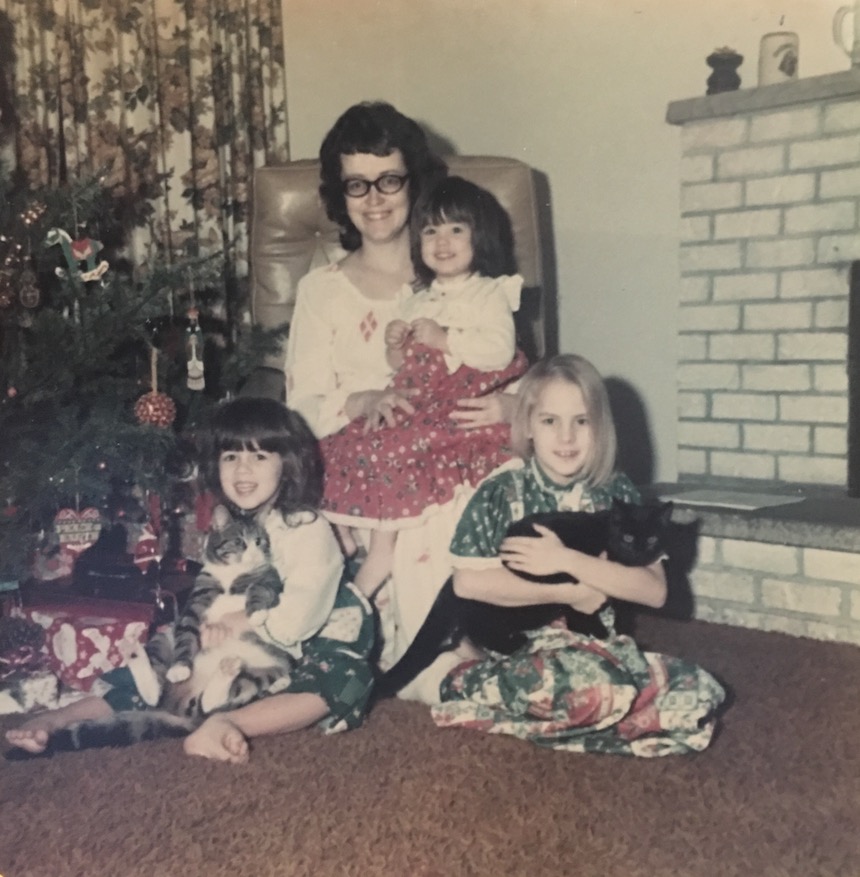
The girls were excited when we loaded up to go look at the puppies. It was chaos when they got down on the ground with the pups. Three girls and eight puppies all trying to lick a face.

As Robert predicted, we went home with the best of the pups. He was Jack before we got very far down the road.

Like all puppies, Jack grew rapidly. In the process, he cemented himself as part of the family. It was good to have a puppy grow up with the kids who were also growing up.

Jack was an active dog. He covered the ground on our small acreage daily. Fences were a barrier at first, but as he reached his adult size, he could sail over any fence on the place. 

One Spring day, I took the girls down to the creek behind the house to fish. Jack went along. The first fish out of the water was held in the air, wiggling on the end of the line. Jack took no time to grab it. I was right there to catch him and retrieve the fish. The fish looked like it was none the worse for wear.

“You kids don’t tell your mother, or she won’t cook this fish,” I said.

My biggest concern, however, was Salmon Disease in Jack. I monitored him close, and sure enough, seven days later, Jack was sick. He could not have had that fish in his mouth for more than ten seconds, and I could not even see a puncture wound on the fish. That changed my thinking on what kind of exposure was required for a dog to contract Salmon Disease, and that was the first lesson taught by Jack.

When Robert had his next litter, he had a little female who nobody had selected. The pressure was applied, and we ended up adding Jill to the household. 

Jill was older when she came to live with us. She and Jack got along well, but like all things female, she led Jack astray. We had virtually no problems with Jack before Jill came along. Now they were straying up the creek further each day. Neighbors were not happy.

We made the decision to find Jill a new home. That was an easy task, and tranquility returned. Jack was immediately back to his old stay-around-the-house dog. Lesson number two.

We had acquired a few bummer lambs to keep the girls busy. Bottle feeding lambs are a chore that kids find fun. That makes it easy to start teaching responsibility and a work ethic.

Ray Michalis had given me a bummer lamb that had an infected knee joint. The chances of saving it were slim, and for Ray, the expense was not justified. 

I took the lamb. I drained the joint’s pus and placed a drain in the joint that I could flush a couple of times a day. We had all the lambs in the stall on the far end of our little barn.

It was a busy afternoon at the clinic when Dixie said Sandy was on the phone.

“You need to come home right now and take care of this lamb,” Sandy said in a voice mixed between hysteria and tears.

“What is the matter with the lamb,” I asked?

“The county tax assessor was here this afternoon, and he locked Jack in with the lambs,” Sandy said.

“That doesn’t sound very smart, but that is not the end of the world,” I said.

“Jack chewed the leg off the little lamb that Ray gave you,” Sandy said, though tears now. “You need to come home right now and take care of this lamb. The girls are hysterical.”

“I will be right there,” I said.

I took a dose of euthanasia solution and apologized to the clients as I ran out the door. By the time I got home, the little lamb was actually doing pretty good on three legs, and all the bleeding had stopped. But I went ahead and put it to sleep.

Now I had two problems. How to deal with a dog who probably couldn’t be blamed for his actions but needed to know that it couldn’t happen again. And how to deal with a tax assessor who most likely would take no responsibility and who could hold my assessment over my head.

For the dog, I took the lamb’s severed leg and tied it around Jack’s neck. You would have thought I had beat him with a stick. He was mortified. 

For the tax assessor, I called him and complained. Restraining myself from calling him a name or two. As expected, he took no responsibility and flexed the muscle of his position at the end of the conversation.

“So, what are you going to do about it,” he said.

Nothing, of course. I wished I had tied the lamb’s leg around his neck.

When I removed the leg from Jack’s neck after the third day, he was the happiest dog you could imagine. And Jack would not even look at the lambs in the pasture again. Lesson three.

It was a warm Saturday afternoon. Jack had gone for a short run on the hillside across the road from the house. The kids were playing in the front yard. I was working on cleaning and checking the vet box’s inventory on the back of my truck.

Jack came down off the hillside and started across the road. The old man from up the creek was speeding down the road. He always drove way too fast. He and Jack collided in the middle of the road. The force of the impact knocked Jack over 30 feet. He landed in the front yard beside where the kids were playing.

Jack stood up and yelped once. Then Jack fell over. He was dead by the time I got to him. 

The kids were wide-eyed, not fully coming to grips with what had happened. Sandy was coming out of the house. I am sure she wanted to slow me down as I headed to the road to talk with the old man behind the wheel.

“Is he dead,” the old man asked?

“He is dead,” I said through clenched teeth. “What the hell do you expect when you knock him thirty feet. You need to slow down, old man. What if that had been one of the kids? I would be dragging you out of the car and beating your ass to a pulp.”

The old man learned to drive a little slower. A hard lesson for Jack to teach, but well taught. Lesson four.

The kids learned the dangers of the road. We never had to caution them about the road after that day. Even Derek, who was just two at the time, absorbed that lesson. Another challenging but valuable lesson from Jack. Lesson five.

And maybe the best lesson of all was Lesson six. The loss of someone close is always distressing. And for kids, their first loss often comes with the loss of a pet. Sometimes traumatic, like in Jack’s case, sometimes from old age, but it prepares them for one of those rigors of life that we all must cope with sooner or later. I think it is one of the best lessons that pets provide for kids.

Jack’s life was short. But one’s life should not be measured by length but rather by the quality and how well it is lived. 

Photo by William Buist on Unsplash

From the Archives, one year ago

The Last Cow in the Chute:

https://docsmemoirs.com/2020/02/24/the-last-cow-in-the-chute/

Buffy and Harry

D. E. Larsen, DVM

Harry’s car pulled up to the clinic’s front and bumped hard into the curb in the diagonal parking space. One wheel of the vehicle almost coming up on the curb. 

Watching out the window, Joleen said, “It looks like Harry has been drinking too much again.”

Harry stepped out of the car, and you could appreciate how large of a man he was. He just seemed to keep coming. He studied himself a bit, with both hands on the roof of the car, and leaned in to pull Buffy off the passenger seat.

Harry was an older man, well into his seventies, if not eighty. He lived by himself. The story goes that he started drinking heavily after his wife’s death, almost 10 years ago.

“I wonder what Buffy has been up to this time,” Joleen said?

Buffy was one of those dogs who could be termed a mutt on his medical record, and he would fit the bill. If one had to pick a breed, you would probably call him a terrier. Small and rugged, he was not much to look at, but he was intensely loyal to Harry. He was perhaps the one thing that kept from going off the cliff with his drinking.

Buffy was also a tough little guy and would take on the biggest dog on the block every chance he could get. We had sewn up more than one gash on his body. His thick bristly hair coat hid most of the scars well.

  Most of the time, when we would see Buffy, Harry was drunk. Sometimes, almost falling down drunk. It often took Harry several days to remember where he had left Buffy. As is often the case when the owner needs someone to watch after him.

Buffy was always protective of Harry and his space. Most of his visits came from wounds received in dog fights: bite wounds, broken legs, and various scrapes and bruises. Harry somehow always paid the bill.

Harry came through the door holding Buffy with bloody hands. He immediately handed Buffy to Joleen.

Joleen looked at the wounds and gasped. “What in the world happened to Buffy this time.”

“Two big dogs got him. They bit me, breaking up the fight. They were going to kill him this time.”

  Buffy had deep punctures on both sides of his lower back and extensive muscle and skin damage.  

“Harry, we will take care of Buffy,” I said. “You need to go get a doctor to look at that hand. Do you have somebody we can call to drive you there?”

“Yes, I have already called Jim to come to pick me up,” Harry said. “I think he just pulled up.”

“What should I tell Harry about how long will we be keeping Buffy?” Joleen asked as she started helping Harry out to the waiting car. 

“Don’t worry about it. We will know more about how Buffy is going to do by the time Harry remembers where he left him.” I reply.

Buffy’s wounds were a real challenge, and had he not been so tough, he would not have survived. By the third day after admission, we could recognize extensive tissue death in the area of his wounds. 

We went through a series of three or four surgeries to remove dead skin and muscle. By the time we had all the dead tissue removed, Buffy had lost a significant portion of skin and muscle on his left side and hip.

Buffy spends twenty-one days in the clinic, and he hated it every day. One could hardly blame him. Two or three injections and the constant bandage changes must make him believe we exist only to torture him. He cowers every time he sees me.  

He is ecstatic when Harry finally takes him home. He still has large open wounds, but they are healing well, and finally, I believe, the wounds can be managed by Harry at home.  

On the fourth day after Buffy was home, Harry calls the clinic. He’s drunk, but he can still talk.

“Buffy’s sick, can hardly walk.” Harry finally stutters into the phone.

Not sure who could hardly walk, Joleen asked, “Can you get him to the clinic, Harry?”

“Don’t think I can drive much right now.” Harry replies, with a stroke of insight that is uncommon for him.

“We will pick him up right after lunch, Harry. I just need to know where you live.”  

I have received many different sets of directions in my years of practice. I have often criticized women for what I perceived as a failure to pay attention to details and inability to give accurate directions that a person could follow. But Harry’s directions were impossible.

Despite those directions, Joleen and I pulled into his driveway shortly after lunch. Harry lived in a small run-down shack, but it was surprisingly well kept.  

We knocked on the door, and in a few minutes, Harry opened the door. He was hooked up to his oxygen bottle and having a little trouble walking. Buffy was at his heels. When he looked up and saw us, he had real dread in his eyes.  

“My God, they know where I live,” those eyes seemed to say. Buffy reared back and headed for the back room, staggering on stiff legs. He was attempting to crawl behind the small cabinet when I caught up with him.

“What is wrong with him,” Harry asked?

“It looks like Buffy has tetanus,” I said. “Tetanus in the dog is rare. I have only seen it in one other dog. The good thing is dogs are resistant to the disease, and most will survive with treatment.”

Joleen took Buffy from my arms, “I think he feels safer with me.”

“We will probably need to keep him for another week or two, Harry. We will give you a call when he is ready to go home,” I said.

Buffy spent another twenty days in the clinic. He responded well to treatment. We kept him a few extra days to make sure Harry could handle his treatments at home.

This time, we had Harry bring Buffy to the clinic several times a week. Just so we could keep track of the wounds. These visits became a struggle. Buffy would be under the car seat before Harry was fully parked in front of the clinic. Joleen had to wrestle him out from under the car seat and into the clinic.  

“Harry, next visit, you call when you leave the house, and you park over at Safeway,” Joleen instructed. “I will come over there and get Buffy.”

On the first trip after that, Joleen opened the passenger door and grabbed Buffy before he could get off the seat. Harry staggered his parking location on each visit, and Buffy never seemed to catch on to the game.

Finally, Buffy’s wounds healed. He was scarred but functional.

“Now you just have to keep him from going out and picking a fight with the big boys,” I told Harry as he made his last visit.

“I think this little guy is going to be an inside dog from now on,” Harry said. “I will probably have to stop drinking. That is what got him into trouble last time. I let him out to do his business because I was too drunk to walk him.”

“Maybe both of you have learned a lesson,” I said. “It will be a good thing if Buffy helps you to slow down on the bottle.”

“How much do I owe you, Doc,” Harry asked?

“Your bill is pretty big,” I said.

“I don’t have much, but I will pay you $50.00 a month, probably forever,” Harry said as he shook my hand.

Harry faithfully paid $50.00 a month, every month until he died. He was always thankful for Buffy’s recovery. If people were half as sincere as Harry, credit problems would be non-existent.  

Buffy hated me for the rest of his days.

Photo by Annie Spratt on Unsplash