
A German Ice Storm

D. E. Larsen, DVM
The winter of nineteen sixty-eight and sixty-nine in Northern Germany was throwing everything it could at us. I had been maintenance NCOIC since the middle of the summer. This site had been a madhouse following the Russian invasion of Czechoslovakia.
Snow and ice seem to be coming every week. If it wasn’t snowing, it was an ice storm. The weather didn’t slow us down much. It just made life a lot more complicated.
“The direction-finding guys are having some problems with the new transmitter they set up for them,” I said to Jamie and Ron. “Why don’t you guys check it out and see if you can get them up and running.”
“We looked at it a bit ago and couldn’t get it to load to the antenna,” Jamie said. “With this ice storm, that antenna the Rothwesten crew installed is probably shorted out.”
“That is sure a possibility, but the big wigs at the Rock are starting to holler, so we need to make sure everything else is in good working order. Let’s start by checking all the tubes and running all your checkpoints. Then it doesn’t load, we can say with confidence that it is the antenna. At the hundred-foot level on that tower, there is probably an inch of ice. I don’t think we want to be climbing that any time soon. I will put a request in for the antenna crew to come to check it out as soon as you guys say everything else is working fine.”
***
“Larsen, this is Sergeant Z. What the hell is up with that DF transmitter?” Sergeant Z asked on the phone. “That new officer in charge of that section is a real ass, and he is all over me.”
“I have a crew out working on it now,” I said. “It looks like it is the antenna. We are in the middle of an ice storm here, you know. There is close to an inch of ice covering the tower at the hundred-foot level. Jamie thinks the antenna is shorted out, but I am having them go over the transmitter, checking all the tubes and everything before we call for the antenna crew.”
“I don’t think there is much of a chance you are going to get the antenna crew up there in this weather,” Sergeant Z said. “CWO Anderson is going to insist that you send someone up that tower. You can bet on that.”
When I hung up the phone, everyone in the shop looked at me for some kind of word. We were used to working independently, and I was a big fan of the previous OIC of the DF operations. Having someone question our work and my decisions were new to us.
Jamie and Ron came back into the shop.
“The transmitter is fine,” Jamie said. “We checked every tube and went through the entire checklist. It has to be the antenna.”
“Okay, I will call Sergeant Z at the Rock,” I said. “He didn’t think that we had a chance of getting the antenna crew up here during this ice storm. But don’t worry, I am not going to send any of you up that tower. It is too dangerous for the antenna crew to be on the road, but it is fine to send us up an ice-covered towner. That sort of lets you know where we stand in the line of importance.”
“Sergeant Z,” I said into the phone. “The transmitter is fine. That means the antenna is the problem. I would suggest you let Mr. Anderson know that he should get the antenna crew up here. I don’t have anyone who is trained or certified to climb a tower covered in ice.”
“They told me that you liked to live dangerously,” Sergeant Z said. “I will tell the man, but I am sure that he will be on the phone or more likely on the secure radio in a short time. You be careful. This man will think nothing of nailing you to the wall.”
***
It was not long, and Brian from the DF station was in the shop.
“I have Mr. Anderson on the secure horn,” Brian said. “He wants to talk with you, Dave. He sounds pissed. He is new, you know. Our guys at the Rock tell us he is a real jerk.”
I picked up the microphone at the DF station and clicked the transmit button.
“Larsen here, over.”
“Larsen, this is Chief Warrant Officer Anderson. I am OIC of the Direction Finding mission at this Field Station. I have a transmitter under your supervision that is not working. What’s up with that? over”
“I just had a crew go over that transmitter with a fine-tooth comb. The transmitter is fine. It has to be the antenna that your antenna crew installed that is the problem. I have a request with Sergeant Z for that crew to return and fix their work. over”
“The antenna crew is not going to be doing any traveling in this weather. I want you to send someone up that tower and do the fixing. over”
“There is an inch of ice on that tower at the hundred-foot level. I don’t have anyone qualified to climb such a tower.” over.
“Listen, Larsen, this is a direct order. You send someone up that tower and fix that antenna. over”
“Like I said, I don’t have anyone qualified to climb that tower. I will do it myself. over and out.”
Most of the operations had stopped as they listened to the conversion.
“Wow, what an ass,” Brian said.
Brian and I had been in Korea together before coming to Wobeck. The Army Security Agency was a relatively small unit in the Army, and such continuity was almost standard.
“One day, I will get back at him,” I said.
I returned to the shop and strapped on a climbing belt and a tool pouch.
“What’s the story?” Jamie asked as I was looking in the drawer for a ball-peen hammer.
“I am going up the tower and fix the antenna,” I said as I started out the door.
This tower was an AB-105 tower. That is a steel tower, triangular in design and about a hundred forty feet in height. The transmitter’s antenna was at the hundred-foot level.
I banged the tower with my hammer, knocking off all the ice I could reach. The is was not too thick at ground level, less than one-half inch.
I secured my belt to the highest rung I could reach and started my slow climb. After going a few rungs, I started knocking off some more ice. I moved my belt up a few rungs and continued my climb.
I was about twenty feet up the tower when Jamie came out of the operations building. He had a climbing belt and tool pouch on.
“Wait up,” Jamie said. “I am going up with you.”
I waited as Jamie started his climb.
“You need to belt up as you climb,” I said. “It makes things a little slower, but this tower is slick.”
It didn’t take long, and Jamie was up beside me. I knocked off all the ice I could reach and handed Jamie the hammer to clear his path.
“I don’t think we are equipped for this kind of work,” Jamie said. “My feet are cold already, and we’re not halfway to the antenna yet.”
We continued our climb together, going up in three-foot sections. Knocking ice off and changing our belt attachment at each stop. I have no idea how long the climb took, but it did not seem long, and we were at the antenna.
I spent some time knocking off all the ice from the antenna that I could reach. At this level, the ice was thick. Maybe not an inch, but then nobody was measuring. I handed the hammer to Jamie, and he knocked off the remaining ice on his side of the antenna.
“I think we got lucky,” I said.
“You find something?” Jamie asked.
“The screw clamping this side of the antenna must have slipped,” I said. “Either that or the antenna crew was just sloppy in their work. This screw is across the two beams of the antenna, shorting them out completely. It should be a snap to fix.”
We loosened the screws on each side of the antenna clamp and repositioned it. Then tightened the screws again.
“That should do it,” I said. “It would be nice if we had some wood spacers, but that will have to wait. Let’s see if we can get some attention and have them load this antenna and give us a thumbs up before we start down.”
“That would be a good idea,” Jamie said. “I really don’t want to climb this antenna tower again any time soon.”
We hailed Ron, who was watching from the door of the operations building. He quickly ran to the transmitter van and had them try the transmitter. A minute later, he stepped out and gave us a thumbs up. We started our slow climb down the tower. Again, going about three feet at a time before changing our belt hookup. At least we didn’t have to knock any ice off.
“I can’t feel my feet,” Jamie said as we started walking to the operations building.
“Stomp around on them a bit and then get in by the heater,” I said.
“Do you want me to get Mr. Anderson on the horn?” Brian asked.
“No, I don’t think I have anything to say to that man unless he addresses me directly,” I said. “I trust that he will get the word that things are up and running.”
***
The transmitter continued to do its job flawlessly, and my relationship with Mr. Anderson never improved. But I survived the remaining six or seven months of my enlistment.
Almost a year and a half later, both Jamie and Ron dropped in on me in Corvallis for a brief visit. They both were in Portland visiting family, and they decided that Corvallis was not that far away.
We had a good visit, I think it was during finals week, so we drank coffee. Jamie was still complaining about his feet.
Photo by Corbin Richardson on Unsplash
Nan
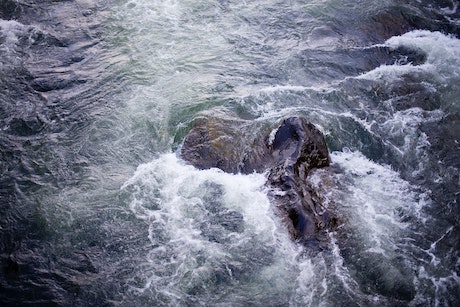
D. E. Larsen, DVM
It was December seventh in nineteen-seventy-six, Pearl Harbor Day, when we finally moved into our clinic in the Safeway shopping center. This was a leased space built to my specifications and budget.
The practice had been growing steadily in our garage, but we were definitely outgrowing the garage. The new clinic gave us a new life. We suddenly had a full appointment book almost overnight.
We certainly needed the cash flow. But there were also some problems with it. We needed time to learn how to manage the workflow in the new clinic. And that lack of management of the workflow was challenging to get ahead of for us.
By nineteen-seventy-eight, we needed the help of a technician.
Nan was recently engaged to a graduate student at Oregon State University. She had been working at a clinic in Portland following her graduation. Now she wanted to be close to Corvallis.
“Nan, we know you are busy, but if you can stop by Sweet Home, we will do our interview over dinner,” I said into the phone as we were trying to get a few minutes to make our pitch to Nan.
Veterinary technicians were few and far between in the nineteen seventies. Sweet Home was considered a fringe community in the Willamette Valley. We needed her to see what the community had to offer. If we had to throw in dinner to get her to town, it was a small price to pay.
“Nan, we are prepared to make you an offer that will be difficult to refuse,” I said to Nan as we wound up our initial interview. “That includes an insurance package, sick leave, and vacation pay.”
“I have several offers to consider,” Nan said. “But I was not expecting all these benefits. I am going to have to do some figuring on just what they add up to dollar-wise. Can I give you an answer in a couple of days?”
Ultimately, Nan took our offer and came to work for us in nineteen seventy-eight. Being from Portland, Sweet Home proved to be an outdoor paradise for her and her fiancé. Nan moved into a small house in Lebanon, so she was close to work and not far from Corvallis.
In the clinic, Nan was able to shoulder tasks that made my time more efficient. Her personality made her an instant hit with clients, and she enjoyed my casual relationships with my clients.
“I don’t know how you do it,” Nan said. “The doctor in the last clinic I worked for wouldn’t come out front and talk with clients if his life depended on it.”
It didn’t take long for Nan and David to start enjoying the great outdoors offered by this area. They did long hikes, and then they got into river rafting.
“You need to talk to Nan about wearing a life jacket when she is on the river,” Sandy said to me one afternoon. “They floated the river the other day and didn’t even have life jackets in the raft.”
“What section did you float?” I asked Nan.
“We were with friends in their six-person rubber raft,” Nan said. “We drifted from the boat ramp at Pleasant Valley bridge down to Waterloo. There was no real rough water, but some fun rapids in spots. It turned out to be a lot longer than we thought. We were a little worried that it was going to get dark on us.”
“Well, if it gets dark and you’re still on the river, you need to pull over and get out,” I said. “This river can lull you to sleep at times, and then you hit a rock, and bam, everybody is in the water. That is why life jackets are a good idea. And the law says you have to have them in the boat, you don’t have to wear them, but everyone has to have one in the boat.”
It was a couple of weeks later when Nan quietly told me of another trip on the river. She now knew that Sandy’s fear of the water was nothing to mess with, so she waited until we were alone in the surgery room.
“We did another float on the river,” Nan said in a hushed tone.
“What float did you do?” I asked.
“We floated from the dam down to Pleasant Valley bridge,” Nan said. “It was so much fun and a whole lot shorter than the trip to Waterloo.”
“It has a couple of dangerous spots for the casual drifter,” I said. “I hope you listened to us about those life jackets.”
“Those are such a pain,” Nan said. “We talked about it, and I’m guessing that we are going to buy a couple, but I hate wearing them.”
“I floated the Rogue this summer with a bunch of friends,” I said. “I was in a little four-man raft. It was probably too small for that river. I ended up in the water twice. One time was just a nuisance flip in a little eddy, but the second time was in big water, and I could have easily drowned without a lifejacket.”
“I will tell Dave and see what he thinks,” Nan said.
“Just don’t talk to Sandy about it,” I said.
“I know, I learned my lesson on that last time,” Nan said with a smile on her face.
***
All good things must come to an end. Sometimes they come to an end because of other good things. Nan and Dave were married, and Nan moved to Corvallis. She got a job at a clinic over there, and they lived another year in Corvallis. Then Dave took a graduate school appointment at Washington State, and they moved to Pullman, Washington.
At Washington State, Nan worked in the Animal Research Lab, and Dave was in a Ph.D. program. They had been in Washington for several years when a note from Nan’s mother arrived at the clinic.
Fred Briggs was in the clinic when I opened the note.
“I remember Nan,” Fred said. “She worked here and then over in Corvallis or Albany somewhere. She was sure a nice tech to talk with.”
I opened the note.
“It is with such great sadness that I have to tell you about Nan’s tragic death. She always loved you two and your kids. And she so enjoyed her time in Sweet Home. Nan and Dave were rafting the Clearwater River in Idaho, and Nan fell from the raft in the Big Eddy Rapids. Her body has not yet been recovered.”
“I guess she never learned. I scolded her several times about not wearing a lifejacket,” I said.
“I grew up on the Clearwater,” Fred said. “During a flood, I watched a big Ponderosa pine tree, root wad and all, come into the Big Eddy Rapids. It stood up on end, and the whole thing went under. It was hundreds of yards downstream before it popped up again. My guess is that if Nan wasn’t in a lifejacket, she didn’t have much of a chance.”
“The note goes on to say that they haven’t recovered her body yet,” I said.
***
We were all in a bit of shock with the unexpected news. They finally recovered Nan’s body, about 2 weeks following the accident and some ten or twelve miles downstream. If any good came of Nan’s death, it served as a reminder to wear a lifejacket when on the water.
Photo by Tim Mossholder on Unsplash
 Memoirs of a Country Vet