A Few Precious Hours, From the Archives

D. E. Larsen, DVM

  I launched the drift boat at the Rock Creek Campground boat ramp. After parking the pickup and trailer. The kids decide that they need to run back to the camp for one last item. 

  “Okay,” I said, “I will pull the boat down by the camp and wait for you there.”

  With that, I got in the boat that rowed down the bank, so it was close to our campsite. Now I just waited for the kids to show up.

  Time away from the practice was precious to me. It was rare that everything lined up in a manner that would allow us a weekend away. Craine Prairie Reservoir, on Century Drive south of Bend, was one of my favorite places to fish. It held large rainbows and was big enough that you could avoid the crowds. It was also far enough away from Sweet Home that it would be rare for me to be recognized.

  When I was away from town, I always avoided any mention of being a veterinarian. Any mention of my profession, even complete strangers, would prompt a long story of their dog, or cat, and their trips to the vet clinic. Being an introvert at heart, I hated such conversations, especially from strangers.

 I pretty much only fly fished. There were times when we would fish with bait, with the kids, and when we could harvest the catch. We had learned that the fish out of Craine Prairie tasted like mud this time of the year. You almost couldn’t use enough tartar sauce to make them palatable. 

  When we were loaded up, I rowed out to Osprey Point and dropped an anchor from each end of the boat. This would keep it from swaying in the wind. I had made fly poles for the kids. I used inexpensive fiberglass rods, 7 and a half feet in length, and rated for line weight of 4. Since kids cannot cast too far, and the most expensive part of a fly setup is the line, I took double taper floating lines and cut them in two. This gave each rod a 33 foot, tapered, fly line. This was almost perfect for young kids

  At Osprey Point, there was a deep hole just off the point and large fish for the taking. It was also an area were the kids could fish with their floating fly lines. By using a nymph, about 6 feet under a strike indicator used as a bobber, they could hook their share of fish. This allowed me to fish the deep hole with a sinking line. I would drag an olive Wooly Worm across the bottom of the hole. This made for wild action most of the time.

  I always believed that when you were fishing with kids, the action was urgent. The quickest way to sour a kid on fishing was to make them sit in a boat, or on a bank, for hours with nothing happening. We hooked fish in the first 15 minutes or a half an hour at most, or we would go do something else. When a kid asks when do they know they have a bite, you have waited too long before going to do something else.

  We managed to get everyone hooked up with a fish in a short time, but that was enough for most of them. We headed back to camp to drop off the kids. Derek was the only one who wanted to fish more. We needed a lunch break anyway.

  When I was ready to go back out in the afternoon, Derek was dragging around a little. 

  “I will wait for you at the boat,” I said as I headed down to the shoreline.

  I was standing there leaning against the side of the boat when I noticed the group of boys. There were 4 boys, walking along the shoreline, coming from the direction of the boat ramp. They looked like they were somewhere around 10 years old. They were checking out everything that looked movable as they came along the bank. One of the boys was carrying something.

  When they reached me, they stopped, and the one boy handed me a bird he had been carrying. It was a Starling. It had a blowgun dart that pierced through its back just in front of the wings. The wound was days old, maybe a full week. There was extensive tissue necrosis around the dart that extended across its back. Its wings were not functional. Even with comprehensive medical treatment at this point, this bird would never fly again. My impression was this bird would not survive, even with medical treatment.

  The larger question was how had this group of young boys find the only veterinarian standing on the banks of Craine Prairie today. Even when I thought I had made a clean escape from town, even when I was as anonymous as it was possible to be, they still find me.

  I knell down, so I am talking at the same level as the boys. This was no rag-tag group. These boys were well dressed for a fishing lake shoreline. I would guess they were all from well to do families. They were probably reasonably well educated. If that can be said for a group of 10-year-old boys when they were grouped with their peers.

  I point out the extent of the wounds caused by this dart.

“I hope the guy who shot this dart is proud of his skill.,” I said, hoping to still some pity for the bird and to just maybe educate the boys on the ethics of killing an animal. “This bird has been suffering for several days, maybe a full week. You can tell by looking at the rotten flesh around the dart.”

  They carefully examine the wound, probably for the first time. I wiggle the dart a bit, to illustrate that the tissue infection has allowed the dart to loosen in the tissue.

  “Hunting, and fishing, is something that we do as a people,” I said. “Some people would say this bird should not have been shot, but it is one of the birds that people are allowed to shoot. But to shot the bird and not finish the kill is cruel to the bird.”

  The boys have some chatter over those statements. Each one of them sort of repeat their interpretation of what I have just told them.

 “I don’t think this bird is going to survive,” I said. “For us to finish the kill would probably be the best thing we could do today. This bird has suffered enough, and we should bring that suffering to an end.”

  So now I was in a corner. With 4 boys watching, how was I going to euthanize this bird?

 One of the boys who, I noticed now, was wearing a cub scout shirt, took the lead.

  “Set him on the ground, and I will get a rock,” the young scout said. “I can crush him with a rock.”

  “That might work,” I said. “But you might miss, that wouldn’t be very fair to the poor bird.”

  “How should we do it?” the young scout asked.

  “I will take care of him,” I said, hoping the boys would continue their exploration of the shoreline.

  No such luck, they all stood there, looking at me for the answer. I gripped the bird in my right hand and held it so the body would not respond. Then I took a firm grip on the head with my left hand. With a quick jerk, I pulled the head off the bird. The body quivered in my right hand for a few seconds.

  “Oh! He pulled the head off!” the young scout said.

  “That was the quickest way to do it here,” I said. “Now, he is not suffering anymore. You guys remember, if you shoot something, you make sure it is dead.”

  Then it is over, the boys continue along the shoreline, I toss the decapitated bird into the grass. Derek comes down from the camp about then, realizing he had missed something, but not knowing what to ask.

  We loaded up and went out to fish for a few precious hours. Surely, they won’t find me out on the lake.

Wooden Tongue

 D. E. Larsen, DVM

The old cow was in the middle of the corral as I pulled up. Her head was extended, and her tongue protruded a bit from her open mouth. Saliva hung from her mouth in long, thick streams that nearly reached the ground.

I stepped out of the truck, pulled on a pair of coveralls, and slipped on my overboots. I could see Ed coming out of the house and heading for the corral at a trot.

“Sorry to keep you waiting, Doc,” Ed said as he approached the truck. He was breathing a little hard, and I noted a pack of cigarettes in his shirt pocket. “I don’t know what the heck is wrong with this old gal, but I noticed her having trouble eating a few days ago, and I’m not sure she can drink today. She stands at the water trough with her nose down in the water.”

“Sounds like we need to look at her,” I said. “I will grab my rope and see if I can throw it this morning.”

I chuckled under my breath. It always amazed me how the guy that would apologize for making me wait half a minute while he trotted out of the house was the same guy who never had the cow waiting at the chute or tied in the corral.

I was learning a bit. I made a mistake early in my tenure here in Sweet Home by displaying my skill with a rope. Now I always tried to look awkward in handling the rope, and I made sure I missed the cow several times before landing a good catch.

Since the gate was at the far end of the corral, I crawled over the top rail of the corral with my rope in hand. I just hoped that Ed could hand things over the fence, or I would be getting plenty of exercise this morning.

The cow didn’t move, I could probably just place the rope around her neck, but I wanted Ed to see how much difficulty I could have throwing the rope. I stood back from the cow and threw a loop at her neck. The rope plowed into the side of her neck with a thud. The cow never moved.

I gathered the rope and threw another loop that missed her all together. I figured that was enough of a display for Ed. I walked up to the cow, placed the rope around her neck, and fashioned a halter. Again, the cow never moved.

“I think you probably need a little practice throwing that rope, Doc,” Ed said.

“Roping is really not in my job description, Ed,” I said. “You could save a lot of time for yourself and me by upgrading this corral with a squeeze chute.”

“That is a lot of expense, Doc,” Ed said. “I have just never been able to justify it.”

“My brother-in-law always says that if he had to do it over again, he would have bought the squeeze chute before he bought his first cow,” I said. “And really, you don’t have to have a squeeze chute. I can help you with the design. You can do wonders with just a crowding alley and a headgate. That would save you the expense of a chute. In fact, if you’re a good carpenter, you can build a headgate. Just make a good stanchion on a gate that opens at the front of the alley. It is a little cumbersome, but it can work if the expense is a big item.”

“I’ll give it some thought, Doc,” Ed said.

That was cryptic for I think it is BS.

“I think I could look at this cow without a rope,” I said. “She is pretty distressed. I think she is just going to stand right here. Can you hand me that bucket of water and that black bag on the truck tail gait?”

I plugged in a thermometer and clipped its lanyard to the hair on top of her tail, and she had no problem with that procedure. But when I got to her mouth, she objected, shook her head, and moved away from me a few steps.

“Looks like she wants to be tied up,” I said as I led her to the nears post and tied her short.

When I grabbed her swollen tongue, it was hard. With my fingers putting pressure on the roof of her mouth, I held her mouth open and explored the base of the tongue with my fingers. There was no foreign body and no apparent injury.

I allowed the cow to relax. Her temperature was a little elevated, but otherwise, she looked okay.

I washed my hands vigorously with Betadine surgical scrub.

“What do you think is wrong with her, Doc?” Ed asked.

“She has Wooden Tongue,” I said. “I’ll give her an IV injection of sodium iodide, which should take care of it. Sometimes we need to repeat the injection in a week.”

“How do you suppose she got it?” Ed asked. “I ain’t never seen anything like this before.”

“It is caused by a bacteria, and Actinobacillus is the name,” I said. “It is probably around in the environment and just pops up once in a while. It gets into the tongue through an injury, often just a small puncture from course feed. But we usually can’t define a source.”

“I know a guy in Crawfordsville who lost a bunch of bone on the side of his face to an Actino bug of some type,” Ed said.

“Yes, I know the guy,” I said. “His case was a little different and probably a lot more serious. It was Actinomycosis that caused his problem. Similar names, but Actinomycosis invades the bone, and it is more difficult to treat. That is probably why he lost a lot of bone on the side of his face. He said the doctors told him he probably got it from chewing on a stem of grass. Who knows?”

I retrieved a bottle of sodium iodide from my bag and attached an IV set to it. I placed a fourteen gauge, two-inch needle into her jugular vein and hooked the IV set to the needle. The infusion only took a couple of minutes.

“I will give you a call in a couple of days, Ed,” I said. “She should be mostly normal in forty-eight hours. If that is not the case, we will need to give her some other antibiotics. Then, next week, we will decide if she needs another one of these infusions.”

“Do you think I should keep her up?” Ed asked.

“I would keep here until I talk with you in a couple of days,” I said. “Just in case we have to give her something else. Just have some good grass hay and maybe a little grain for her. I would guess she will be noticeably improved by morning.”

I untied the cow and handed my things across the fence to Ed. Then I crawled over the rails. 

I got out of my coverall and boots and washed my hands again.

“Okay, I’ll call in a couple of days,” I said. “You call if she is not improved in the morning. And Ed, do call and set up a time for me to go over your corral system. There is no charge for me doing that, and you can always ignore it if the plans don’t work for you.”

***

The old cow was back to normal when I called Ed in two days. And I just stopped by and talked with Ed as we looked at her in the pasture two weeks later.

And, true to form, Ed never did come by the clinic to discuss his corral system.

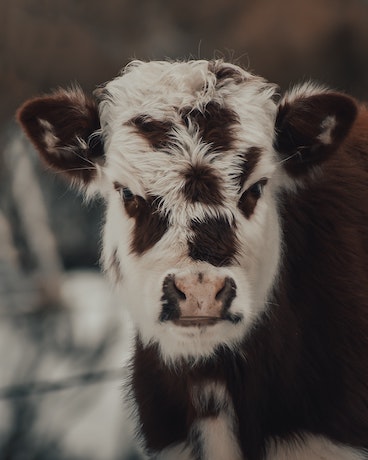
Photo by freestocks.org from Pexels.

Hold the Horse Down

D. E. Larsen, DVM 

Mike was sitting behind the desk in the large animal hospital, his standard position during every one of our weeks of night duty at Colorado State University.

“Mike, you seem to like the desk job,” I said.

“Naw, not so much. I just need the experience of talking to people on the phone,” Mike said.

This was Thursday evening, nearing the end of our week of night duty. Seniors were assigned night duty every couple of months. Ten of us ran the hospital from closing at five until ten o’clock. We were managed by two interns, one on the small animal side and one on the large animal side of the hospital. We got to go home at night. The interns slept over at the hospital. But they had our telephone numbers if the need arose.

“Larsen, you need to get the whole group together for a quick conference here,” Doctor Reese, the intern on duty, said. “We are going to have an issue tonight.”

I headed out to the small animal side of the hospital and started gathering everyone for this conference.

“Conference?” Rod asked. “What is going on?”

“I have no idea what’s up,” I said. “Doctor Reese needs us all together to discuss the night.”

“Is he going to keep us here all night?” Rod asked.

“I say again, Rod,” I said. “I have no idea what’s going on. I’m just the go-for out getting everyone over to the large animal office.”

“It looks like we are missing a couple of guys,” Doctor Reese said.

“Chuck and Rod are finishing up doing the evening treatments over on the small animal side. They should be here shortly,” I said.

“I’ll wait till they get here. I don’t want to have to repeat everything twice,” Doctor Reese said.

The two latecomers came through the door just as Doctor Reese made that statement.

Chuck sat on the corner of the desk. “What’s up, Doc,” Chuck said.

“Okay, for those of you who don’t know it,” Doctor Reese started. “Doctor Adams had an emergency surgery today. He had the American champion endurance horse come in with a fractured humerus.”

“That is almost an automatic euthanasia, isn’t it?” Jim asked.

“In most cases, yes. But this horse has an exceptional value. So it was decided to give the repair a try,” Doctor Reese said. “It was a complicated surgery, even for Doctor Adams. Repairing a fractured humerus in the horse is almost an unheard of surgery.”

“So, how does that affect us?” Chuck asked. 

“It was a seven-hour surgery,” Doctor Reese said. “Seven hours lying on its left leg, and on recovery, there is radial nerve paralysis in the left leg.”

The radial nerve controls all the muscles that extend the front leg. Without radial nerve function, the animal cannot stand on that leg. I had never heard of it in a horse. In the dog, the leg drags along, wearing the skin off the top of the paw in short order.

“That’s another automatic euthanasia in the horse,” Jim said.

“So the surgery team has been holding the horse down in the recovery stall all evening,” Doctor Reese said. “The plan is to let them go home at ten tonight. We will be responsible for holding the horse down tonight. We will pull two-hour shifts with two of you on each shift.”

“I’m not sure I understand the plan,” I said. “I mean, if we had radial nerve paralysis with the horse on its side during surgery for seven hours, can we expect anything different if we hold the horse down on the other side for ten or twelve hours?”

“It is the only option we have,” Doctor Reese said. “They gave the horse a big dose of dexamethasone. The hope is to see some return to function by morning so they can get the horse in a sling. I will agree, the odds are not good for the horse. But, Larsen, if you want to discuss the plan with Doctor Adams, you can just march right down there and talk with him.”

Doctor Adams was almost a god in the world of lameness and orthopedics in the horse, and he had a massive influence in the veterinary school. He could kick a person out of school in a heartbeat, and there were rumors of him doing just that in the past. True or not, the potential threat made students conduct themselves with an extra measure of decorum. 

“I think Jim and I will volunteer for the first shift,” I said.

“Okay,” Doctor Reese said. “We need to get everyone signed up for a shift. You guys take a phone into the recovery stall with you. There is a phone plug-in there. You give the next shift a phone call a half hour before they are due to be here. Everybody needs to take the responsibility to make it here for your shift. That way, all of us can get some sleep tonight.”

“I need to call Sandy and let her know I am going to be late tonight,” I said.

“You other guys go ahead and head home now,” Doctor Reese said. “Jim and Dave, gather the clipboard with the list and bring a phone. We can go down to the recovery stall and get instructions for the night.”

The recovery stall was a large room, maybe twenty feet square. It was padded with thick rubber mats, like a wrestling mat, on the floor and all sides. Once you were in the room and the door was closed, it was just you and the horse, and do place to duck for cover if the horse was flopping around.

“You guys have had a long day,” Doctor Reese said as we squeezed through the large door that was opened only a crack for our entry. “We are set up with two-man shifts at two-hour intervals. We just need some instructions.”

“All you need to do is have somebody sitting on his neck all the time,” Doctor Adams said. “He is fully recovered and will try to jump up if he gets a chance. His left leg has no radial nerve function, and bone plates on his right humerus will not hold his weight. His only hope is to get enough return to function so we can get him in a sling tomorrow.”

Jim placed his knee on the horse’s neck as Steve stood up, and then Jim swirled around and sat down on his neck. It looked like an easy maneuver, but the horse did try to raise his head during the change of position.

“I’m about beat,” Steve said as he pushed past me. “I don’t think I will be going into Equine Orthopedics after today. We have been working on this horse since ten o’clock this morning. You should have been in on that surgery. I will never complain about the surgical approach of the humerus on a dog again.”

“Retracting the muscles must have been a chore,” I said. 

“I don’t think most people could have done the surgery,” Steve said. “Doctor Adams is so strong, and he made some of it look easy. But, a seven-hour surgery is almost too much for this kid.”

The surgical team filed out of the recovery stall. 

“Call me if you need anything. I will try to get some shut-eye,” Doctor Reese said as he left the stall and shut the door.

I plugged in the phone and laid the clipboard down in the corner, and set the phone on the clipboard.

“I guess if we hold the horse down, the phone will be safe in the corner,” I said.

“I hate being closed in this room with a horse,” Jim said. “There is no way to be safe if the horse is really flopping around.”

“Well, it’s one thing if you are recovering a normal horse,” I said. “This horse has almost zero chance of recovery, and here we are, stuck in this recovery stall with it.”

“The thing that I don’t understand is how are they going to get this horse in a sling anyway?” Jim asked.

“I don’t know. I would guess they will have to sedate him to lift him into it,” I said. “I don’t know why they didn’t do that this evening. By morning, the nerve on the repaired leg will be shot too.”

“I think Adams just wants to be able to write up this repair,” Jim said. “I doubt if it has been done before.”

“I don’t think so,” I said. “If it has, it hasn’t been done very often.”

“Have you heard of a radial nerve paralysis ever returning to function?” Jim asked.

“I haven’t heard of it occurring in the horse before, but in the dog, the leg gets ruined before there is any return to function,” I said. “At least that is the impression that I get from Doctor Creed.”

“It’s probably about time we switch positions,” Jim said. “My butt is getting tired.”

I moved around the horse and knelt with my knee on his neck. Jim stood up and stretched, and I tried to turn on my knee and sit down on the horse’s neck. The horse swung his head up at the same time, knocking me off his neck, and suddenly I am lying on my back beside his front legs. I scrambled away from his legs, and he was immediately was up on his sternum. In an instant, he tried to stand.

His left leg hung uselessly, and he placed his repaired right leg out to stand. It held together for a brief moment, and then the leg collapsed as the repair broke apart.

I looked at Jim and shrugged my shoulders.

“I wonder what Adams is going to say about this?” I said.

“We better call Doctor Reese,” Jim said as he picked up the phone and dialed the intern quarters.

Doctor Reese was there in a flash.

“Oh, boy,” he said. “Not much to do now. I will go call Doctor Adams.”

It didn’t take Doctor Adams long to get to the hospital. I have no idea where he lived, but I would guess he drove fast.

He entered the recovery stall with a frown and knelt down to examine the horse’s leg.

Jim and I stood aside, not saying a word but waiting for Adams to explode.

“I have to go call the owner,” Doctor Adams said. “Then we will put him to sleep.”

That was all that he said. I could hear Jim take a deep breath when Doctor Adams left the room. Doctor Reese looked relieved also.

It was maybe five minutes later when Doctor Adams returned with a bottle of euthanasia solution.

“It was a long shot anyway,” Doctor Adams said as he drew up the solution into a couple of large syringes. “I have never seen radial nerve paralysis in a horse before. Too bad, I really wanted this repair to work.”

With that, he gave the injections and patted the horse on his head.

“We can move him back to necropsy in the morning,” Doctor Adams said as he left the room.

We stood there a couple of minutes, nobody said a word.

“I will call the others,” Doctor Reese finally said. “You guys can go home.”

“I think this was the best outcome for the horse,” Jim said. “But somehow, I feel like we dodged a bullet tonight.”

“Doctor Adams likes to look mean,” Doctor Reese said. “But he is really a nice man, down deep.”

Photo by Missi Köpf from Pexels