Lacerations

D. E. Larsen, DVM

The big Holstein cow groaned a little as we pulled the massive calf out through the large incision in her right flank. Dr. Reese and I had been working for some time doing this C-section. To say this was an oversized fetus was an understatement. This was the largest calf I had seen delivered by any means.

Dr. Reese was one of the large animal interns at Colorado State University vet school, and I was in my senior year of study. Now, with the calf safely in the hands of several junior students, we could concentrate on closing the incisions. Usually, closing the uterus and the flank incision are the most time-consuming parts of a C-section on a large cow. In this procedure, however, getting the calf out was a difficult task, and both Dr. Reese and I were a bit tuckered out.

The closure went well until we got to the skin. The cow’s skin is thick, and even the sharpest suture needles are difficult to push through. After school, I would witness some veterinarians use a leather punch to make holes to lace the suture through. 

It was probably when Dr. Reese was placing the third skin suture that he lacerated the middle finger of his left hand with the needle. The laceration was less than an inch long, but it was deep and right across the first knuckle.

“I can suture that for you if you want,” I said.

Dr. Reese looked at the laceration and swore under his breath.

“No, I better go to a real doctor,” he said.

We finished the surgery, and Dr. Reese left to go to the Student Health Center to get the laceration sutured.

Later, he stopped me in the hall and showed me his finger.

“I should have had you suture this,” Dr. Reese said. “The guy didn’t even line up the creases in my knuckle.”

***

Some months later, Sandy and I were busy organizing the kitchen in our new rented house in Enumclaw, Washington. Brenda, a third-grader, was old enough to help a bit.

Halfway through getting the kitchen boxes unloaded, Brenda managed to run her forehead into the corner of an open cabinet door. She had a nice one-inch laceration above her forehead, just inside the hairline.

“What do you want to do?” I asked her. “Do you want to go to the doctor, or do you want me to suture that wound?”

“I want to go to the doctor,” Brenda said with some finality in her voice.

Off to the emergency room, we went. I don’t remember the doctor’s name, but he seemed efficient. He had Brenda lying on a table in the emergency room as he got ready to inject some lidocaine into the wound. He held a wet towel above her head.

“I will just drip some water on this cut,” the doctor said as he squeezed the towel, dripping some saline into the wound and on her forehead. At the same time, he stuck the needle into the wound and injected the lidocaine.

That stuff hurts, and Brenda let him know that it hurt.

Brenda was unhappy when we were leaving.

“I should have let you do the stitches,” Brenda said. “That doctor lied to me.”

***

It was another few weeks when I had a call to castrate a group of young bulls. These were all three hundred pounders, large enough to be a job but small enough to be relatively each to handle.

“Have these guys been on a clover pasture?” I asked the owner.

“No, what difference does that make?” she asked.

“Clover has a lot of phytoestrogens, and those can interfere with blood clotting,” I said as I moved behind the first bull in the chute.

I grabbed the scrotum with my left hand and squeezed the testicles down to the bottom of the scrotum. I made a couple of quick slices on each side of the scrotum with my scalpel. The second slice also included a nice clean, two-inch slice in the heel of my thumb.

“Ouch!” I said as I looked at the laceration.

I stopped and washed the wound on my hand with Betadine and injected it with a bit of lidocaine. Then I put on a surgical glove and returned to the job.

When I got back to the clinic, I didn’t have time to go to the doctor, and after Brenda’s experience, I decided I could suture it myself.

“Are you sure you can do this?” Ann said.

“I think so,” I said. “I will use a continuous suture pattern so I won’t have too many ties to make.”

I injected a little more lidocaine into the wound, which was the hardest part. I cleaned the wound well with Betadine scrub and laid my hand on a sterile towel as I picked up the suture needle with the needle holders.

In school, when Doctor Creed watched as each of us, one at a time, did our surgical ties on a practice board in front of him, I hurried through my one-handed tie because I had failed to master the technique.

“I’m not sure that was quite right,” Doctor Creed said. “But it was fast enough that I will let it pass.”

Now I wish I had worked harder on learning the one-handed tie. I struggled with the first knot but finally made the knot. It was the same on the other end of the closure, but I did it.

“That doesn’t look too bad,” I said as I held my hand up for Ann to see.

***

Although it is not entirely obvious, I still have the scar because it has become one of many on my left hand and arm.

When I lacerated my left forearm with a scalpel when a larger bull calf kicked in the chute as I was castrating him, I went to Corvallis to have it sutured.

I waited for some time, nearly a half-hour, in the immediate care unit before they called me back.

“How did this happen?” the nurse asked.

“I had a soon-to-be steer kick when he didn’t like my services,” I said.

“Oh, on-the-job injuries have to go to Occupational Medicine,” she said.

“And where is Occupational Medicine?” I asked.

“It is over at our annex,” she said as she cleared the tray she had prepared for me.

The annex was a couple of hundred yards walk from immediate care. A long walk but too close to drive.

There was a gal at the reception window when I entered.

“What can we do for you today?” she asked.

I held out my forearm for her to see. I had not reapplied the wrap after the nurse had removed it at immediate care.

“Oh my!” she said. “That looks like it hurt.”

“Yes, it hurt,” I said. “What are my chances of getting it taken care of today?”

“The problem is we won’t have a doctor here until two o’clock,” she said.

I looked a the clock. It was eleven forty-five.

“I will do it myself,” I said as I picked up my papers.

She didn’t say anything but had a surprised expression as I turned around and left.

Back at the clinic, I scrubbed the would and injected some lidocaine.

Progress made things a little easier. I closed this wound with staples in a couple of minutes. 

I probably saved the insurance company a thousand dollars.

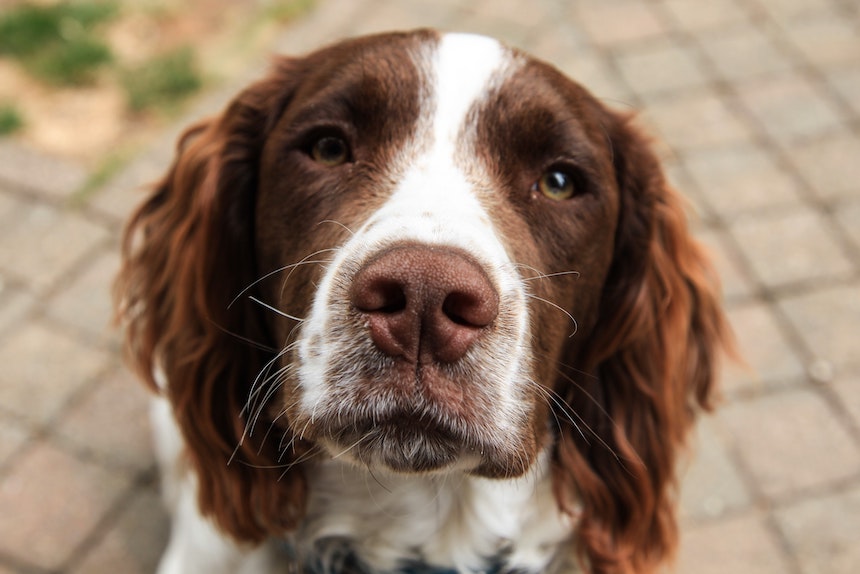
Photo be Karolina Grabowska on Pexels.

Notes on My Mother, from the Archives

D. E. Larsen, DVM

My mother was born on August 14, 1913, as Dolores Lorrene Davenport. She was born on the family farm on Catching Creek, out of Myrtle Point, Oregon. 

The fifth child in a family of ten, she learned how to work at an early age. But by today’s standards, her childhood was idyllic. There was hard work, shared by many hands, and many lessons learned that served her for a lifetime.

There was no electricity on Catching Creek until the late 1930s, and the family had a three-hole outhouse. My mother never lived in a house with indoor plumbing until 1950. They installed an indoor bathroom in their house at Broadbent that summer. She was thirty-seven years old.

She went to elementary school at Twin Oaks School. At this one-room school, her family accounted for a large portion of the attendance. Then she went on to high school in Myrtle Point.

She met my father in high school, and they were married a couple of years later. Graduating in 1932 in the depth of the depression, Mom worked at several jobs until she married Frank Larsen in September of 1934. Dad attended OSU that fall and winter before running out of money. They hitchhiked from Corvallis to Myrtle Point. Mom was pregnant with my sister by then. Some 13 months after my sister was born, my oldest brother came along.

Dad went to work in the woods, and they lived in logging camps in Coos County for a time. One shack they lived in, they purchased for forty dollars. It had a dirt floor, no water, no plumbing, no electricity. They couldn’t sell it when they were leaving, so they just left it.

In those years, one car was luxury, two cars were unheard of for most people. Once, when they lived out of Allegany on the Coos River, my sister was whittling on a door frame, dropped the knife, and it stuck in her eye. Dad was at work with the car. Mom had no phone, no car, no close neighbors, and my oldest brother was too young to run for help. Mom held my sister on her lap with a washcloth over the knife until Dad got home from work. They took my sister to the doctor then. The injury looked far worse than it was, but imagine the stress of that situation.

My second brother was born in 1941, and I followed in 1945. Shortly after I was born, we moved from the Coos River back to Catching Creek. And then, they purchased a small ranch above Broadbent in December of 1949. 

Things like a telephone and electricity were commonplace by the late 1940s. And most houses had running water by then, gravity fed from a spring on the hill in our case, both on Catching Creek and at Broadbent. The telephone hung on the wall, and you cranked the handle to contact the operator who would connect you to who you were calling. Party lines only, and that meant 10 or 12 parties on the line. Don’t plan on making a call on Saturday morning, and don’t think anything you say is private.

To make a go of it on the ranch, Dad continued to work in the woods as a Donkey Puncher. Mom milked the cows in the morning with the boys’ help, and then she did her housework. Dad would be off work in the afternoon, and he did the evening milking. Mom and the kids did all the other chores. The included changing irrigation all summer long.

A full dinner just seemed to happen, every night. Everybody was at the dinner table, and that was what you had to eat for the night. If you didn’t like something for dinner, that was fine, but there was nothing else to eat until breakfast.

With the labor of a bunch of uncles, the folks installed a bathroom in the house at Broadbent in the summer of 1950. No more late-night trips to the outhouse and no more weekly baths in the washtub. Mom was 37 years old at the time.

In 1950, my brother cut his hand badly. We had no car, and an ambulance did not exist. Mom was able to call a neighbor, and she had a car. She drove Mom and my two brothers to the doctor. Larry was in the back seat tending to Gary’s lacerated hand.

That laceration required several surgeries, most of them in Portland. Mom and Gary would catch the Greyhound Bus at two in the morning in Myrtle Point, change buses in Coos Bay and arrive in Portland about 10:00 in the morning. They would do the doctor visit, eat lunch, and maybe go to a movie before catching the afternoon bus back to Coos Bay. Dad would pick them up when they arrived at about midnight. I have never heard how they got around in Portland, from the bus to the doctor and back. I could not imagine them using a taxi.

I have no memory of eating at a restaurant as a family. A couple of times, I remember eating at a restaurant when we were traveling and visiting, but those events were rare. When my sister got married, we went to LA.  We went to a Chinese restaurant with an aunt and uncle. Even when we traveled long distances, we would eat a packed lunch in a park somewhere.

In 1958, we moved from Broadbent back to Catching Creek, where the folks leased the Lundy Place, and Dad quit the woods and milked cows only. Mom did not have to milk cows there, but she kept plenty busy with a massive garden, canning, and housekeeping. 

There was silo filling twice a year and hay hauling once or twice a year. Lunches for the crew of uncles and friends and maybe a hired hand or two were something akin to a holiday dinner. The women worked as a crew in the kitchen, similar to the crew in the fields.

I was the last to leave home, college in 1963 to 1965, where I was home and gone from time to time. Then I joined the Army in 1965. In 1967, the folks sold the dairy cows and moved back to Broadbent and ran beef cows. Dad worked at the feed store for a time, and then he tended greens at the golf course. Mom went to work at Meyers Department store in town. 

They fully retired in 1978. Dad had contracted brown lung disease from the silo and got to the point that he could no go to the barn. Mom had to do all the feeding, so they decided to sell the cows.

When they were loading the cows to go down the road, Mom started to cry. Dad asked her what was wrong.

“I wanted to keep that little heifer,” Mom said.

So, of course, they kept the heifer. And in so doing, they learned that feeding one cow is just a hard as feeding twenty cows in the winter. The following spring they sold the heifer. And Mom was without cows for the first time in her life.

My mother was loved by everyone. She was a favorite aunt, commonly called be Auntie Deacon. I think there were other names. Deacon, also used by my father and her brothers, was a name given to her by a childhood friend, Connie Felcher.

My mother seldom said a cross word. We were always instructed, “If you can’t say something good, don’t say anything at all.”

As I grew older, I could read her body language better. When she was bothered by somebody’s comments or the event of the moment, she might wring her hands. It would be rare indeed to hear her speak in unfavorable terms.

Maybe the most consistent way to get her to comment would be to say something was the mother’s fault. “The kid was bad because it was the mother’s fault.”

Then Mom would say, “That makes me so mad, for them to always blame the mother.”

Mom struggled with my father’s death. Dad had wanted to die at home. When the doctor in Eugene told him that there nothing more they do for him, he immediately said, “I want to go home.”

Mom could not allow nature to take its course with Dad. Every episode where Dad would approach death, she would call the ambulance, and it was back to the hospital. Each trip left him weaker and frailer, and it did nothing but buy a few more days or another week. Finally, Dad died in a care center.

Mom’s family was long-lived. Although, her mother had died at 84 after suffering a stroke.  Her father lived to be 94. Six of the 10 kids lived into their 90s. Mom was the longest-lived, at 98.

We had to move her into the care center in Myrtle Point for the last few years of her life because we could not find competent in-home care in the area. The last year she was home, she was in and out of the hospital with digestive issues every few weeks. The caretakers could not boil water. 

Initially, in the care center, the converted Mast Hospital, she had a room upstairs where the full nursing care was located. 

“David, I think this is the room we were in when you were born,” Mom said to me on my initial visit. In those years, birthing mothers were often kept in the hospital for an entire week or more.

Later, when a room came available, we moved Mom downstairs to the assisted living portion of the center. She was happier there, but she would have preferred to be home.

At one point, two of her sisters were in the care center with her. Lila and Audrey were both there. Of the three, Mom was the oldest, and she took personal responsibility for the care of her sisters. 

Once, she said, “I would like to escape this place, but I can’t leave Lila here by herself.”

Mom became somewhat bitter as she recognized her approaching death. She had enjoyed many years where she was the matriarch of the large extended Davenport and Larsen families. She said to me during one visit, “People are just going to have to learn to get along without me.”

“Mom,” I said. “Your example will guide many people for the rest of their lives.” I am not sure that helped her cope with her pending death much.

The care centers tend to eat through a person’s assets quickly. We were very close to the point of going to state and placing her on Medicaid. She was down to her last few dollars when she had a stroke. She was in the hospital for almost a week following that stroke and then returned to the care center in Myrtle Point, where she died a few days later. On my last visit with her in the care center, she was able to sit up and stand with assistance, but she did not acknowledge anyone. And she never spoke. 

She lived 98 years, 6 months, and 11 days. She left four kids, 13 grandchildren, and 27 great-grandchildren.

https://www.newspapers.com/clip/33947890/dolores-lorene-davenport-larsen-obituary/

A Gift for Mom

D. E. Larsen, DVM

For everyone looking for the perfect gift for Mom, especially those who may be a bit pinched for funds, all four of my books are free this weekend on Amazon Kindle. Starting Friday and running through Sunday, all books are available for immediate delivery at no charge.

Autographed paperbacks are available for sale at Lilies and Lovelies at 1141 Long St., Sweet Home, or by contacting me via email at d.e.larsen.dvm@peak.org.

Links to these books are also on my home page at docsmemoirs.com. They can be previewed at this link. Scroll down the page. The books are near the bottom.