Dancer’s Dilemma

D. E. Larsen, DVM

Dancer was standing in the exam room when I entered. Unlike her usual demeanor, she barely acknowledged me. She was concentrating on her next breath.

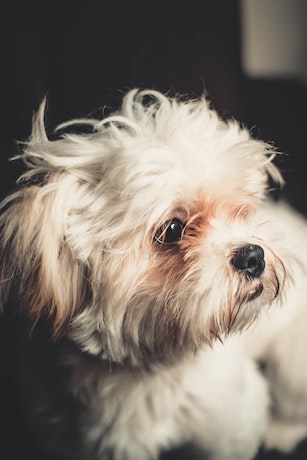
Dancer is a walker hound. A fine confident hunter, she is one of Leon’s leading girls. For Dancer to be distressed, she must have a major problem.

“Do you want her on the table?” Leon asked.
“He looks like we should leave her on the floor for now,” I said. “How long has she been breathing like this?”

“I noticed she was slow yesterday,” Leon said. “She was the last one back to the truck, and usually, she is leading the pack. But this morning, she has just been standing the breathing pretty hard.”

I pat Dancer on her head. She had no response, and she didn’t move when I knelt beside her. I noticed that she was breathing with a lot of abdominal movement.

I put my stethoscope on the left side of her chest. I could hear breathing sounds, and her heart sounds were normal. When I moved to her right side, there were no sounds.

I listened closer. I could hear muffled heart sounds, but no breathing sounds. I thumped her chest on the right side. The normal chest should sound hollow. On Dancer, it was a dull thud.

“I think her chest is full of fluid, probably mostly on the right side,” I said.

“Same as Roxy?” Leon asked.

We had lost Roxy to a prothorax not long ago. Her chest was filled with fluid on both sides, and we lost her before getting too far along in the treatment. When I opened her chest, I found the cause quickly. That is unusual in a prothorax. Roxy had a porcupine quill sticking out of her right lung. She had probably inhaled it when she tangled with a porcupine some months before her death. It took some time, but it finally migrated to the outside of the lung, contaminating the pleural space and causing the pus-filled chest.

“Probably, but it sounds like just one side of the chest is involved,” I said. “Hopefully, we will have a favorable result this time.”

“What do we need to do?” Leon asked.

“We need to get an x-ray,” I said. “But I am going to drain a lot of this fluid first. That will make her comfortable. Then we will decide how to proceed. My thought is to open her chest with a small incision, flush out all the exudate, and place a chest drain. That way, we can reduce the scarring in her chest. If the left side is not involved, we will be lucky. The mediastinum, the structure which divides the chest, is usually not complete in the dog.”

We clipped the right side of Dancer’s chest and prepped it with Betadine Surgical Scrub. I rigged a sixty cc syringe on a three-way stopcock with a discharge tube to a one-liter bag. After using some lidocaine for local anesthesia, I inserted a fourteen-gauge needle into the chest and started aspirating a thick exudate.

It did not take long to fill the one-liter bag. We changed the bag and had nearly a half liter before I could feel the needle bumping into some lung tissue. I withdrew the needle and reserved the last bit of fluid for culture.

Dancer looked like that elephant just stood up off her chest. She wagged her tail for the first time as she took a deep breath.

Her x-ray showed that there was still a lot of fluid on the right side of the chest, even after I pulled a liter and a half of exudate out of her chest. The left side was clear.

“I think I should open this chest and flush all this exudate out,” I said. “That way, we can start with a clean chest, and the antibiotics will work better. Then I will place a chest tube, close the chest and hang on to her for a few days.”

“Do you think this is another quill?” Leon asked.

“I would doubt that, but was she in the fight with the porcupine?” I asked.

“No, she wasn’t involved with the porcupine,” Leon said. “But what else could it be?”

“It only takes a little puncture into her chest from the claw of one of those bobcats she runs,” I said.

“Yeah, there is plenty of opportunity for that to happen,” Leon said. “So I guess I just wait for your call.”

“I will keep you posted,” I said. “But I will keep her for at least three days. I will flush this chest daily through the chest tube. I want the drainage to be clear before pulling the tube.”

We hooked Dancer up to an IV and got some IV antibiotics started. Then we went to surgery. I opened her chest on the right side between ribs five and six. A lot of foul-smelling yellowish fluid was in the chest. I explored the chest wall and the lung lobes as best I could but found no apparent cause.

It took multiple saline flushes before the fluid suctioned out of the chest was clear. I placed a drain tube and secured it to a suction device. Before I closed the chest, I instilled a dose of antibiotics.

Dancer’s recovery was unremarkable. By closing time, she was up and around and looking for dinner. Her breathing was close to normal, and she felt much better than when she came through the door.

The first thing in the morning, I flushed a half liter of saline into Dancer’s chest. To encourage the fluid to do a little slouching about in her chest, I allowed her to follow me on my morning rounds.

Dancer showed genuine interest in the other patients in the clinic. I wasn’t sure how she would respond to the cats, but she seemed to understand that we were taking care of them. At the end of rounds, I lifted Dancer up on the treatment table and drew off the fluid I had infused earlier. It was almost clear.

“I think you are doing pretty well, Dancer,” I said. Dancer looked at me like she knew exactly what I said.

We repeated the procedure that evening. And by the next morning, Dancer jumped down from the treatment table after her infusion and waited for me to start my rounds. She rubbed noses with dogs through their kennel doors and stood on her hind legs with her front feet on the lower kennels to watch the cats.

When the fluid was clear on the third day, I pulled the drain tube and started to go call Leon. Dancer followed me to my office and sat at my feet while I called Leon.

“Things are looking pretty good with Dancer,” I told Leon on the phone. “She is eating well. The fluid coming out of her chest this morning is clear. She can go home. The only problem is she will miss taking care of all the other animals in the clinic.”

“That sounds great,” Leon said. “We will be right down to pick her up.”

Dancer went home on antibiotics and returned to normal. She lived a good life and had a couple of litters of pups.

Photo by Leon Olson of Sweet Home.

Donica Lake Trip, From the Archives

D. E. Larsen, DVM

It was early summer in 1978. We had lived in Sweet Home for a couple of years, and I was becoming involved in the community. There was a lot of debate taking place between the timber industry and environmental groups. The environmental groups had proposed a Middle Santiam Wilderness area. I felt that I needed to check it out.

Our family was young at the time, and Sandy was a good sport but not really an outdoor girl. We had 4 kids: Brenda, 11, Amy, 7, Dee, almost 6, and Derek, just 2.

We planned a 3-day backpacking trip into Donica Lake in the southern edges of the proposed wilderness area.

The trip involved a 3-mile hike, and the first 500 yards were tough, as we would have to traverse an ancient landslide that was still slowly moving. The plan involved packs for all the kids, one pound per year. My pack would be 45 pounds, Sandy would carry 20 pounds, Brenda would be limited to 11 pounds, Amy would have a 7-pound pack and Dee 6 pounds. Derek was given a pack, but it only contained a couple of clothing items.  

Amy’s and Dee’s packs included their sleeping bags and clothing items, and that was about all. Brenda’s was similar but also contained the tent poles to our large 6 person wilderness tent. Sandy’s pack included a lot of the food items, the rain fly for the tent, sleeping bag, and clothes. We were pretty strict with the weight of these packs. My pack contained everything else we would need over 3 days and the main portions of the tent. My pack tipped the scale at close to 50 pounds. I had carried more in the army.

Finally, the day arrived, and we were off. Leaving the highway at Mountain House about 20 miles east of Sweet Home, we traveled up Upper Soda Fork to the divide between the South Fork and Middle Fork of the Santiam River. We stopped at the massive old-growth tree that stood along the creek a couple of miles from the highway and then continued to the top of the hill. The road down the other side to the Middle Santiam River was steep and winding.

We parked the car, loaded up, and headed for the slide. This was more of an obstacle than I had been led to believe. On my first trip across the slide, I took all the kid’s packs and had Brenda follow my footsteps. She had no problems. Setting all the packs down, I returned for the others. With Derek on my shoulders and the younger girls on each hand, we managed to get everyone across. Sandy was having a few second thoughts about now.  

A young man was camping by himself at Pyramid Creek. We stopped and talked with him for a time. He was interested in going to Donica Lake and asked if he could travel with us. I figured he seemed nice enough, but then so did Ted Bundy. I just thought it would be better to have him with us, rather than wondering where he was behind us.

We started off up the last remnants of a logging road. We were clustered in small groups as we started up the hill. Sandy and the kids led the way, followed by the young man and then me bringing up the rear. I was glad that I had decided to carry my revolver. Probably would not need it, but it just made me feel more in control of the situation. 

It was easy going now with the road to the river and bridges across the river and Pyramid Creek. I noticed an excellent campsite along the river just before the bridge. The trail involved a logging road for the first mile and then a large clearcut that was all located within the proposed wilderness. There was a hill in this first mile, but it would be an easy hike from the top of the hill. Derek was the first to shed his pack, but Amy and Dee were not long after him when they realized Dad could carry more.

After the clearcut, we entered a prime old-growth forest. The shade was welcome, and the trail was level. Soon we reached a stream, and we missed the turn in the path where it crossed the creek on a massive old cedar windfall. The young man decided he had gone far enough and headed back to his camp. It didn’t take long to correct our error, and just over a little rise from the stream, we came to Donica Lake.

The lake was not very impressive, maybe 3 acres in size, but entirely surrounded by giant old-growth Douglas Fir trees. These trees were all 4 to 6 feet in diameter. On the eastern end of the lake, a small stream entered through a grove of massive red cedar trees. I had never seen such a grove of old-growth cedar trees. There was a nice sand bar here, and this is where we made camp.  

Everyone was tired from the hike, so we busied ourselves getting the tent set up and the sleeping bags laid out so the kids could relax. A gas backpacking stove made dinner easy to fix. The kids wanted a fire, but we convinced them that we would do that tomorrow. Early to bed tonight.

About 3:00 in the morning, Derek started vomiting. He was still vomiting when morning came. Sandy and I decided that we had better get back closer to civilization. If we got on the trail after breakfast, it would still be afternoon by the time we got back to Sweet Home. So I packed up while Sandy fixed breakfast. Derek was not up to eating. We loaded up, I took the two younger girls’ packs on my pack and put Derek on my shoulders. I told Sandy I would walk at a brisk pace and wait for her and girls every half mile or so.

By the third stop, Derek was digging through the pockets on my pack for anything edible. Nuts, Trail mix, and jerky were all disappearing. He was apparently well. We decided to continue on to the river and set up camp if Derek continued to improve. By the time we made it to the river, Derek had consumed everything available from the pockets on my pack. I was tuckered out after 3 miles with over 80 pounds on my back. The campsite on the river looked pretty good. There was no sign of the young man who had been camped at Pyramid Creek.

As it turned out, this was probably a much better place to camp. The kids had fun, and we were able to get each of them hooked up with a fish. There is nothing like fresh trout cooked over an open fire. The next two days were relaxing and comfortable. Now the only thing that we had to worry about was getting back across that slide.

Photo by David Baker on Unsplash.

A Bladder Rupture

 D. E. Larsen, DVM

September was one of my slowest months in the large animal portion of my practice in Sweet Home. Pink eye cases probably accounted for most of my cattle calls during the summer months. Those cases were all but gone with the cooler days of fall. Cases of pneumonia were not happening yet, and the herd work usually didn’t start until October. I was happy when the phone rang, and Sandy was obviously talking about a steer.

“Alice called,” Sandy said. “She has a steer with a swollen belly. I told her she called at the right time and that you would be out shortly.”

“Must be a water belly with a ruptured bladder,” I said. “I don’t know if I will be able to help her with this one.”

I double-checked the truck. Dixie had called in sick today, so I would be on my own. With Alice to help, that would probably not be a problem.

Alice was waiting at the corral when I pulled into her driveway. The steer was in the chute. His belly filled the chute, even without any squeeze.

“I noticed this guy’s belly this morning,” Alice said. “What do you think?”

“I think he probably has a stone plugging his urethra,” I said. “When that happens, something breaks. Usually, it is his urethra. But sometimes, it’s his bladder. The bladder rupture is the most difficult to handle. I’m not sure I will be able to fix him.”

“This guy is close to weaning,” Alice said. “I can’t shoot a good-looking steer like this without trying to save him.”

“Okay, who knows, we might just get lucky,” I said. “Let’s start by seeing if I can find a stone first.”

We put a halter on the steer and tied it to a post in the corral before letting him out of the chute. When we opened the headgate, the steer had difficulty pulling his full belly through the open headgate.

Once he was out, I put a rope throw on him. I used a flying W. Once he was down, I rolled him on his back and tied his hind legs with the free ends of the throw rope. 

After clipping his belly, I could see the stone in his urethra.

“This is much easier when the urethra hasn’t been leaking urine under the skin,” I said.

I prepped the surgery site and used local anesthesia. I grabbed the penis through his skin and palpated the stone at the attachment site of the retractor penis muscle on the sigmoid flexure. The stone was easily palpated.

Holding the stone firmly, I incised through the skin and dissected it to the urethra. I made a short incision over the stone, and it popped out.

“That was simple,” Alice said as she retrieved the stone from the ground.

“I am going to leave this incision open,” I said. “He will have urine coming from it for a few days before it heals. And if there are other stones, hopefully, they will fall out of this incision rather than plugging him up again. Plus, if we can’t fix the bladder, I won’t have wasted time closing this incision.”

“How are you going to fix the bladder?” Alice asked.

“I am going to be honest with you, Alice,” I said. “This is something I have never done, and I don’t know if it is even written in the book. I did listen to a description of the procedure by Dr. Annes when I was in school. That was a clinic discussion. I probably wouldn’t have listened well if it had been in a classroom. Do you have a front-end loader on your tractor?”

“I appreciate your honesty, and no, I don’t have a front-end loader,” Alice said.

“We need to hang this guy by his hocks. That way, his guts will fall away from his pelvis, and I will be able to deal with his bladder.”

“How are we going to do that?” Alice asked.

“Maybe I can get his rear end high enough by hanging him from a fence post,” I said.

I released the throw rope, and the steer rolled to his side but did not attempt to get up. I tied his hocks together with the rope and pulled him over to the fence. 

This steer was close to five hundred pounds. I took a dally wrap with the free end of the rope on the post. I pulled hard, but the steer’s butt didn’t come off the ground.

“Let me give you a hand,” Alice said.

Alice was an older lady in her sixties and had run this ranch by herself since her husband died. She grew up on a ranch in the Dakotas, and she was tough as nails.

Alice took a grip on the rope between the steer’s hocks. We pulled together and took up the slack on the rope. With two or three pulls, we had the back half of the steer hanging from the top of the post.

“Is that going to be good enough?” Alice asked.

“I think it is going to have to be,” I said.

I prepped the steer’s abdomen and made a ventral midline incision starting at his pelvic brim. When I opened the abdomen, I was amazed and relieved that the bladder was hanging in full view. I explored the bladder, both with my gloved hands and visually. I could find no defect.

“What’s the problem?” Alice asked.

“The bladder is right here in the middle of the incision, but I don’t find a defect,” I said. “I guess it could have leaked when it stretched far enough and then closed up after it emptied some.”

“What are you going to do now?” Alice asked.

“I am going to close the abdomen and leave a drain in place to empty the urine out of his abdomen,” I said. “If he can pee normally, and if my theory is correct, we might be fine.”

Alice was quiet. I guessed she probably thought this was a goner steer. But I made a separate stab incision and placed a large penrose drain. Then I closed the abdominal incision, sprayed for flies, and gave the steer a long-acting antibiotic.

I released the rope and lowered his butt to the ground. After untying the ropes, I helped the steer to his feet.

“What do we do now?” Alice asked.

“I think just turning him out in a small pasture would be the cleanest place for him,” I said. “If you keep him in the corral or a stall, he will get dirtier than in a pasture. I will get back here in three days and take that drain out if his belly is down. Then we will just cross our fingers and watch him. With any kind of luck, we will be home free.”

***

Three days later, I was back to check the steer. I stood and watched him in the pasture while waiting for Alice to finish her work at the barn. His belly looked normal, and he was grazing well. I was lucky to see him pee, and he only had a few dribbles from the urethral incision.

When Alice was done, we ran the steer into the chute. I snipped the retaining suture on the penrose drain and pulled it out.

“He looked good out in the pasture,” I said. “Eating well, and his urine flow looked close to normal. I will check back next week. Don’t celebrate until then, but I think we may get lucky.”

***

When I stopped by Alice’s place the following week, she was not home. I watched the steer in the pasture for some time, and he looked as normal as any steer out there.

I left a note on her gate, saying she could throw a party now, we were home free.

Photo by Jorge Jimenez on Pexels.