Tiny’s Swollen Belly 

D. E. Larsen, DVM

I watched as Dixie showed Mr. Johnson into the exam room. He ducked his head as he went through the door. I don’t know if he needed to duck, but it was close. Mr. Johnson was a large old man. Not fat, just tall and solidly built. In his later years, he lost some muscle mass, making his pot belly a little more prominent. 

“What’s going on with Tiny today, Don?” I asked as I entered the exam room. 

One of the things that I always found interesting was how the biggest men seemed to be attached to the smallest dogs.

“I don’t know what’s going on, Doc,” Don said. “Tiny is all swollen up in the belly the last few days. I guess it has been going on for some time now, but it has been really bad these last few days.”

I took Tiny from Don’s arms. He was always reluctant to place her on the steel exam table. Dixie brought a blanket in for the table, and we carefully placed Tiny in the middle of the table.

Tiny fit her name. She was a small Chihuahua. When I finally got a good look at her, it looked like her little belly was going pop. It was so distended that I couldn’t compress it enough to feel anything inside.

“She was uncomfortable this morning, Doc,” Don said. “I figured I better get you to look at her before she popped. What do you figure is going on with her?”

I listened to Tiny’s heart, and it sounded normal. I could bounce any enlarged organ off the distended belly wall.

“I am probably going have to hang on to her for a bit to find out what’s going on,” I said. “Can you leave her with us for a few hours?”

“You know I don’t like to leave her, Doc,” Don said. “It’s not that I don’t trust you. It is just that we are never apart. She is all I have, Doc.”

“Okay, I will start with just a little needle poke,” I said. “That way, I can maybe figure out what kind of fluid is in Tiny’s belly. Depending on what that looks like, I may need to drain a lot of this fluid so I can get an X-ray. If I take an X-ray with all this fluid, we won’t be able to see much.”

“You can do that right here?” Don asked.

“Yes, you sit down in the chair,” I said. “You have a long way to fall if you faint. I will grab some things, and we can do this right here.”

“I’m not going to faint,” Don said with a bit of a frown. “During the war, I saw a lot more than a needle poke.”

We laid Tiny on her side and clipped a small area on her lower abdomen. After a prep, I used a sixty cc syringe to draw some fluid off her belly.

“You said a little needle poke,” Don said. “That looks like a horse needle.”

“I figure if we are going to poke her, we may as well draw off enough fluid to make her more comfortable,” I said.

The fluid was ugly. It was a dark straw color with small white flecks all through it. This was not going to be good news for Don. With a full syringe of fluid removed, Tiny’s belly was relaxed enough now that I felt her liver and spleen were not enlarged.

We returned Tiny to Don so he could hold her while we took the fluid syringe to the lab.

“We are going to get a look at this fluid. It will only take a few minutes,” I said.

The white flecks in the syringe were quick to settle to the bottom of the fluid. I squeezed a drop on several slides, making sure I had a slide with a lot of flecks.

My heart sank as soon as I looked at the slide. The slide was covered with large aggregates of tumor cells. The only tumor that I knew of that would put this much debris into the abdominal fluid was an ovarian tumor. This was not good news for Tiny, and I had no idea how Don could cope with the pending crisis.

“Don, that slide that I just looked at from the fluid looks like bad news,” I said. “It looks like Tiny has a tumor in her abdomen. It might be a bad tumor, Don.”

“Can you remove it?” Don asked.

“We need to confirm what type of tumor it is first, but if it is what I think it is, we can remove the tumor, but it will have already spread elsewhere in the abdomen.”

“Are you trying to tell me that you think Tiny is going to die?” Don asked.

“I don’t know that for certain at this point, Don,” I said. “But we need to find out as fast as we can.”

“I don’t have a money tree in the backyard, Doc,” Don said. “I want to help Tiny if I can, but we have to do it without spending a lot of money.”

“When there are limited funds, and we are dealing with an abdominal tumor, I think the best approach is to do an exploratory surgery,” I said. “That shortcuts a lot of the diagnostic work. If I find something I can deal with, we take care of it right there. If it can’t be fixed, then we have decisions to make.”

“When can you do this surgery?” Don asked.

“I can move things around on the schedule and do the surgery in the morning,” I said. “Now, Don, if this is an ovarian tumor, there might not be much to be done. Looking at this fluid, this tumor has probably spread all across the abdomen. If that is the case, Tiny will die, and all the money in the world will not help her.”

“But if it is something else, you could maybe fix it,” Don said.

“Yes, but you are grasping at straws now,” I said. “My guess is there will not be much I can do to help Tiny. I may be able to remove the primary tumor, but looking at this fluid, that will be closing the barn door after the horse is out. The other option would be to send this fluid into the lab and get an opinion from a pathologist. I could draw the fluid off Tiny’s belly so she would be more comfortable while we wait for the results from the lab. That should only be a couple of days.”

“And I suppose that just adds another hundred bucks to the bill,” Don said.

“If the pathologist agrees with me, we might want to rethink doing a surgery,” I said. “If there is not going to be anything that will help Tiny, we might want to just make her comfortable for the time she has left instead of doing a surgery.”

Don sat quietly for several minutes, cuddling Tiny and looking at her.

“You really think I’m going to lose her, don’t you, Doc,” Don said. 

“That’s what I’m afraid of, Don,” I said. “Why don’t we draw some fluid off Tiny’s belly, and I will send those slides and the fluid to the lab. It will only take a couple of days to get results. Then we can talk again about the best thing we can do for Tiny.”

With another few minutes of thought, Don agreed. We drew another two large syringes of fluid off Tiny’s abdomen. The fluid didn’t look any better this time, but Tiny felt much better.

“Now she is going to feel pretty good with all that fluid off her belly,” I said. “But don’t think that she is well. I will call you as soon as I get results from the lab, and we can decide what we want to do.”

***

“Dave, I don’t like to make a diagnosis with just cytology, but looking at this fluid you sent and the slide, this has to be an ovarian tumor,” the pathologist said. “With all these tumor cells floating in this fluid, this tumor has spread all over the abdomen. There is nothing you can do for this dog.”

“Would removing the primary tumor be any benefit?” I asked.

“In ovarian cancer, the primary tumor seldom causes any problem,” Doctor Hedstrom said. “It just spreads to every corner of the abdomen. There is nothing we can do for this dog at this point.”

I had Sandy call Don to make an appointment for a consultation. I didn’t look forward to the conversation. 

Don was in the exam room with Tiny when I entered.

“Just like you said, Doc, she felt great after you took the fluid off her belly,” Don said. “I thought you had to be wrong. She was feeling so good. But it seemed to all come back almost overnight, and now she feels worse than before.”

“The pathologist agrees that this is an ovarian tumor,” I said. “He says that surgery won’t be helpful for Tiny.”

“If you can take this fluid off one more time,” Don said. “Give me one more day with her. That is all I ask.”

And that is what we did. I drew off another three syringes of fluid, and Don went home with Tiny.

It was three days later when he returned to have Tiny put to sleep. It was hard, but she was weak and miserable. It was the best thing for her.”

Photo by Stephanie Yolanda on Pexels.

The Unusual Colic, From the Archives

D. E. Larsen, DVM

I hurried along Berlin Road as the last of the daylight was fading into twilight. Hank had an old horse down with colic. I always dreaded colic calls. Many were simple fixes, but there was no place close to send them for abdominal surgery if it was a complex colic. Few clients would be willing to take their horse six or seven hundred miles for surgery.

I slowed as I approached Hank’s place. The old workhorse was down in the front yard. I could see several guys holding the horse to keep him from rolling. That was my instruction to Hank when I took the call. Often times a simple colic became a fatal colic when the horse would roll and end up twisting a gut.

“Good evening, Doc,” Hank said as I stepped out of the truck. “I’m sorry for calling you this evening. Old Bob has been getting worse for the last few hours. I could tell something wasn’t quite right with him earlier today, but the last few hours have been pretty rough. After talking with you, I got these guys to help hold him down.”

“Don’t worry about having called me, Hank. If you hadn’t called now, you would have called by midnight, and things would have far worse then.”

“Well, thanks for coming,” Hank said. “We moved him out front here so you would have a little light. It doesn’t look like we will be done before dark.”

I look Old Bob over. For a horse with colic who was down, he looked pretty good. His pulse was a little fast, and his gut sounds were slowed, but otherwise, he looked pretty good.

“Do you think he will stand for us?” I asked.

“Yes, he has been up and down for the last couple of hours. After talking with you, I just didn’t want him to lie down and roll before we could get him under control.”

The guys got up, I think they were a little relieved, and I slapped Old Bob on the butt, and he jumped right up.

“If you guys hold him tight, and maybe one of you lean against his ribs on each side, I will do a little rectal exam.”

I pulled on a plastic sleeve and lubed it well. Then, standing on his right side, I held his tail out of the way, and I eased my hand and arm into Bob’s rectum. He did not object. I advanced my arm and started to sweep the floor of his pelvis and posterior abdomen.

Bob’s pelvic urethra bounced with a massive spasm when I touched it. The urethra was full and expanded. That was a most unusual finding. I advanced my arm further, and Bob’s distended bladder filled the posterior abdomen.

“I am not sure Old Bob has been peeing,” I said. “Have you seen him pass in urine today?”

“To be honest with you, Doc, I don’t spend a lot of time watching the old guy pee,” Hank said. “Now that I think about it, I did see him all stretched out like he was trying to pee earlier this afternoon.”

“I think his urethra is obstructed,” I said as I removed my arm. I cleaned up Bob’s rectum and let his tail fall. “It’ll take me a few minutes to hopefully find my urethral catheter. I hope it is in the truck.”

I had to dig deep into the back of the vet box. The call for using a stud catheter does not occur often. I had debated about even buying one when I did my equipment order. But after some digging, I did find it, and the sterile pouch it was in was still intact.

“Lean a little harder, guys,” I said. “There is nothing we are going to do to this guy from here on out that he’s going to find pleasant.”

Old Bob was a good old horse, but when I started to try to get a hold of his penis and pull it out, he was not very cooperative. After struggling for a minute or two, I decided to do it the easy way.

“Okay, Bob, you have earned a little dose of Rompun. Rompun was a popular tranquilizer, and it also provided some pain relief. In most cases, it would allow bulls and horses to drop the penis out of the prepuce.

After a dose of Rompun, Old Bob’s head started to hang, and then, as if on cue, he dropped his penis out of the prepuce.

I passed the catheter up his urethra, and it came to a dead stop. I pulled it out and measured the distance on the side of Bob. The obstruction was just after the urethra turned out of the pelvic cavity and headed down toward his prepuce.

“I don’t know what it is, but I need to do a little surgery. If it’s a stone, we can maybe remove it. We can at least open his urethra and empty his bladder. And just doing that is going to make him feel a whole lot better.”

I clipped and prepped a surgery site over Bob’s urethra and also a spot above the base of his tail for an epidural. Bob was still well tranquilized from the Rompun injection. I injected six ccs of lidocaine into his epidural space. After a few minutes, I checked that it had adequately numbed the surgery site.

The light was poor, but finding urethra was a snap. I incised the skin over his urethra and quickly dissected down to the surface of the urethra. Incising the urethra yielded a gush of urine. I passed the stud catheter into the bladder and waited as the urine drained.

Then I enlarged the incision a little and inserted my gloved finger. There, immediately below my incision, I palpated a large stone. The stone was nearly two inches wide and wedged tightly in the descending urethra.

“Okay, Hank, I can feel a large stone right here,” I said as I inserted my finger and bounced it on the top of the stone. “I can remove it, I am sure. But I think it would be best to wait until morning when the light is better.”

“Is he going to be okay until then?” Hank asked.

“He will be fine,” I said. “I am going to leave this incision open, and he will pee out of this incision. I will put his tail in a plastic sleeve to protect it. I will give him a dose of antibiotics tonight. 

It will take another hour before the tranquilizer wears off. But you can put him in a stall or in a pasture, and I will be back here about nine in the morning.”

“These guys are going to be at work. Are you going to need any help?”

“This old guy is a pretty good horse. I think I will be fine,” I said.

***

Bob was at the feed rack eating when I returned in the morning. He sort of shook his head at me when I approached the fence. I wondered if he was giving me credit for making him feel better. I doubt it.

We pulled Bob out of his stall and tied him to the fence. I removed the plastic sleeve from his tail and then put a wrap on it to keep it out of the way. I prepped the incision and the epidural spot and repeated the epidural. Bob was not bothered by any of it.

With my finger, I palpated the stone. It had not moved overnight.

I extended the incision a bit and pushed on the bottom of the stone through his tissues. It popped out of the incision, and I caught it in mid-air.

“That was pretty easy,” Hank said. “Can I have that stone for a mantlepiece?”

This was an impressive stone. It was almost heart-shaped, and two inches across at the top, and nearly an inch thick. Smooth and light brown, it was most likely a struvite stone.

“Sure, you can have it. You probably should rinse it well before you set it out for viewing. Most of the time, these result from an infection in the bladder. We are going to put Bob on some antibiotics for a week or so, and I will check him in a couple of weeks when I take the stitches out.”

I passed the catheter into Bob’s bladder and then down the urethra until it came out in the prepuce. Just to make sure things were open in both directions. 

I closed the urethra carefully and then loosely closed the tissues over the urethra. Leaving a small opening at the bottom end of the incision to allow for drainage. Then I removed the tail wrap and gave another dose of Polyflex. I fixed Hank up with injections for the next week. 

“I want you to look at this incision every day. If there is a small amount of drainage, that is okay. But if there is a lot of swelling or a lot of drainage, I want to hear from you. I’ll be back in two weeks.”

***

On recheck, Old Bob was well healed and acted like there had never been a problem. He was the only horse I ever treated with a urinary obstruction.

Photo by Free Nature Stock from Pexels

Albert’s Last Cow

D.E. Larsen, DVM

I stood at the small makeshift corral waiting for Albert to make his way from the house. Albert was old and arthritic. He walked pretty slow these days.

The corral wouldn’t hold a cow if she wanted out. The posts were propped up instead of set in the ground, and the old boards used for rails were ancient. Something Albert probably found in a pile behind the barn.

The cow standing in the middle of the corral looked more concerned with her next breath than trying to test the strength of the corral.

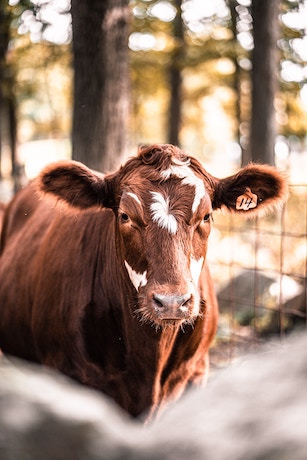
She was standing with her head extended and lowered. The swelling under her jaw was no simple bottle jaw. It spread down her neck to a massively swollen brisket. Even from my position at the edge of the corral, I could see a bounding jugular pulse.

“How are you doing these days, Albert?” I asked as I extended my hand.

“I think I’m too old for this cow business, Doc,” Albert said. “I have enough trouble getting myself dressed and fixing something that I can call breakfast. Let me tell you, Doc, this getting old stuff is no fun. And then when Verna passed on, it got even harder.”

“I suppose that was the hardest part,” I said.

“I watched you looking at my old Sally cow,” Albert said. “What do you think is wrong with her, Doc?”

“I think she is a pretty sick cow, Albert,” I said.

“I know that, damit,” Albert said. “Why the hell do you think I called you.”

“I think she has a wire,” I said. “It is not a simple hardware disease. It has progressed to what we can call traumatic pericarditis.”

“If it is just a wire, you can go in and get it with surgery,” Albert said.

“Sally is beyond that stage, Albert,” I said. “Actually, we don’t go in and get those wires anymore. We use a magnet that pulls the wire back into the stomach. But Sally’s problem is an infection in the sac around her heart.”

“If it’s just an infection, you should be able to give her a shot and take care of that,” Albert said.

“It’s more complicated than that, Albert,” I said. “She has had that infection long enough; there is a lot of infection debris in the sac around the heart. After some time, that infection debris around the heart starts to mature, constricting the heart’s function. There is no fixing this, Albert. Your Sally cow is going to die.”

“How can you be so sure, just standing here looking at her?” Albert asked.

“I have seen it before, Albert, many times,” I said. “I do need to examine her just so I don’t miss something, but my confidence level in my diagnosis is very high.”

“You doctor guys make mistakes sometimes. I think just putting her on some antibiotics might be the way to go,” Albert said.

“Nobody is perfect, that is for sure,” I said. “I have always been cautious about saying an animal is going to die because once that is said, that will be the animal that will come back through the door for the next twenty years. But looking at Sally, I am certain that there is nothing we can do at this point that will help her.”

“It’s not that I don’t trust your opinion, Doc. It’s just that I don’t understand how you know so much,” Albert said.

“Last month, I did a necropsy on a cow up Wiley Creek,” I said. “She had the very problem as Sally. Before she died, she looked just like Sally looks. When I opened her chest, there was a piece of wire sticking through her diaphragm, the wall between her chest and her abdomen, into the sac around her heart. With all the infection debris, that sac was over an inch thick. Normally, it is thinner than the material of your shirt.”

“Okay, but how do you know that nothing can be done to help her?” Albert asked.

“When I was in school in Colorado, a cow came to the veterinary hospital in this very condition,” I said. “She was a valuable cow, and the owner wanted to save her at any expense. So the doctors at the vet school removed a rib over her heart and opened the heart sac to the outside so they could drain it and flush it daily. You could look in the hole and see the heart beating, and you could see the very thick sac around the heart.”

“So, did they save that cow?” Albert asked.

“No, that cow died,” I said. “The time to save these cows is when the wire first appears. In the old days, when I was a kid, and you were a young man, they would do surgery. Today we use a magnet. Once we reach this point, the ball game is over, and the cow dies.”

“Can I eat her?” Albert asked. “I mean, Sally is the last cow I have, and I want to save her, but if she is going to die, can I eat her?”

“She is not fit to eat,” I said. “Maybe if you were starving, you could eat her, but you would have to be pretty hungry to choke the meat down. There is not a slaughter outfit around that would hang her carcass in their cold room.”

“I don’t understand how a wire that the cow swallows can get from her stomach to her heart and cause all this problem in the first place,” Albert said.

“The cow is not very discriminating when they eat,” I said. “So if there is a piece of baling wire in the hay, they will just swallow it down with the hay. The second stomach, or compartment, is called the reticulum. It catches all of the foreign material. Suppose that material happens to be a wire. In that case, it can punch through the wall of the stomach, pass through the diaphragm, and into the pericardium. The way things are put together, the wall of the reticulum and the tip of the heart are separated only by the diaphragm. So that is a very short distance for the wire to travel. That injects a lot of infection from the stomach into the chest and the sac around the heart. When it first happens, the cow will be painful, not eating, and have a bit of a temperature. At that point, we treat her with antibiotics and a magnet. The magnet will attract the wire and pull it back into the stomach. Often times we just put a magnet into every cow. That is especially done in dairy cows. And, just a point of interest, the reticulum is sold in the grocery store as tripe.”

“So I would guess that is one reason they no longer use wire to bale hay,” Albert said.

“Baling wire was always around when I was growing up, but I would guess that hardware disease was much less common before the days of baled hay,” I said.

“So what are we going to do with Sally?” Albert asked.

“In my view, you have two choices,” I said. “You can put her down, or you can let her die. It won’t be a pleasant death if you let her die.”

“I think I would like you to give her some shots for a few days,” Albert said. “Just in case you are wrong.”

When I first started practice in Enumclaw, Washington, Don Henricksen, the older associate veterinarian in the practice, had warned me to always give a cow a shot before leaving her, even if it wasn’t indicated. If you don’t give her something, you will be accused of not doing anything, and you will be a villain if the cow dies. You will be a hero if you give her a shot and she gets well.

“I can give her a big dose of antibiotics,” I said. “But I want you to remember, this cow is going to die. I don’t want to hear any stories about how the antibiotics didn’t work. There is no chance of saving this cow.”

“Okay, but I just want to try, just to make sure,” Albert said.

I gave Sally forty ccs of Combiotic, a large dose.

“It will be interesting to see what morning brings,” I said. “I will be back right after lunch tomorrow to give her another dose.”


The following morning, Albert was on the phone a few minutes after eight.

“Doc, I just wanted to thank you for trying to help Sally,” Albert said. “She was down this morning and struggling to breathe. I looked her in the eyes, and she asked me to put an end to my foolishness. So, Doc, I went and got my rifle and shot the old girl. That was the hardest thing I have had to do in a long time.”

“It is always hard to do,” I said. “But it was the right thing. Do you want me to come out and show you inside of that chest?”

“No, you explained things pretty well,” Albert said. “I have the neighbor coming with a backhoe, and we will bury her out under the old maple tree. I thought about calling the rendering company to pick her up but decided that she had earned her hole in the ground.”

“That’s a good thing, too,” I said. “Have you given any thought about what you are going to do with your pasture land now?”

“No, I haven’t thought about it,” Albert said. “I don’t want any more cows at my age.”

I know a couple of young guys who would jump at the chance to rent it from you,” I said. “They are hard workers and trying to get a herd started. I could send them your way if you would like.”

“That would be good, Doc,” Albert said. “Thanks again.”

Photo by Harry Dona on Pexels.