A Bat in the Bathtub 

D. E. Larsen, DVM

It looked like it was going to be another warm September day. The sun shone through the trees as I backed the truck out and headed for the clinic. Not a cloud to be seen in the sky.

Judy was already at the clinic when I arrived. It was hard for me to get there before her. Once she had Andi off to school, she would drop Bryon off at the babysitter and come to the clinic. It was difficult for me to be there first.

“Sudi is on her way with a bat,” Judy said as I walked through the door. “She sounded a little excited on the phone.”

“I’m hoping this is a dead bat,” I said.

“She didn’t say. She said she found it flopping around in her bathtub last night,”

“She is probably going to want it tested for rabies,” I said. “I guess I better call the lab and check their procedures.”

“I don’t think you need to be in a hurry,” Judy said. “She is just going to drop this thing off on the fly so she isn’t too late for her class. I don’t know why they start school so early these days?”

“They like to be out of school early,” I said. “They don’t worry about the little kindergartener up in Cascadia who has to get up five to catch the bus.”

Our conversation ended when Sudi burst through the door holding a quart jar. The bat was still fluttering in the jar.

“Dave, I caught this thing fluttering around in our bathtub last night,” Sudie said. “Frank thought we should have it tested for rabies. He read were Oregon’s bats carry rabies.”

“Were the kids sleeping while it was in the house?” I asked.

“Well, they weren’t sleeping when I caught the thing last night,” Sudi said. “But I have no idea where it came from or how it got in the house. I figured the cat must have brought it in and let it go.”

“Did you handle it when you put it in the jar?” I asked.

“No, I just scooped it up with the jar and put on the lid,” Sudie said. “I was going to let it suffocate, but the kids threw a fit, and I had to punch some holes in the lid.”

“Okay, I’ll get this to OSU,” I said. “You will probably have to pay for the testing, but that might be good. That way, without human exposure, you won’t have to deal with the public health folks.”

“Just let me know when you get the results,” Sudie said as she pushed open the door to leave.

After Sudi left, I called the lab for instructions. I spoke with Doctor Johnson, a new pathologist, probably a graduate student.

“I have a bat to send over rabies testing,” I said. “Are there any special instructions?”

“We can only do the testing if there has been no human exposure,” Dr. Johnson said.

“The client found the bat flopping around in her bathtub,” I said. “She didn’t handle it, just scooped it up in a quart jar. She thought the cat brought the bat into the house.”

“That sounds good,” Dr. Johnson said. “Is the bat dead?”

“No, it is still flopping around in the jar,” I said.

“It is a real hassle for us if you send it alive,” Dr. Johnson said. “We don’t have any way to euthanize it here in the lab. We have to get one of the pathologists from the necropsy side to euthanize it for us.”

“So you want me to euthanize it before I send it over,” I said. “Does that count for a human exposure?”

“You are supposed to be able to protect yourself,” Dr. Johnson said.

“Okay, I’ll figure something out,” I said. “How long will the test take if I get this bat over today?”

“This is Friday, you know. You will probably not get any results until Tuesday or Wednesday, even if you get it over here this afternoon,” Dr. Johnson said. “It is just going into our refrigerator. Getting it this afternoon will allow us to get started on it first thing Monday morning. That way, we should have results on Tuesday.”

I hung up the phone, and Dixie was looking at the bat with a frown on her face.

“What happens if this thing gets loose in the clinic?” Dixie asked.

We took the jar into the surgery room, wet a cotton ball with a few drops of Halothane, and dropped it into the jar. The bat was asleep almost instantly. 

“How long is he going to sleep?” Dixie asked.

“Your guess is as good as mine, but we don’t have to hurry,” I said. “We will let him soak in there for a few minutes while I draw up some euthanasia solution. Then I’ll dump him out of the jar outside so we all don’t get gassed. It will only take a second to get this injection into his chest. Then it is off to bus depot with him.”

***

I hadn’t given much thought to Sudie’s bat until the phone rang on Tuesday morning. It was Dr. Williams, the state public health veterinarian. 

“Dr. Larsen, that bat you submitted to OSU last week tested positive for rabies,” Dr. Williams said. “I just wanted to make sure I had the fact right.”

We went over all the facts again. Dr. Williams agreed that there had been no human exposure to the bat.

“Do you know if the cat was vaccinated for rabies?” Dr. Williams asked.

I quickly scanned Sudie’s file. Luckily for the cat, it had a current rabies vaccine.

“The cat is current on its rabies vaccine,” I said.

“That’s good. It would have to be euthanized if it wasn’t,” Dr. Williams said. “It is recommended that you booster that vaccine now,”

“How many cases of rabies in bats do you see in Oregon?” I asked.

“We only see a handful of bats that test positive,” Dr. Williams said. “But we don’t test very many bats. About ten percent of the bats that we test are positive. But that doesn’t mean much. How many people just throw the bat in the garbage. To get an idea of a population incidence, we would need to capture and test a bunch of bats from around the state. The funds for that sort of process are not available. And we would have all sorts of bat lovers down on us for doing that. So, that’s not going to happen unless we were to get into a lot of human cases.”

We sent a message to the high school to have Sudie drop by the clinic after school.

I think she snuck out early because she was waiting to talk with me at three in the afternoon.

“The bat was positive for rabies,” I said. “Luckily, the cat was current on her vaccines, so the only thing we need to do is booster her rabies vaccine early. You, Frank, and the kids are fine, with no significant exposures.”

“Why were you asking about the kids being asleep?” Sudie asked.

“The public health folks consider it a rabies exposure if a bat is loose in the house with sleeping children,” I said. “If the bat is captured and tests negative, they are okay. If it tests positive, the kids have to get shots. If the bat escapes and is not tested, the kids must get shots if the public health folks know of the incident. Those shots are serious things. Some of the side effects, although very rare, can be serious. The problem is rabies is a fatal disease. So any possible exposure has to be taken seriously.”

“We had bats in the house all the time when we were kids,” Sudie said.

“So did we, Sudie,” I said. “We even kept a tennis racket in the upstairs bedroom for that reason. We were just lucky, I guess.”

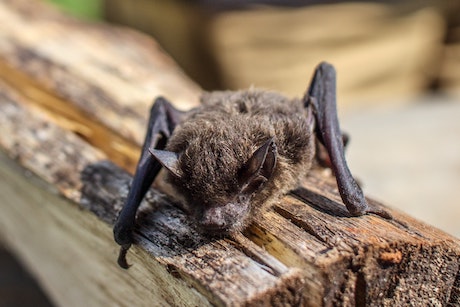
Photo by Peter Scott on Pexels.

Catching Creek 

D. E. Larsen, DVM

I acquired this rendition of the Davenport portion of Catching Creek this Fourth of July. A good part of my early life occurred within the bounds of this sketch. 

If we refer to my story of Hallowed Ground, https://docsmemoirs.com/2020/05/24/hallowed-ground-prefaced/, I can explain the locations of that story.

At the time of the story, we lived on the Lundy ranch. It was off the page at the bottom. The Cow Horn field was part of the Lundy Ranch. This sketch is laid out as the creek flows from the top of the page to the bottom. Unlike most maps, the top of this sketch is west. Just over the hill at the top of Catching Creek Mountain, one goes downhill to the coast. Going down Flores Creek to Langlois.

The Hallowed Ground story starts at the cow bridge, seen crossing the creek near the top quarter of the sketch. We would have started the hunt by walking the road up to the Davenport Grove, framed by a large bend in the creek. This grove has been the setting for an annual Fourth of July celebration since 1904. The bend of the creek always held many ducks.

After hunting the grove, we followed the creek to the cow bridge. That is where the story starts and where the grouse was shot. The field across the creek had a massive myrtle tree in the center. That tree is not on the sketch.

The creek crossing, where we almost fell on the second crossing, was on a line from the cow bridge to the logging truck. The Bartlett land was located just up the creek as it disappeared off the sketch at the top of the page.

The two houses at the top of the sketch were located a little more up the creek. The first house is about where the log truck is, and the second is about where the first house is. Jim’s cabin was before my time. I had heard stories of the place but had never been to it.

We lived in the first house until I was four years old. The sketch doesn’t illustrate how the outhouse was located on a hillside behind the house. That was a difficult trip in my memory.

On our trip back down the creek, we would have crossed the cow bridge again and walked (or ran) down the middle of the field to the upper barn, where we would have returned to the road. 

The house on the driveway from the barn was Uncle Dutch’s house, and the next large house near the road was my grandparent’s house. My mother had been on ten children in their family. 

The lower barn is just across the bridge from up the creek; the other building has a garage. The outbuildings behind my grandparent’s house were the woodshed and the outhouse. Remember, they had a large family with six girls and four boys. The outhouse was an impressive three-seater.

We then ran down the road, past the Bee Tree, and around the creek to where the road left the stream at the bottom of the sketch. There were never ducks in the creek where it ran along the road. 

The cow was in the creek just above the “a” in Catching Creek at the bottom of the sketch. 

The creek was loaded with ducks from where the road left the stream, all around Horse Shoe Bend and around the tip of the Cow Horn to Camphor Creek. There were ducks from Camphor Creek down the creek, but the Catching Creek became brushy from there to the river and was hard to hunt.

Today there are no dairies on Catching and fewer cows in the pastures along the creek. The creek is brushy along most of its course. There are likely still a lot of ducks in the stream in the fall, but hunting them is almost impossible.

Davenport Grove is still a gathering place, but my generation is fading fast. Next year we will celebrate a hundred and twenty years of Fourth of July Celebrations.

Time marches on!

Sketch done by C. Vincent.

Jack, From the Archives

D. E. Larsen, DVM

Sandy and I were standing in the garage talking when Robert pulled into the driveway with his load of boxes. Robert was our UPS delivery guy and was a regular visitor to our clinic in the garage.

Robert dropped the boxes on the table in the back of the garage and returned waited for a signature.

“Did I hear you two talking about getting a puppy,” Robert asked?

“We are just getting settled into this place, and we figured it was about time for a puppy.”

“I just happen to have a litter of Springer Spaniel pups who are ready to go next week,” Robert said.

“We haven’t even discussed what kind of a puppy we need, but a Springer might fit this place and this family well,” I said.

“They are good pups, all liver and white, and I have both parents. Drop over this weekend if you want to look them over,” Robert said.

“We will do that. The kids will enjoy looking at the litter.”

“I will give you the pick of the litter,” Robert said. “You know you will take home a puppy if you bring the kids.”

The girls were excited when we loaded up to go look at the puppies. It was chaos when they got down on the ground with the pups. Three girls and eight puppies all trying to lick a face.

As Robert predicted, we went home with the best of the pups. He was Jack before we got very far down the road.

Like all puppies, Jack grew rapidly. In the process, he cemented himself as part of the family. It was good to have a puppy grow up with the kids who were also growing up.

Jack was an active dog. He covered the ground on our small acreage daily. Fences were a barrier at first, but as he reached his adult size, he could sail over any fence on the place. 

One Spring day, I took the girls down to the creek behind the house to fish. Jack went along. The first fish out of the water was held in the air, wiggling on the end of the line. Jack took no time to grab it. I was right there to catch him and retrieve the fish. The fish looked like it was none the worse for wear.

“You kids don’t tell your mother, or she won’t cook this fish,” I said.

My biggest concern, however, was Salmon Disease in Jack. I monitored him close, and sure enough, seven days later, Jack was sick. He could not have had that fish in his mouth for more than ten seconds, and I could not even see a puncture wound on the fish. That changed my thinking on what kind of exposure was required for a dog to contract Salmon Disease, and that was the first lesson taught by Jack.

When Robert had his next litter, he had a little female who nobody had selected. The pressure was applied, and we ended up adding Jill to the household. 

Jill was older when she came to live with us. She and Jack got along well, but like all things female, she led Jack astray. We had virtually no problems with Jack before Jill came along. Now they were straying up the creek further each day. Neighbors were not happy.

We made the decision to find Jill a new home. That was an easy task, and tranquility returned. Jack was immediately back to his old stay-around-the-house dog. Lesson number two.

We had acquired a few bummer lambs to keep the girls busy. Bottle feeding lambs are a chore that kids find fun. That makes it easy to start teaching responsibility and a work ethic.

Ray Michalis had given me a bummer lamb that had an infected knee joint. The chances of saving it were slim, and for Ray, the expense was not justified. 

I took the lamb. I drained the joint’s pus and placed a drain in the joint that I could flush a couple of times a day. We had all the lambs in the stall on the far end of our little barn.

It was a busy afternoon at the clinic when Dixie said Sandy was on the phone.

“You need to come home right now and take care of this lamb,” Sandy said in a voice mixed between hysteria and tears.

“What is the matter with the lamb,” I asked?

“The county tax assessor was here this afternoon, and he locked Jack in with the lambs,” Sandy said.

“That doesn’t sound very smart, but that is not the end of the world,” I said.

“Jack chewed the leg off the little lamb that Ray gave you,” Sandy said, though tears now. “You need to come home right now and take care of this lamb. The girls are hysterical.”

“I will be right there,” I said.

I took a dose of euthanasia solution and apologized to the clients as I ran out the door. By the time I got home, the little lamb was actually doing pretty good on three legs, and all the bleeding had stopped. But I went ahead and put it to sleep.

Now I had two problems. How to deal with a dog who probably couldn’t be blamed for his actions but needed to know that it couldn’t happen again. And how to deal with a tax assessor who most likely would take no responsibility and who could hold my assessment over my head.

For the dog, I took the lamb’s severed leg and tied it around Jack’s neck. You would have thought I had beat him with a stick. He was mortified. 

For the tax assessor, I called him and complained. Restraining myself from calling him a name or two. As expected, he took no responsibility and flexed the muscle of his position at the end of the conversation.

“So, what are you going to do about it,” he said.

Nothing, of course. I wished I had tied the lamb’s leg around his neck.

When I removed the leg from Jack’s neck after the third day, he was the happiest dog you could imagine. And Jack would not even look at the lambs in the pasture again. Lesson three.

It was a warm Saturday afternoon. Jack had gone for a short run on the hillside across the road from the house. The kids were playing in the front yard. I was working on cleaning and checking the vet box’s inventory on the back of my truck.

Jack came down off the hillside and started across the road. The old man from up the creek was speeding down the road. He always drove way too fast. He and Jack collided in the middle of the road. The force of the impact knocked Jack over 30 feet. He landed in the front yard beside where the kids were playing.

Jack stood up and yelped once. Then Jack fell over. He was dead by the time I got to him. 

The kids were wide-eyed, not fully coming to grips with what had happened. Sandy was coming out of the house. I am sure she wanted to slow me down as I headed to the road to talk with the old man behind the wheel.

“Is he dead,” the old man asked?

“He is dead,” I said through clenched teeth. “What the hell do you expect when you knock him thirty feet. You need to slow down, old man. What if that had been one of the kids? I would be dragging you out of the car and beating your ass to a pulp.”

The old man learned to drive a little slower. A hard lesson for Jack to teach, but well taught. Lesson four.

The kids learned the dangers of the road. We never had to caution them about the road after that day. Even Derek, who was just two at the time, absorbed that lesson. Another challenging but valuable lesson from Jack. Lesson five.

And maybe the best lesson of all was Lesson six. The loss of someone close is always distressing. And for kids, their first loss often comes with the loss of a pet. Sometimes traumatic, like in Jack’s case, sometimes from old age, but it prepares them for one of those rigors of life that we all must cope with sooner or later. I think it is one of the best lessons that pets provide for kids.

Jack’s life was short. But one’s life should not be measured by length but rather by the quality and how well it is lived. 

Photo by William Buist on Unsplash