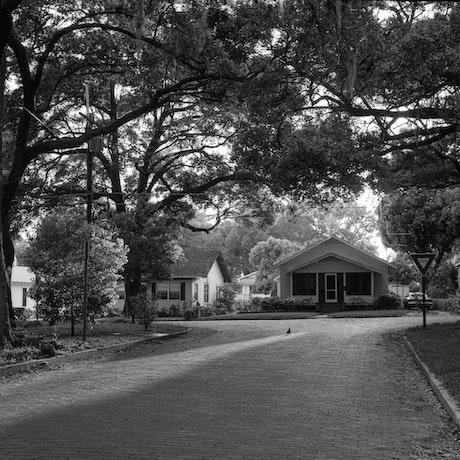
Gus and Blackie, From the Archives

D. E. Larsen, DVM

We watched as Blackie hurried across Main Street, almost in the crosswalk and with no regard for the traffic light, his long leash trailing behind him. Blackie was a Dachshund cross, solid black in color, and the structure of a Dachshund. 

Blackie was always in the lead and always seemed to know where they were going. And not too far behind, came Gus. Gus, with his narrow brimmed hat, cocked to the side of his head and sporting a grouse feather stuck in its band. 

Gus was much slower afoot than Blackie and walked with a broom. He walked a little bent over, favoring his lower back. He always gave the appearance of someone who just got out of bed and dressed quickly. Never getting everything on just right. His shirt was half tucked in, and his greying hair was sticking out from under his hat in all directions.

Blackie was at the clinic door now, patiently waiting for Gus to arrive. The leash strung out on the sidewalk behind him. This leash was Gus’ way of complying with the city’s leash law. Gus was schizophrenic. Medication keeps him functional in the community, but if he is off medication, he has problems, and he is well known to the police.

Ruth opened the door for Blackie and waited a couple of minutes for Gus.

“What are you two up to today?” she asked.

“Blackie thinks he needs to see the Doc,” Gus replied, leaning on his elbows on the counter to catch his breath.

“Come on Blackie,” Ruth says, as she gathers up his leash. “Let’s go get your file.”

Gus always played the role of being a little dense or slow. But, the reality was he was as sharp as a tack. If you wanted to know what was going on in town, all you had to do was ask Gus. He knew everything about everyone and every business. He just had difficulty articulating the facts in a manner that anyone could understand.

Blackie was due for his annual exam, vaccinations and a heartworm test. We would have mailed a card tomorrow. That is how well Gus kept track of things.

Blackie was an excellent patient on the exam table as long as you talked with him and took things slow. If you tried to zip through the exam and stick him with a needle without adequate conversation, he would get a little snappy.

“Gus, I see that Blackie is doing well,” I said. 

“He does okay, you send the bill, gal over at the DQ has a problem,” Gus stammers.

I have found that Gus will carry on 2 or 3 conversations at the same time. Giving snippets of each sentence stitched together in a manner that is almost incomprehensible if you don’t listen very carefully.

“John takes care of it, I think her boyfriend left,” Gus continues. “I will get your sidewalk, maybe she is pregnant.’

Gus kept track of all the drama in town, I never knew how he came up with his information. I think maybe people didn’t pay attention to him, thinking he was never listening.

“I ran a guy off last night, John says Blackie owes some money,” Gus continued.

“Blackie’s bill is fine,” I said. “You don’t worry about Blackie. We will take care of him.”

“They didn’t like me in that jet,” Gus said. “That guy next door doesn’t like me; in Korea, they were mad. I only moved it a little.”

Gus must have been in the Air Force, he often spoke of being in a fighter jet and taxiing it a small distance. I would guess that probably ended his military career. And there were several folks in town which he had altercations with in the past.  Those seemed to stick in his mind and come out once in a while. 

Gus was not allowed in any of the bars in town because if he drank, especially if he forgot his medication, he would become violent and unmanageable. It was not unusual for Gus to require a few weeks in the state hospital in Salem to get straightened out.

John related one trip he made, taking Gus to the state hospital. John said that Gus babbled all the way to Salem and then was real quiet when they were waiting to see the doctor.  John said that they saw a new, young doctor that day. When the doctor was interviewing Gus, Gus was as normal as John had ever seen him. Just when the doctor was getting ready to send Gus back home, Gus snapped back into his incomprehensible babble. John said the doctor’s eyes just popped.

But, for all his problems, Gus did pretty well. His family had provided him a small house. Gus worked every day, sweeping and cleaning up small areas. He got funds, probably SSI, and maybe some state funds from time to time. He swept sidewalks in front of businesses and looked after small things out front, like bums hanging out. I took care of Blackie. The A&W fed him lunch and dinner at times, although he usually had to eat outside. Some of the women in town would clean his house on occasion.

If everyone on public assistance did a fraction of the work that Gus did, communities would be far better off. And that segment of the population would be looked upon with better favor.

Photo by Mel Elias on Unsplash

Driving Blind, From the Archives

D. E. Larsen, DVM

This was one of extra busy days in the middle of July. The appointment book was full. Most of the problems were flea problems. I always became weary of discussing the flea life cycle with folks. We were trying to put out the fire that should have been controlled last winter.

I noticed Ed sitting out in the reception area. He had a small dog on his lap. I knew Ed from my days bowling for the Elks Club team in the Thursday night men’s league. Ed was older, probably in his 70s, balding, and he wore thick glasses. He was short and stocky and somewhat rounded by the years.

“What’s up with Ed,” I asked Sandy as she was passing on a run? 

“He has a flea problem with his dog, but no appointment,” Sandy said. “I told him we would try to work him in, but we were booked solid today.”

I stepped back into the exam room and started my rehearsed spiel on flea control. Flea control was difficult to impossible if folks had not been working at it all year round. When the heat of July and August hit, the fleas hatch from everywhere. They just about eat the poor dogs and cats alive.

“This is a typical case of flea allergy dermatitis,” I started. “The hair loss and the skin lesions are back here by the tail. It doesn’t take much looking to see the fleas scatter.”

I spread the hair on the dog’s back, and fleas ran in all directions. I turned her over and showed a dozen fleas on his belly.

“The flea collar doesn’t do a lot of good at this point,” I said. “His little cloud of protection is a few feet behind him as he runs around the house.”

“There are no fleas in my house, Doctor,” Mrs. Jones said flatly.

“This time of the year, fleas are everywhere. Getting them under control is difficult. It requires flea bombs in the house and flea dips on the dog. And then, the process needs to be repeated every week for several treatments. Sometimes we need to use a yard spray also.”

“I don’t have fleas in my house,” Mrs. Jones repeated. “We had to sit out in your reception area for almost 15 minutes today. That must be where all these fleas came from.”

“I can give you some medication that will help the skin, but without flea control, Chloe is going to have a bare tailhead until winter. If you would like, I can give you a referral to a veterinary dermatologist in Newberg.”

At about this time, I hear a big commotion in the reception area. I excuse myself for a moment. I get a brief respite from Mrs. Jones.

Ed is up on his feet and arguing with Sandy and Ruth.

I step out to the reception room. Ed is red-faced and clutching his little dog tight enough that his eyes are bulging a little.

“Doc, damn it, I have been sitting out here for 15 minutes, and this lady comes in, and they take her back before me. It is my turn.”

“Ed, Sandy told you we would try to work you in. We have a solid book of appointments this afternoon. That lady had an appointment. My policy is to see appointments on time if possible.”

“Damn it, Doc, I am telling you, it ain’t fair,” Ed said.

Now I was a little upset. I took a step toward Ed and pointed to the door.

“Ed, the door is right there, don’t let it hit you in the ass as you leave,” I said. “The next clinic is about 19 miles down the road.”

“No, I don’t need to do that,” Ed said, holding his hands out in defense of my approach. “I just wanted to make sure I was not being slighted by the girls. I will wait for my turn.”

Ed returned to his seat, and I returned to Mrs. Jones, probably not in the mood to discuss where Chloe’s fleas came from. I am sure everyone in the clinic had heard the altercation.

“I don’t need a referral,” Mrs. Jones said. “You can fix me up with what I need and see how it works.”

That was a lot easier than I expected, and it allowed us enough time to get Ed into an exam room.

When I finally got to Ed, we were both apologetic. We treated his little dog with fleas, along with most of the other dogs that day.

Several months later, Ed and his wife were in the clinic at a much quieter time. I had ample time for some casual conversation.

“Are you still bowling, Doc,” Ed asked?

“No, I have an old football injury to my left knee and figured I better give it up,” I said.

“I had to give it up, too,” Ed said. “My vision got so bad that I couldn’t see the pins at the end of the alley.”

“That would make it pretty difficult,” I said.

“Yes, and I don’t drive,” his wife said. “So when he is driving now, we drive the old pickup with bench seats. I sit really close to him, sort of like when we were teenagers, and I tell him what is coming down the road.”

“That sounds a little dangerous,” I said. “You guys maybe should get some help before you are in a wreck.”

“It works okay right now, Doc,” Ed said. “Our son is getting his job changed around, and he is going to move his family in with us pretty soon. Things will be better then, and I won’t be driving so much.”

“Okay, that sounds better, but you need to be careful out on that road.”

Photo by Carlos Esteves on Unsplash

Splints for Scruffy 

D. E. Larsen, DVM

Hugh and I were walking out to the small pig pen beside their small barn. The pen held a large sow with a litter of eleven piglets about five weeks old. The reason I was here was because now there were only ten piglets. One had been found dead this morning.

Scruffy, a ragged cross between how many breeds, I don’t know, but he was the size of a Corgi, but that was his only similarity to that breed. He was constantly underfoot on our walk to the pig pen. He would constantly try to brush against my legs as we walked along.

“Scruffy, you’re going to either trip me or get stepped on if you don’t knock it off,” I said.

“He does that to every visitor he likes,” Hugh said. “He just trying to get petted.”

We stopped at the low fence around the pig pen. Hugh had pulled the dead piglet out of the pen this morning. The pen looked small for all the piglets, the dirt had dried, but you could, but from all the dry mud on the sow and the piglets, it had been mostly mud not long ago.

“The wife thought I shouldn’t worry about this guy,” Hugh said as he placed the piglet on an old set of boards they had set up on a couple of saw horses. “She thought the sow probably laid on him, but I want to make sure there isn’t something else going on that we need to take care of.”

“These guys are older than the piglets who get laid on by the sow,” I said. “They are big enough and active enough to get out of the way. Let’s open this one up and see if I can see anything.”

I opened the piglet with a long incision from his chin to his pelvis and spread the ribs wide. With a quick glance, it was obvious that this piglet died from migrations of roundworm larvae.

“Hugh, you can see his liver is covered with white spots, and his lungs are congested,” I said. “This guy died from larval migrations. We need to worm this whole group, both the sow, and piglets, and get them out of this pen and out on pasture.”

“I always thought the worms were just in the gut,” Hugh said. 

“That is where they end up,” I said. “When an infective egg is ingested, it hatches in the gut and migrates from the gut, through the liver, and into the lungs. Then the larva is coughed up and swallowed back into the gut, where it becomes an adult worm. It is sort of a numbers game. The body can handle the damage if there are only a few worms. If there is a bunch, this is how things end up. The problem is the dewormers we have now only kill the worms in the gut. That needs to be done, but if you have another pig or two who looks like this inside, you might find them dead. But we can stop any additional exposure by worming everybody and getting them out of this pen.”

I fixed Hugh up with what he needed to deworm the pigs, and he had a small pasture he put them into. I patted Scruffy on the head and headed back to the clinic.

***

The following week Hugh was in the office waiting to talk with me. I figured he had lost some more piglets.

“How are your pigs doing?” I asked.

“Oh, they are doing great,” Hugh said. “I think they are really growing now, and they have had no other problems. I’m here today about Scruffy. He must have gotten out on the road last night. He’s sort of broken up this morning.”

“Did you bring him with you?” I asked.

“Yes, he is in the car,” Hugh said. “But Doc, we are really short on money right now. I wanted to make sure it would be okay to charge things for a bit. Otherwise, I will just have to put him out of his misery.”

“Hugh, good clients can always charge here,” I said. “Bring him in, and let’s get a look at what’s going on with him.”

Hugh carefully laid Scruffy on the exam table. Even being banged up, Scruffy looked at me with bright eyes, and his tail seemed to play a tune on the tabletop as it wagged away.

“I think he has a broken leg,” Hugh said.

I looked over Scruffy with him licking my forearm every time it came within his reach. His skin wounds were superficial. What we like to call road rash, just deep scrapes from being bounced off the pavement. His major problem was his fractures. Scruffy had fractures on both front and rear legs on his right side.

“Hugh, Scruffy has two broken legs,” I said. “Everything else is superficial, and I think we can repair both of these fractures with some surgery.”

“Doc, we are on a really tight budget,” Hugh said. “There is just no way we can pay for any surgery for Scruffy. Is there anything else you can do?”

“These fractures are both on his lower legs, so we could splint them,” I said. “A splint works pretty well on one leg. Dogs will learn to get around so well that sometimes they will wear right through the splint rods. But I have never tried to splint two legs. The legs will heal, but you might have a lot of nursing care during the month or two of healing.”

“That will be a lot cheaper than surgery, won’t it, Doc?” Hugh asked.

“Oh, yes,” I said. “A lot cheaper than surgery.”

“That’s what we will do then,” Hugh said. “If Scruffy becomes too much of a burden, we will just cross that bridge when we come to it. When can you do this?”

“We will work him into the morning schedule,” I said. “You can plan on picking him up this afternoon.”

We sedated Scruffy, but I would guess that I could have put his splints on with him awake. He acted like everything was fine throughout the entire process.

Thomas splints are easy to apply, but the splints are longer than the opposite leg. When dealing with one leg, dogs adapt to the splint very quickly. Often walking well the first day and acting like the splint is part of them by the third day. I was unsure how well Scruffy would adjust to having two legs in a splint.

When Scruffy woke up from his sedation, he had some difficulty just getting into a sternal position. He ended up with both splints splayed out to the right side. He looked and acted uncomfortable. But when Hugh came to pick him up, he was all happy, licking Hugh’s face when he picked him up, and his tail never quit.

“When do you want to see him again, Doc?” Hugh asked.

“I usually recheck these splints at the first week and every two weeks if everything is going okay,” I said. “You need to keep it clean and dry. I would guess that Scruffy will need some help, especially with his urination and BM. Let me hear from you if you have any problems. And for Scruffy, I would like to look at him Monday, just to make sure he is adjusting to his situation.”

***

On Monday, Hugh packed Scruffy into the clinic. Scruffy greeted everybody. He was back to his happy self.

“This guy is doing great,” Hugh said. “He had some struggles Friday night but was up on all fours when we got up Saturday. The only thing is his right legs are longer than his left legs now. So he sort of goes in circles to the left. But he gets where he wants to go eventually. We are embarrassed to say that we laugh at him now.”

We took Scruffy into the back of the clinic and set him down on the floor. When I called him, sure enough, he made a tight circle to the left and tried jumping up on my knees.

“You know, Hugh, I think he knows geometry better than most people I know,” I said.

Scruffy continued to do well, and we removed his splints after six weeks. His fractures were well healed, and he had to relearn how to walk in a straight line again.

Photo by Frágil y fugaz on Pexels.