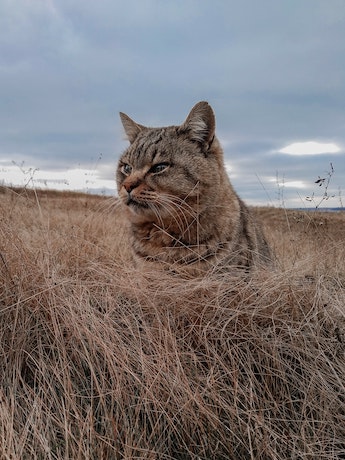
Old Three Toes, From the Archives

D. E. Larsen, DVM

When I was growing up in Coos County one rarely encountered a Coyote, except on the high ridges. We didn’t think much about it at the time. That was just the way it was. I remember the first coyote I saw, on the top of Sugarloaf Mountain, on a cold morning Jeep ride with Uncle Robert.

    Twenty years later coyotes had moved into the valleys and were heard regularly and encountered with little effort if hunting them. They had become a significant problem to sheep ranchers, and an occasional brave one would come close enough to the barnyard to snatch a chicken.

    My Uncle Duke’s explanation for the change was probably the most accurate. I didn’t have a full understanding at the time but would later come to appreciate his wisdom.  In my younger years, 1940s and early 1950s, all the creeks in the area were full of spawning salmon and steelhead in the fall and winter. Dead, spawned out, fish were present on the riverbanks and all the creek banks. Later in the 1950s and 1960s, commercial fishing for salmon moved from the steams to the ocean.  Spawning fish numbers decreased and dead fish were only occasionally encountered on most streams.

    Duke’s opinion was that when the streams were chuck full of fish the coyotes would have easy access to salmon and would die from the disease. The only viable populations thus existed on the high ridges far removed from the spawning streams.

    Salmon Disease (or Poisoning) is a complex disease of all canines. It occurs approximately 7 days after a dog (or coyote) consumes infected raw salmon, trout or steelhead. The fish carry a larva of an intestinal fluke. The fluke causes only mild disease and can infect a number of species, but the fluke also carries a rickettsia. It is this rickettsia that makes all canines ill and is the cause of Salmon Disease.

    Salmon Disease is treatable if it is caught in time. Ninety percent of dogs (and coyotes) will die within 7 – 10 of becoming sick if they are not treated. Survivors may be immune for long periods if not for a lifetime although there are exceptions to this immunity.

    I was on a farm call, talking with Dick Rice. Dick owned a ranch on the Calapooia River. His ranch was one of the early pioneer ranches in the area. 

“Doc, I have been having a heck of a problem with coyotes the last couple of years,” Dick said. “It seems to be the same coyotes most of the time. He has only three toes on one foot.   He catches any lamb left out of the barn overnight. Can’t trap him, he is too wise.”

  Dick was at his wits end on how to deal with this bandit.  I related my Uncle Duke’s opinion on the shift of the coyote population into the Western Valleys. He listened with interest but just seemed to take it in as a story. I finished with the calf we were treating, loaded up and returned to the clinic. 

    I never gave the conversation much thought after that until I bumped into Dick outside of Thriftway one afternoon. Dick had hurried to catch up to me in the parking lot. It was apparent that he wanted to talk.

    “Hi Doc, how have you been?” he said, a little out of breath.  “I have wanted to talk to you about that Old Three Toes.”

    “Aw, yes, I remember you talking about him,” I replied.

    “You know, I got thinking about the story you told about Salmon Poisoning. One night after work, I stopped in here and bought a hunk of salmon tail. I have an old burn pit and garbage pile on the far side of the pasture behind the house. I took that salmon out there and put it on the edge of that pile.  It was gone the next morning.” 

    “And Doc, that was a couple of months ago. I have had no more coyote problems, and Old Three Toes is gone. I have not seen his tracks anywhere. Can’t thank you enough for that story.” 

    “I’m glad it helped you, Dick. You can thank the observation skills of an old farmer for the information. I am not sure that I would have ever put that information together to come up with that conclusion,” I replied.

Photo by DAVID NIETO on Unsplash

Table Manners for the Old Dog, From the Archives

D. E. Larsen,DVM

   Frank pushed through the door with Harley. Harley was an old yellow lab, very overweight, and suffering from arthritis due to all the extra weight.  

   “I need to see Doc, right away if possible!” he said abruptly. “Old Harley, he is not eating much since Kara passed. I’m not eating much either, for that matter.”

   Frank and Kara had been very close and worked together on their small farm out at Liberty. Harley was always happy to see me when I would make a farm call, but in the office, he knew he was the one to get the shot, not the cows. Today he sort of looked confused, like he was not sure what was going to happen next. 

   “Let’s get a weight on him, and then I will get Dave to get him up on the table,” Sandy said as she started for the scale at the end of the hall.

   “Harley, you have not lost any weight, you still weigh 108 lbs,” Sandy said, patting Harley on the head as she ushered them into the exam room. “I will get Dave, it will just be a minute.”

   I came into the exam room and swooped Harley up with both arms under his chest and belly and landed him on the exam table.

   “One of these days, you won’t be able to do that, Doc!” Frank said.

  “What brings you and Harley in to see me today?” I asked Frank with some concern in my voice. I knew things must be hard on both of them, Kara was the world to both of them.

   “Will, I am telling you Doc, old Harley here is not eating. I tell you that, and Sandy tells me he is not losing any weight. Now, how can that be, Doc?” Frank asks.

   “He must be eating something. Maybe he is cleaning up the grain after the cows.” I said.

  “No! He doesn’t eat a bite of his dog food. The only thing he eats is what he begs from me at the table. Maybe I give him more than I figure,” Frank says.

   I do a full exam on Harley, something I do with every patient. Start at the nose and end at the tip of the tail.

   “Everything looks fine, he just needs to lose some weight, like ten pounds for a starter,” I said as I lift Harley off the table. He is happy now, no shot, and he knows a treat is coming. He snatches the treat out of my hand, and it is gone in a second.

“One thing I never understand about dogs,” I said, “that treat touches his tongue of a tenth of a second, but he thinks it is the best-tasting thing in the world right now.”

   “One thing I never understand about you Vets,” Frank says, “you tell me he needs to lose weight, and then you feed him. Now, don’t you go and try to sell me some of that damn expensive dog food you have. He won’t eat a bite.”

“I won’t sell you any dog food. You just have to stop feeding him from the table. And I give him a treat so he will like coming back here. You know I have some patients who don’t think well of me.”

  “Okay, Doc, I will quit feeding him from the table. But you know, Kara has been gone for over a year now.  There is not a lot of joy in our house, for Harley or for me. Feeding him from the table is something we both enjoy.”

   “I know you guys have gone through a lot in the last year or more, but you want this guy to be around for a while. Don’t kill him with kindness. You eat your dinner, don’t look at him, or put him outside. Then you go outside and throw the ball for him a little. Don’t get so vigorous that he tears out a knee, just a little exercise. Then you sit on the front porch with him while he eats his dinner.” I explain.

   “You think that will really work, Doc?” Frank asks.

   “It might take a few days or a week or so. If the ball isn’t his thing, go for a little walk with him. What you do is not important, just spend a few minutes with him. It might even make you feel better.” I reply. “Now you do that, and then you come back in a few months, and we will talk again while Sandy gets a new weight on Harley. It doesn’t have to be an office visit.”

   As is often the case, it was over a full year before I heard anything from Frank. He had called, wanting me to look at a cow that was not coming into heat. Frank had a small place and maybe a dozen cows. He usually borrowed a bull from one of his neighbors. Not the best practice, but they were all small farms, and most of the herds were very stable. So there was not a significant risk of introducing a reproductive disease. It also meant that he needed to get his cows all bred within 2 cycles, 3 cycles at the most. He had not seen this cow in heat since he picked up the bull almost 2 months ago. If she didn’t cycle soon, she would miss her chance to get pregnant, and Frank would have to send her down the road to the sale barn.

   When I turned into the driveway, I could see Frank and Harley down by the barn. It looked like they had the cow in the small corral. Frank did not have a squeeze chute, we would have to rope her and tie her head. That would make the job a little more difficult.

   Frank’s farm was neat as a pin. Spoke of his German roots. There was nothing out of place, any manure in the corral would be quickly picked up and placed in the manure pile at the back corner of the barn. When Kara was alive, I would have to be watchful when I was working on a cow. She would be picking up manure as it fell, I would have to dodge the pitchfork as best I could. The house was close to the road. It was a small house with a large front porch, painted off white and with new black shingles on the roof. The yard was large, both front and back, and unlike the majority of farmhouses around here and where I grew up, the front door was used as the main entry. Today I noticed a new car, a little blue Ford, parked outside the garage behind the house.

   Frank and Harley were quick to greet me when I pulled up to the corral. I opened the back of my truck and pulled out the rope.

“How are things, Frank?” I asked. “It looks like you and Harley are a little brighter than when I last saw you at the clinic. Harley is trimmer, too.”

   “Yes, things have been going pretty good lately. Old Harley expects me the throw the ball a little every night, just like you suggested, Doc. I think it’s has helped us both,” Frank said.

   “Let’s get this cow looked at,” I say as I crawl over the fence with my rope in hand. I toss the lasso at the cow as she turns to the left to avoid the throw.  The rope neatly falls over her head. I pull it tight and throw the free end over the fence to Frank.

  “Take a wrap around the post there and take up the slack as I pull her into the fence,” I say as I start to pull the cow toward the fence. She probably has a name, I think to myself. She is tame, almost seems halter broke, and getting her snubbed up the post is not a problem.

   “Give me some slack, Frank, and I will get a loop around her nose, so she doesn’t choke herself,” I say.

   Frank lets out some slack, and I pull a loop of the rope through the lasso and loop it over her nose. This essentially makes a halter and prevents the noose from tightening around her neck and choking her.

   “Okay, Frank, if you could grab that other rope in the back of the truck, I will sideline her so I can do a rectal exam without chasing her rear end.”

   Frank hands me the rope, and I thread it around her neck and between her front legs, so when I closed the loop with the quick release latch, it includes her right front leg. This also is to prevent her from being choked if she struggles. I string the rope down her right side and take a wrap around the next fence post. When I pull it tight, it holds her left side against the fence. This will allow me to do a thorough rectal exam with my left arm. I am right-handed, but we were trained to use the left hand for rectal exams, so your right hand would be free to make notes or whatever is necessary.

   “What’s her name?” I ask Frank.

   “Kara called her Flossy. She was a favorite of Kara’s. That’s one reason I am anxious to get her pregnant. Will, in reality, it probably doesn’t matter Doc, I wouldn’t sell her anyway,” Frank explains.

   I pull the fingers off a plastic OB sleeve and pull it on my left arm. Then I put on a latex exam glove on my left hand. Then I pull the fingers off another OB sleeve and pull in on. This will give me full digital sensitivity and protect my hand and arm from manure. 

   After applying ample lube to my gloved hand, I grasp Flossy’s tail with my right hand and ease my left hand into her rectum. I remove several handfuls of manure from her distal colon. Then I insert my hand and arm up to my elbow. Then I sweep my hand over the brim of the pelvis. This is going to be an easy exam. The uterus is full. Flossy is pregnant, judging from the size of the cotyledons, those ‘buttons’ where the bovine placenta attaches to the uterus, I would say she was 4 months pregnant. I remove my arm and pull off the sleeves, being careful to turn them inside out as I remove them.

   “That was quick,” Frank says.

   “What is the most common reason a cow doesn’t cycle?” I ask Frank.

   “How the hell do I know, that’s why I hired you,” he replies.

   “Flossy is pregnant, probably 4 months along,” I say.

   “Impossible, there hasn’t been a bull on the place since last year,” Frank says emphatically.

“There is no question about the pregnancy, and time will confirm that. Just have to wait about 5 months. So there had to be a bull here somehow. Are you sure a neighbor’s bull didn’t jump the fence?” I said.

   “No way, there is nothing here except the cows and a couple of steers. They are getting near market weight,” Frank replies.

   “How were the steers castrated?” I ask.

   “I banded them when they little, they are about 2 years old now,” Frank replied, a little defensive now.

   “You must have missed a testicle on one of them. That is a common error, you think have both testicles in the scrotum, then when you release the rubber band, one testicle slips through the band is above the scrotum. The majority of retained testicles will not be fertile, but in reproduction, 100% certainty is difficult to obtain,” I explain.

   “That is sort of academic now. Flossy is pregnant, and you might find you have one or two the other cows calving early this year. The steers with be at market soon, so that issue is fixed. Next Spring, give me a call and I will show how to castrate young calves with a knife. That solves this problem as long as you can count to two. Plus, you end up with some nice mountain oysters to fry up,” I say.

   “I don’t know about mountain oysters. We have enough problems with regular stuff around here anymore. Peg has been doing the cooking lately,” Frank says.

   “Peg?” I ask.

   “Margaret McFadden, we call her Peg, me and old Harley,” Frank replies.

   “Yes, I know Margaret. Her and Hank used to come into the clinic. I think Hank died a few years ago,” I say.

   “My neighbor talked me into going to the Senior Center downtown. You know, a man can’t walk into that place alone without being jumped on by half the old women in the place,” Frank says as he explains their meeting. “Anyway, Peg was sort of quiet, like me. We hit it off pretty well. She has been coming out here and trying to get things straightened out.”

  “So that must explain that new little car up at the house,” I say.

  Peg was a short woman, thin but rather striking for an older lady. Her gray hair still had streaks of black in it, giving a hint to her jet black hair as a younger lady. Her facial features were almost stern until she smiled. If she had a defect, it was the prominent mole on the right side of her jaw. I often found myself looking at it rather than at her eyes. I am sure it bothered her some because she would usually cover it with her hand when she was talking. I often wondered why she didn’t have it removed.

“Yes, that is Peg’s car. She doesn’t like to ride in my old farm truck. She is sort of a city girl, you know,” Frank says. “For the most part, we get along fine. We have been talking about getting married, or at least living in the same house. But you know what they say, a skinny woman probably doesn’t like to cook. You go into a restaurant operated by a skinny woman, and you get good salads,” Frank said.

   “You might have to do the cooking, Frank,” I said

  “Now, I’m not saying anything about her cooking, but she sure cured old Harley from begging at the table,” Frank says.

Photo by superloop on Unsplash

My Pocket Knife, From the Archives

D. E. Larsen, DVM

I have a vivid memory of having only a single request for a present for Christmas in 1950. I was five years old, and the only thing I wished for was a pocket knife. I was delighted when I opened the small package. It wasn’t much of a knife, small and thin with a single blade and fake pearl on the handle. But it was a pocket knife and for me, probably my first rite of passage. Virtually everybody in my life carried a pocket knife, my brothers, my father, my grandfather, and all my uncles. Now I was closer to that group of men.

I carried that knife, or others, every day since that Christmas. I don’t remember the pocket knife being much of a thing at school until about the third grade. At that time, skills with the knife became essential to the other boys (and a few girls) and me. Being able to ‘stick’ the knife when thrown, at the ground, at a wall he or in the chest of invading Russian, became a valuable skill.

  We played knife games before and after school and during recess. Mumbly-Peg was the main game played. We would stand to face each other, maybe 3 feet apart. The object of the game was to throw your knife a distance out from your opponent’s foot. If the knife stuck, the opponent would have to move his foot to the knife and then retrieve your knife. Then it was his turn. If the knife did not stick, then you lost a turn. The winner was determined when someone could not spread his feet far enough and could not retrieve your knife.

We also played a Cross Country game where you would throw your knife from a starting point, and you could advance to the knife if it stuck. There was a goal line, usually the fence around the schoolyard, and the first to reach the goal line won the game. 

In those years, 3 – 6 grades, I would go to school with my knife and a pocket of marbles. Marbles were also huge in the lives of most of the student body. There are not many pictures that survive those school days at Broadbent Elementary School. Cameras were not in every pocket in those days. 

      You can tell from this picture that the economic status of the school students was far different than what you see today. If you look closely at our shoes, you can read a lot into the picture. Jimmy was from a family less well to do than ours; he is in rubber boots. My shoes are new and too large for my feet. We got new shoes only at the start of the school year, and they were sturdy, work shoe types, and always large enough to allow the growth during the school year. These shoes would become my work shoes next year. The funny thing is that we were all poor, but we didn’t realize it. 

From these humble beginnings, most of us turned out pretty good. Jimmy became a minister of a church in Washington. Like so many men in my age group, he recently died from liver cancer from Agent Orange exposure in Vietnam.

As the years have passed, I have continued to carry a pocket knife. Even today, I feel naked if I don’t have one. Naked to the point of returning to the house to retrieve it if I get to town and realize that it is not in my pocket.

With the urbanization of our culture and the advent of political correctness, I have come to strenuously resent those who would call my pocket knife a weapon. To me, it is an essential tool that I use daily. In recent years that might be limited to opening boxes, but in the past, I have used it to kill fish, gut deer, peel oranges, open cans when camping and slice meat. The blade usually gets cleaned by a good swipe across a pants leg when necessary.

I have used my knife professionally also. Not often, but I can remember saving at least one life with my pocket knife. It was in the early winter when I was called to look at a backyard goat who was down and could not get up. Wintertime was often a time when those animals who were not fed well started to suffer from environmental stress. Backyard goats were often expected to survive on berry vines growing in the back yard. The first freezing weather would show the ones who had no reserve, and they were essentially starving to death.

We received a call to look at a goat who couldn’t stand. Arriving at the house, the driveway was packed with cars. We had to park some distance from the house. Dixie was with me on this call. Dixie was a short, trim, blonde girl who had worked for me almost from the beginning of my practice in Sweet Home. We walked up the driveway to the open garage, where a group of men was working on something. At the outside corner of the garage was a small, pitiful little goat laying flat out.

I knelt and did a brief exam. This gal was pregnant; you could see the kids kicking at her belly. She was skin and bones. I didn’t think there was any hope for her. The owner came over as I stood up. Jim was a young man with a full head of dark hair, the hand he extended was smooth and had no sign of a callous.

“What do you suppose is her problem?” he asked as we shook hands.

“Agroceryosis!” I said. “She is starving to death. I know everyone thinks you can tie a goat in a brier patch, and they will do well, but this little gal is pregnant and still trying to grow a little herself. I doubt if we can save her.”

No sooner than the words were out of my mouth, and she took her last breath. We stood for a moment and looked at the lifeless little goat. Then there was a noticeable kick on her belly. 

Dixie and I exchanged glances. “Run,” I said, “get a scalpel blade.”

Dixie was off like a shot. I watched her, and the kick in the goat’s belly. It is too far, I thought. She will not make it in time. I reached in my pocket and pulled out my knife. I hope it is sharp enough.

With a stiff swipe, I opened the abdomen. I pulled the uterus to the edge of the wound and opened it only slightly more carefully. I grabbed one kid by the neck and pulled him out of the open uterus. No pulse, hopefully, the next one will still be alive. I reached into the uterus and found a foot; it retracted from my grasp. I reached deeper and grabbed the kid by the back of his pelvis. He came out with one pull.

About this time, Dixie returned with the blade. A little out of breath, she was quick to turn her attention to clearing the airway of the little surviving kid. It took a deep breath, shook its head, flapping his ears, and then let out a short bleat.  

We took care of his navel, gave a dose of BoSe, and milked out what little milk was in mama’s udder. We gave him the milk with a stomach tube.

“You got lucky,” I said to Jim. “This kid will give your kids something to for a few months.”

Then, with a little bit of my Army voice, I said, “You need to drop by the office in the next hour or two. We will discuss what you need to do to raise this little guy and how to care for him later. We can also hook you up with a goat lady in Brownsville who has a herd of goats and will be able to help you out with some milk and more advice.”

Dixie smiled as I wiped my knife blade on my pants leg, folded in closed, and returned it to my pocket.

“I will remember that the next time you offer me a slice of apple off that blade,” she said.