The Game

D. E. Larsen, DVM

I held my 3 cards firmly and a little cupped, so the 3 aces were out of view to the other players and the crowd of half-dressed GIs watching the game. It was Saturday evening in mid-October, and a poker game was the best entertainment available to our platoon. We were in the middle of basic training at Fort Ord. 

This was 1965, and we were still under restrictions due to the recent epidemic of spinal meningitis that occurred on the post. We were restricted to our platoon area and no contact with the other 4 platoons in the training company. These 39 other guys were my circle of friends for the duration of the 8 weeks of basic training.

I waited anxiously for my draw of two cards. There were 6 of us in this game. We probably had half the platoon watching, all in various states of dress and undress. Boxers were standard attire in the barracks in the evenings. Boxers and a tee-shirt were almost Sunday-go-to-meeting dress. There were a few guys still in their fatigues. I watched as the other players called for their cards. Only Tangerman, a younger kid, sitting across the makeshift table, a couple of footlockers pushed together, drew 2 cards.

I slowly picked up my 2 cards, one at a time. I turned the first card over and stuck it in my hand, a king.  I took a deep breath and picked up the next card. It was an ace. I am sitting here with 4 aces and a king, the only hand that can beat me is a straight flush. It is highly unlikely that Tangerman would draw 2 cards to a straight flush.

I watch as the bet goes around the table, one guy, to the right of the dealer, bets, then Tangerman raises. The next guy folds, the next guy sees the bet. I am trying to decide if I want to raise now. The rules of this game say we are limited to two raises. All of us playing are in the same boat. We need some money to last until payday. We have tried to construct a game that will be fun but where nobody will be hurt. I go ahead and raise the bet.

The group of guys behind Tangerman is excited, which means he hit his draw. The dealer folds, as does the next guy. So there are 3 of us still in the hand and my guess the other guy will fold. 

Then Tangerman makes a fatal error in judgment. He asks if we can suspend the rules. Could it be that he has a straight flush? I can’t believe that. 

I agree. “Bet away,” I say.

Tangerman raises my bet again. The third guy folds. There are a few guys behind me now, wanting to see my hand. I see Tangerman’s bet, and I raise him back. I relax a little and show my hand to the guys behind me. Both groups of guys are going crazy now. There is enough tension in the platoon that you could cut it with a knife. Virtually the entire platoon is watching the game now. Tangerman’s group has more than 20 guys, more than mine, and much more vocal. 

Tangerman sees my bet and only has a few dollars left in front of him. He fingers his dollars as he considers his final raise.

“We have over a week before payday,” I say, “you might want to hang onto a few dollars.”

Tangerman looks at the pot, there must be close to $30.00 in the pot, a half months pay for us. He looks at his remaining $3.00.

“Okay, I call you,” he says.

With a sigh, I lay my cards on the table. Tangerman’s group erupts in a colossal moan.

“Damn,” Tangerman says as he lays his hand on the table. Four queens and a king.

The game is over after that. Tangerman is tapped out, and there is no way the excitement can be matched. I scrape in the pile of bills.

Everyone is dispersing to their bunk area, and as we are repositioning all the footlockers, I grab Tangerman by his elbow.

“If you run short before payday, you let me know,” I say. “This game wasn’t supposed to leave anybody broke.”

“Thanks,” he says. 

That is the only poker game I played in the Army. After basic training, there was either too much work to do or too much fun to be had elsewhere. 

Much later in life, in Sweet Home, I would play an occasional friendly game with a group of guys. Most games were casual, everybody had more money to lose than the guys had during basic training, but is more of a social gathering than a serious card game.

I had been playing in a weekly group with 5 or 6 guys for a couple of months. I considered myself lucky if I broke even, I think once or twice I came home with an extra $20.00, but never anything more than that. Usually, the host would have some finger food on the table, and there was maybe a beer or two on the table.

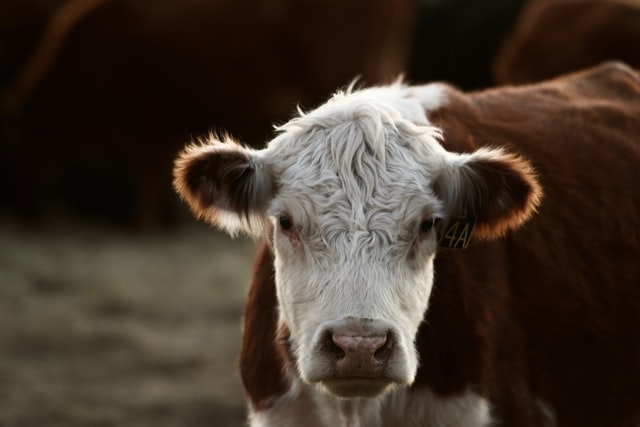
I got a call one afternoon to castrate and a group of young bulls. This was a purebred Black Angus herd, and this was a group of 12 young bulls who didn’t make the grade for the bull sale. These bulls were all approaching a year of age, or they were just over a year.

This was a pretty routine call, but the candidates for bedroom guards were a little older than the usual crowd. 

The first bull was waiting in the chute when we pulled up to the corral. I used my standard castration technique. I had Helen put pull the tail up over the back to create a good tail pinch on the spinal nerves. I would grasp the scrotum above the testicles and squeeze the testicles into the bottom of the scrotum. I would make a quick incision down each side of the scrotum and squeeze the testicles out of the scrotum. I would grab each testicle and stretch them down until I could feel the cremaster muscle tear. That done, with a clamp on the cord above the testicle, I would remove the testicle with the emasculator, holding firm pressure on the emasculator to ensure a solid crush on the vessels. In small bulls, I would remove both testicles together. Bulls this size, I removed each testicle individually.

With the first set of testicles in my hand, I looked at Debbie.

“Do you want these,” I asked.

“Are you kidding,” she said.

“I don’t know, they tell me they are pretty good eating,” I said.

“If you want them, you are welcome to them.”

“Helen, grab me a few OB sleeves,” I said. “I happen to have a poker game tomorrow evening. These might make pretty good hors d’oeuvres”.

We worked through the remaining bulls similarly. By the time I was done, both OB sleeves were full of prime testicles. I tied the sleeves at the top, and we packed up our stuff.

“You will find that they will all be singing soprano from now on,” I said. “Thanks for the leftovers.”

I had no recipe to follow in cooking these things. I figured I would just imagine the end product and work backward. These were probably a little larger testicles than what one might see in a bar in Colorado. Mountain Oysters were a fall delicacy in many Rocky Mountain areas. Each testicle was over 3 inches long and approaching 2 inches in diameter.

I removed the loose tunic from each testicle, and then with a sharp knife, I sliced the epididymis from the testicles. I then sliced them into rounds, about the thickness one would slice a potato for frying.

With them all sliced, I dipped them in milk, dredged them through a beaten egg, and then flour. Then, each round was fried to a golden brown. Sandy always says I cook things with too high of a temperature, so I was careful to use medium heat. I little salt and pepper finished the process.

When they came out of the frying pan, I let them cool on paper towels and then carefully stacked them on a platter. When finished, it was a pretty impressive plate of mountain oysters, if I do say so myself. I covered them with plastic wrap and put them in the refrigerator overnight.

I took the platter to the office the next day because I was going to be at the clinic until I left for the poker game. The girls in the office were impressed with the appearance of the platter and wanted to taste one.

Helen took a bite and immediately ran to the bathroom. She was embarrassed when she came back. When she bit into the sample, she had gotten a small tubule stuck between her teeth. Needless to say, that ended the sampling at the office.

I arrived early at the poker game, but there were a couple of guys there already. I sat the platter on the table, a little off-center but where it was within reach of everybody. I removed the wrap and didn’t say anything about it.

The group arrived, and we settled into the game. As the evening wore on, guys started picking away at the platter. It wasn’t long, and the plate was nearly empty.

“What are these things?” Jerry finally asked, holding up one of the rounds. “They are pretty good. Who brought them?”

I never said a word and worked hard to maintain my best poker face.

Finally, Gil chuckled and pointed to me. “Larsen brought them,” he said as he continued to laugh.

Of course, the whole table thought they were poisoned for sure.

I quickly fessed up to the truth, “They are just Mountain Oysters. And they are as fresh as you can get anywhere.”

Photo by Mark Williams on Unsplash

There is Gold in Them Hills

D. E. Larsen, DVM

It was 11:10, and Bob should be coming through the door any minute. He was sort of the highlight of our morning in the office. Bob had been our Postman ever since the office opened. He was older, probably getting close to retirement, but he was a joy to talk with.

I think he must have us as a scheduled break on his route. He always seemed to have several minutes to talk. Bob was a Sweet Home native or as close as one could be to a native. He knew everyone in town. If we wanted to know about someone, Bob could give a pretty good synopsis. 

Bob could talk gold. He knew where to look in every stream, and he shares that information only to a trusted few. I liked to think I was one of those entrusted few. Bob had lost a son who was my age, a Lieutenant in the Army. In those years of the Vietnam War, Bob was probably preparing himself for his son serving in the war. Instead, he was driving home from the East Coast, and died in an auto accident.

The reality of the thing was he knew I was too busy to chase any of his stories.

We bumped into Bob one afternoon when he was panning gold with a friend. Bob took the time to give the kids and me a lesson on how to work the pan. We came up with a lot of black sand but no color. Bob truly enjoyed teaching his hobby to the kids, including myself. Hobby was probably the wrong word. I think gold was Bob’s true vocation. His postal job and any other work in his life only allowed him to pursue his real life’s work.

Bob told me a story one day about one of his trips to the California goldfields. He and a group of friends would make an annual trip to the areas out of Sacramento, California to pan for gold. This was a working trip for this group of guys. They would rework some of the same streams that were the site of the 1849 gold rush.  

Bob said that on one of these trips, they had a new guy along. He was always underfoot and trying to learn every little thing he could from these old guys. Bob finally tired of putting up with this guy. Bob pointed to a distant sandbar up the creek.

“Why don’t you go up there and work that sandbar,” Bob said.

The guy took his shovel and pan and headed up to the sandbar that Bob had pointed out. Bob and the rest of the crew continued to work with the dredge where they had been all morning.

“That was the biggest damn mistake that I ever made,” Bob said to me. “Just before quitting time that afternoon, this guy comes down the creek with a gold nugget the size of the end of your finger. I was so mad at myself after that, I almost couldn’t eat dinner.”

One August afternoon, we had a new client, Rob, came in with his dog, Yoda, a pit bull cross. Yoda had a pretty severe laceration on his large pad on his right front foot. Yoda was camping with his owner way up the Calapoolia River at the mouth of State Creek.

“Yoda spends most of the day in the river with me,” Rob said. “If he is not in the river, he is chasing a squirrel somewhere up the creek. I don’t know when this happened, I noticed him licking his foot last night, and then this morning he was limping on that foot quite a bit.”

Yoda was an excellent dog, and he didn’t flinch while I examined his foot. This was a deep laceration that extended halfway across the carpal pad, front to back. It was deep also. This was going to be challenging to get healed. Especially in a dog who was used to spending a lot of the day in the river.

“Pad lacerations are difficult to manage, in the best of circumstances,” I said to Rob. “In a dog who is spending a lot of his time in the river, it might be impossible.”

“I can keep him out of the water for a couple of weeks,” Rob said. “I am not on any schedule, I am just spending the summer up there panning for gold.”

“I suture most of these,” I said. “By suturing them and keeping them wrapped for a couple of weeks, most of them will heal. If we can’t keep a dry wrap on the foot, there is little chance that the sutures will hold.”

“When can you do this?” Rob asked. “Keep in mind, I am a long way from camp.”

“I can probably do it shortly,” I said. “But it is going to take a little time from Yoda to wake up.”

“This dog is the toughest dog I have ever owned,” Rob said. “You could probably sew this up with giving him anything. Is there any chance you could do it with local anesthesia?”

“We can try,” I said. “Yoda will let us know if that is an option or not.”

We moved Yoda into the surgery room. Laid him down on his side. He did not react as we started scrubbing the wound. Rob stood on the opposite side of the table from me and scratched Yoda’s ears. 

I drew up a syringe of Lidocaine and looked at Rob.

“We are going to find out right now, this stuff stings a little, I hate it myself,” I said.

Avoiding the laceration, I slid the needle through the skin at the front edge of the pad. Injecting a little at a time as I advanced the needle under the pad. I injected half the syringe here and then repeated the process from the back edge of the pad.

After a few minutes, I parted the edges of the laceration. There was no response from Yoda. Spreading the wound wide, I scraped the deep crevice of the wound. I applied some Neosporin to the in the wound and wiped it out with a sterile sponge. Then I draped the wound.

Taking a deep breath, I stabbed the pad with a suture needle. There was no response from Yoda. I glanced and Rob and smiled as I continued to close the wound. In this type of deep pad lacerations, I would use a deep vertical mattress suture using stints, made from IV tubing, on each side to spread the tension across the wound edges so the stitches would not tear the tissues.

Closure only took a few minutes. And then I applied a wrap that extended halfway up the leg. 

“The key to healing this wound is the wrap,” I said. “If it gets wet, it needs to be changed. Otherwise, we will change it every 3rd day. Is that a schedule that will work for you?”

“I can work with that schedule,” Rob said as he let Yoda stand up on the table.

“I will put him on some antibiotics just to make sure we keep the infection down as much as possible,” I said.

With that, Rob and Yoda headed back to camp. We started on their schedule of regular visits. Rob did a great job of keeping the wrap dry, and the wound looked better with each wrap change. After two weeks, we had a decision to make.

“We could go without the wrap starting now,” I said. “This wound looks good, but I really would like to go one more week.”

“The squirrels are going to love you, Doc,” Rob said.

The following week we removed the wrap and the sutures. This wound healed as well as any pad laceration that I had managed. I patted Yoda on the head when I set him down on the floor. 

“It has been fun working with Yoda,” I said as I shook hands with Rob. “It has been good working for you too. How long are you going to be around these parts?”

“I will probably break camp in a couple of weeks,” Rob said. “You never know about a guy like me, I might back next year, or I might be in Colorado.”

As the days passed, Rob and Yoda sort of slipped to the back of my mind. I was a little surprised when Rob was in the reception room one afternoon. He motioned to me, indicating he had something to show me. I invited him back into the exam area, and he looked at an empty exam room and stepped into it.

“I have to show this, Doc,” Rob said. “I saw this under a large boulder, and it took me three days to get to it.”

Rob had something wrapped in a square of rawhide in his left hand. He held his hand out as he peeled back the folds of rawhide. There, in the palm of his left hand, was the largest gold nugget that I had ever seen. I didn’t have words.

“Wow!” I said.

“This is what keeps us guys with gold fever going,” Rob said.

It was a few days later when I had time to meet Bob when he came through the door with the mail.

“Bob, I have a story to tell you,” I said.

“Will now, that is a switch,” Bob said, “you telling a story.”

“Bob, I just spent a few weeks working on a dog for a guy who was camped up the Calapoolia River at the mouth of State Creek,” I started.

“I know the area,” Bob said.

“He came into the clinic the other day with a nugget wrapped in a piece of rawhide,” I said. “This nugget covered the palm of his hand and was over an inch thick.” 

I motioned on my hand the size of the nugget. Bob grabbed my forearm, his eyes wide open, and his pupils expanded as wide as possible. 

“No!” Bob said, “I have been all over that river and that area. There is gold there, quite a bit of the stuff. But it is all small, tiny stuff really. I have never seen a nugget come out of the Calapoolia.”

“Well, I don’t know,” I said. “That was the biggest nugget I have ever seen.”

“That is a $20,000 nugget, maybe $30,000,” Bob said. “But, I can’t believe it came out of the Calapoolia.”

“I guess, when I think about it, he never specifically said it came out of the Calapoolia, I just assumed it,” I said. “He has been camped up there most of the summer.”

“Now you have done it,” Bob said. “I am not going to be able to sleep until I can get up there and start looking through the place myself.”

Photo by Csaba Nagy from Pixabay

The Pointed Quill

D. E. Larsen, DVM

“Doc, my old Tank dog, just came home tonight with a few porcupine quills in his mouth,” Ed said into the phone.

I wonder why they either call at dinner time or 3:00 in the morning, I thought to myself as I listened to Ed, hoping I could get back to the table before everyone was done eating.

“I hear that I should be able to pull them out myself,” Ed continues, “what do you think of that idea.”

“Some guys do it,” I said. “I don’t know how they get it done. Most of the time the dog is going to get real tired of the process pretty quick. I just put them under an anesthetic before I start. It’s a lot easier that way, and you don’t end up with a lot of broken and buried quills.”

“He is not too bad,” Ed said, “I might try to pull a few tonight and see how he does. If I have any problems, I will just bring him into the office in the morning.”

“That will be okay,” I said. “Try to get Tank there early, right at 8:00, and I will have some time to take care of him. I have a farm call scheduled for 10:00, and it is going to take me a few hours.”

“If I’m coming, I will be waiting for you at 8:00,” Ed said as he hung up the phone.

Ed was waiting at the door with Tank when I pulled up to the clinic. I could see from the truck Ed’s assessment of quill numbers was a bit off. He said a few quills, old Tank’s mouth, and face was a mass of quills. Probably 200 quills. Just like with eyes, you could never trust a client to evaluate the number and severity of porcupine quills.

“I would say that Tank has a few more quills than a few,” I said to Ed as I was unlocking the front door to the clinic. “I am going to have to get started on him right away, or I will be behind schedule all day.”

“I pulled a couple of quills out last night, and Tank said that was enough, in no uncertain terms,” Ed said as Dixie took Tank and headed for the treatment table.

“We will get him taken care of right away,” I said. “It will take him some time to wake up, and I will want to check him when I get back from the farm call. We will have him ready to go home anytime after 3:00.”

With that, we had Tank on the table, and I gave him a dose of IV Pentathol. Placing an endotracheal tube in a dog with a mouth full of quills can be a painful experience. My usual procedure was to hold the mouth open with a mouth gag, pull the tongue forward with my left hand and hold the epiglottis down with my index finger of the left hand. I could then guide the tube in place, with the whole procedure taking only a few seconds. With a mouth full of quills, there was no way I could stick a hand in that mouth. I would have to use a laryngoscope, it would work okay, just a little more cumbersome.

Tank was under anesthesia, and we started pulling quills. The porcupine quill is sort of barbed. Under the microscope, the tip of the quill sort looks like a shingled roof. When they are pulled, it takes slow, steady pressure, or you will break the tip off. I always hear from clients that it is easier if you cut the backend of the quill off, allowing the air inside the quill to escape, and pulling them is easier. I have never found that to make any noticeable difference.

I pulled the quills with a forceps, holding the skin in place with a finger so as not to bury any small quills in the area. Pull a quill, place it in a pan of water to facilitate getting it off the forceps and easier cleanup. With this many quills, the whole process takes an hour. I have to hurry to keep on schedule.

I would see most porcupine quills in the fall. I think this was because the porcupines were forced to come down out of the trees for water since we were at the end of the dry period. 

Most of the time, one episode was enough to teach the dog that he didn’t want to mess the critters. One time in Enumclaw, I saw 3 dogs, daily for 3 days. Each day there was a different dog with the majority of the quills, and the other two would only have a couple of quills. On the third day, the owner confessed that he was going to have to go porcupine hunting.

Jack was the one exception to the rule.  Jack was a Cocker Spaniel. Like all Cockers, his activity level often exceeded his judgment. I pulled porcupine quills out of Jack at least 5 times, maybe 6.

I have seen a couple of cows with quills in their nose. I have never seen a horse with quills. One cat came in with quills completely through his front legs. It looked like he must have jumped on the porcupine.

Sandy and I were just starting to get ready for bed one Friday evening when the phone rang. It was Cathy, one of their pups had porcupine quills.

“Hello, this is Cathy, the pups have been gone since dinner time, and they just came home,” she says. “Kirk has porcupine quills. Could you take care of him tonight. I would hate for him to have to suffer until morning.”

“I could probably meet you at the clinic,” I said. “Did you check Spock? Many times if one has a lot of quills, the other one will at least have a few.”

“Sam checked them both over pretty well,” Cathy said. “Kirk is the only one with quills. It will take us half an hour to get to the clinic.”

“I will meet you there,” I said.

Looking at Sandy, I said, “I hope this isn’t an all-night affair. People are just not able to make a good judgment call on porcupine quills.”

Both Sam and Cathy were waiting when I pulled up the front of the clinic. They came up behind me when I started to unlock the front door. Kirk was standing with his head sticking between them. He looked at me with his mouth open, tongue hanging out, and panting. Kirk was probably still excited about the hunt and the ride to town. He had 2 quills stuck in the end of his nose.

I hooked a finger behind his canine tooth and raised his nose so I could get a good look to make sure there weren’t any quills in his mouth.

“Is that all he has?” I asked Sam.

“That is all I could find,” Sam said.

I put my door key in my pocket and, with one quick motion, grabbed both quills and plucked them out of Kirk’s nose. I brushed the blood droplets that sprang from the holes with the heel of my hand. Kirk stood there with his tail wagging.

“Let’s go home. Do you want these?” I said, holding the two quills out to Sam. “They are sort of interesting if you can get them under a microscope.”

Sam took the quills, looking a little confused at how fast the problem was handled.

“Do we owe you anything?” Cathy asked. 

“I didn’t have to open the door, I think we are square,” I said.

Photo by Free Nature Stock from Pexels.