Hot Tub Skin Infection

D. E. Larsen, DVM 

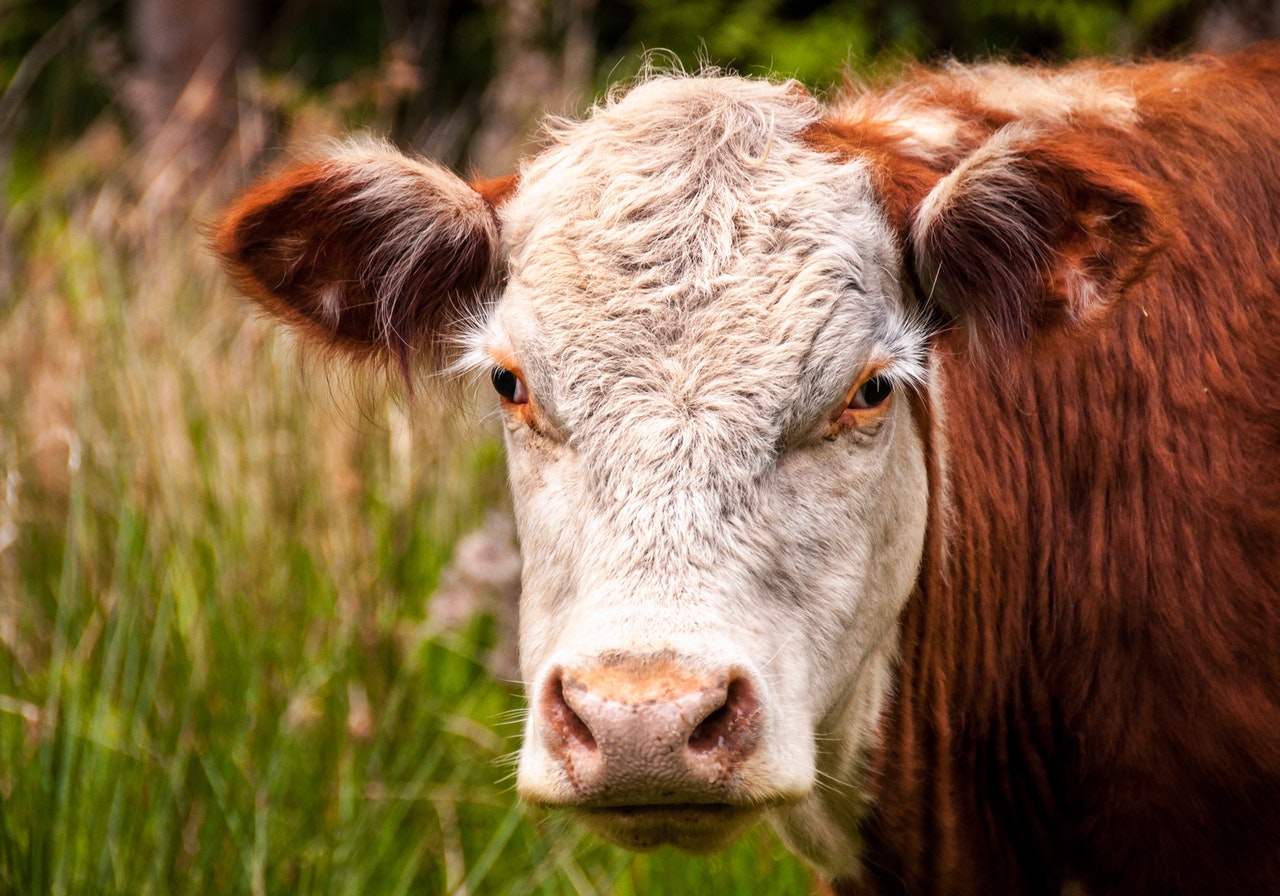
 “Doc, this is Dave, I just brought in an old cow from the back pasture,” Dave said into the phone. “I think she has a dead calf in her. I have been busy, and It has been several days since I checked those cows. I guess I didn’t even suspect this old gal was pregnant. But she is sloughing a lot of fluid and smells pretty bad.”

 “I can up there this afternoon if that works for you,” I said. “Do you have the cow in the barn?”

 Dave had the old cow in the crowding ally when I pulled up to the barn. I enjoyed going to Dave’s place. He had a commanding view of Sweet Home, plus his facilities for working his cows were some of the best around.

 This was a big old Angus cow. I could smell her when I stepped out of the truck. 

 “The way she smells, that calf must have been dead for several days,” I said.

 “It’s been several days since I checked that pasture,” Dave said as he loaded her into the squeeze chute.

 This was one big old cow. Reaching the depths of this old girl’s uterus will be impossible for me. With the volume of fluid she is discharging, and the odor, this was going to be a real mess. After scrubbing her well, I pulled on a plastic OB sleeve on each arm.

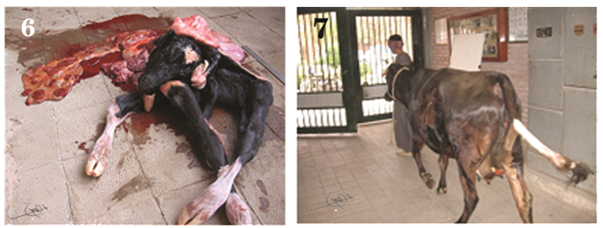
 I ran my left arm into the vagina. I ran into a shoulder of the calf lodged into the birth canal. Feeling around, the head is turned back to the right side of the calf. Both front legs are retained. I could feel the hair slipping off the calf while I maneuvered my hand around him while exploring his position.

 When I pulled my arm out, the sleeve was covered with black hair. 

 “Dave, this calf has been dead 5 to 7 days to be losing hair like this,” I said. “This is going to be a mess. I think the best thing for the cow is to do a fetotomy. I always try to do a fetotomy on a dead calf first. I think we see better fertility in the cow following a fetotomy versus a C-section.

 “That sounds good to me,” Dave said. “What do you need from me?”

 “Aw, actually, you are going to have to do a lot of the real work,” I said. “You are going to have to do all the sawing. I will have to position the wire saw and hold the fetatome in position while you do the work.”

 With a fetatome, I could make right angle cuts on the fetus. My first cut would be to remove the head and neck. That should allow me room to bring the front legs into the birth canal. Then t will depend on how much air has accumulated in the abdomen of the calf. 

 Passing a wire around the neck of the calf proves nearly impossible. I finally have to strip down to my waist and go in with a bare arm to drop an OB chain over the top of the neck. 

 “Dave, I need something to stand on,” I said. “This big old cow is a long reach for me.”


Dave brings a big block of wood, an oak round, for me to stand on. Standing higher, I reach as deep as I can, my shoulder is in the vulva now. Finally, I grab the chain on the underside of the neck.

 Tying the OB wire saw to the chain, I can pull the wire around the calf’s neck. Then I thread the wire through the two barrels of the fetatome. This fetatome sort of looks like a cross between a double-barrel shotgun and a trombone. 

 With everything in position, I give Dave a brief lesson on how to run the saw handles. He is a strong young man, this won’t take long.

 “The only thing I want you to remember is my hand is holding the end of the fetatome in position,” I said. “If you hear me holler, you stop. That saw will take a finger off in a single pull.”

 Severing the neck takes less than a minute. I quickly set the fetatome aside and run my arm back in to try to grab the head. The head has slipped into the depths of the uterus.

 I can reach the front legs, but I had to stand on the block of wood to accomplish that feat. With the aid of a little J-Lube, I can pull the calf with little difficulty. 

 Now the only thing is to get the head. Reaching as far as I can into the uterus, I can only just touch the head. I try again and again. There must be another way.

 “When I was in school, the thing that was always stressed was time,” I explained to Dave, as much for my benefit as his. “If you haven’t accomplished what you are trying to do in 20 minutes, you better be doing something else.”

 “So, what else is there at this point?” Dave asked. “Are you going to do a C-section for the head?”

 “That would be like doing a C-section for the last puppy after spending half the night to deliver the first 10 pups,” I said. “I have been there, done that. If worse comes to worst, we might have to do that. But first, we are going to use some tincture of time. I will put a package of tetracycline powder in this uterus and load her up on some antibiotics. I will recheck her in the morning. Hopefully, this uterus will shrink up enough that I can get ahold of the head and pull it out.”

 “You think she will be okay?” Dave asked.

 “I think so,” I said. “The cow is a funny beast, though. This calf has been dead in there for a week, and she is looking pretty good. Then I come and dig around in there, and it knocks a lot of bugs off into her bloodstream. We have to load her up on antibiotics. Otherwise, she will be in a problem in the morning. The biggest risk with this plan is if the uterus closes up too much, and we can’t get the head out. Then it will be like that last puppy.”

 With the cow taken care of, I started washing up. I exhausted my water supply in the truck, and my arm still smelled.

 “Maybe you should come in the house and wash again,” Dave suggested.

 I was quick to take him up on that. I scrubbed and scrubbed on my arm before I felt comfortable putting my shirt back on.

 The next morning, the view from Dave’s place was eerie, Sweet Home was covered with a dense layer fog. Standing beside the barn and looking out over where you knew the town was, and it looked like you were looking out the window a jetliner at 20,000 feet: nothing but a layer of clouds.

 The cow was in the chute, and it was an easy trip. I scrubbed up the old cow and ran an arm in, and there was the head. She probably would have delivered it if I had given her a little more time. Removing it was no problem. I put some more antibiotics into the uterus, and the cow was good to go.

 In most cases, that would be the end of the story. But when I stepped into the shower on Saturday morning, I noticed that I had little pustules at every hair shaft on my left arm. Had I lived by myself, I would have taken antibiotics off the shelf at the clinic. But Sandy would not hear of that, so it’s to the doctor of me.

 On Saturday morning, I have a little trouble convincing Dr. T that I should be looked at today rather than Monday. I think he relented more out of professional courtesy than real concern for my arm.

 Dr. T looked at my left arm carefully. The pustules ran almost to my shoulder. They were small pustules, and there was no real discomfort.

 “If you want my opinion,” I said. I always gave the MDs my opinion. “I think I just need some antibiotics and a few good scrubs.”

 “I can’t figure this out,” Dr. T says. “This arm looks just like someone who was in a real dirty hot tub. But the rest of you looks fine.”

 “Vagina, Doctor, this arm was in a real dirty vagina,” I said.

 Dr. T shook his head, “What you guys go through, I will never understand.”

Photo Credit: Photo by Harry Cunningham @harry.digital from Pexels

Banana Chip Therapy

D. E. Larsen, DVM

Rex watched from his bed on the porch as the little red pickup pulled into the driveway. This was Jimmy’s truck now. Rex could remember when his owner, Pete, owned that truck, and they would drive up the lake to fish and play in the water. 

Jimmy stepped out of the truck and pulled a bag out with him. Pete met him at the door.

“Jimmy, it is a surprise to see you here,” Pete said as he offered his rough hand for a shake. “Your mother said you were through school, but she didn’t say anything about you coming by here.”

“I have almost a week before I have to go to work,” Jimmy said. “I thought I would stay with you for a few days as I look for a place to stay.”

“Your mother said you would be working here,” Pete said. “You don’t have to look very far for a place to stay. You are welcome here as long as you want to stay. It is just me and old Rex there, and things get sort of slow around here anymore since your Grandmother passed.”

“That sounds great,” Jimmy said. “Maybe I can find some things to help you around the place. And I would like to take you and Rex up to the lake to fish a little like we did years ago.”

“Me and old Rex aren’t as spry as we were years ago,” Pete said. “He only gets off the porch to do his business. I doubt if you can get him to go fishing.”

“Well, we will just have to see about that,” Jimmy said. “If I am going to stay here a while, I better check your refrigerator and stuff. I don’t want to end up eating dry cereal for breakfast.”

After a trip to Thriftway, Jimmy starting unpacking the groceries into the near-empty refrigerator and pantry.

“It will take us a month to eat all this stuff,” Pete said. “And what did you buy this bag of banana chips for?”

“Grandpa, if you remember, Rex used to love those things,” Jimmy said. “If he is going to just lay on the porch and die, the least I can do is give him a little joy in his last days.”

The next morning, Jimmy was up early, and Pete watched him grab a small handful of the banana chips and head out the door.

“I am going for my morning walk,” Jimmy said over his shoulder as he went out the door.

Jimmy went over and put the banana chips in Rex’s food dish and patted him on the head. “We are going get you back to enjoying life,” he said.

Rex watched Jimmy skip off the porch and walk out to the sidewalk. He licked up the banana chips. He remembered how good they were, but it had been years since he had any.

The next morning, Pete watched Jimmy repeat the event of yesterday. Only when he opened the door, Rex was up and waiting at the door. Rex took the banana chips from Jimmy’s hand and wagged his tail.

He followed Jimmy to the edge of the porch and wagged his tail as Jimmy skipped out to the sidewalk.

“I’ll be darned,” Pete said to himself.

The next morning, Jimmy took a larger handful of banana chips. Rex was at the door, and Jimmy gave him half the chips. This morning when Jimmy started out to the sidewalk, Rex followed along with tail wagging.

Jimmy walked with Rex at a leisurely pace, handing Rex a few chips at every street corner. By the time they got back to the house, Rex had a bounce to his step. Pete watched them come through the gate, and Jimmy sat on the porch with Rex and talked about going fishing.

When Jimmy came through the door, Pete said, “I haven’t that dog so happy in a long time, probably since your Grandmother died.”

“Grandpa, you two have just been sitting around here growing old,” Jimmy said. “Maybe you start eating some of those banana chips. You can see how they have helped Rex.”

“I have noticed, I ate a few this morning when you were walking Rex.”

This went on for the next few days. With Jimmy around, Rex was almost back to his old self. He was coming into the house in the evening, laying at Jimmy’s feet. Jimmy would talk with him and pet his head. Rex even rolled over to have Jimmy scratch his belly.

“I have been thinking,” Pete said. “Maybe we should take that trip up to the lake and do a little fishing. I am feeling a lot better since I have been eating those banana chips. I don’t know what it is that is in them, but they sure make me feel a lot better.”

“So, that is a plan,” Jimmy said. “We will go in the morning. Are you ready to go fishing, Rex?”

Rex stood up and wagged his tail with the word ‘go,’ or maybe it was ‘fishing.’ In either case, he was ready.

The fishing trip was not quite like it was in the old days. But Pete and Rex had a good time. Rex swam a little, and both Pete and Jimmy caught a few fish. They got home in the middle of the afternoon, and Jimmy cooked fresh trout for dinner. By now, Rex was sitting at attention beside Jimmy at the dinner table. Jimmy kept a small handful of banana chips at the corner of the table.

“I am so glad that you came to stay with Rex and me,” Pete said. “And finding those banana chips was the best thing that ever happened for me, and Rex too, for that matter.”

The next week, Pete walks into the barbershop for his weekly haircut. Tuesday morning was senior day at Bill’s Barber Shop, and the usual crowd filled the chairs, waiting for their turn. They were not worried about the wait. For most of them, this was their social time. The new spring in Pete’s step was not missed by the crew as Pete came through the door and found a place for his hat on the rack before taking a chair.

“My, don’t you look like a new man this morning,” Bill, the barber, said.

“My Grandson, Jimmy, is living with me for a few weeks or months,” said Pete. “He started feeding my old dog and me some banana chips from Thriftway. I feel like a new man and old Rex is acting like a puppy.”

“You don’t say, do those really work?” Walter said. “I could sure use a boost. Maybe I will have to stop by and pick some up.”

“My wife has been complaining about my activity level for months,” George said. “I might give those a try also.”

“You guys make me laugh,” Bob said. “Banana chips are not going to do a thing for you.”

“Look at Pete, last week we didn’t think he was going to live through the winter,” Walter said. “This morning, he comes bouncing in here like he just found a new girlfriend.”

“Not a new girlfriend, but we had one hell of a fishing trip up to the lake,” Pete said. “And I even had a dream about little gal down the street.”

Bill smiled to himself as he worked. “Next week is going to be interesting,” he said to himself.

When Jimmy went to Thriftway for more banana chips a couple of days later, the bin was close to empty. He thought that was a little odd, but he filled his bag as full as possible. He didn’t want to run out.

“You guys must have had a run on banana chips?” Jimmy said to the checkout lady. “Last week, that bin was full, and today it is close to empty.”

“I don’t know what is going on,” the lady said. “But I think we have had almost every old man in town buying those things. They must be on to something.”

That night at the dinner table, Jimmy remarked, “I couldn’t believe it. Thriftway was just about sold out of banana chips this afternoon.”

“Doesn’t surprise me,” Pete said. “I told the crew down at the barbershop about how much better Bubba and I are feeling after eating those things. I would guess everybody plus a few were down there buying a supply.”

“That is interesting,” Jimmy said, not wanting to delve into the subject.

The next week at the barbershop, the talk was fast and furious. Almost everybody was feeling so much better they couldn’t get over it. Everyone that is, except for Bob.

“I have to admit,” Bob said. “I went to Safeway with the wife, and I bought a bag of banana chips. I don’t think they did a thing for me.”

“Well, let me tell you, my wife has been really impressed with how they have helped me,” George said. “I haven’t even had to take one of those little blue pills this last week. Your mistake, Bob, was buying the banana chips at Safeway. The ones at Thriftway are the ones that really work.”

“I feel like a million bucks,” Walter said. “And I told the guys that I play poker with on Wednesday evening up at the Elks. A lot of those guys are trying them also. I think they work.”

A couple of weeks later,  I got around to Bill’s Barber Shop for a quick hair cut. I took a few minutes out of my clinic time to rush over to the barber chair.

“Doc, I have wanted to talk with you for some time now,” Bill said. “Have you heard all the buzz about these banana chips?”

“I had an old guy in the clinic the other day asking me if I thought banana chips had any magic in them,” I said. “I wondered where that question came from.”

“Will, Pete’s Grandson, came to live him,” Bill said. “And Jimmy started feeding Pete’s old dog Bubba these banana chips that you can buy down at Thriftway. Anyway, Pete sees this old dog start acting like a puppy, so Pete starts eating these banana chips. Then he comes in here acting like he is 40 years old and credits it all the banana chips. Now half the old men in town are scarfing down these banana chips. Thriftway can hardly keep them in stock. Half of them have thrown out their blue pills. I think it is just crazy. What do you think, Doc?”

“Sounds to me like old Bubba needed some attention,” I said. “Old dog lays on the porch, and nobody pays any attention to him, then all of a sudden, someone comes along and gives him a treat every day, pats him on the head, and says come along. The old dog figures, maybe he isn’t going to die after all.”

“Okay, that makes sense,” Bill said. “But what about all these old men? Something must be going on?”

“Old dogs and old men, not much different,” I said. “Pete had pretty much given up since Alice died. Having the grandson around probably did the trick. All the other old guys, it is just the placebo effect. They think it’s going to work, and it does for a lot of them. The placebo effect is potent. That is why they have to do double-blind studies to make certain drugs work. Even the doctor will think something is working if he wants it to work. All these old guys have just been waiting for that spark to show up again.”

Photo Credit: Photo by Jean Alves from Pexels

The Shadow Knows

D.E. Larsen, DVM

I first met Dr. Al on a hillside up 50th Ave on the East side of Sweet Home. I was in the middle of doing a C-Section on a 15-month-old heifer who was stretched out on the ground. Dr. Al was visiting at a neighbor’s house and came out to watch. I think he was surprised at the surgery in the middle of a pasture.

“How does a little heifer like this get pregnant in the first place?” Al asked.

“If they cycle and are not separated from the bulls, the system is made to work,” I answered. “I have done this on heifers under 14 months of age.”

About now, I had entered the abdomen through an incision on the left flank. The inside of the abdomen of a cow is always sort of a mystery to MDs. Al looked on with interest as I pushed the rumen aside a brought the uterus up the incision.

“That looks pretty simple,” He said.

“All surgery is pretty simple as long as everything goes well,” I replied.

I incised the uterus and had both hind feet sticking out of the incision. I secured the feet with an OB strap and handed the strap to the owner standing behind me.

“Pull straight up and then let him down to the ground easily,” I instructed as I guided the calf out through the uterine incision.

The calf hit the ground, raised his head, and shook fluid out of his nose.

“He is going to be up before mom,” I said.

“Now, how do you close all of that?” Al asked.

“It won’t take long,” I said. “I use a single layer on the uterus with number 2 Dexon in a pattern developed by Utrecht University in the Netherlands. It closes the incision securely and does not leave any of the suture material exposed to the abdomen. That way, there is little chance for adhesions to form and less loss in future fertility. The rest is just routine abdominal closure.”

“You won’t have any infection problems?” Al asked. “I mean, you’re out here in the pasture, with only gloves on, instrument pack opened on the ground. In people, we would have a mess.”

“I never, knock on wood, have an incision infection on a C-Section,” I said. “Maybe your hospitals are the problem.”

“Ha, that might be,” Al said. “Thanks for letting me watch. It was fascinating.”

Following that meeting, Al’s family became regular clients. They had a Great Dane. Al always enjoyed sharing similarities in our professions and the differences. I think he envied the lack of regulatory restrictions I enjoyed. He often spoke of early days in practice in Colorado and how he enjoyed making house calls and having close relationships with his patients.

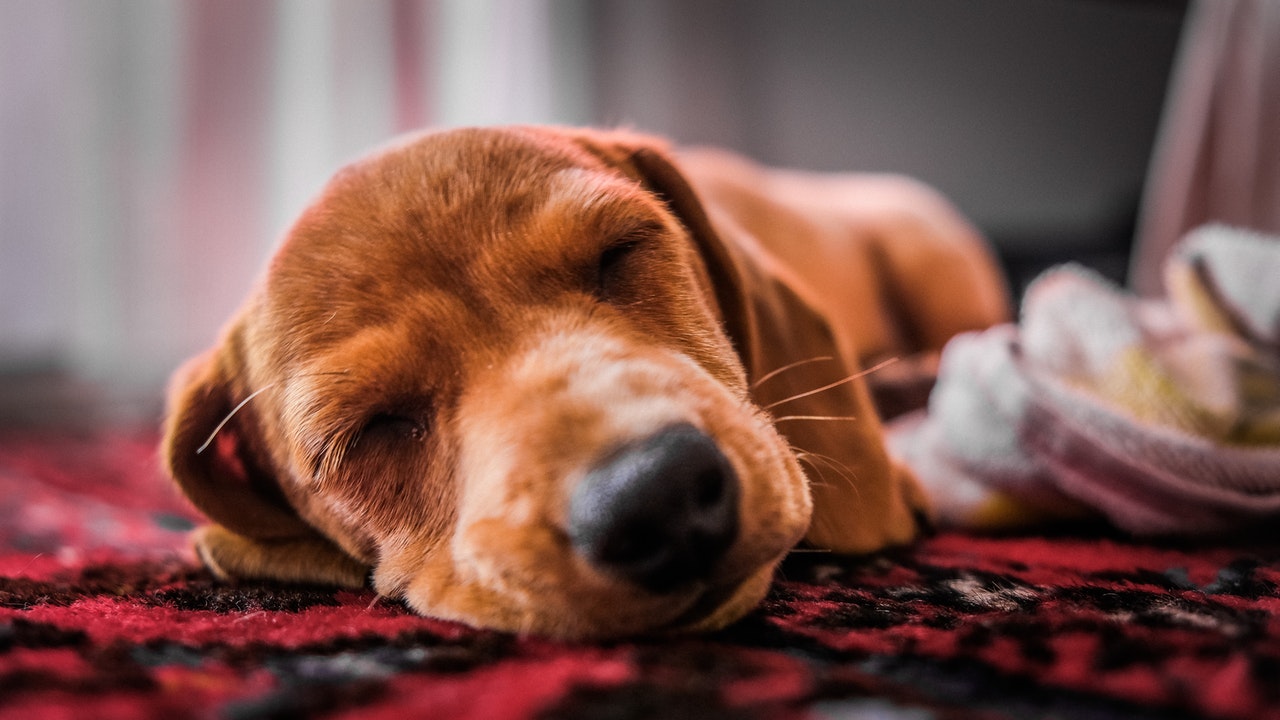
Great Danes never seem to live very long, and it wasn’t very long until they were in with their Dane with an enlarged breast. It had developed very rapidly, and chest x-rays showed tumors in the lungs and in the vertebra already. There was nothing we could do at the time except to provide comfort care for a short time.

It was not long after the loss of their Dane that Al’s wife Jane and a daughter brought in a new German Shepherd pup. They were going to try a new breed. German Shepherds were a breed that I was always cautious about. There are many super dogs, but there seemed to be an increasing number of screwballs.

“We have always had Great Danes, but they never seem to live very long,” Jane said. “A friend has a German Shepherd that seems to be a great dog. So anyway, here we are.”

“He is a pretty good looking pup and well behaved already,” I said. “What are you going to call him?”

“We haven’t made the decision just yet,” Jane said. “Al wants to call him Rudy, the girls and I are thinking Shadow is a better name.”

“We will write Shadow on the record,” I said. “That is how it usually works out.”

I lifted Shadow up on the exam table. For a young German Shepherd, he looked good. Both ears are erect, teeth are good, and he is responsive to the people around him. Ruth hands Shadow a tennis ball to chew on as I start with his exam.

I start at the nose and work toward the tail.

“Everything looks good,” I tell Jane as I put my stethoscope to my ears.

The lung sounds are healthy, and the heart sounds strong. I almost put my stethoscope down and then remembered to check the left anterior thorax, which I always try to remember on young pups.

My expression immediately changes. Jane, who worked alongside Al for many of his early practice years, instantly recognizes the concern on my face.

“What is it?” she asks.

“There is a machinery murmur in the left anterior thorax,” I said. “That almost always means there is a PDA, a patent ductus arteriosus. That is a vessel between the aorta and the pulmonary artery that normally closes at birth. In Shadow’s case, it did not close.”

“Does it need to be fixed, or can he live with it?” Jane asked.

“He can live with it for a short time, but when he starts his rapid growth phase around 4 – 5 months, it will become life-threatening,” I explain. “Virtually all of these dogs will die before they reach adult size. Some small breeds might live longer, but not the large breeds.”

“How do we fix it?” Jane asked.

“Right now, in the dog, the fix is a surgical one,” I said. “They go into the chest and ligate the vessel.”

“You say they, does that mean you don’t do that surgery?” Jane asked.

“I have never done one, but I could probably do it,” I said. “We do have a cardiologist in Portland. He would be a better choice.”

“I don’t think Al is going to be up to sending a new puppy to a specialist for surgery,” Jane said.

“Will, we don’t have to make the decision right now,” I said. “You have Al listen to this heart and give me a call this evening. We can go from there.”

It was after dinner when Al called.

“I’m not sure I hear what you heard today,” he said.

“Put your stethoscope on the left side of the chest and move it way to the front of the chest, almost under his elbow,” I instructed.

There was a pause on the phone.

“Dang, do you think that is a PDA?” Al asked.

“It is a PDA or a large defect in the ventricular septum,” I said. “In veterinary medicine at this time, a PDA can be fixed. A septal defect cannot.”

“We are not going to Portland with this pup,” Al said with a finality in his voice. “Can you do this surgery?”

“I can do the thoracotomy,” I said. “But ligating the PDA, I have never done, but it should be something that I can do. The important thing for you to remember, this is a veterinary clinic. I am the only veterinarian. If I make a mistake, if I were to tear the ductus or puncture a vessel, the ball game is over.”

“I have watched you in surgery, I don’t think you will have any problems,” Al said. “You go ahead and get set up and schedule it, we will have him there.”

Jane had Shadow in the clinic at 8:00 AM sharp on his surgery day. She was obviously worried and understood the gravity of the undertaking. She patted Shadow on the head as the girls took him into the exam room, then she shook my hand as she wiped a tear from her eye.

“We are hoping for the best,” she said.

“I think we can do this with little problem, I will call you when he is recovered,” I said.

We completed Shadow’s exam and had him under anesthesia in short order. We clipped the entire left side of his chest, laid him on the surgery table on his right side with a towel roll under his chest to facilitate spreading his ribs.

When he was prepped and draped, I made a curved incision between his 4th and 5th ribs. I continued this incision down to his intercostal muscles. Then I carefully divided these muscles and opened the chest.

My surgical philosophy was to work fast. I had sure hands and utter self-confidence, in the environment of a veterinary clinic surgery room, the longer an incision was open, the better the chance of having an infection.

We had Shadow hooked up to a ventilator with his chest open. We paused the ventilator and moved his anterior lung lobe out of the way and packed it off with a moist lap sponge. I could put my finger on the PDA, the mechanical murmur shook the whole heart. I isolated the vagus nerve and pulled it out of the way with a loop of umbilical tape.

Now I was at the most critical point. I had to bluntly dissect a pathway around the PDA so I could place the ligatures. This dissection, especially on the deep side of the short vessel, could result in a catastrophic tear in the vessel that would most likely lead to a fatal hemorrhage.

I took a deep breath and began the dissection. My inexperience made me a little more aggressive with the dissection than a surgeon who had seen a vessel rupture. It only took me a couple of minutes, and I could grasp the middle of a length of 0 silk and pull it through the open pathway around the vessel. 

I divided the silk into two ligatures.  Then I slowly tightened the ligature closest to the aorta.  I moved to the ligature on the pulmonary artery side. I slowly tightened this ligature. Then I took another deep breath.

I returned the vagus nerve to normal position and placed a couple of sutures to close the soft tissues in the area. I removed the packing from the lung lobe and allowed the ventilator to expand this lung lobe. I placed a ten french chest tube with a 3-way stopcock on the outside of the chest. 

I did a nerve block on the intercostal nerves to help control pain and closed the ribs with 4 sutures placed around the 4th and 5th ribs. After insuring an airtight closure of the chest wall, the remaining closure was routine.

After putting a light wrap on his chest, we moved Shadow to a kennel to recover, and I began to relax. Looking at the clock, surgery was less than 50 minutes. I listened to Shadow’s chest. Nothing but good heart sounds. This guy should have a long and healthy life.

“Surgery went well, we were done in less than an hour,” I told Jane.

“Oh, thank you!” she said. “I was so worried.”

“We will keep him overnight, just to make sure everything is okay. But if I can pull his chest tube in the morning, he can go home.”

Shadow went home in the morning. After his hair grew back, nobody ever knew he had had a problem. 

Some years following Shadow’s surgery, one of Al’s daughters called. She had a friend in Bend, Oregon, who had a dog with a PDA. Her friend was being referred to Portland for surgery and could not afford the fee. They were hoping I would do the surgery.

I declined. Working with an established client, who I had a good relationship, I could feel confident they understood the risks. It would be far different from someone I did not know. They would likely have a whole different set of expectations.

The last time I saw Shadow, it was almost twelve years to the day following the surgery. Like a lot of his breed, old age was not kind to his body. He was crippled with arthritis in his back and hips. His life had become a struggle. You never heard him complain, but his efforts to get up and down had become unbearable for Jane. Al had died a couple years before, and the girls had moved on with their lives.  

Shadow’s last trip to the clinic with Jane saw tears in her eyes as they were on the first trip. The clinic where we had years before given him an opportunity for a full life was where we gave him a silent and humane end to that life. Putting Shadow to sleep was one of the most challenging things I have had to do. May he rest in peace.

Photo Credit:https://www.pexels.com/@carl-adrian-barcelo-1978030