
D. E. Larsen, DVM
“Doc, I need you to come out and document some sheep who were chewed up by coyotes last night,” Carl said.
“How many are dead?” I asked.
“I have a half dozen that are chewed up pretty bad. I haven’t found any dead ones at this point. I think they are all accounted for, but I haven’t double-checked them.”
“I can get out there this afternoon, Carl, but it doesn’t sound like a coyote attack to me,” I said.
“The sheriff said the I can get some indemnity from the county if you can verify that it was coyotes,” Carl said. “A few of these old gals are torn up pretty bad. I’m not sure they will live through the healing process.”
“I’ll be out and get a look at things after lunch,” I said. “No promises on the indemnity, but we will see. I can give you some help with the wounds if you would like.”
“They’re just sheep, Doc,” Carl said. “I can’t afford to be spending a lot of money on them.”
“That’s fine. I’ll just give you pointers on general wound care. They often heal surprisingly well. The most important thing you can do is clip the wool away from the wounds’ edges. That helps to keep them clean and allows the topical medication to do its job better.”
“That’s easy enough. I’ll have Dot get started on that chore right away. She has a good little clipper that should do the job.”
***
I could see Dot and their daughter struggling with an old ewe when I pulled up to shed that Carl used for a barn. Carl was not known to be a bundle of energy. If it wasn’t for his wife and daughters, I doubt anything would get done around the place.
Carl came out of the shed when I stepped out of the truck. I think he was trying to look like he had been working.
“This ewe, they’re working on now is probably the worse one,” Carl said. “We have the other pinned up in the shed.”
I stepped through the gate and helped Beth, Carl’s oldest daughter, hold the ewe’s hind leg for Dot. There was a gaping wound on the back of the ewe’s thigh. Some muscle tissue was missing, and the injury was several inches long.
“You’re doing a good job, Dot,” I said. “Once you get that wool away from the wound, you want to wash it well and then treat it with a topical light Furacin or Betadine.”
“Carl likes to use Gentian Violet,” Dot said.
“That’s better than nothing,” I said. “But it causes one hell of a mess, and you end up with purple hands every time you treat her. You’re better off with a good antibacterial ointment or spray.”
“Do you think we are wasting our time with this one,” Beth asked.
“You’ll be surprised. This will heal up fine. You will probably want to give these gals some antibiotics for a few days also.”
“I don’t know what we are going to do to control these damn coyotes,” Dot said.
“I better get a look at the others,” I said. “If they look like this one, I’m not sure you have a coyote problem.”
We stepped into the small shed. Carl had a half dozen ewes pinned in the corner with a few pallets, held together with baling twine.
“No lambs involved?” I asked.
“No, just this group of ewes.”
“Carl, I don’t think this is from coyotes. Coyotes kill for a living. They don’t spend a lot of energy chewing on the hind legs of old ewes. They go for the throat. And most of the time, they get a kill. They know that lambs are easier for them to kill, but they will take on a ewe every once in a while.”
“If it wasn’t coyotes, what was it?” Beth asked.
“It was probably a group of dogs,” I said. “Probably your neighbor’s dogs, but they will travel a good distance at times.”
“That means I don’t get any indemnity for a coyote attack?” Carl said.
“You might get some help from dog control,” I said. “It just comes from a different pocket. They might give you some help finding the dogs, but if you don’t catch them in the act, your probably out of luck.”
“What can a guy do, then?” Carl asked.
“Ed. you’re old neighbor down the road apiece, he says he just shoots them. He says he used to try to talk with the owners but never had any luck with that, so he just shoots them and dumps them on the back of his place.”
“Old Ed can’t talk civil to anybody,” Dot said.
“Dog control will take care of the problem if you have some proof of which dogs are involved,” I said. “But it has become a hot button issue these days. Some folks buy a llama or a sheepdog to run with the flock. Both will do a good job of protecting them. Other than that, putting them in the barn every night is probably best, but you’re not set up for that sort of a thing.”
“I should probably at least talk with dog control,” Carl said. “They might be having problems in the area.”
“Yes, that is often the case. You get a couple of dogs running around at night, often from different households, just looking to get into trouble. I will write you up a sheet, so you have what you need. I could probably call dog control and give them a heads up so they can be looking for your call.”
It turned out that Ed had been having problems with a couple of dogs in his sheep also, and dog control was close to resolving that problem. The dogs’ owners were cooperative, and with Carl’s problem added to the list, they surrendered the dogs to dog control.
Carl’s ewes healed well, and with the dog issue taken care of, he could go back to relaxing on the porch.
Photo by Paulina et Jérôme on Unsplash.
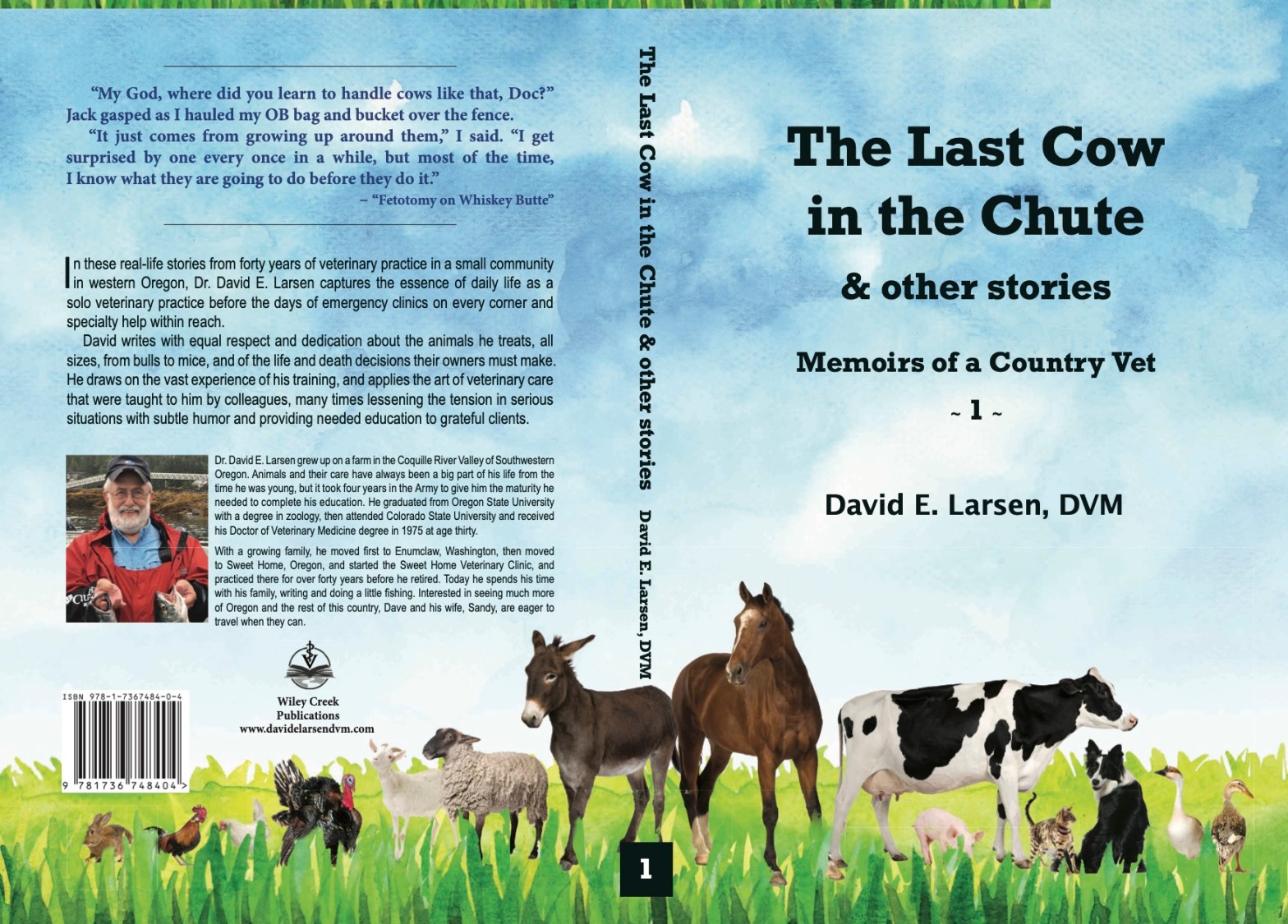

 Memoirs of a Country Vet