Rosie, From the Archives

D. E. Larsen, DVM

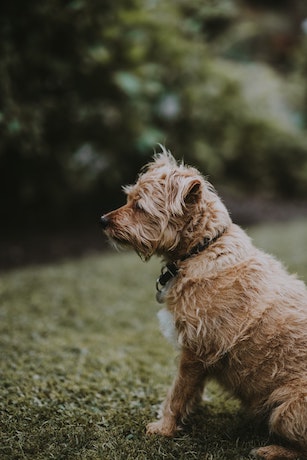
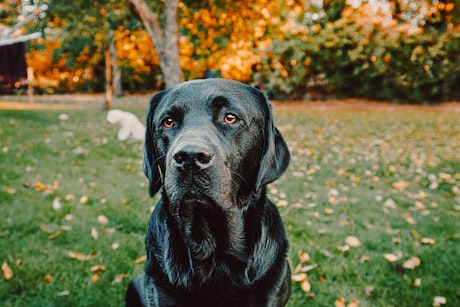
Rosie was a quiet Chocolate Lab who lived with her family up the river from Cascadia. Their driveway was nearly a mile long and joined the highway just below Mountain House. Tall Douglas Fir trees lined the road in this area. The river ran along the south side of the highway. The timber provided shade from the summer sun and the bubbling river provided additional cooling of the area. Even on the hottest day of summer, the upper reaches of the Santiam River provided a gentle breeze and mild temperatures.

The Mountain House was the last semblance of civilization for the next fifty miles. The road started a steep climb to the Santiam Pass in the Cascade Mountains just past the Mountain House. The history of Mountain House goes back to the early years of Linn County. It was a hotel to begin with, serving clients who visited the soda springs in the area. Now it was a backcountry inn and general store. There were no phone lines, so even in this last vintage of civilization, you were isolated.

The road had its share of curves, so any travelers were moving slow. People who took this route over the mountains were not in a hurry. They would turn off their air conditioning and open the windows so they could enjoy the fresh mountain air, hear the rushing water of the river, and hope to see some deer, elk, or any of the numerous birds in the area. Maybe even be lucky enough to glimpse a Big Foot. This area was as wild as any area in the state.

Rosie’s family was small. Her owners were an older couple who had lived in their little house on the banks of Soda Fork for many years. George and Alice Dunn relished the quiet and isolation. They seldom came to town, preferring to get what supplies they needed from the Mountain House. If they needed something special, they order it, and the Mountain House would pick it up for them when they went to town for supplies. Rosie shared this family with an old dog, Nick. Nick was an old Black Lab, very arthritic, and he didn’t often get off the porch. He provided Rosie company, and while she licked his ears, she could share her adventures of the last squirrel hunt or the fishing trip in the deep holes of Soda Fork Canyon. Then they would curl up and sleep on the porch. Rosie keeping one eye open for the raccoons who would come by in the night. She hated those raccoons.

Life on the banks of Soda Fork was not without its challenges. A garden near the house was impossible because of the shade from the timber. They would grow their vegetables on some of the clear-cuts located along road higher up the creek. They had learned to carry water to these gardens from the Marijuana growers in the Cascadia area. They used an old waterbed mattress in the back of their pickup truck. They would attach a hose to the outlet of the waterbed and water the garden as needed.

Their meat supply came from the game harvested from the area. They took only the meat they needed, and they used every part of the animals collected. Be it a deer, an elk, or a couple of squirrels, they only took what they needed, and they gave thanks every time. The short canyon up Soda Fork provided some excellent fishing, especially in the Spring and early Summer. The access to the canyon was too difficult for the fishermen from town. Hunting and fishing seasons had little meaning for them. They did not hunt or fish for sport but for subsistence. Game wardens only ventured into this area during hunting season when there were enough other people to make it safe for them to be off the main road.

We did not see the Dunns often. They would bring the dogs in for their Rabies vaccination every 3 years. They felt they were isolated enough that they did not have to worry about the other vaccines.

“Your isolation might make those other vaccinations more important,” I explained on one of their visits. “Dogs in town get a vaccination as a puppy, and then they see many other dogs in their lifetime. They are likely exposed naturally to most of the important viruses. Their immunity is likely to last for several years. We recommend boosters just to be sure because a disease like canine distemper is often fatal, and parvovirus can be extremely expensive to treat. Your dogs seldom see another dog, their immunity probably weakens much sooner than the town dogs who are likely to come into contact with those viruses naturally. Something to think about when considering their vaccinations.”

During these routine visits, Rosie enjoyed the clinic and the treat jar. Nick, on the other hand, hated the trip to town and shook the entire time in the clinic. He would take a treat, only to drop it on the floor for Rosie. He would not be bought.

Nick continued to age, and his arthritis became so severe that he could hardly get around. There was not much that we had to offer, medication wise, at that time. That last visit came when Nick could no longer get off the porch to do his business.

“Doc, we feel terrible about this, we wanted to wake up some morning and find that he had passed away in his sleep,” George said. “Are we doing the right thing? We don’t want to do this if you think we should wait.”

“It is always a hard decision, but once you make it, you don’t want to put yourselves and Nick through the struggle again. He isn’t going to get any better, and life is going to be miserable for him from here on out. It is better to make this decision one day too soon and a day too late.”

Alice signed the release. “I am going to wait outside George. You stay with him. I wish we had brought Rosie,” she said as she slipped out the door, wiping tears from her eyes.

“What happens now, Doc?” George asked.

“I’m a farm boy, George. Life comes, and life goes. I believe that when the decision is made, and we are all on board, we get it done. No ceremony, get it done, and then we all get on with grieving.”

“Okay, Doc, I am ready.”

I dropped to my knees, Nick was laying on the floor. He hated the exam table. I lifted his head by his chin. His eyes were half-closed, cloudy mucus filled the corners of his eye. There was no longer any black in his muzzle, and gray hair streaked the rest of his coat. I stroked his head and allowed him to lower it back to his paws. I placed a rubber band tourniquet above his elbow and felt to make sure he had a favorable vein. This needed to be a quick procedure. Nick hated this place, and I didn’t want to put him through any more than necessary.

I took his left paw in my left hand and slipped the needle into his vein in one movement. I drew back on the syringe just a little, making sure I was in the vessel, released the tourniquet, and started the injection of a massive dose of pentobarbital. Nick was gone before the dose was fully delivered. I checked his heart and pulse, nothing there. No reflex in his eyes.

I stood and looked at George. “That all?” he asked.

“That’s all, he is gone. Do you want me to take care of him?”

“Oh no, we have his place under his big cedar tree that used to be his favorite place to sleep. That was a long time ago.” George said, wiping a single tear from his cheek. “Can you help me get into the back of the pickup?”

We loaded Nick and said our good-byes. They were having some difficulty talking right now. They needed to get home and finish this terrible day. Hopefully, Rosie will handle the loss, okay.

It was several months later, during one of our early October rainstorms, when a young couple came through the door with a very wet chocolate lab.  

“We found her alongside the road up by Mountain House,” the young lady said. 

The dog went right to the treat jar and sat down, staring at the jar, as if to make it open.

Sandy came around the counter to get a better look, opened the jar and handedk the wet dog a treat. The treat instantly disappeared.

“She acts like she knows the place,” the young man said.

Sandy read the rabies tag hanging from the collar. 

“It is our tag, so she has been here before,” Sandy said as she looked up the number.

“Oh my!” Sandy exclaimed, “This is Rosie.” 

Rosie stood up and wagged her tail at the mention of her name.

“She wasn’t lost, she lives about a mile up the creek from where you picked her up,” Sandy explained. “But that is not a problem, we will make sure she gets home.”

“It is hunting season, and I am sure that Doc will be more than happy to take you home tonight when he is done,” Sandy explained to Rosie as she handed her another treat and escorted her back to a kennel. 

“If you have time, you need to dry Rosie off a bit,” Sandy mentioned to Ruth as she went back to the front desk.

That evening I threw my rifle in the truck and loaded Rosie into the front seat. The drive up the river was a pleasant one. The rain had mostly changed to a light mist. The wind was blowing, and it was brisk along the river. Yellow and Orange leaves were flying off the trees, tumbling in the air and floating down the river. Rosie sat up, looking at the road as we sped along. She seemed to know exactly where we were going.

The Dunns were on the porch when I pulled into their driveway. Rosie was standing and wagging her tail. She almost knocked me over as she scrambled to get past me as I was getting out of the truck.

“Oh Doc, we have been sick all afternoon looking for Rosie. We thought we had lost her for sure. How did you get her?” Alice asked.

“A couple of kids picked her up down at the highway. They thought she was lost. They said they just opened the door and she crawled into the car. They brought her to the clinic early this afternoon.”

“I wish we had a phone, it is terrible that you had to bring her all this way. Can we pay you anything for your trouble?” Alice asked.

“No, I am happy to be able to do it. Besides, I thought I would run up the creek for a few minutes and see if I can get that old buck that George has been feeding all summer.”

“That would be great, Doc. Let me grab a coat and come with you. I just happen to know where a little forked horn sleeps,” George said.

A couple of miles up the road, we came to giant Douglas Fir tree that had been saved for public view. 

“Slow down here and pull off in that pull out up ahead,” George said, speaking in a hushed voice as if the deer could hear us from inside the truck. “Close your door real quiet like, this guy is going to be in that little clearing between the tree and the creek.”

I walked around the truck, George placed his hand on my shoulder and pointed to trail through the brush. We made our way toward the creek, not saying a word, but I could hear George’s breathing behind me. As we approached the clearing, George grabbed my shoulder to bring me to a stop. He pointed over my right shoulder to the far side of the clearing. There was the little forked horn, unaware of our presence, browsing on a low bush.

Bang! One shot through the heart, the deer lurched forward, maybe a few steps, and fell forward in a pile.

“Good shot, clean kill, just like it should be,” George said in a normal voice now. “You bring the truck around to the road toward the creek, and I will get this guy out to the road.”

I pulled the truck around toward the bridge on the side road. George had already had the buck out to the road. It didn’t take very long to take care of him. 

“I never take the heart and liver, Sandy won’t cook them,” I told George.

“Oh, we like those, and I’ll take the kidneys also.”

“I will give you half of this deer, George. I would have never found him,” I said.

“All the hunters just go a barreling past this little place, but I don’t need half, just a hind leg will do us fine. We have plenty of meat most of the time.”

I had a large plastic bag that I used for the heart, liver, and kidneys. We skinned out a hind leg, carefully severed the meat from the pelvic bones, and disarticulated the hip. I removed the lower leg, at the break joint just below the hock, and slipped the whole leg into the bag with the organs.

“You do quite a professional job, Doc. You would be a handy guy to be around hunting camp.”

“I have never had the time for a hunting camp. My hunting is just like this, a stolen hour once in a while. Always feel lucky if I get anything.”

“Doc, if this happens again with Rosie, you don’t have to bring her all the way up here. We will run down to Cascadia and use the phone at the professor’s house. You know, Dr. Hayes. You can also leave a message for us with him.”

“Okay, and we can hang onto her for a couple of days for that matter.”  

“What do you suppose is going on with her, Doc?”

“She was pretty close to Nick, probably just having trouble getting used to his passing. Maybe you guys should get a puppy.”

“No way, we are too old to take on a puppy. Wouldn’t be fair to the pup, might end up being a race with Rosie to see who goes first.

And so it started, it seemed that Rosie came to the clinic every couple of weeks. Her rabies tag was her ticket. She would sit by the road and people of just figure that she was lost. They could not visualize a dog having a home in this area.

Rosie loved to come to the clinic. She would come through the front door and approach the counter with tail wagging. Then she would sit down in front of the treat jar and stare at the jar, mouth open, panting, and saliva draining from the side of her mouth. The people would figure out quickly that they had given her a ride to her favorite place.

“Rosie, what are you doing here again this week?” Sandy would say as she retrieved a treat from the jar.

With the treat in her mouth, she would continue to doors to the kennel room. She knew her routine very well. The couple who brought her through the door stood sort of dumbfounded.

“She obviously knows where she is welcome,” the young lady said. “We found her lost beside the road up by Mountain House. We couldn’t just leave her there to get hit by a car. We stopped and opened the door, and she just climbed in, like she was expecting us.”

“We see Rosie every couple of weeks. She lives up by Mountain House. Her folks have a driveway about a mile long. Rosie gets bored since they lost their older dog, she just goes down and sits by the road. Somebody comes along and picks her up, thinking she is lost or deserted. Most of the time they bring her here, once she was taken to Redmond. Our Rabies tag gets her home every time,” Sandy explained.

This went on for 5 – 6 months. It almost became part of our routine, and we would see the Dunns frequently when they would come to retrieve Rosie. On occasion, the old professor, Doctor Hayes, would be the one to pick up Rosie. And then, suddenly, it all came to an end. The end was one of those things you felt more than something that was on the surface. One day Sandy said, “We haven’t seen Rosie in weeks. I wonder if something has happened to her.”

It was several weeks following that realization when we bumped into the Dunns at Thriftway. Thriftway was not the biggest grocery store in town, but it was the only one that I would use.  

“Hi Doc,” George said as we met at the doorway.

“George, how are things? We have been thinking about you guys at the clinic. We haven’t seen Rosie in a long time. Is everything okay with her?”

“You were right, Doc, about the puppy thing. We didn’t get a puppy, so Rosie sort of took care of things herself. It was sort of funny, you know how she hated the raccoons who came around. Will, an old sow raccoon with a bunch of babies, got hit by a car down on the highway. There were dead raccoons scattered everywhere. Rosie must have heard it, or maybe she was just going down there to catch another ride. Pretty soon, here she came, with a baby raccoon in her mouth. She must have found the only one to survive. Anyway, she adopted the thing. She spends all her time taking care of the little guy.”

“Isn’t that funny,” I said. “I don’t really approve of raccoons as pets, it is illegal for one thing, and there are some health factors, like the raccoon roundworm.”

“It’s no pet, Doc. Rosie takes care of it on the porch. It can come and go as it pleases. It won’t have anything to do with us, except to eat the food we provide. But it sleeps with Rosie, she washes the thing with her tongue every night. I don’t know what will happen with it as it gets older, but right now, Rosie is happy as can be and back to her old self.”

 Tigger’s Pellet

D. E. Larsen, DVM

Ann spent most of the time at the front desk while Ruth and I did an annual exam and vaccinations on Tigger. She returned to the exam room just as we put Tigger back into his kennel.

“How do things look with Tigger?” Ann asked.

“Tigger is doing fine for a twelve-year-old neutered male,” I said. “You know, these guys seldom make to fifteen. But it is pretty hard to find anything wrong with him today. The only problem I can even mention is the pellet I can feel on his upper right thigh. But looking through his record, I have noted that every year for the last five years.”

“Yes, and you always say the same thing,” Ann said. “We can take it out with no problem, but it doesn’t seem to be causing him any issues.”

“You took the words right out of my mouth,” I said. “I guess there is probably some lead exposure to his system. But he is healthy as a horse. I don’t think it is causing him any issues.”

“I do worry about the lead issue,” Ann said.

“Well, this is a twenty-two caliber pellet, and they are usually made is uncoated lead,” I said. “It would be easy to remove it. Just a short anesthetic episode, and I would make an incision around the pellet and remove it in a block of tissue surrounding it. A couple of stitches is all, not anything that will bother Tigger.”

“I will think about,” Ann said. “Obviously, it’s a very elective thing. It hasn’t caused a problem for the last five years, and I sort of think it was there for some time before you noted it.”

***

It was late winter of the same year when Ann again had Tigger into the clinic.

“What’s up with Tigger today?” I asked as I entered the exam room.

“I’m not sure, Doc,” Ann said. “He has just been doing a lot of vomiting lately. Nothing major. He just vomits little puddles of liquid with a little grass, but it happens several times a day, and he has never had that kind of a problem before.”

“Am I correct in thinking that Tigger is outside and does a lot of hunting?” I asked. “If that is the case, this is most likely just a parasite issue.”

“Yes, I guess I’m just a worry wort,” Ann said. “You don’t think it could be that pellet do you?”

“You have probably heard me say before, if you’re in a barn and see hoof prints, you look for a horse, not a zebra.”

“What does that mean?” Ann asked.

“You will feel foolish if you spend all your time looking for a zebra and then suddenly stumble onto a horse,” I said. “Or in Tigger’s case, if we do all the work, and the expense, to diagnose lead poisoning and then figure out that it is just a tapeworm problem.”

“I see. You’re saying that you see more tapeworm problems in cats than you see lead poisoning,” Ann said.

“Yes, that’s the thing,” I said. “I have seen one case of lead poisoning, in a cow no less. She had been chewing on a car battery left in the pasture. That was when I was in vet school, and the diagnosis was not made until the cow reached the necropsy floor. As far as pellets under pets’ skin, you should see some of the x-rays I have of bird dogs. They are usually peppered with lead shots. And they don’t have any problems. With Tigger today, let’s make sure his kidneys are okay and worm him. If problems continue after that, we can formulate a course of action. Depending on what you want to do, just removing that pellet might be the easiest first step.”

With that discussion over, we popped a worm pill down Tigger and checked his urine, which showed no problems.

“Let me hear from you in a couple of days, Ann,” I said. “If Tigger is still vomiting, we can send some sample in for lead levels, or we can remove the pellet and see what happens.”

***

Two days later, Ann was back with Tigger.

“The vomiting is still happening,” Ann said. “I think I would like to take that pellet out and see what happens.”

“Do you want to send in some samples for lead levels?” I asked.

“He still eats. Let’s just do the pellet today,” Ann said. “That will spare the lab expense, and if nothing else, it will give me peace of mind.”

We took Tigger to surgery, and after getting him under an anesthetic, we prepped a wide area on his right thigh. I made a wide elliptical incision around the pellet and removed it in a block of tissue. The incision was closed in two layers.

When I opened the tissue block, there was a dark discoloration of the tissues in contact with the pellet. This discoloration extended several millimeters into the tissues.

Tigger went home, utterly oblivious to his surgical wound. After several days, his vomiting resolved.

***

“It looks like this incision healed with no problem,” I said as I wrestled Tigger to the tabletop to take his sutures out.

“The surgery never bothered him,” Ann said. “He seems to feel so much better than he has in a long time. I think that pellet must have been causing him some problems for a long time.”

“We didn’t do any of the diagnostics, so we will never really know,” I said. “It is challenging to accurately gauge results when we want to see favorable outcomes. That is why medical studies have to be so carefully designed or our biases sneak in and influence the findings.”

“Well, Tigger doesn’t care,” Ann said. “He just feels better.”

Tigger lived to a ripe old age of sixteen years. In those years, that was almost unheard of for a male cat. Today’s life expectancy is longer, and twenty years is an attainable goal for many cats.

Photo by Yulia Ilina from Pexels.

Life Saving Adoptions

D. E. Larsen, DVM

Sally rushed through the door with her old cat. 

“Tom has been hit by a car,” Sally said as she stopped at the front desk. “He has been gone for several days and just came home, and he has a big gash on his side.”

Sandy and Joleen ushered Sally and Tom into an exam room and got Tom comfortable on the exam table. I entered right behind them.

Tom’s injury looked worse than it was. There was a two-inch laceration on his left flank. The wound looked several days old and was soiled with dirt and leaves. Tom was oblivious to the wound.

“Sally, this is a nasty wound, but it looks worse than it is,” I said. “It will repair well. I just have to get Tom under anesthesia and make a new wound out of it. I will make a larger incision around the wound and remove all the old contaminated tissue. That gives me a nice new wound to repair.”

“That sounds expensive,” Sally said.

“It will take me a few minutes to give you an accurate estimate,” I said. “But, yes, it will be a little expensive.”

“With all we have going on, I am afraid that we just can’t afford the expense right now,” Sally said. “I hate to say it, but can we just put him to sleep, Doctor?”

“I hate to do that with a superficial wound, but if you can’t afford the repair, I guess that is an option,” I said.

“I think that is what we are going to have to do,” Sally said as she patted Tom on the head. “Goodbye, old boy.”

Sally left the room to take care of the paperwork at the front desk.

“This is terrible,” Joleen said. “If I pay to fix him up, can I take him home?” 

Joleen had just started working for us. She had spent a couple of months at the clinic when she was in high school on a work-release project.

“Joleen, if you try to save every sad case in this business, you will not only spend way too much money, but you will run out of room at home.”

“I know, but this guy will be able to live out his life in my barn with no problem,” Joleen said.

“Okay, but you need to get a signature from Sally,” I said. “Sandy has an adoption form.”

Sally was happy to sign the adoption form, and Joleen was the new owner of Tom. 

Repairing Tom’s wound was straightforward. I got him under an anesthetic and cleaned and debrided the wound, trimming all contaminated tissue and making a fresh skin edge. Then I gave him antibiotics and did routine wound closure with a drain.

“I just want to say again, Joleen, if you adopt every patient with a sad story, you will be overwhelmed,” I said. “Some practices limit the number of animals an employee can adopt out of the clinic. I’ve never done that, but you just need to be mindful of the problem.”

In this case, Tom went home with Joleen and lived out his life in her barn. Many such cats were not so lucky.

***

Several years later, when Joleen and Larry went on their annual elk hunting trip in the Ochoco Mountains of Central Oregon, the next adoption occurred.

It was the third day of the hunt, and there had been several inches of snowfall overnight. Joleen elected to stay in the camp that morning and tidy things up a bit. The rest of the crew went hunting.

As evening approached, everyone was back in camp and tired. Joleen decided to take her rife and walk down a nearby forest road, just in case a stray elk might cross her path.

Joleen was enjoying the walk and not really expecting to see anything. It just felt good to get out of camp and stretch her legs after the day of working around the camp.

She rounded a corner in the road and came upon a parked pickup. The guy in the pickup had set out a litter of eight young puppies along the road. These looked like six-week-old pups, and they were mixed-breed puppies.

“Just what is going on here,” Joleen asked the young man as he stepped out of the pickup with his rifle.

“I can’t get rid of these pups, and I can’t keep them myself,” the young man said. “I am going to shoot them.”

“Oh no, you don’t!” Joleen said. “Not while I am here.”

“Fine then, you can have them,” the young man said as he tossed his rifle back into the pickup. “I’m outa here.”

There was Joleen, standing in the middle of the road in three inches of snow with eight puppies now huddling around her feet. 

“Okay, guys, it looks like we have some work to do,” she says to the pups as she slings her rifle over her shoulder and scoops up three of the smaller puppies.

Down the road she goes, back to camp, carrying an armful of puppies, with five other pups trailing her and tangling in her feet.

Almost everyone was settled into their trailers when Joleen walked into camp. Larry and a couple of guys were tending the fire but only glanced at Joleen.

“Did you see anything tonight?” Larry asked.

“Oh yes, I saw some things,” Joleen answered. “No elk, but some things.”

One of the guys finally got a good look at Joleen, standing in the light of the fire with all her puppies.

“Where in the hell did you get those things?” Bill asked.

“Some jerk was getting ready to shoot them down the road a piece,” Joleen said. “I put a stop to that, and he said they were mine. He got in his truck and left.”

By now, the whole camp was gathered around the fire and starting to play with the puppies.

“So, the first thing we have to do is get these pups dried off and warmed up,” Joleen said. “And then everyone can pick out the puppy you are going to take home.”

“Now, wait a minute,” Bill said. “You are the one who took these puppies. Why are we going to have to take one home.”

“Well then, Bill, you just go ahead and pick out the one that you’re going to shoot,” Joleen said.

“Good one, Joleen,” Jean said. “Bill and I will be happy to take one of these pups.”

Everyone in the camp took one of the puppies. That left Joleen with three puppies to bring home and place them in good homes. That task only took a short week. Not many people could accomplish that task without an organization behind them. 

All the puppies grew up and lived a good life. Far better than the fate they were rescued from on a snowy evening in the Ochoco Mountains.

Photo by Daniel Lincoln on Unsplash.