David E. Larsen, DVM
The little dog on the table seemed oblivious to his pain. Tuffy’s right femur was severely broken after his adventure in trying to cross the highway. Tuffy was a Hienz 57 crossbreed. He had a little bit of everything, but he didn’t know he wasn’t the biggest and baddest dog on the block.
“Jim, I think Tuffy was pretty lucky,” I said. “Most of these little guys get far worse than just a broken leg when they tangle with a car.”
“Oh, he was lucky, alright,” Jim said. “He almost made it across the road, but the car only gave him a glancing blow. And he has lived up to his name. He hasn’t said a word since it happened.”
“I am going to have to get an x-ray,” I said. “I will sedate Tuffy and give him some stuff to control this pain until I can get him on the surgery table. This won’t take too long. If you could hang around, I can go over the x-rays with you.”
I gave Tuffy a dose of Innovar-Vet. This was combination sedative with fentanyl as the main ingredient. This provided profound enough sedation that I was able to get the X-rays with additional medication.
When I looked at the films, my heart sank. Tuffy’s femur was mostly shattered. Repair would be difficult if I sent him to Dr. Slocum in Eugene. For me, this repair would be close to impossible.
I motioned for Jim to come back to the exam room.
“What did you find, Doc?” Jim asked.
“Tuffy’s femur is shattered,” I replied. “It is probably beyond me being able to repair. Dr. Slocum in Eugene has the equipment to repair it with a bone plate.”
“Doc, I like the heck out of Tuffy,” Jim said. “But I’m just a fisherman, and the season is just getting started. There is no way I can take him to a specialist.”
“That doesn’t leave many options,” I said. “The best thing to do is to amputate the leg.”
Jim stood still, rubbing his jaw a little. He appeared deep in thought. Amputations were always tricky for clients to deal with initially. Maybe I was too casual with the procedure. Dogs were such adaptable creatures. They just wake up after the procedure and get up and go. It might take them a day or two to figure things out, but by the end of a week, you had to count legs to realize they were missing one.
“Do you suppose you could try to fix it, Doc?” Jim finally asked. “If it don’t work, we could always take the leg off then.”
“I do that sometimes, Jim,” I said. “You have to understand that Tuffy’s well-being is the deciding factor in deciding to amputate. That means if I make the decision to amputate in the middle of the repair surgery, it will happen then. If things go bad in the healing process, we won’t put Tuffy through much misery for a low chance of healing.”
“I understand, Doc,” Jim said. “Where do you want me to sign?”
It was a few hours later before I had the time to get Tuffy on the surgery table. He was still pretty well sedated from his earlier Innovar injection.
After anesthesia was induced and the leg prepped and draped, I made an incision on his lateral thigh and made a lateral approach to the femur by separating the muscles.
It was probably an overstatement to say the bone was shattered. Still, the center third of the femur had three large bone fragments and a number of small pieces of bone sort of floating free in the fracture site.
I attached the three large fragments to the proximal shaft with hemi cerclage wires and firmed the structure with two cerclage wires. Then, I seated an intramedullary pin to align the reconstructed proximal shaft with the distal portion of the femur.
The small pieces of cortical bone were discarded. I collected some cancellous bone from the head of the humerus and used it as a bone graft for the larger defects.
Finally, I placed a pin in the distal femur and the greater trochanter for a half Kirschner splint to provide rotational stability and reduce compression forces at the fracture site.
Checking the stability of the fracture site before closure, I was impressed. This might just work, I said to myself.
Tuffy recovered from surgery with no problem. When he went home the following day, he was already touching his foot to the ground. When we took the sutures out at two weeks, he was almost walking on the repaired leg.
“We are pretty pleased with how Tuffy is doing,” Jim said.
“Things look pretty, but we still have a ways to go before we can start celebrating,” I said. If things are going well, we will look at him in another two weeks and remove this extra hardware on the outside of his leg.”
***
Two weeks later, Tuffy was bouncing around on his bad leg. There was a pronounced limp, but that was just because of all the hardware.
“Is he going to have this limp for the rest of his life?” Jim asked.
“No, he is doing great,” I replied. “Once this external splint is removed and we take the pin out in another two to four weeks, he will be back to normal. I sort of wish he had a little more of a limp. He is putting this repair to the test. I will give him a gas with a mask and pull these external pins. He will wake up pretty quick after we are done. You might run some errands or go over to Mollie’s for a cup of coffee. Give me a half an hour and Tuffy will be ready to go.”
I sedated Tuffy and removed his external splint and pins. His leg palpated well, and the fracture site was stable.
Tuffy was bouncing in the kennel when Jim returned.
“He acts like nothing happened,” Jim said.
“It wasn’t much of a procedure,” I said. “Tuffy woke up quickly, and his leg felt fine. I think I will give him another four weeks before I pull the pin out of his leg. I will get an x-ray at that time, just to make sure the bone is healed before I remove the pin.”
***
Tuffy came through the clinic door, as happy as ever. If I didn’t know he had a problem leg, I probably would not think he was limping. He was close to normal on his leg.
“We are really pleased with this job you did on Tuffy, Doc,” Jim said. “For thinking it was over your head, it sure looks like you did a bang-up job.”
“These little dogs make pretty good orthopedic patients,” I said. “They make a surgeon look pretty good sometimes. Today is going to be just like last time. I am going to sedate Tuffy with some gas anesthesia and take a quick x-ray, and if everything looks okay, I will pull his pin. If you drink a large cup of coffee at Mollie’s, he should be ready to go when you get here.”
Tuffy stuck his nose in the anesthesia mask like he knew what was going to happen. The x-ray showed a healed fracture site. I prepped a small area over the head of the pin. I made a small incision over the pin. Grasping the pin with a pin-puller, I made a couple of twists and pulled the pin out. I closed the incision with a couple of buried sutures so it would save Jim from another trip to the clinic for suture removal. I knew that the salmon fishing was getting hot on the coast. He was probably going to be busy in the coming weeks.
Jim was upfront settling up with Sandy when we placed Tuffy in the recovery kennel.
“Tuffy will be awake in no time,” I said as I walked out to talk with Jim.
“Doc, we are catching fish like crazy this year,” Jim said. “I want to give you and Sandy a couple of seats on my boat. We have been catching boat limits on every trip. I don’t know your schedule, but this Saturday would be good for me.”
“That sounds like fun,” I said. “Sandy usually doesn’t get to go fishing, so she will enjoy it. You don’t have to give us the trip. I will gladly pay your fee.”
“No, Doc,” Jim said. “You saved us a bunch over going to a specialist. And Tuffy is doing so well. I just want to do this for you, sort of a thank you tip.”
***
Saturday was a blustery day. It rained all the way on our drive over to Newport.
“That ocean looks rough today,” I said, looking at the bar when we pulled up to Jim’s boat. “Are you sure you want to do this?”
“We came this far. We may as well go fishing,” Sandy said.
Jim was on the dock beside his boat. He was talking with a couple of others who will be fishing with us this morning.
“The Coast Guard has the bar closed due to the rough ocean,” Jim said. “But the bay is full of silvers right now. We might have better fishing in the bay anyway.”
So we loaded into the boat and planned to be fishing in the bay.
“Doc, we are going catch a lot of silvers today, but I would like to rig you up for a chinook,” Jim said as he and his boat hand were getting all the poles rigged. “There aren’t as many chinook in the bay, but I want to catch a couple. If that’s alright with you?”
We got the lines in the water and started trolling towards the mouth of the river. As we approached the bar, the waves were huge. I was glad we were not crossing the bar today.
Sandy hooked a fish. She reeled it in like a pro, and Jim netted it and gave her a high five. They were all smiles as Jim added the fish to the fish box.
We made a turn and started back up the river. The rain was starting to get heavy. I looked at Sandy to make sure she was still game. She smiled.
Sandy hooked another fish.
“This is getting habit-forming,” Jim said as he returned with the net.
“Do you want to change out your rigging?” Jim asked me as he put Sandy’s second fish in the fish box.
“I’m okay with staying with this rigging,” I said. “If we can hook up with a chinook, everyone will be happy.”
“We can party fish today,” Jim said. “Sandy has her limit, but she can still fish. We will just put any more of her fish on your tag.”
Sandy hooked another fish. Now, even the other guys in the boat were getting tired of this.
Jim netted the fish, put it in the fish box, and chuckled a bit.
We made another turn and started down the bay toward the ocean.
Sandy hooked another fish. This was getting tiring, but she seemed happy as a clam.
“Do you guys want her to keep fishing?” Jim asked the other guys on the boat. “We can pass you her rod when she hooks up on a fish.”
Finally, one of the other guys caught a fish. And then Sandy hooked another fish and handed her rod to one guy without a fish (she had already caught mine).
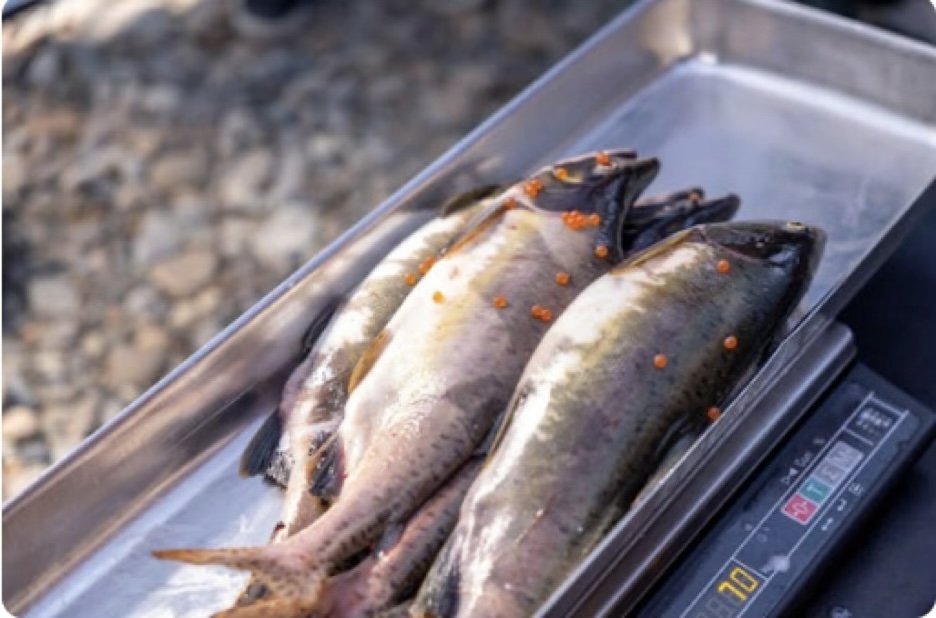
When the boat came into the dock, I sorted out four of the best fish from the fish box and laid them out on the dock.
“Doc, I’m sorry that I let Sandy out-fish you today,” Jim said. “Maybe we can do this again when the weather improves, and you can have better luck.”
“That’s okay, Jim,” I said. “I made the choice; now I have to live with the results. The only problem is I will have to live with those results for the rest of my life.”
We tipped the deck hand and I had to twist Jim’s arm to get him to take a tip. We loaded the fish into our ice chest and headed for home. It was a quiet ride.
Photo Credit: Sergei Starostin on Pexels


I enjoyed both stories, Doc. A good start to the morning.
LikeLiked by 1 person
I don’t think there are many vets as kind as you, and you have my admiration and thanks for living life helping not only the animals in need but also their owners who have no money to pay usually high vet fees. I live in the UK and I never met even one vet who wouldn’t think his job was just a business and had nothing to do with being human in a difficult situation.
Joanna Ashbourn
LikeLiked by 2 people
I love this — I was pulling so hard for Tuffy. I cracked my femur 3 months ago and it’s doing its best to be Tuffified. You did great work there!!!!
LikeLiked by 1 person