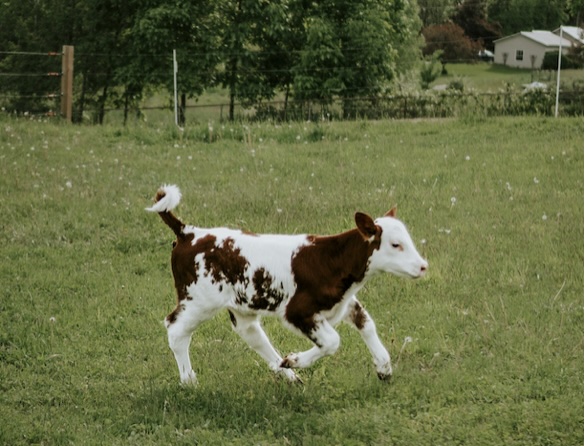
How Do We Catch the Calf

Screenshot

D. E. Larsen, DVM

We were still struggling to find a house in Sweet Home and were living in a very crowded two-bedroom apartment. We did get a phone line with a number that we plan to use at the clinic. It was almost by accident that we received that number in time for it to be included in the phone book, which was set to be released in the fall. In those days, a phone book listing and advertisement was a lifeline for a new business.

My equipment and supplies continued to arrive daily. The most challenging part of that was knowing what I had available to work with. I was trying to keep a low profile, but the word was out that there was a new veterinarian in town. And Stan, at the feed store, was sending as much business my way as he could.

It was shaping up to be another hot July day when the phone rang. Sandy had just picked up the baby, so I was left with the task of answering the call.

“Good morning, this is Dr. Larsen,” I said into the phone. “How can I help you?”

The voice on the other end of the line was that of a young woman.

“Yes, this is Kathy. I live in Lacomb, but Stan at the feed store in Sweet Home suggested I give you a call,” Kathy said. “I have a calf with a watery eye, and my husband won’t be home for several more days. I was hoping you could get a look at it for me.”

“We are still just getting settled in, and I really have not started practicing yet,” I said. “But this sounds like something I could handle. In fact, if it isn’t too bad, it might wait until your husband gets home.”

“If you have the time, I would really rather get it looked at,” Kathy said. “This is our first calf, and my husband is really attached to it already. We are just getting started, and we only have six cows.”

“Okay, I have plenty of time,” I said. “You are the first call this morning. Give me some directions to your place.”

“That is sort of difficult,” Kathy said. “Growing up around here, I know the back roads like the back of my hand, but I don’t think I can give you directions that will get you here without going all the way around on the main road. Why don’t I meet you where the road turns off the highway to Waterloo? Then you can just follow me. I will be in an older yellow pickup, and my ten-year-old son will be with me.”

“That will work fine, I know the spot,” I said. “When do you want to meet me?”

“I will meet you there in thirty minutes,” Kathy said.

The moment I hung up the phone, Sand was ready with her critique.

“You didn’t discuss fees or payment with her,” Sandy said. “And I know you are following her; you didn’t get her address or even her phone number. If she doesn’t show up on time, we won’t even be able to call her back. And you didn’t tell her to have the calf caught. All in all, you will make a poor receptionist.

“Well, I have nothing but time right now,” I said. “My guess is things will work out. And I think we have a girl coming for an interview tomorrow. Even if we are not set up to start working yet.”

“Just so I know if someone else calls, how long will you be gone?” Sandy asked. “Do you even know where Lacomb is from here?”

“If, by chance, the phone rings again, schedule anything in the afternoon,” I said.

Of course, everything Sandy said was spot on. I had coached her well, and her office experience was going to help us survive. I kicked myself for not following my phone policies, but how bad could it be? I was most worried about finding my way home if Kathy couldn’t articulate directions.

I loaded the few things I needed into the back of our station wagon. Things would be better when I get our truck and vet box in a couple of weeks. When I put the rope in the car, I had to untie the cord holding the coils. It was brand new and very stiff. I hope I don’t have to try to use this thing today, I thought.

Kathy was waiting for me when I made the turn towards Waterloo. I tried to memorize every turn as I followed her through a maze of backroads. We pulled into her driveway, and I glanced at the speedometer, almost twenty miles. I had hoped to limit my practice area to a ten-mile radius.

Kathy drove out to a pasture gate. Her son jumped out and opened the gate. We both drove out into the pasture. It looked like a five-acre pasture with cows and a calf standing in the far corner, watching us. There was no corral, so there was no way to get the calf into a smaller area. This wasn’t going to be fun.

“How do you think we are going to catch the calf?” I asked when Kathy got out of the truck.

“He is pretty tame,” Kathy said. “My husband just walks right up to him.”

“That was before a stranger came into their pasture,” I said. “My guess is we are going to have a rodeo. And my rope is brand new and stiff as a board. But I will try walking up to them first.”

I got my rope out and straightened it out. The loop would work if I could drop it over his head, but there was no way I could throw this rope.

We started out toward the small herd in a group. I was surprised that they remained calm as we approached.

“I can pet the calf most of the time,” Kathy’s son said as we got close.

“Okay,” I said. “You go ahead and see if the cows let you pet the calf. Then you come right back to us.”

The boy walked up to the calf and scratched its back. The mother cow had her eye fixed on me. As soon as the boy started back to us, the herd took off for the far corner. If I had a decent rope, I could have caught the calf.

“What are we going to do now?” Kathy asked.

“If we get this close again, I can lasso the calf with no problem,” I said. “The problem is the rope is too stiff. If you don’t mind, I will drag it behind the car and do a few loops around the pasture. Then it should be softened enough to throw.”

We walked back to the car, where I tied the rope to the trailer hitch. Then, I drove to a wide circle in the pasture, away from the cows. After three loops, I checked the rope and deemed it satisfactory to use.

“Okay,” I said to Kathy’s son, “We are going to do the same thing again.”

We approached the herd, and Kathy’s son walked up to pet the calf. The cows took off toward the other corner. This time, I threw a perfect loop and caught the calf. I quickly tied him to a fence post and had Kathy’s son calm him down while I went for the car.

The calf’s left eye was watering enough to have the side of his face a little wet. I looked at it closely, and I could see a grass seed peeking out from under the third eyelid. I called Kathy’s son over to look.

“Look closely,” I said as I held the calf’s head steady. “See the end of that grass seed?”

“Is that little thing causing the problem?” He asked. 

“If that was your eye, you would think you had a rock in your eye,” I said.

It only took me a few minutes to apply a few drops os topical anesthesia to the eye and remove the grass seed. The cornea was scratched slightly, but there is no big ulcer yet. I injected antibiotics into the upper eyelid, cleaned the calf’s face, and sprayed it with fly spray. We let the calf go, and he was slow to walk away.

“It looks to me like you should join a 4-H club and take that calf to the fair next year,” I said to the boy. He smiled, but did not respond.

“You made that look easy,” Kathy said. “Did I do the right thing having you look at him?”

“Yes, that eye would have been a mess if you had waited for your husband to get home,” I said. “It will all be healed when he gets home now. But you guys need to come by and talk with me in a few weeks when we are more settled. You need to build a small corral in a corner of this pasture.”

I got home with little problem and found that I would have ample opportunity to learn the back roads over the next few years. The biggest problem was that Kathy provided Stan and the community with a glowing report on my abilities with the lasso. 

***

It was several years later when I was talking with an older veterinarian at a continuing education meeting at Colorado State University.

“I had a veterinarian tell me the other day that he threw away all his ropes,” I said. “He said his life was much easier since then.”

“Hell,” the old veterinarian said. “If I threw away my rope, I would starve to death.”

Photo Credit: Amber Kipp on Pixels.com.
The Flea Question

D. E. Larsen, DVM

I read the question again, this time carefully. 

This was a typical multiple-choice test that we had in Dr. Cheney’s Parasitology class. There was a question and usually five answers. You were to select all the correct choices. One incorrect selection, or failing to choose a correct choice, and the entire question was marked wrong.

They always seemed to throw a negative in the mix somewhere. The negatives were my downfall. For some reason, my mind would not read a negative. I assumed that it was because I lived with a positive attitude. 

My test-taking strategy was to go as fast as possible. My first impression was always the most reliable, and I never looked back over my answers. 

I suffered for that when there were negatives in the question or the answers. To me, that was just the cost of keeping my stress level low. Finish the test quickly, and then go have a cup of coffee while the rest of the class struggles. In four years, I was always the first one done with any test.

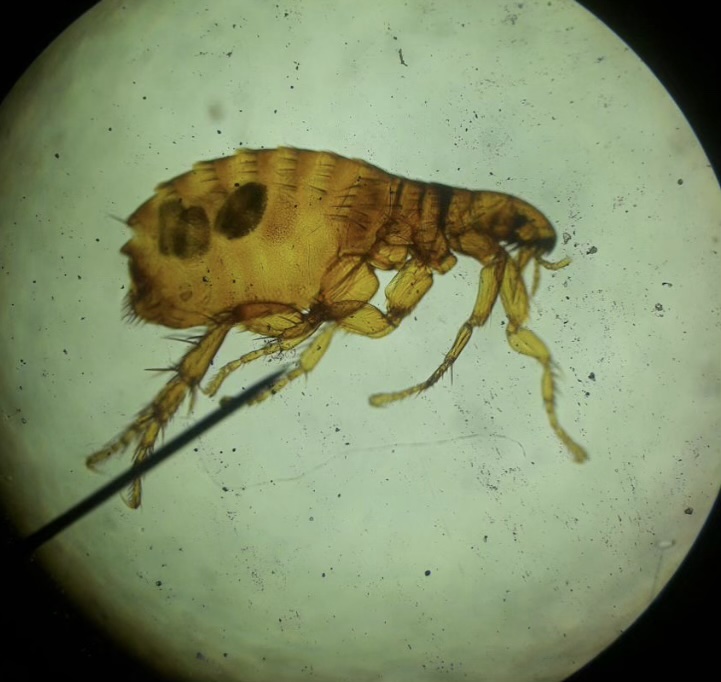
“Where are the likely locations you will find fleas?” That was the question. I am not sure I remember all the choices, but most were in the house. Like on the carpet, along the baseboards, on the dog’s back. And then there was the stickler, outside in the grass.

Now, you should know that I grew up in the Pacific Northwest. Veterinary school was located in Fort Collins, Colorado. I had been around fleas my entire life. And if you looked really hard, you might find a flea in Fort Collins, but not many more than that single flea.

If you remember those flea collars that were said to be effective for six months. I have little doubt but that the testing to certify those six months of effectiveness was done in Denver. Of course, like Fort Collins, there are very few fleas in Denver.

I read the question one more time time. I remembered Dr. Cheney stressing in his lecture that the flea resided in the house. I never spent this much time on a single question before. I made my selection, including outside in the grass, and moved on.

Again, I was the first to turn in my paper and leave the room, but it didn’t take long for others to follow. I had spent too much time on that one question. But that was over now, hopefully never to be discussed again, certainly, not over this cup of coffee.

***

First thing Monday afternoon in Parasitology class, Dr. Cheney handed out the corrected tests and asked if there were any questions or discussion.

I scanned the results quickly. Sure enough, my answer on the location of fleas was marked wrong. I always hated listening to some of the class nerds argue over a test question. After all, one question, right or wrong, was not going to influence my grade one bit. But this needed some discussion. I raised my hand.

“You have a question, Mr. Larsen?” Dr. Cheney asked.

“Yes, why is my answer to question fourteen marked wrong?” I asked.

“If you had taken adequate notes, you would have learned that fleas reside on the animal or in the house, not outside,” Dr. Cheney said.

“That may be the case in Colorado, but that is not the case in Oregon,” I said.

“Can you show me a reference to that fact?” Dr. Cheney asked.

“Over twenty years of life experience,” I said.

One classmate, also from Oregon, raised his hand. Dr. Cheney pointed at him.

“I agree with Dave,” Chuck said. “There is ample evidence of fleas living outside in the grass in Western Oregon.”

“I’m sorry, your answers are both wrong,” Dr. Cheney said as he continued with the class discussion.

***

It was several years later, during a very hot and dry summer in Sweet Home, when the flea problems became almost insurmountable.

Dogs, along with a few cats, with flea allergy dermatitis, consumed over half of my clinic time. The biggest hurdle in solving the problem often involved convincing the owner that the dog had fleas. Then the hassle we had to go through in those years to get the flea population under control was expensive and arduous.

I started discussing my flea control recommendations with one client early in my practice in Sweet Home. Most clients were reluctant to jump through all the hoops necessary. They want a quick fix.

“You have to do more than just a flea collar,” I said. “Flea collars work great in Denver, but there are few, if any, fleas in Denver. When I was in school at Colorado State, I never saw a single case of flea allergy dermatitis. Around here, that little cloud of protection that the flea collar is supposed to provide is usually two feet behind the dog.”

“Doc, you don’t have to convince me about flea control,” George said. “We moved here from New Zealand. In New Zealand, many people would wear flea collars around their ankles to keep from picking up fleas when they were outside.”

“I have heard similar stories around here,” I said. “That is a little drastic, but the important thing is to follow a program to eliminate fleas from the pet’s environment. That usually means using a flea bomb in the house after vacuuming and repeating the process in two weeks. The vacuum stimulates the eggs to hatch; the bomb will kill the fleas and larvae, but not the eggs. That is why you have to do it twice. At the same time, you have to treat the pet with a shampoo and dip, or a good spray. And you have to spray the yard also.”

“That adds up to a little expense,” George said. 

“Yes, but it is cheaper than dealing with a constant flea exposure when you have an allergic pet,” I said.

***

A couple of weeks after that conversation, Fred Briggs visited the clinic on his monthly rounds. Fred was my favorite salesman.

“I have a new product line that will make your job a little easier, Doc,” Fred said. “Vet-Kim has come out with a complete line of flea control products. Everything is well labeled, and the program for flea control is well explained with a handout.”

“That sounds good,” I said. “I spend a lot of time explaining flea control. If we can shift that to the front desk, it will help me out a lot. Let’s look at the products.”

Fred set out his display. I picked up a large spray bottle that caught my eye.

“Yard and Kennel Spray,” I said under my breath.

“Yes,” Fred said. “It comes with a good explanation sheet.”

“Do you suppose I could have you send one of these to Dr. Cheney at Colorado State?” I asked.

“I know the salesman who calls on the vet school there,” Fred said. “I bet I could get him to hand a bottle to this Dr. Cheney. What’s the deal?”

“It goes back to a test question, years ago,” I said. “If you can get it done, that would be great. Just add it to my account.”

“Do you want your name on it, so he will know who sent it?” Fred asked.

“I don’t think that’s necessary,” I said. “If Dr. Cheney has a good memory, he will know. If he doesn’t remember, it doesn’t matter.”

***

It was three weeks later when Fred called and asked to speak with me.

“I just wanted to let you know my friend delivered the spray to Dr. Cheney,” Fred said. “He said that it took a few minutes, but Dr. Cheney was able to tell him the whole story. It seemed to be the only time a student had told him he was wrong. “

***

Epilogue: With the advent of the new array of flea control products, the old regimen is long gone and faded from most memories. I doubt that you can purchase a flea bomb for the house today.

Photo Credit: Arthur Uzoagba on pexels.com

The Whispers of Three Brothers

D. E. Larsen, DVM

I was in the back room cleaning up from my morning farm calls. I had been in Enumclaw for a little over a year, and my portion of the practice was steadily growing. Today was a fairly typical Monday. The morning was spent on herd health work with two or three dairy herds, followed by a full afternoon schedule of office calls at the clinic.

I was hoping to have time today to run home for a quick lunch with Sandy and the girls. Sandy was over seven months pregnant, and I liked to be able to check on her during the day.

Just as I was pulling my shirt back on, Kathy popped her head through the door from the front of the clinic.

“Oh, good,” She said. “I see you’re ready to go to work.”

“I was hoping I had time to get a quick lunch,” I said.

“No such luck, Cheryl is on her way with her young tomcat,” Kathy said. “You should remember her. She is the one you tried to convince to have her cat neutered. He was that young orange tomcat you gave vaccines to a few months ago.”

“Yes, I remember, she was a pleasant young gal,” I said. “But sort of stubborn, I guess the cat still isn’t neutered.”

“That’s the one,” Kathy said. “She is pretty excited. I think Leo must be pretty sick.”

Kathy was right. Just as I stepped into the front of the clinic, Cheryl pulled into the parking lot. I watched as she rushed around and wrestled a large cardboard box out of the back seat. Plastic cat carriers were not common in 1976.

Cheryl was out of breath when she pushed through the front door.

“I think he is almost gone,” Cheryl said, as Kathy took the box from her. She followed us into the exam room.

Kathy placed a fleece pad on the exam table, and I lifted Leo out of the box and placed him on the padded table top. He was limp as a dishrag.

The instant he hit the table, he went into a seizure, and then he was gone.

Cheryl watched, horrified. “Oh, my gosh, what could have happened to him?” Cheryl asked. “He seemed fine yesterday.”

I raised Leo’s lip and then opened his mouth. His membranes were ghost white. Running my hands over his body, there was no evidence of any trauma.

“He has been in the house the last few days,” Cheryl said. “He couldn’t have been injured.”

“Give me a few minutes,” I said. “I will get a drop or two of blood and get a look at it. You can wait out front if you like.”

The Clinic in Enumclaw was not really set up to accommodate small animal clients. Historically, it was a dairy practice that took care of dogs and cats as an afterthought. After my arrival, the small animal practice began to expand a bit. Some of that was because I made an effort to be available in the afternoons. Being part of a younger generation in veterinary medicine may have also influenced the practice’s growth.

As soon as Cheryl left the exam room, I drew a small sample of blood from Leo’s jugular vein. It looked like red water. I was certain this was a Feline Leukemia death.

Sure enough, Leo’s blood showed a packed cell volume (PCV) of 6%, not compatible with life, and the blood slide was covered with abnormal lymphocytes. Quick chair-side diagnostics for feline leukemia were not available in 1976, but this was all I needed for the diagnosis in a dead cat.

I stepped out and motioned for Cheryl to return to the exam room.

“Leo died of Feline Leukemia,” I said.

“I feel so guilty,” Cheryl said. “Could we have done something for him if I had gotten him here earlier?”

“Cheryl, this disease is killing a lot of cats these days,” I said. “We lose cats every week. Had we seen him yesterday or the day before, we might have bought him some time with a blood transfusion and some medication. But the outcome would not have changed, and the transfusion only would have bought him a few weeks or a month or two at best.”

Cheryl carefully loaded Leo back into his box.

“At least I can take him home and bury him under his favorite tree,” Cheryl said as she headed out the door.

“That’s so sad,” Kathy said. “I wish there was something that could be done for these cats.”

“They’re working on it,” I said. “But it will be while.”

***

It was late in the day on Wednesday when I noticed Kathy hang up the phone and look at me with concern all over her face.

“That was a new client,” Kathy said. “She is on her way, she said five minutes. It sounds just like another Leo.”

It was less than three minutes when Marie came through the door with a cat carrier. She was in tears.

“I think he just died,” Marie said, the tears streaming down her face. “It happened so fast. He seemed fine this morning, and when I got home from work, he was stretched out on the front steps, unable to move. He had a seizure or something just as I pulled into the parking lot. There was a terrible ruckus in the carrier. And he looks dead to me.”

Kathy placed the carrier on the exam table, and I removed the cat.  A young orange tomcat. Sure enough, he was dead. One didn’t need a degree to determine that. I opened his mouth; no color to his membranes. There was no evidence of any other injury.

“He even looks just like Leo,” Kathy said.

“What do you think happened to Nacho, Doctor?” Marie asked.

“I could do some blood tests if you want, just to be more accurate in my guess, but I would I would guess he has feline leukemia,” I said.

“How did he get something like that?” Marie asked.

“It is caused by a virus. It is a common problem around here,” I said. “A young tomcat like Nacho could have easily gotten it from a bite wound from an infected cat. Sometimes the virus is passed from an infected mother to her kittens, either before or after birth. Some cats will live a long time with the virus, others, like Nacho here, not so long.”

“Could you have helped him if I had brought him in this morning?” Marie asked.

“We could have bought him some time,” I said. “Not much, maybe a week or two. Do you want me to do some blood work on him now?”

“No, I don’t need to be spending any more money on a dead cat,” Marie said as she placed Nacho back into her carrier. “Thank you for your information.”

Marie paid her bill and left with Nacho. I don’t think I saw her again.

***

Early Friday afternoon, the scene repeated itself one more time. Three leukemia cats in one week seemed a bit much. This time, it was a good client, Ellen, with Sunshine, whom we had seen many times in the last year.

Ellen came flying through the door carrying Sunshine wrapped in a towel. 

“I didn’t have time to call,” Ellen said. “Sunshine was flat out on the kitchen floor when I got home a few minutes ago. I think he is dying.”

We directed Ellen and Sunshine into the surgery room where we had an open table. She carefully laid him down on the table.

“I have been sick with worry all week,” Ellen said. “I talked with Cheryl on Monday, and then Marie called me last night. Leo and Nacho are both brothers of Sunshine, all from the same litter. Then I called Mrs. Wilson. She said her momma cat seems to have kittens that don’t live very long. Cheryl said you told her Leo could have gotten the virus from his mother. I am just sick over all of this.”

I carefully looked at Sunshine. I had vaccinated him as a kitten, neutered him at six months of age, and then saw him for his annual exam. He was a friendly, neutered male cat. It was easy to recognize why Ellen was so distressed by his pending death.

I opened Sunshine’s mouth. His membranes had no color. I tried to respond as I stroked his head and back, but he did not have the strength to raise his head off the table. I was as gentle as possible, trying hard to keep from inducing a seizure that would end his life.

I clipped a foreleg and prepped it so I could place a catheter.

“Ellen, I am going to place a catheter in his leg,” I said. “That is going to allow me to collect a blood sample, and if we are lucky, we will be able to give Sunshine some blood. There is a risk here. Sunshine is very fragile right now; he could die at any moment. If he struggles at all, he could die.”

“I understand, Doctor,” Ellen said. “Cheryl told me her story. It must have been horrible to watch.”

“You are welcome to wait out front,” I said. “This is going to take some time. If I can place the catheter, and if the blood shows what I suspect, then I will collect some blood from our donor cat. This might take half an hour.”

“That’s fine, Doc,” Ellen said. “Sunshine will rest better if I am here with him.”

“If I can get some blood into him, his response will look like a miracle to you,” I said. “But you have to understand, this is only going to buy him a few weeks. Maybe a month or two if we load him up with some medication.”

“I will make those weeks the best weeks of his life,” Ellen said. “I can promise you that, Doc. Go ahead and try, we will take any time you can buy.”

With Ellen petting Sunshine and murmuring into his ear, I was able to place the catheter and collect a small sample of very watery-looking blood.

Sunshine’s PCV was 8%, which may be why he was still alive, but it was still marginal. There were many abnormal cells on the blood slide. I headed to the back to retrieve our donor cat.

I sedated the donor and collected just over a hundred ccs of blood in two heparinized syringes.

“How long is it going to take to give him that blood?” Ellen asked.

“Sunshine does have time to have it dripped into his vein,” I said. “I am going to give it out of the syringe, as a push. It will only take a few minutes. Prepare yourself for a miracle.”

I started with the smaller syringe, pushing the plunger of the thirty-five cc syringe at a slow, steady pace until it was empty. Sunshine blinked his eyes and shook his head. Then, with Ellen’s help, he righted himself to his sternum.

I started with the larger syringe of seventy ccs. By the time that syringe was empty, Sunshine was licking at his catheter and Ellen’s hands. Now the tears came, Ellen gave me a hug, and sobbed out a thank you.

I gave Sunshine a large dose of dexamethasone and removed his catheter. 

“Okay, remember what I said, this is only going to last a few weeks,” I said. “Let me look at him on Monday.

Ellen wrapped Sunshine in his towel and put him on her shoulder, wiped her tears away, and worked her way through the now crowded waiting room.

“We will see you on Monday, Doc,” Ellen said as she exited.

***

It was almost three weeks to the day when Ellen returned with Sunshine and requested euthanasia.

“He had a great three weeks,” Ellen said. “But I can tell it is time, he hasn’t moved from his bed for two days now. We want to thank you again for that extra time.”

Photo Credit: Daniil Kondrashin on Pexels.