Preface: This story was first published on August 6, 2020. The story is based on events in my first weeks of practice in Enumclaw, Washington. That would have been in the spring of 1975.
Mr. Hansen was leaning on the corral fence when I pulled into the barnyard. He had a half dozen young bulls in the corral.
“Doc, I hope you are ready for these guys,” Mr. Hansen said. “They might be a handful.”
“We can handle them quickly with the chute,” I said.
Mr. Hansen, a Norwegian farmer outside of Enumclaw, had called to have these bulls castrated. I had wondered why he didn’t do it when they were small calves.
“You could have done this surgery much easier about 6 months ago,” I said. “This procedure is okay, but if you castrate enough of these guys, you will lose one. It is just the nature of the procedure, we use a tissue crush to control bleeding. That works fine unless a calf has been on clover pasture or has some other clotting disorder.”
“Well, Doc, I do all this stuff by the moon,” Mr. Hansen said. “It is pretty hard to get you guys out here on my schedule sometimes.”
I worked through the bulls with no problems. When I was cleaning up afterward, Mr. Hansen turned the bulls, now steers, out to pasture.
“See, Doc, not a problem one, see how easy it is when you do things by the moon,” Mr. Hansen said.
That was my first experience with the moon. Growing up, I had heard several men talk about the moon having an influence on castrations and dehorning. Still, I had never paid attention to it. It was easy to allow these folks to believe what they wanted, as long it did no harm.
There were events, however, that made a person wonder if there wasn’t some outside influence.
Uterine prolapse in the cat was one of those things that were considered rare. Some said it was a once in a lifetime for most veterinarians.
Alice called on Sunday morning. This was my first weekend to take emergencies after taking a job in Enumclaw, Washington.
“Doctor, I have a momma cat who had a litter of kittens last night or this morning,” Alice said. “I am not sure what I am seeing, but something hanging out of her is not right.”
“It sounds like I should get a look at her,” I said. “When can you meet me at the clinic?”
“I was hoping that we could take care of her right away,” Alice said. “I am not really interested in hand-feeding this bunch of kittens for any length of time.”
We agreed to meet at the clinic in a few minutes. I was excited to have a genuine small animal emergency this weekend.
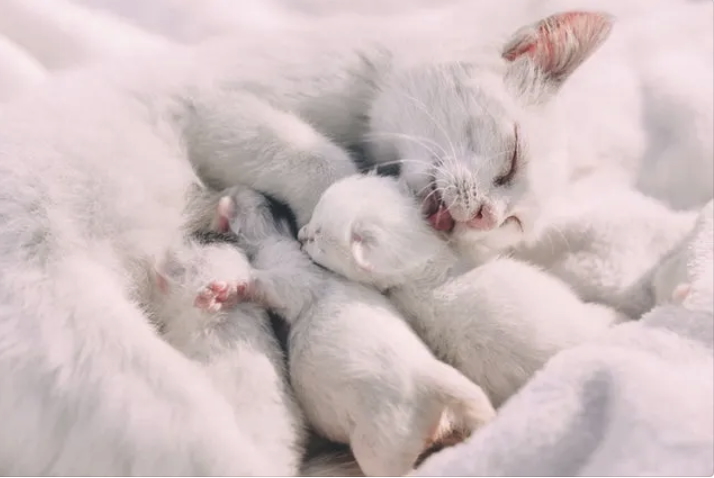
Alice came through the door with her momma cat and her kittens in a cardboard box. Momma was a young cat. She was mostly white, and so were the kittens. She was nursing the kittens, oblivious to her own problem.
Setting the box on the exam table, I lifted Momma out of the box. A complete prolapsed uterus hung from her vulva.
“What are we looking at, Doctor,” Alice asked. “I have never seen such a thing.
I didn’t think it would instill any confidence in me if I told Alice that I had never seen such a thing.
“It is a prolapsed uterus,” I said with confidence. “This is considered rare in the cat. It is something that we often see in cows. In cows, we replace the uterus. In this cat, the easiest thing would be to remove it. That will solve her immediate problem, and it would keep her from having more kittens.”
“Am I going to have to take care of these kittens tonight?” Alice asked.
“I think that I can get my wife to help, and I can get this surgery done this morning,” I said. “I should be able to send her home this afternoon. These kittens have been nursing well this morning, they should be fine until mom is home.”
I placed Momma in a kennel, and Alice departed with the kittens. When I got back to the house, Sandy was less than enthusiastic about the task of helping with the surgery.
“All you have to do is be there, just in case I need you to hand me something,” I explained. “The girls can come along, they might enjoy watching.”
We placed a short bench alongside the surgery table and lined the girls up to watch. They were excited, however, other than Brenda, I don’t think they had any idea what was going to happen.
I had no idea what to expect with this surgery, but it turned out to be easier than I thought it would be.
Momma was given a small dose of IV Rompun and Ketamine for anesthesia. Opening her abdomen, I found her ovaries stretched down into the posterior abdomen. I grasped the ovarian ligaments and pulled the uterus back into a normal position with moderate traction. After that, it was just a standard spay. Sandy survived the experience well, as did the girls.
Momma recovered well, and Alice was happy to pick her up in the late afternoon.
So what about the moon business?
The odd thing about the coming week was that I had this case within weeks of getting out of school. Don, the other associate veterinarian in the practice, treated a cat with a prolapsed uterus on Tuesday of that week. That was the first prolapsed uterus in a cat that he had seen in his 8 years of practice. Then on Friday, Jack, the practice owner, had a cat with a prolapsed uterus also. It was the first time he had seen the problem in a cat is his 32 years of practice.
That was 3, once in a lifetime events, in a single week in a predominantly cattle practice.
What are the odds of that, without some outside influence? I never worried about the moon, but after that week, I never argued with anyone who did things by the moon.
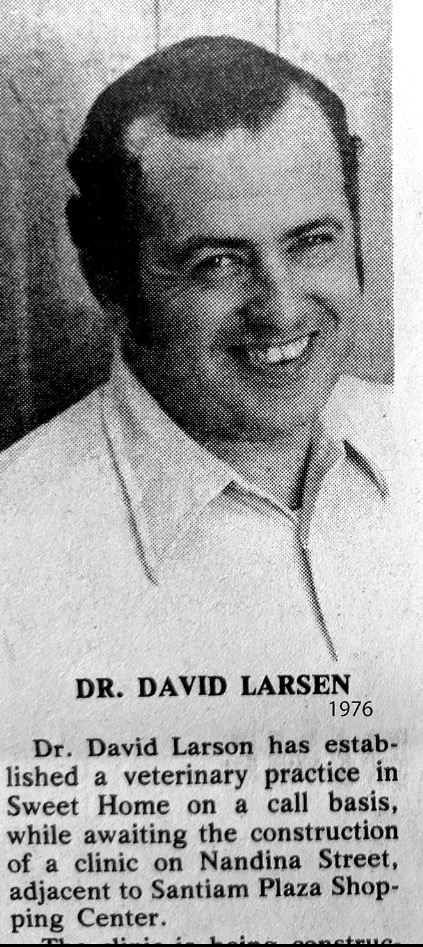
Preface: I made the Sweet Home New Era newspaper this week. Throwback Thursday, 50 years ago. The blog post was written many years ago. It was one of the first of my writings but has never been published.
The Clinic in the Garage
D. E. Larsen, DVM
We had made the decision to move to Sweet in early March of 1976. I contracted for the clinic construction and rented a house by the end of March. The clinic was scheduled to be completed by the middle of August, and we planned to move the first of August. Our son was born in May and an August move would give everyone a good three months to prepare for the move.
Then things started started to fall apart with those plans. First the the owner of the house we were renting in Enumclaw suddenly needed the house because their son was getting married in a shotgun wedding. The the house I had rented became unavailable. It appeared the realtor who rented the house to me didn’t have authorization to rent it. I pleaded with the owner to no avail.
So we ended up driving into Sweet Home with a truck load of household stuff, four kids, one of which was a month old baby, and no place to go. We considered our selves lucky to be able to rent the last two bedroom apartment in town.
Sandy stayed in Sweet Home, managed the apartment and the kids, and started house hunting. I returned to Enumclaw to complete the final month of my contract. Looking back, we didn’t consider it fun times.
I moved to Sweet Home the first of July, and I did a house call practice. The clinic completion date started getting pushed back. First to the end of September, then to sometime in November. And finally to the first week of December. Surviving on borrowed money, we needed to start generating some income.
Finally, we were able to purchase a house just out of town on Ames Creek. We formulated a plan to set up a clinic in garage.
The house was a nice house that sat close to the road on Ames Creek. We had a large garden in the back of the house and also near the road. Large rhododendron bushes lined the front of the house. There was a large oak tree that stood over the driveway. All the green framed the light blue ranch style house and gave a very homey appearance.
The double car garage was mostly unfinished but was reasonably clean and would have to serve our purposes until the clinic was completed. Now scheduled for the end of November. We placed the bank of five cages against the back wall and the exam table in the center of the garage. The door opened into kitchen. A long narrow layout with the sink and cabinets along the outside wall on your left and a long counter on the right. The back of the fireplace provided a brick wall at the end of the room on the right. We placed the surgery table against this brick wall. A small desk in the dining room served as an office. We planned to be rather slack for the fall and felt that this arrangement would be reasonably functional.
Our first office visit in the garage was on Tuesday after Labor Day, September 7, 1976. Elaine Gravesgaard brought her parents dog Shandharr out to have a lacerated foot pad sutured. Then later that morning Mrs. Jean Meeks brought out Tony, a small cocker spaniel, with a draining sore between his toes. We started slow but the pace increased steadily as we progressed through September. There were several cases that we referred to other clinics in the area because we were not prepared to handle them.
When the new telephone books came out in October our pace quickened. We had 7 transactions in July, 59 in August, 96 in September, 157 in October, and 186 in November. Compare those figures to the almost 700 invoices a month in 1996 and it doesn’t seem very busy. When you consider the conditions we were working under, it is amazing.
We had hired Paula to help me in the exam room and surgery. Paula had no experience but a lot of enthusiasm. i set up a thorough training program and we had ample time to go through it. Paula was probably the best trained of my in house trained assistants.
By the middle of October we were busy enough that we hired Judy to work as a receptionist. Judy was also inexperienced and benefited enormously by the slow steady increase in workload that fall. Everybody’s training was well in place by the time we moved into the clinic on the 6th of December and we were able to hit the ground running. Everything that had seemed to be a problem in the summer, the early move from Enumclaw, the rental house problems, and the clinic delays, turned out to be to our ultimate benefit. By the end of 1976 we were well established as an integral part of the Sweet Home community.
Photo Credit: The New Era, Sweet Home’s weekly newspaper, July 30, 2026. Throwback Thursday, 50 years ago.
Ruben and Mae Wilde owned High Mountain Ranch on Ames Creek in 1976. Ruben had made his money in the construction business. He bought the ranch and was now in the process of becoming a hobby rancher. He did not need the farm to produce a livelihood, but he needed something to keep him busy.
Ruben’s answer was to do things a little differently from his neighbors. He would raise bison. Not many people around knew much about raising bison. There were not many bison around. That was Ruben’s first problem, where was he going to get these bison. Then Ruben was going to learn that the assumption that they were like raising cattle was false.
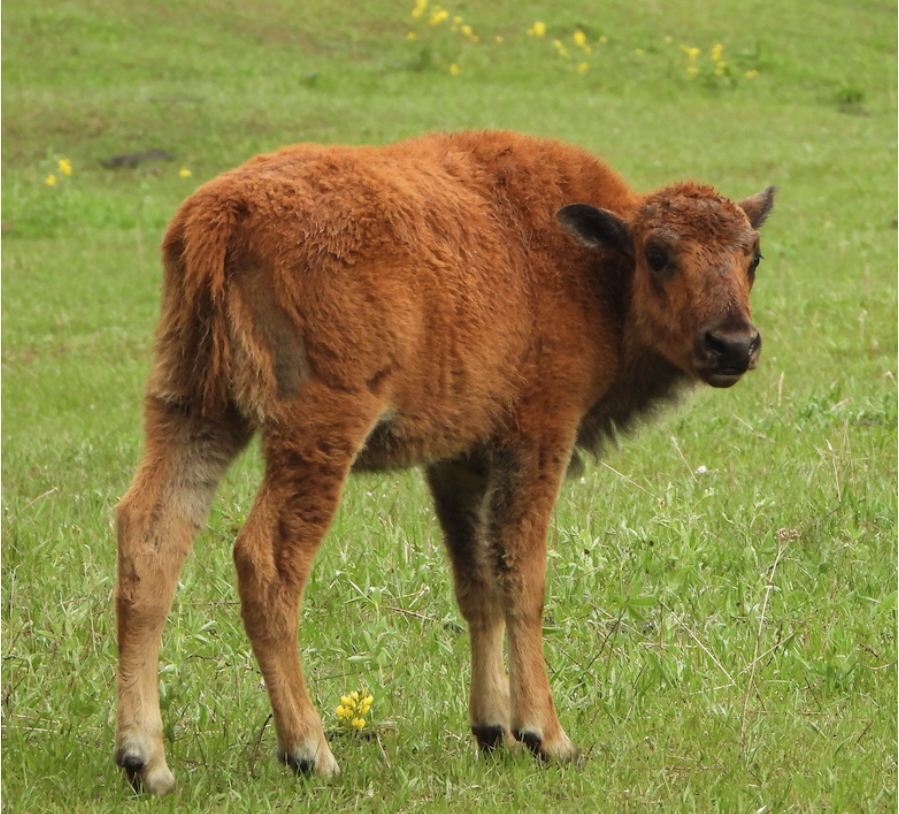
My first visit to High Mountain Ranch was to look at a bison calf the had puss draining from his hind leg. The previous owner had repaired a fracture on this leg before Ruben had purchased the calf. Ruben had purchased this bull calf and a female calf, both about six months of age, from an orthopedic doctor in Eugene.
“Who repaired the fracture?” I asked as I was getting out of the truck.
“The doctor did it, with a cast, I believe,” Ruben answered.
I had not been in practice too long at this time. Still, I was already aware that some of the worst veterinarians were medical doctors. They would not accept any advice from a veterinarian because they knew everything. Their education gave them little appreciation of the variability of species. You could put a cast on a person and tell them not to bear weight for six weeks. Try doing that with a three-month-old bison.
“Bison are pretty hard to handle in a chute, but if we can get him restrained well enough, I might be able to get an x-ray of the leg. Then we will know if this infection has affected the bone. That is going to be a difficult task.”
“I have them both in the barn right now. I was hoping you could rope the little guy, and we could do it in there.”
“I have never had a rope on a bison calf, Ruben. That doesn’t sound like a viable plan, but let’s look at what we have,” I said as I sat things down and head toward the barn with Ruben trying to keep up with me. He had one leg shorter than the other and had about a three insole sole on his one boot.
The barn was old, probably built in the 1920s. Heavy timbers formed the supporting structure. Long 1 x 12 boards enclosed the building and interior walls, probably cut from number one peelers. Not a visible knot anywhere. Not painted, the wood had seasoned to steel gray. The wood was likely more valuable than the barn.
Ruben lead me through the side door of the barn. This barn was more of a workshop than a stock barn. We threaded our way through this large workroom, cluttered with old farm equipment. Most of the items probable came with the place. I doubt if Ruben knew what they were. It did not look like he had moved anything in years.
“I have them in the haymow,” Ruben said as he pushed open the door just enough for us to squeeze through.
Ruben had the calves in the barn, but they were far from restrained. We were standing in a large empty room with a few traces of old hay. The floor was of heavy planks. There were no fences or pens, just a large room about 60 feet long and 30 feet wide. The calves stood side by side in the middle of this haymow, staring at us and getting more agitated by the second.
Before I could even begin to tell Ruben that there was no way we were going to get a handle on that calf, the calves started a slow jog around the haymow. I pushed my shoulders against the wall as they brushed past us. There was nowhere to go except back out the door. The calves picked up speed on their second lap around the room.
“Ruben, there is no way we are going to get ahold of that calf. You will at least need to get them in the chute.”
“I couldn’t get them anywhere near the corral,” Joe answered.
The calves were at full speed on their third lap. I was alarmed for our safety and pressed myself back against the wall as they brushed past us, too close for comfort. I reached for the door. Ruben was right behind me. The calves didn’t do a full lap on their fourth turn, they cut the lap short and squared themselves up with the far wall of the barn. Going full speed, they hit the wall together. The wall never slowed them a bit. Boards flew in all directions. They knocked a hole in the side of the barn four planks wide.
I looked at Ruben, and he was standing with his mouth open in disbelief. We walked over to the gaping hole in the side of the barn. I leaned out the new opening in the barn and surveyed the area, the siding boards were torn off in their full length. The calves had torn through the old fence just like they went through the side of the barn. They were across the first pasture, still going full speed toward the far corner of the place. “
Hopefully, they will slow down when they reach your line fence,” I said to Ruben.
“Ruben, I would call that doctor up and have him come to get those calves, there is no way you are going to be able to treat the infection in that leg.”
Ruben looked at the hole in the side of the barn and shook his head. “I guess you are right. He has a young bison bull. I could probably trade him these calves for the bull.”
“You need to get your fences in better shape and get your corral set up to catch a bison before you get another one. These are not funny looking cows. When I was in school, we were vaccinating a bison herd in Wyoming. I saw a bison almost kick a guy over the fence in a crowding ally. You might be better off raising llamas.”
I had hoped Ruben had learned a lesson on that day. Those hopes were trashed when I got a call from him a couple of months later.
“Doc, I have a real mess up here,” Ruben said, obviously short of breath. “This damn young Buffalo bull has just gored my pregnant sow. She has one hell of a gash on her side.”
“I have some time, Ruben, I can run up there right now. Where is this gash on the sow?”
“It is on the side of her belly. I hope it is just skin and muscle, I don’t see guts.”
“I’ll be right up.”
“Doc, if you are coming anyway, could you castrate this guy for me, and dehorn him at the same time?”
“We will have to hurry if we are going to do all of that. It will depend on how bad the injury is to the gilt. We will do the gilt first and do the bull if we have time. We can always schedule the bull another time.”
“I suppose so, but I don’t want to take a chance. If you have time, we need to do it today,” Ruben said with some finality.
“Will, if we are going to do it today, you need to have him in the chute before I get there. And I am leaving here in just a few minutes.”
The drive up Ames Creek was a short one from the clinic. It went by the house, if I was lucky, I could have time to stop for lunch with the kids on my way back to the clinic. The kids will enjoy that, maybe I can bring them a buffalo horn.
I was a little surprised to see the young bull buffalo in the chute as I pulled into the barnyard. Ruben was waiting anxiously. He wiped his brow as I was getting out of the truck and motioned to the pig laying in the shade of small shed. Actually a young sow, a gilt, with a large belly from a pregnancy. She had a jagged gash on the side of her abdomen, maybe 6 inches long.
“She has just been laying there the whole time since he attacked her,” Ruben said. “I think she is okay. She is sort of a gentle little thing, tame as a pet.”
I knelt beside the sow and patted her behind her ear. She shook her head and grunted a little. I swiped the wound with a Betadine swab. I then started injecting lidocaine into the tissues along each side of the injury.
When the wound was deadened, I scrubbed it and the skin around it with Betadine. I explored it both with my finger and visually as best I could. It was deep but did not get into the abdomen. I applied a small amount of Furacin powder for some local antibiotic benefits. The placed a half-inch Penrose drain in the deepest portion of the wound, giving it an exit port through the skin below the injury.
The closure was relatively quick. I used #2 Dexon in the muscle layers in a simple continuous pattern and repeated that for closing the subcutaneous tissues. Then I closed the skin with #2 Nylon.
With the wound taken care of, I injected her with a hefty dose of Polyflex for the antibiotic. Then I gave a standard dose of dexamethasone for the shock. I sprayed the wound for flies, even though we were probably early for that problem.
True to Ruben’s word, when I stood up, she rolled up on the chest and stood up also. Almost as if I had told her she was okay to go. She shook her whole body, grunted again, and walked out toward the pasture.
I drew up a couple of doses of Polyfex for Ruben and instructed him on how to give them.
“You need to monitor the wound for a couple of weeks,” I said. “I will be back in a few days to check the wound and remove the drain.”
“That will be good,” Ruben said. “I can take the sutures out after that.”
“Yes, that will be okay,” I said. “But don’t get in a hurry. If everything is okay, we will leave those in a full 2 weeks.”
“Now, let’s take care of this fellow,” Ruben said, motioning to the young buffalo bull in the chute.
We went over to the chute, and I leaned on the bar to tighten the squeeze as tight as I could get it. The problem with bison in the squeeze chute is their size is all in the shoulders. It doesn’t matter how hard you squeeze them, their hips are free to move somewhat.
Standing on the right side of the chute, I put a strong tail crank on the bull. Pulling the tail back up over his back. I instructed Ruben to hold in that position from the far side of the chute.
The bull jumped a little when I grabbed his testicles and squeezed them into the bottom of his scrotum. After that initial jump and with the tail crank, he settled down pretty well. With my scalpel, I made a quick slice down each side of the scrotum. The incision was deep enough to cut through the tunic and into the testicle. There was no response from the bull.
I expressed both testicles out of the scrotum and grabbed them with my right hand. I pulled them down, stretching the cords until I could fell the cremaster muscles break. Now the testicles dangled several inches below the scrotum. One at a time, I applied the White’s Emasculator to each cord, nut to nut, and squeezed with both hands. This severed the cord and crushed the vessels all in one motion. I held the squeeze for 20 seconds or so.
I held the testicles up for Ruben to see. They were smaller than I would expect. A bovine bull this age would have testicles twice this size. Maybe this was one reason for the relatively low fertility in the bison population compared to cattle.
“You want these for breakfast?” I asked Ruben.
“You have to be kidding,” he replied.
I tossed them out toward Ruben’s two dogs. They were unsure what was coming at them and jumped out of the way. Then they slowly returned to the testicles on the ground, carefully sniffing, then each grabbing one and moving in different directions. Pleased with the morsel.
I continued the scrotal incision through the bottom of the scrotum, so there would be no pocket to catch any drainage. Then I sprayed the scrotum with Furacin spray and the whole area with fly spray. When Ruben released the tail, I sprayed the tail switch liberally with fly spray.
I went up to the head and looked at the horns. These were a real set of horns. I had dehorned older bovine bulls with horns that did not come close to these, especially the size of the base of the horn.
“Are you sure you want this done,” I asked Ruben. “This is going to leave massive holes into the frontal sinuses.”
“Will they heal,” Ruben asked.
“Yes, they will heal,” I said. “It is just going to surprise you.”
“I don’t want to deal with a goring again,” Ruben said with a sense of finality in his voice.
I tried to put nose tongs on the young Bison bull, but he was not going to let that happen. He was squeezed tight enough that his head was pretty secure. I pulled my cordless clippers from my bag and started shaving the hair around the base of the horns. This hair was dense and long. When I had the hair cut from around the horns, they looked even larger than before. They must have been at least five inches in diameter. I scrubbed the base of the horns with Betadine Scrub and then injected the primary nerves with a large dose of lidocaine. I injected four nerves on each horn, at the top and bottom, and each side of the horns.
When the horns were numb, I pulled a six-foot length of OB wire saw out of its container. I attached saw handles on each end and seated the wire snuggly around the base of the horn. I took the handles in hand and leaned back to apply pressure to the wire saw and started with long slow strokes. As the saw passed through the skin and soft tissues and engaged the bone, I quickened my pace. Smoke rose from the site and an odor that would put the old-time dental drills to shame.
“Ruben, grab the tip that horn,” I instructed as I made the last few strokes.
The wire saw came free of the tissues, almost white-hot from the friction, and Ruben had the horn in his hand. Ruben looked at the massive hole into the frontal sinus and gasped.
“I see what you were trying to warn me about,” he said.
There was no bleeding. The heat of the wire sealed the ends of the arteries. The large artery at the bottom of the hole was pulsating. It would be spurting six or eight feet in the air if not sealed by the heat, and any rub could break that seal. I grasped this large artery with my forceps and gently stretched it out, one inch, a little more, then it broke, and snapped back into the tissues. A small amount of blood came from the hole. This allowed a firm clot to form deep in the soft tissues so there would be no significant blood loss. I repeated the process with the lesser arteries around the base of the horn. I powdered the gaping wound with Furcin powder and trimmed a piece of filter paper to cover the wound, attaching it with a couple of dots of back-tag glue.
With the first horn done, the second was completed the same with a new piece of wire saw. The wire saw could often be used on each side, but the amount of bone being cut made it dull enough to warrant a new length of saw wire.
When the horns were both done, I sprayed the head with fly spray. Then I went and got a single injection of Dual Pen for antibiotics and a dose seven-way blackleg vaccine.
“I don’t often use antibiotics following castration and dehorning, but you would probably have trouble getting this guy back in a chute,” I said to Ruben.
“Yes, I doubt that he would be fooled with some grain next time,” Ruben said.
I picked up the horns as I headed back to the truck. “Do you want these?” I asked.
“No, you can take them if you want,” Ruben replied.
If the kids are interested, the dog will have a new chew toy, I thought.