Water, Water Everywhere and Not a Fish Alive

D. E. Larsen, DVM

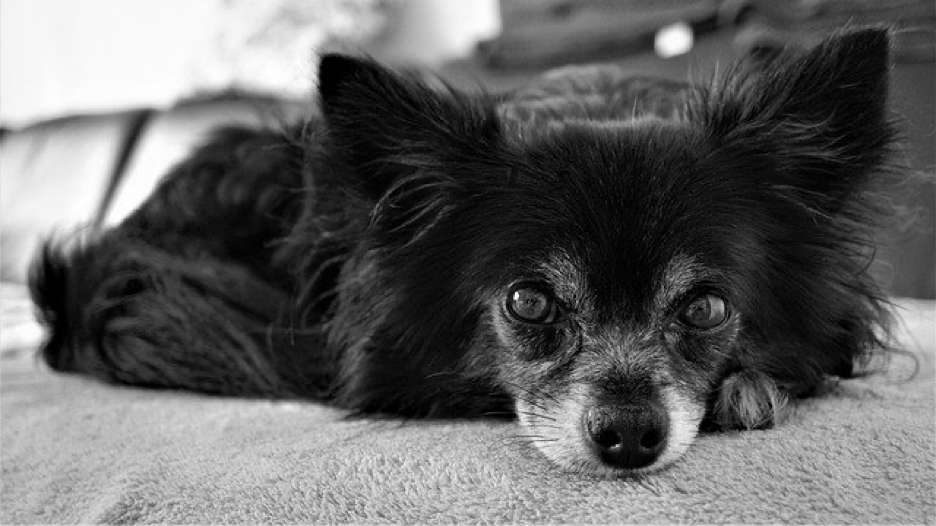
Mr. Campbell had been bringing his little Yorke into the clinic ever since I had opened the clinic a couple of years ago. This Saturday, he came through the door empty-handed, or so it appeared.

“Where is Wolf today,” I asked.

“He is home,” Mr. Campbell said. “I have another problem I wanted to talk to you about.”

“You picked a good day, it looks like I have an empty schedule for the rest of the morning.”

Mr.Campbell laid a rolled-up paper towel on the counter. 

“I was hoping you could do an autopsy on this little guy for me,” he said.

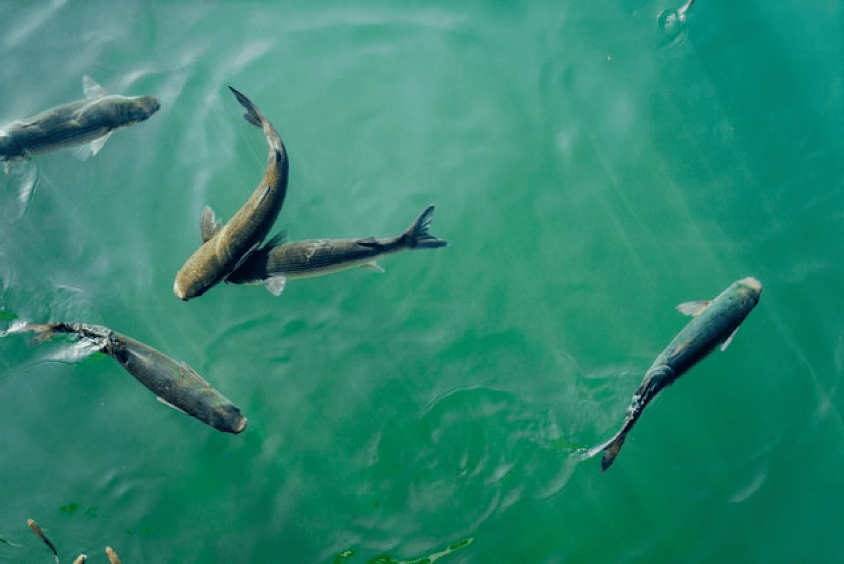
I carefully unfolded the paper towel. Inside was a very dead little goldfish, almost two inches long.

“Mr. Campbell, I could do an autopsy, we call it a necropsy, but I doubt very much if I could find anything useful to you,” I said. “Maybe, I could put this guy in formalin and send it to the diagnostic lab and get some information for you.”

“No, I don’t want to want to get too much expense involved here,” Mr. Campbell said. “I have been losing every fish I put in my new pond. Stan, over at the feed store said I should talk with you about the problem.”

“I tell you what, I will open this fish up and see if there is anything obvious,” I said. “I can’t charge you for something I know almost nothing about. I’ll look, and then we will talk about your problem a little more.”

I have been cleaning fish since I was 5 years old. I never gave it a lot of thought, but I knew the anatomy even as a pretty young kid. I unzipped this fish and looked at the heart, liver, kidney, and gut. There was nothing visible, and without sending tissues to the lab, I learned nothing. 

I also remembered to look closely at the gills. They seemed normal also. But then I thought about Mr. Campbell’s comment about his new pond. I lived up in the avenues, sort of on a hillside, I wonder where his water is coming from.

“I don’t see anything useful looking at this fish,” I said. “We might find something if we sent some tissues into the lab, but that is probably questionable also.”

“Will something must be going on for them all to die,” Mr. Campbell said.

“Tell me about this new pond of yours,” I said.

“It is not much of a pond, I built it this spring,” Mr. Campbell explained. “A couple of years ago, this stream started running through my back yard and down the hill into Ames Creek. A friend was visiting, and he suggested I build a pond for the stream to run through, may be able to keep some big goldfish in it. At least the water would be good. The stream ran all summer long.”

“This stream just showed up, out of the blue?” I asked.

“Yes, almost, I guess,” Mr. Campbell replied. “I didn’t think much about it at first, but then it was just there all the time.”

“Maybe we should get the water checked,” I suggested. “It seems unlikely that you would have a year-round stream that just pops up, especially in that area. I will give you a sample jar and you can bring it back on Monday. I will send it in to the lab, or maybe we should have the city water treatment guys check it first. That might save a little if they can find something out.”

On Monday, Mr. Campbell came in with his jar of water. I had already spot with Ray down at the water treatment plant. He had said he would check it for all the basics, but we would need to send it in if he didn’t find anything. Sandy ran the sample down to the treatment plant.

The phone rang later in the morning, it was Ray. 

“Doc, this is Ray,” he said. “Where did you say this water came from?”

“Mr. Campbell brought it in, it is from a stream that runs through his backyard,” I said.

“Will, I can tell you what is killing his fish,” Ray said. “This is city water. There must be a broken pipe up there. If you have time, I would appreciate it if you could go up there with me.”

Ray was at the office in a short time. I crawled into his truck and handed him a paper with Mr. Campbell’s address.

“How long has this stream been running through his yard?” Ray asked.

“He said it just popped up a couple of years ago,” I said as we pulled into Mr. Campbell’s driveway. 

Mr. Campbell came out the door before we were out of the truck.

“Ray here has found what is killing your fish,” I said. “It seems the stream running through your yard is city water. The chlorine in the water will kill the fish in a day or two.”

“I wonder if I can look at this steam?” Ray asked.

“Sure, just follow me,” Mr. Campbell said as he opened the gate into the yard.

The yard was large and well kept. It was fenced with a white picket fence all the way around it. The stream came down the small hillside beside the yard, ran through half the yard, and then went down the hill to Ames Creek. After a couple of years, there was a pretty good streambed worn into the manicured yard. Mr. Campbell had built a pond about 12 feet in diameter that the stream ran into and then out before flowing down the hill.

Ray was interested in the source of the stream. He went back out the gate and around to the hillside. He was almost to the top of the slope when he turned at called out.

“Here is the source, bubbling straight up, probably a broken feeder line,” He said.

When he got back down the hill, we were waiting for him by his truck.

“We solved your fish problem, but I am afraid that you are going to lose your stream,” Ray said. “The City has probably been losing many gallons of water for a couple of years. We will have that line fixed in a day or two. We can’t help out with your loss of the steam, but we sure do thank you for helping find the water leak.”

“I guess I will have to tear out that pond and fix the lawn,” Mr. Campbell. “I am just sorry that I killed all those little fish.”

Photo by Pixabay from Pexels

There is Blood Everywhere

D. E. Larsen, DVM

“Doc, this is Harold. You have to come quick. There is blood everywhere. I think she is bleeding to death!”

Then the phone went dead. I looked at the clock, 4:50. At least it is not 3:00 AM. That means something happened during the morning milking. What could have happened that would cause a cow to bleed so much in a milking parlor?

I jumped out of bed and dressed quickly. I have been going to Harold’s place too often, it seemed. This time I have to hurry into a mess that I can’t even begin to imagine. Hard to say what I was going to be walking into.

It was a short drive to Harold’s place. The driveway up to the barn was a little steep but well maintained. I pulled the truck as close to the milking parlor as I could. I jumped out of the truck and hurried to the door.

Harold was waiting for me and held the door open. He was covered with blood.

“Are you alright?” I asked with genuine concern.

“I am fine, but you need to look at this cow, quick.”

We went into the parlor, there was blood on the floor, running down the floor drain. The cow is a big animal, and losing a gallon of blood is probably no big deal. But I don’t think I was prepared for this much blood on the floor.

I got to the cow, still standing in the milking stall. Blood was still streaming from where a teat should have been.

“What the hell happened?” I asked.

“She had mastitis. I have watched you guys whack off a dozen teats before, so I just took my knife and whacked it off,” Harold explained with a motion of this hand to show how he had whacked the teat off.

“Harold, when we have cut a teat off, it is because the mastitis is so severe that the tissue is dead,” I said. “This teat is very much alive. I will explain more after I get this bleeding under control.”

I ran back to the truck and grabbed a bucket of water and scrub, scissors, a needle holder, and a pack of suture material.

After a rapid swab of the area, I started placing some mattress sutures around the bleed base of the teat, or where the teat should be. As I got all the way around the opening, the blood flow finally stopped. Harold was correct about one thing, this cow could have bled to death. In these large dairy cows, the udder receives a tremendous blood supply. This is evident when you look at the large veins running forward from the udder on the ventral abdomen. These veins are garden hose size.

With the bleeding stopped, I cleaned the wound as best I could. This quarter was obviously lost. I just hoped that we could keep the infection under control, so the cow was not lost. 

When the cow loses a quarter, the other quarters will show a compensatory increase in production. In this way, she does not lose 25% of her production, but more like 10 to 15%. So most of the time, the cow can remain a productive member of the herd. With the antibiotics that will be needed to prevent a significant infection, this cow’s milk will be suitable only for feeding to the calves, and the barn cats. She may lose a month of production, at least two weeks.

Finally, I relaxed enough to talk with Harold. He had been frantically trying to keep the milking string moving while I had been working on this cow.

“It is important for you to understand what went on here tonight,” I said. “When you cut that teat off, you threw away a quarter that could have been treated for mastitis and returned to full production. When we cut a teat off, it is because the infection is so severe that the whole quarter has gangrene, and the tissue is dead. That is why there is no blood when we cut a teat off. So, next time, if the teat isn’t black, don’t cut it off.”

“Doc, there ain’t going to be no next time,” Harold said. “I am just going to call you first. I just thought I could save a few dollars and look what happened.”

“This is going to take a little time for this wound to heal,” I said. “I am not sure just how we will handle it. I want to talk with Don and Jack in the morning, and we will come up with a plan. We are not going to be able to completely close the wound because there is going to be some milk drainage for a time. I think we might be able to close most of the wound and just place a rubber drain, but I want to discuss that plan before we do it.”

“Just tell what I need to do with her,” Harold said.

“For now, you need to keep her in a clean stall by herself,” I said. “I will be back later this morning, maybe with Don, and we will work on this wound again. You will need to discard her milk until we completed her antibiotic treatment.”

“Can I use it for the calves?” Harold asked.

“That will be fine, but you should milk her last, so there is no chance of getting any antibiotics into your holding tank,” I said. “Otherwise, you might end up buying a tanker truck full of milk.”

With that, I cleaned up and headed home. I figured I would just have time for a good breakfast before I had to be at the office.

“What did he do?” Don asked, somewhat, not believing my story. 

“Yes, He just took his knife and cut the damn teat off,” I repeated. “I thought I was walking into a murder scene when I entered the milking parlor. So now there is a big hole into the milk cistern. I placed a bunch of mattress sutures to get the bleeding stopped but I wanted to talk to you about how I should close the hole.”

“I agree about placing a drain for a few days and suturing most of the hole closed,” Don said. “Maybe this would be a place to try that closure that was in the Veterinary Medicine journal last month. That would probably hold better than sutures.”

“I have some time this morning, let’s run out there together,” Don said, “I want to see this.”

Harold was waiting with the cow in the parlor when we pulled into the barnyard.

Harold had cleaned up the blood from the morning fiasco, but there was still some blood on his apron hanging by the door.

“We are going to close up this wound, and hopefully it will heal without too much of a problem,” Don said as he looked closely at the gaping hole on the bottom of the udder. There was some dried blood around the wound and a slow drainage of milk from the hole.

We scrubbed the wound and sprayed Betadine around and into the wound. I injected a good dose of lidocaine around the wound. Then I placed a small Penrose drain in the front edge of the wound and secured it with a couple of sutures.

Neither Don nor I had done this new closure that was written up for teat lacerations, but it was simple enough. Teat lacerations were challenging to deal with, especially if they extended into the milk channel. This closure was fast and simple and provided a wide spread of the tension, so there was little chance of tearing the tissue.

After apposing the wound edges with a couple of towel clamps, I took three 18 gauge, 1½ inch needles, and placed them across the wound, evenly spaced, and entering and exiting about 1/2 inch from the wound edge on each side. Then using umbilical tape, I closed the wound by lacing around the needles, much like you would close the body cavity of a turkey before putting it in the oven.

This proved so simple and provided a tight closure with the tension distributed across the entire length of the wound. It would be unlikely to tear out. Both Don and I wondered why it had never been published before. I cut the sharp end of the needles off with a wire cutter and sprayed the area with some Furacin wound spray.

“I will be back in 3 days to check this wound,” I told Harold. “You need to give her an injection of 10 ccs of Polyflex each day. Otherwise, don’t do anything to the wound. If you notice these needles fall out, give us a call. And don’t cut off any more teats.”

Photo by Matthias Zomer from Pexels

The Last Cow in the Chute

D. E. Larsen, DVM

I stepped through the small gate into the crowding ally behind the chute. Ag swung the tailgate open, and I grabbed the tail of this large Charolais cross heifer with my right hand. I worked my gloved left hand into her rectum. There was enough squeeze on her that she could bounce around.

I had been doing this for most of the day. We took some time for a lunch of a special soup Ag had made for the day. Homemade bread and a hearty soup would make the afternoon go faster. The most significant advantage of the lunch break was my left arm got a rest. 

In the big cattle country, a cow doctor might have herds of 400 cattle to check every day for a couple of weeks. Their arms became accustomed to the workload. For me, it was one or two herds a week, and most of those herds were less than 100 cows. My arm was in shape enough to do over a hundred cows, but I had to rest it every chance I could.

I was skilled at rectal palpation. Using my left hand, I would first attempt to retract the uterus. This would bring the uterus into the pelvic canal where I could feel along the entire length. I would first feel the membranes slip between my fingers when I pinched the body of the uterus near the bifurcation. If present, this slip was a positive sign of pregnancy. Then I would explore down each horn of the uterus to find an amnionic sac or a fetus. Based on the size of the amnion sac or the fetal head, I could age the pregnancy to plus or minus 3 days.

A uterus with pregnancy over 90 days duration could seldom be retracted. One could usually find a fetal head by sweeping your hand along the length of the pregnant uterine horn. After 120 days of pregnancy, the fetus was generally out of reach until very late in pregnancy. Aging a pregnancy after 120 days was difficult, and getting between plus or minus 15 days was considered the best one could do. Inexperienced veterinarians could miss the age by months.

The obvious benefit of pregnancy exams in a commercial herd was to enable ranchers to cull the cows that were not pregnant. In that way, they would avoid the expense of winter feed for those cows. On rare occasions, I would detect a problem in the breeding program by finding a high number of open cows. Most of those problems could be seen by adequate observation during the breeding season.

The primary goal was to have cows fall into a 42 – 84-day pregnancy window. Cows outside that window would be culled. This would select for productive breeders, cows who would become pregnant on the first cycle she was exposed to the bulls. Then those cows not pregnant on the first cycle would have a second chance at pregnancy. By culling cows who could not breed back with two cycles, we were able to condense the calving season to a shorter time. This would allow ranchers to concentrate their observation of the calving and render help as needed. Having the age of pregnancy helped in knowing just when a cow was due to calve.

Failing to cull a cow who was outside the prescribed pregnancy window selected for infertility. First, you would have one cow that was a problematic breeder, then 5 years later, you would have that one cow and three of her daughters. The ball game was lost then.

It obviously would take several years of work to arrive at the desired calving window. With Ag’s herd, we probably had over 70% of the herd calving in the first 21 days of the calving season. This was ideal, and it allowed for some elective culling.

Elective culling would allow you to cull individuals based on other factors than fertility. Cows with better milk production would wean calves with a higher weaning weight. Cows with poor udder conformation might cause a lot of extra work at calving and could be susceptible to mastitis. In any herd, there are cows with behavior issues, culling them would reduce stress on the rancher and on the herd.

I always told my clients to cull the last cow in the chute.  If you have 100 cows in the corral to work through the chute, there will always be the last cow. She is seldom last by chance. 

Ag never listened to me on this point. She had to large Brahman cross cow that was almost impossible to get into the chute. So difficult, in fact, that I had only checked her one time. We would try and try to get her in the chute.

“Let’s just forget her,” Ag would say. “She is always pregnant. She is too mean to not be pregnant.”

“I am telling you, Ag, you need to get rid of that cow,” I would always say.

And true to form, after 5 years, there was the old mama cow and then 3 of her daughters, all trying to be the last one in the chute.

Photo by Jorge Zapata on Unsplash