Charlie and Betty, All Bad News

D. E. Larsen, DVM

 It was not long after this fishing expedition that we got the sad news. Lee called me at the clinic one afternoon. “I have some bad news,” Lee said, his voice almost breaking. “Charlie has prostate cancer. It is very advanced and has already metastasized. I am afraid he doesn’t have much time.”

  Not much time, everybody wants to know how much time they have when they get a cancer diagnosis for themselves or for their pets. I have never understood how doctors could be so blatant about the figures they hand out. Be it 1 year, 6 months, or 3 weeks, people always think they really know. As I veterinarian, I can read the book too, but the times are the best guess, at best, and complete BS, at worse. Charlie’s time went fast. In less than two weeks, he was on his death bed, and he was gone a few days later. Probably better that it went quickly, the end was pretty painful for him.

 Sandy and I closed the office and went to his funeral. We had lost Sandy’s mother a couple of months earlier, and we were starting to realize we had entered that age group where funerals seemed to be more common than weddings. Charlie’s service was small, mostly family. The preacher did an excellent job for having met Charlie on his death bed. Although we knew we were welcome, we almost felt like we were intruding. We both shed more than a few tears. Walking back to the clinic, we both decided, almost at the same time, that we should not be attending funerals for clients. We held that as a policy for many years until we started losing some good friends who just happened to be clients, sort of like Charlie.

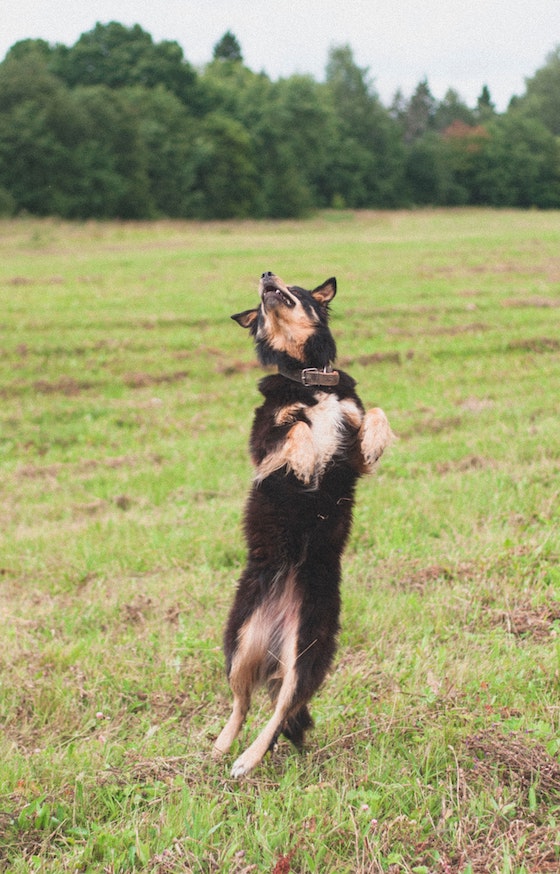
 The week following Charlie’s funeral, Betty came to the clinic with her little dog, Taco. Taco was a little Chihuahua crossed with a Dachshund, black, short hair coat except with long hair on his ears.

 Betty puts Taco on the exam table and looks at me with great concern. “He can’t pee,” she says with tears in her eyes. “What am I going to do? I can’t lose him too, I just can’t.”

 “Let’s look first before we start worrying about something that maybe doesn’t exist,” I said.

 I start through an exam when his distended bladder jumps out at me. I can’t pee for sure, but there are a couple of drops on the exam table.

 Betty points to urine on the table, “that’s what he does everywhere, never more than a couple of drops.”

 I put an exam glove on and lube my left index finger. This will be a tight fit but should be no real problem. Dixie comes in and holds Taco as I insert my finger into his rectum. There are a lot of reasons for urinary obstruction, and some are quite simple to deal with. I reach the level of his prostate, and my heart sinks. Taco has been neutered for many years, and his prostate should be small and smooth on palpation.

 Taco’s prostate is grossly enlarged, solid, and hard, with extensions of this hard tissue in all directions. Both vas deferens are 4 times their normal diameter and hard and bumpy. This extends as for down each vas as I could reach. This was unlike anything I have ever palpated. Old intact male dogs often suffer from an infected prostate Their prostate may reach a massive size, maybe the size of a grapefruit in a large dog. Those cases resolve quickly with antibiotics and neutering. This is not an infected prostate. Prostatic cancer is now number one on my list, and there is no way I can say those words to Betty at this point in time.

 “Betty, he has a problem for sure,” I explain. “We need to get him under an anesthetic, pass a catheter, and drain his bladder. That is number one, then we can do some lab work and get some x-rays. We will also do a pneumocystogram, which is an x-ray where we fill the bladder with air. That allows us to see the lining of the bladder and the pelvic urethra. We should be able to get this done this morning. So if you set up an afternoon appointment, we can go over our findings.”

 After anesthesia, I pass a catheter quickly. I get x-rays, plain film and then a pneumocystogram. The prostate is large, and the urethra that passes through it is eroded and large with tissue hanging into the lumen. This urethral abnormality extends down the pelvic urethra for some distance. The neck of the bladder is also involved with an abnormal lining that extends into the prostate. This has to be prostatic cancer. Something I have not seen in a dog. Time to hit the books.

 It turns out that prostate cancer in the dog is rare. I know that already. It also seems to occur more commonly in neutered dogs. This is not well understood because prostate cancer is thought to be testosterone dependent. It could just be a numbers game. Veterinarians see many more old neutered male dogs than they see old intact male dogs. The pictures are disturbing, they look exactly like what I am feeling in Taco.

 At this time, there are few specialists to send Betty and Taco. She would not go anyway, she thinks I can do anything. The truth is, Taco is on borrowed time, just like Charlie was. My guess is we have very few options. Attempting to remove this prostate will be at the very edge of the ability of this clinic. And even with surgery, we probably will only buy a few weeks at best.

 Betty returns in the afternoon, and I reluctantly go over everything with her. The x-rays, the lab work, and the book findings. The diagnosis is prostate cancer, the only thing lacking to confirm that diagnosis is a tissue biopsy. The prognosis is grave, meaning I don’t expect Taco to survive this cancer.

 “How can this be happening?” Betty says with tears in her eyes.

 I can hardly talk. “We can find a specialist to send you to if you would like.”

 “No, no, Charlie would never allow that. If anything is going to be done, you are the one we want to do it.”

    “There is not much I can do, Betty. This surgery is at the very edge of my skill and equipment. And even if he comes through surgery, I may buy him only a short time, maybe a couple of weeks, maybe less.”

 “We have to try because it could be maybe more. I have seen some of the things you do. We have to try,” Betty says. “When do you want to do this?”

 “We will make time this afternoon,” I said.

  We had Taco under anesthesia and prepped for surgery, on a slow IV drip of Ringers Lactate, and we had passed an eight french urinary catheter into the bladder. His prepuce is reflected to the left side of his abdomen, and clamped in place with a towel forceps. 

 Then a posterior ventral abdominal incision is made, passing on the right side of the prepuce, ligating preputial vessels as they are encountered, the linea alba is exposed all the way to the pelvic brim. The linea alba is opened carefully, exposing the bladder and prostate. It looks far worse than it felt.

 The entire prostate is involved with cancer, and it extends down both vas, beyond my vision. I grasp each vas deferens and pull them free of any attachment. Then I thread a length of OB tape around the pelvic urethra and secure it approximately 1 cm distal to the abnormal tissue. I sever the pelvic urethra and telt the prostate and bladder up to allow me to pull the tip of the catheter out of the prostate. Next, I sever the prostate from any bladder attachment. Now I remove the entire prostate with both vas deferens attached. I ligate any bleeding vessels, examine the cut edge of the bladder carefully. I trim away any tissue that looked suspicious. Then, after reinserting the catheter into the bladder, and using 3-0 Maxon, I sutured the bladder to the pelvic urethra. We filled the bladder with saline and put it under pressure to check for any leakage. Everything was good.

   With a neutered male, we didn’t have to worry about sexual function, but I had to trim enough of the bladder that I was sure that Taco would leak urine. It probably wouldn’t bother Betty at this point, she will just have to find a diaper that fits.

   The closure was routine and recovery uneventful. Taco went home the next day. Betty was pleased, even though she knew that time was short. This would at least give her a short time to come to grips with the recent events of her life.

    Taco did live a couple of weeks longer than I had expected. Betty was sad but buried him out by the pond, near where Foster was buried. The horses were gone now, and the ranch was for sale. Betty planned to move east of the mountains to live with her sister. I am not sure what happened to Charlie’s fish.

 I could always deal with the death of a pet without a lot of emotion. I guess that is the farm boy in me. I still remember the calf that was born without a rectum. It was a perfectly healthy little calf but had no rectum. It did well for a few days, but it obviously had no future. I was in the seventh grade, and when I got off the bus on the calf’s 3rd day, Dad said, “I want you to go get the rifle and take that calf without a rectum up on the hill and shoot her.”

 Simple task, I got the rifle, an old Model 94 Winchester 25-35, pulled the calf out of the pen and tied a twin around her neck, and led her up on the hill for a couple of hundred yards. I sat down on a log with her at my feet. Her big brown jersey eyes looking at me, we talked a little about her problem. I must have sat there 10 minutes with her before I gathered enough strength to stand up, shoot her in the head, and, after ensuring that she was dead, returned to the barn to do my evening chores. 

 Pets and animals die at times, and they die sooner than people in the best of times. I could handle that in my mind. When we started to lose clients, often clients who were also friends, that became difficult, and that was something I never really was able to deal with satisfactorily. There was no family attachment, there was really no circle of friends in our friendship. They were sort of in that special place in our lives, business clients, but clients who we shared intimate facets of their life, and often cultured a special friendship. Their loss was just hard to deal with in our minds. 

Photo by Mylene 2401 from Pixabay

Charlie and Betty, The Fish Pond

D. E. Larsen, DVM

Over the next few years, Charlie would call for a post-breeding infusion on every mare on her second breeding. I don’t think we had a 100% conception rate, but it was close enough for Charlie and his clients to be pleased. On one of these visits, Charlie asked me if I wanted to look at his fish pond. He had dammed up the creek that ran through the back of his property, dumped in a couple of truckloads of fine pea gravel to provide for breeding, and planted it with trout. This pond covered nearly a half-acre, and the water was deep. The creek had year-round flow. These fish were sort of his pets.

 “I let my brother Lee, the pharmacist, bring his kids up to catch a fish once in a while,” Charlie said as he retrieved a coffee can full of pelleted fish food from the little shack beside the pond.

 Charlie threw the pellets into the water in front of us. The water was instantly alive with trout. These were no little trout one might expect to see at a fish hatchery, these were large fish. They looked like they were all 20 inches or more. I stood there amazed, probably had my mouth open.

    “I think they have pretty good reproduction with all that gravel I dumped in up there where the creek comes into the lake. I have not planted any fish for a couple of years, and the numbers don’t seem to go down any. I think there must be some freshwater shrimp in there because they all have pink meat. That or they eat their fill of all the goldfish that you see along the edges,” Charlie said, pointing to a group of 20 to 30 six-inch goldfish hiding in the willows.

 “If you want to bring your kids up, they can catch a fish,” Charlie said.

 “Will my son, Derek, and our youngest daughter, Dee, would love to catch one of these fish. I am not too sure about the other two. I wouldn’t want to catch more than we could eat anyway,” I said.

    “You bring them up tomorrow evening, I will honk when I go by your place on my way home.”

    The next evening Dee and Derek clambered into my truck with their fishing poles. I had set the stage, and they were excited.

    When we got to Charlie’s, he was waiting at the pond. He had a jar of old salmon eggs in his hand. He looked at the poles the kids were carrying. “I don’t know if these will work,” Charlie says as he examines the hooks and four-pound test leaders. “These are pretty big fish, but let’s give it a try.”

    Charlie places a small glob of salmon eggs on Dee’s hook. “Just cast it out there a little way, not too far,” he says.

    The eggs hit the water and begin to sink below the surface. Bam! A large trout rolls as it grabs the eggs. There is a sharp pull on the line, then nothing. When Dee reels it in, everything is gone, hook, line, and sinker.

    Charlie says, “I better get my pole,” as he heads for the shack.

 Charlie’s pole is an old rusted steel pole with about 12 – 15 feet of line tied to end. The line is heavy, it looks like a 50-pound test line. Tied to the tip of the pole with a half dozen granny knots. And with a large double hook at the other end of the line, probably a #4 hook size. The knot securing the hook to the heavy line is the same series of knots that tie the line to the tip of the pole.

    “Now this ain’t no fancy pole, but it catches these fish. We just put a big glob of eggs on this hook like this,” Charlie says as he baits the hook.

    He walks to the water’s edge with the baited hook. “Now I am going to throw this into the water, you need to stand here beside me,” he says to Dee.

 When you hook the fish, and it will happen as soon as this bait sinks, you just hold the pole and back up toward the shack there,” Charle explains. “I will get the fish when you pull him out of the water.”

    Charlie throws the baited hook into the water. About the time it disappears under the water, there is a tremendous tug on the line. Dee almost loses her grip but recovers quickly. 

 “Now, just back up,” Charlie reminds her.

 Dee backs up, struggling to hold the pole with the fish fighting on the other end of the line. A few more steps and this large trout is floundering on the bank. Charlie scoops him up and pulls a little club from his back pocket and wallops him on the head a couple of times. He holds up the fish, probably 23 inches long and close to 8 inches deep.

 We repeat the process with Derek. He is 3 years younger than Dee and has a little more of a struggle with the fish, but it doesn’t take long, and second fish is on the bank. This fish is slightly smaller but still an impressive fish well over 20 inches.

 “Any time you get hungry for a fish, just give me a call,” Charlie says as I load the fish and the kids into the truck.

 “Thanks a lot, Charlie, I will try not to take all your fish,” I say as we head the truck down the driveway.

Photo by Dan Gold on Unsplash

Charlie and Betty Land, Foster

D. E. Larsen, DVM

 Charlie’s horses were pretty well managed, and after the breeding season, there was not a lot to do around the farm. Betty managed to keep their account pretty active.

    “What brings you in today?” I asked Betty when she eased through the front door. Betty was a slightly built lady with black shoulder-length hair. She seemed a little shy most of the time when Charlie was around, but I suspect that she could hold her own in most situations.

    “This darn cat of mine is peeing everywhere,” she said with some concern in her voice.

 This darn cat was named Foster; he was an old guy. He was approaching the golden year for male cats in the 1970s. I seldom saw a male cat over 15, and if I remembered correctly, Foster was going to be 15 this summer. Betty had found him as a kitten under the dumpster at Glen’s Market in Foster. He pretty much had the run of the place now.

    “Peeing all over the place, small puddles or large puddles?” I asked.

    “Oh, they are large puddles when they are on the floor. He peed on the bed this morning. That is why I am here, it woke up Charlie, and he was none too happy,” Betty explained.

    “Well, let’s get him in an exam room and look at him and see if I can get some urine out of him.”

  Pulling him out of the carrier, I noticed that he was much thinner than he was in the past. There was urine in the kennel.

    “Oh my,” Betty exclaimed, “how could there be so much urine already?”

    “We will get a quick look at this urine first, then I will do an exam,” I said as I drew up some urine from the kennel.

    This urine would do fine for a dip stix, but we would need a better collection if we were going to have to do additional testing. I handed the syringe to Dixie and returned my attention to Foster. He was quite thin, ribs were showing through his hair coat. His eyes had early cataracts, sometimes these old guys just have trouble finding their way to the litter box. He was dehydrated also. My guess was either advanced kidney failure, the most common cause of death in an old cat, or possibly diabetes. I seldom saw diabetes in the cat, but it was definitely on the list.

 Dixie popped into the exam room and laid the results of the dip stix on the counter. A four-plus urine glucose and normal specific gravity just about confirmed a diabetes diagnosis.

   “Betty, Foster probably has diabetes. We need to do some blood tests to make sure and to check his liver and kidney function. Then we need to give him some fluids and get him on a stable insulin dose. He is probably going to have to stay with us a day or two.”

    “Doc, I can leave him for the day, but I don’t want to leave him overnight. If he is going to die, I want him to die at home,” Betty said in a stern voice. I had not heard that voice from her before.

    “We can probably work with that, but I will need to see him every morning for a week or so. We will start off with a pretty low dose of insulin and work it up slowly,” I explained.

 “The other thing we need to discuss is what we can expect with his treatment. He is almost 15, and I don’t see very many male cats older than 15. Diabetes is a difficult disease to live with for people. For people to manage the disease in pets is even more difficult. Top that off and cats are also difficult to treat when they have diabetes. A high percentage of pets with diabetes are euthanized within 6 months of diagnosis, just because of the difficulty of living with the disease.”

 “We will do whatever we need to do to keep Foster alive,” Betty said. “I know he is old, and I know he won’t last forever, but we won’t be the ones to give up on him.”

 With that, we kept Foster for the day. His blood glucose was well over 400, and other blood tests were normal. We gave him 300 ml of Ringers Lactate by SQ injection and started him on a low dose of insulin.

 Betty was waiting at the door every morning with Foster. My guess was the barn chores would wait until his treatment was done. Testing at the time was cumbersome. The first few days, we did both a blood test and urine glucose. Foster was obviously feeling much better, looking brighter, and Betty reported him to be much more active and peeing less. My goal was to get his glucose to somewhere around 200, just to a level he could live with and not have much in the way of a hypoglycemia risk.

 By the third day, we were there. “I think this is the dose we use for a couple of weeks,” I explained to Betty. We had been showing her how to do the injections all week. I want to see him still for a couple of days, just to check his urine glucose and give the dose in the morning, Then we will turn you loose at home.”

 Thursday morning, expecting a quick check, Foster’s urine showed no glucose. Great, so much for a simple case. We drew a little blood. Blood Glucose was 50, pretty low.

    “No insulin for Foster today,” I explained to Betty. “Sometimes, in the cat, we will see a remission or sometimes a fluctuation in insulin requirement. So no insulin today, and we will check him in the morning.”

 Friday morning, and there was still no glucose in his urine. We decided to go the weekend without insulin and recheck on Monday. This might prove to be a complicated case to manage.

 On Monday, Foster’s urine showed a 4+ glucose, and his blood glucose was over 300. So we started over where we left off.

    “That would be great if you could check his urine every morning, but I am not sure that you could get urine out him,” I said. “We will have you check his glucose every morning, give insulin if it is positive, and don’t give insulin if he doesn’t have glucose in his urine. That is not perfect, but we will see how that works. You just call in the mornings and let Dixie know how things are going so she can keep his record up to date.”

    So that was the program, Betty was happy, Foster was delighted, I was hopeful that we would not have a wreck. I could not believe that Betty could get urine every day.

 Two weeks later, when Betty was in for a recheck, I noticed that the daily record was complete. There was a two-day stretch where she did not give insulin. Foster had gained almost 2 pounds and starting to look like his old self.

 “Things look like they are going well,” I said. “But it looks like you are going have to check his urine every day, his insulin demands are just going to fluctuate enough that we have to have a daily check. My concern is, how are you going to get urine out of him every day?”

 “That is no problem, I just have him pee in a coffee cup,” Betty said with no expression, just like that was something everybody would do. 

 Betty was able to manage Foster for another 3 years with this simple program of monitoring. Consistently during those years, Foster would have several days each month where he would have no need for insulin. We could have managed him closer and done away with those days, but I am not sure that his quality of life and the quality of life for Charlie and Betty would have been improved.

Photo by Ave Calvar on Unsplash