Cows Never Eat the Stuff

D. E. Larsen, DVM

Here I was again, standing over a dead cow, in the middle of a pasture filled with Tansy, listening to a rancher explain to me that cows never touch the stuff. As I stood there sharpening my necropsy knife, I thought about my long history with Tansy.

My first recollection of awareness of Tansy was at a family picnic at Tom and Kathryn Lawson’s ranch, on the top of Catching Creek Mountain, out of Myrtle Point. The year was 1950, the plant was just then starting to show up on the high ridges of Coos County. We knew it killed cows and horses, but I do not recall seeing a loss. My oldest brother had a summer job the following year, working for Coos County spraying Tansy, mainly on the high ridges in the county. It did not take long for it to spread to the valleys. By the time I was 10, pulling Tansy was a standard summer chore for almost any farm kid in the county.

At least this cow was dead. In the 1970s, the diagnosis was challenging in a live animal before it was near death. Blood work could show liver failure, but that was not specific to Tansy toxicity. 

I was always amazed at how these guys could be in such a state of denial. They wanted an answer to the death, but one that fits their opinion that cows would never eat the stuff.

It only takes me a few minutes to open this cow up. I slit the skin down the ventral midline and reflect the hide up to her back. Elevating the legs and freeing them of their muscle attachment, I flip both legs and the skin to layout over her back. Then I open the belly and ribs, reflecting them back, so I now have the cow opened for view.

“So, I want you to look at this, Tom,” I say as I start to point out the visible signs of liver failure. “This belly shows all the signs of liver failure. The yellowish discoloration to the tissues, the severe accumulation of fluid in the belly, the chest is normal, and the liver is swollen and pale yellow in color.”

“Okay, I can see liver failure,” Tom says. “But there has to be a lot of things that cause liver failure. How can you be so sure it is Tansy?”

“Well, an old veterinarian, Dr. Pierson, who I respect very much, always said: “When you are in a barn and hear hoofbeats, you look for a horse, not a zebra.”

“I guess I don’t know what that means,” Tom said.

“That means you rule out the obvious diagnosis before you go off in some unrelated direction, trying to prove a once in a lifetime diagnosis. In my mind, when I stand in a field filled with Tansy, looking at a cow with liver failure, the diagnosis is Tansy Toxicity until I prove that it is something else. Now let me get a piece of this liver and show you the insides.”

I slice off a large section of the liver. The very sharp knife almost vibrates as it is pulled through the liver tissue. I lay this piece of liver on the cow’s hip for a makeshift table.

“I can send a piece of this into the lab, and the pathologist will give us a confirmed diagnosis,” I say. “Tansy Toxicity has a very characteristic appearance under the microscope. First, I want you to look at the cut surface of this liver. Think about the liver seen in the store and compare it to this liver. This liver is swollen with rounded edges, not dense with sharp edges, pale yellow in color rather than deep red, and this cut surface has the appearance of nutmeg, not a consistent deep red appearance.”

I handed Tom the knife. “I want you to drag this knife through this liver. You watched how sharp this knife is when I opened this cow. I want you to feel how it almost vibrates as it cuts through this chunk of liver.”

Tom takes the knife and makes a slice in the liver. “It almost feels like it is cutting steel wool.”

“That is maybe a good analogy,” I say. 

“Okay, Doc, you have presented me a pretty good case,” Tom says. “And I guess we are going to send a piece of this to the lab, just to be sure. Why is it then, that we don’t have a bunch of cows lying here dead?’

“You are a little bit correct, Tom, when you say the cows never eat the stuff,” I say. “Most cows will avoid it most of the time. It is most dangerous in the hay, and also after it is sprayed. The plant takes up a lot of sugars as it wilts after being sprayed. Cows will find it acceptable for a week or two as it dies. Also, some cows, and some horses, will develop a liking for the stuff, and they will seek it out.”

“So you are saying we are both right,” Tom says.

“Only sort of,” I say. “This cow didn’t eat a bunch of Tansy yesterday and then died. She could have eaten a toxic dose months ago. You are just lucky that you found her dead and not sick. Making a diagnosis in a cow getting ready to die from Tansy is difficult, and expensive. Sometimes I will make several visits before ending up doing a liver biopsy. There is a lot of frustration in treating a Tansy Toxicity. But time always tells us, all of these cows die. I looked at a dead cow once and her 3-day old calf, who was also dead. Both of them died of Tansy Toxicity. The cow is easy to understand. The calf is a little more of a question. It is highly unlikely it could have eaten enough Tansy to be a problem. There is some evidence that the toxic alkaloids are passed in the milk. But probably not in a dangerous concentration. That leaves the placenta; this calf probably received a toxic dose from its mother through the placenta.”

“What do I have to do now to get control of this stuff?” Tom asked.

“It is tough, and it is not going to happen overnight,” I said. “Maybe not even in a year. This stuff it too high to benefit from spraying. I would mow it down and either compost it or burn it if you can. Then next spring, you need to spray the pasture. Keep the cows off the pasture after spraying for 2 – 3 weeks. Then next summer, pull any plants that make it through all of that. Probably most important, get all your neighbors to do the same. And talk to the County Extension Agent. They promise that a caterpillar is coming that will eat the stuff. I haven’t seen any yet.”

“What do I need to do with this carcass?” Tom asked. “Is it toxic? I mean, if my dog gets out here and eats on this, is it going to kill him?”

“Now, that is an interesting question,” I said. “And I don’t have an answer for that one. I will definitely check the books, but I am not sure anything is written about the toxicity of the tissues. I doubt if there is a problem, but I don’t know. I would call the rendering company, or I would bury it.”

Under the Old Plum Tree

D. E. Larsen, DVM

It was almost midnight in the early fall of 1977 when Lloyd called with a sick cow. 

“The boys say she has been eating plums. She seems to be pretty sick, Doc. Do you think she will be OK till morning?” He asked, obviously quite worried about his favorite cow.

“How many plums do you think she ate, Lloyd?” I inquired, hoping I could justify rolling over to go back to sleep.

“The boys say she was under that tree all afternoon, and there are plums all over the ground. The limbs are hanging pretty heavy with them,” Lloyd replies.

“It’ll take me a little while, but I will be there shortly,” I say as I throw my legs out of bed and start looking for my clothes.

Lloyd is a tall thin, soft-spoken man with a thick mustache and thinning hair. I have only been to his ranch once before, but I have seen Lloyd and his dog at the clinic several times.

I turned onto Scott Mountain road and passed Ayer’s driveway. It’s well past midnight as I wind up Scott Mountain road. It doesn’t take long, and I break into the open fields of Pat’s place. The moon is full, and the crisp autumn night is still. The stars are bright, and the sky is very striking out here, far removed from the city lights. 

As I enter the timber starting down the backside of Scott Mountain, a bobcat suddenly is surprised by my headlights in the middle of the road. He runs helter-skelter ahead of me down the mountain road. With high banks on both sides of the road, he runs headlong, looking for an escape from the glare of my headlights. It’s unusual to see a bobcat on the road, and I’m a little surprised at the speed he is traveling. The road suddenly opens again, and he darts into the brush on the right of the road.  

Lloyd and his son are waiting for me at the door of a small barn next to the road. A very miserable cow is standing in the milking stall of the shed. She is not in a stanchion, which is probably a good thing because there is a possibility of her falling.

The old Jersey stood head down, was not wanting to move. The left side of her abdomen quite distended with gas. I didn’t need a rope or halter to handle her, she is miserable enough that she doesn’t want to move.  

I slide through the gate and start doing an exam. Her temperature is normal, and her chest sounds are normal. When I got to her belly, her rumen distended and is hardly moving. Then I start a rectal exam, Standing on her right side, I begin to insert my gloved left hand into her rectum. She has a major blowout of watery diarrhea, just missing me.

“That was close,” I say. “Has she had that diarrhea for awhile?”

“No, she has been fine until tonight,” Lloyd said. “The boys say that she was eating plums all afternoon, out under the old plum tree we have out on the hillside. Most of the time, that tree doesn’t have much fruit, but this year it’s loaded.”

Using a Frick Speculum, a metal tube to keep the cows teeth from chomping on the stomach tube, I pass my large rubber stomach tube into her rumen, the first stomach of cows. I blow a deep breath of air into the tube to clear the tube of obstructing rumen content. I pull the tube from my mouth and point it away from me. The rumen gas fills the small shed. The smell of fermented plums is overwhelming. The old Jersey feels better with the relief of the gas. I pump a gallon of mineral oil into the rumen. This is to aid in the passage of the plums through the gut. Then I pump in a gallon of warm water with a pound of Carmalax powder dissolved in it. Carmalax is an antacid, laxative, and rumen stimulant all rolled into one.

“She’ll be fine, Lloyd. But you probably don’t want to be caught standing behind her in the morning,” I say, smiling as I begin putting things away in the truck.

What a beautiful drive home with the full moon.  I enjoyed the night. I didn’t see the bobcat again, even though I looked closely along the edge of the road where I had last seen him. He probably would not make the mistake of being seen on the road again for a long time. It was going to feel good to get back to a warm bed and snuggle close to Sandy.

When I called Lloyd the next day, the cow was doing great.

“I see what you meant last night,” Lloyd said, “She sort of plastered the walls of the shed during the night.”

Photo Credit: Photo by Ivanna Kykla from Pexels.

Egor

D. E. Larsen, DVM

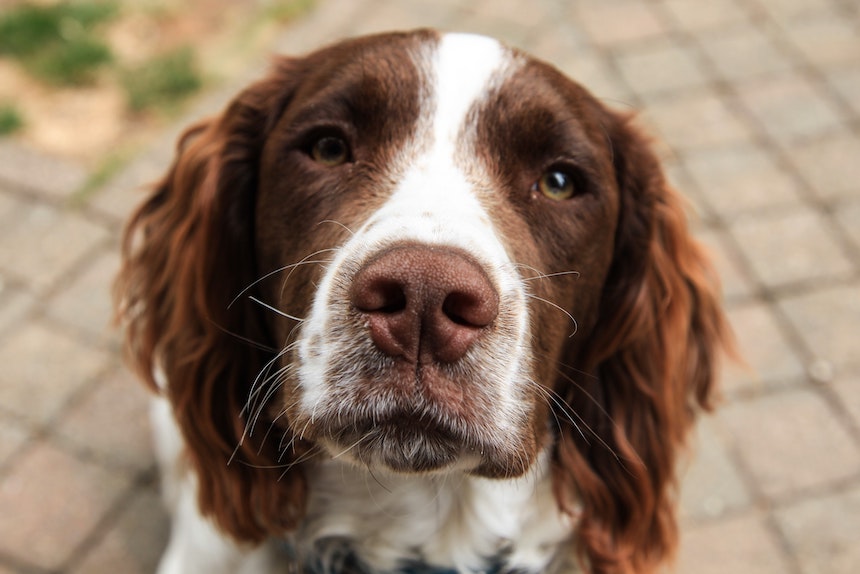
Egor was a large mix breed dog.. He was large enough that he could have had some Saint Bernard in that mix. His massive head sat on a body with a broad flat back that reminded one of an aircraft carrier’s flight deck. He weighed over 110 pounds and was generally treated on the floor of apparent reasons.

Joe first called for me to see Egor in September of 1976. I was doing house calls, then as the clinic was still several months from completion. Egor was 9 years old at that time, and he was beginning to show his age.

“Good morning, this is Joe, I was hoping you could look at my dog, Egor. He has a torn toenail.”

Joe and Kathyrn lived in a small house. The living room was cluttered with knickknacks, mostly old clocks, and antiques. Then, when you put a couch and two chairs in the small room, there was little room to work on a large dog. We moved to the front yard.

“This toenail is broken back into the quick,” I explained. “This is going to be painful for a couple of days, even after I clip it. We are going to have to do a nerve block on this toe, and that might be painful also. Hopefully, Egor is going to let me do this.”

“Egor is a tough dog,” Joe said, breathing hard from the short walk to the front yard. “You can do anything to him, and he won’t move.”

I had Egor sit and picked up his paw. When I inserted the needle in each side of his toe and injected a good dose of Lidocaine for a nerve block, he did not even flench. We waited a few minutes to make sure the nail was numb. Joe’s breathing was improved with the short rest, but you could still hear every breath as he struggled to exhale. 

I wiggled the broken portion of the toenail, watching Egor closely. If he felt anything, he was not showing it. I took my nail scissors and snipped off the broken portion of the nail. The blood flow was enough that I was glad we were outside. I held a cotton gauze on the bleeding nail for a moment and then put a silver nitrate stick on the point of bleeding. It took a couple of minutes, but finally, the bleeding stopped.

“What if that starts to bleed after you are gone?” Joe asked.

“All bleeding stops, eventually, one way or the other,” I replied. Joe did not understand the comment, or he didn’t think it answered his question.

“If it starts bleeding, you give me a call, and I will come back, I am not too busy yet, and I live just a little way up Ames Creek,” I replied.

That was the first of many visits with Joe and Egor. It was always a sight to see Egor coming to the clinic door with Joe hanging onto the leash, struggling to keep up. They would come through the door, and Joe would grab a chair, entirely out of breath. Egor would be wagging his tail as he went into the exam room. Joe always waited in the chair.

In April of 1978, Egor developed acute kidney failure. His prognosis was poor.

“He means the world to me, Doc,” Joe said. “I can’t give up on him. If you can do whatever is possible to save him, I will find a way to pay you.”

“He is a huge dog, Joe,” I said. “There is less than a 50% chance he can survive, and treatment is going to be expensive.”

“My wife has all sorts of antique clocks,” Joe said. “You can have your pick of the collection.”

“Okay, Joe, we will do as much as we can. But you must know, there are no promises. Sometimes, all the money in the world cannot buy a cure.”

“I understand that, Doc,” Joe said. “But without Egor, I won’t last a week.”

“We will keep him, at least 3 days, probably more likely a week,” I said. “I will keep you posted on Egor’s progress.”

“I can’t take him home at night?” Joe asked.

“I am going to be running IV fluids around the clock,” I said. “He is going to need to stay if we are going to have any chance of saving him.”

Egor was a great patient. He was very ill, had IV tubes hanging everywhere, and we were coming at him with needles for a blood draw or an injection multiple times a day. His tail always wagged. He hated the bland food he was allowed, but he would lick your hand when the bowl was put in the kennel. 

After three days, he greeted me with a bark and a bounce when I came into the kennel room. He was feeling better. His kidney numbers edged back toward normal. When I called Joe, I tried to instill only cautious optimism.

“Good morning, Joe,” I said into the phone when he answered, only allowing a single ring. “Egor is improved this morning. His kidney numbers are close to normal this morning, and his urine has some concentration to it. He is not well, but much to my surprise, he is improved.”

“Does that mean I can take him home?” Joe asked. “I have been worried to death that he is going to die down there, Doc. I know we all have to go some time, I would just like to be with him when it is his time.”

“I would like to keep him one more night,” I said. “I will take him off the IVs, and we will see if his kidneys can maintain him on just water.”

Egor bounced out of the clinic the next day. He almost knocked Joe over, he was so happy to see him. Joe had no understanding about how incredibly lucky we were to be seeing Egor go home. We loaded him down with a case of kidney diet food and oral antibiotics. I was not confident that Joe would have the strength to keep Egor on the special diet for an extended time, but for today, everybody was happy.

“You and your wife come by the house this evening and pick out a clock,” Joe said as he and Egor went out the door.

“Do you think they have a clock that is worth enough to cover this bill?” Judy asked.

“I guess the value of an antique is based on perceived worth,” I said. “Seeing those two go out the door together, is a pretty precious event in its self.”  

Sandy and I dropped by Joe’s house that evening. Egor greeted us at the door as if he hadn’t seen us in weeks. Sandy and Kathryn looked over the clocks as I sat and talked with Joe and Egor.

Sandy selected a modest mantle clock. Kathryn had some large clocks that she felt had a higher value and tried to get Sandy to make a better selection. We had discussed our needs before we stopped, and we needed a clock that we could display, not one that took up a lot of space.

The Clock is still on our mantle.

Egor did well over the next months. Not perfect, but pretty well. The bland, low protein, diet required in Egor’s long term management did not appeal to either Joe or Egor. My guess was that Joe tried but likely cheated some.

Egor was losing a lot of protein in his urine and losing weight. His kidney numbers continued to hoover close to normal, and he maintained his high spirits. But when he would drag Joe into the clinic, it was evident that neither one of them were their old selves.

Joe died in October of 1979. The family decided that Egor was too ill, and too lonely without Joe, to go on. They brought Egor to the clinic for the last time a couple of days following Joe’s death. We were busy that day, and Egor was left in a kennel for a short time before I could find a few minutes for him. This should have been nothing for Egor.  He had been in this very kennel for days at a time in the past.  

Egor sat in the kennel and howled a loud, mournful howl, as I have never heard a dog howl before or since.

If ever a dog knew his fate, Egor knew!

Photo by Jozef Fehér from Pexels