D. E. Larsen, DVM
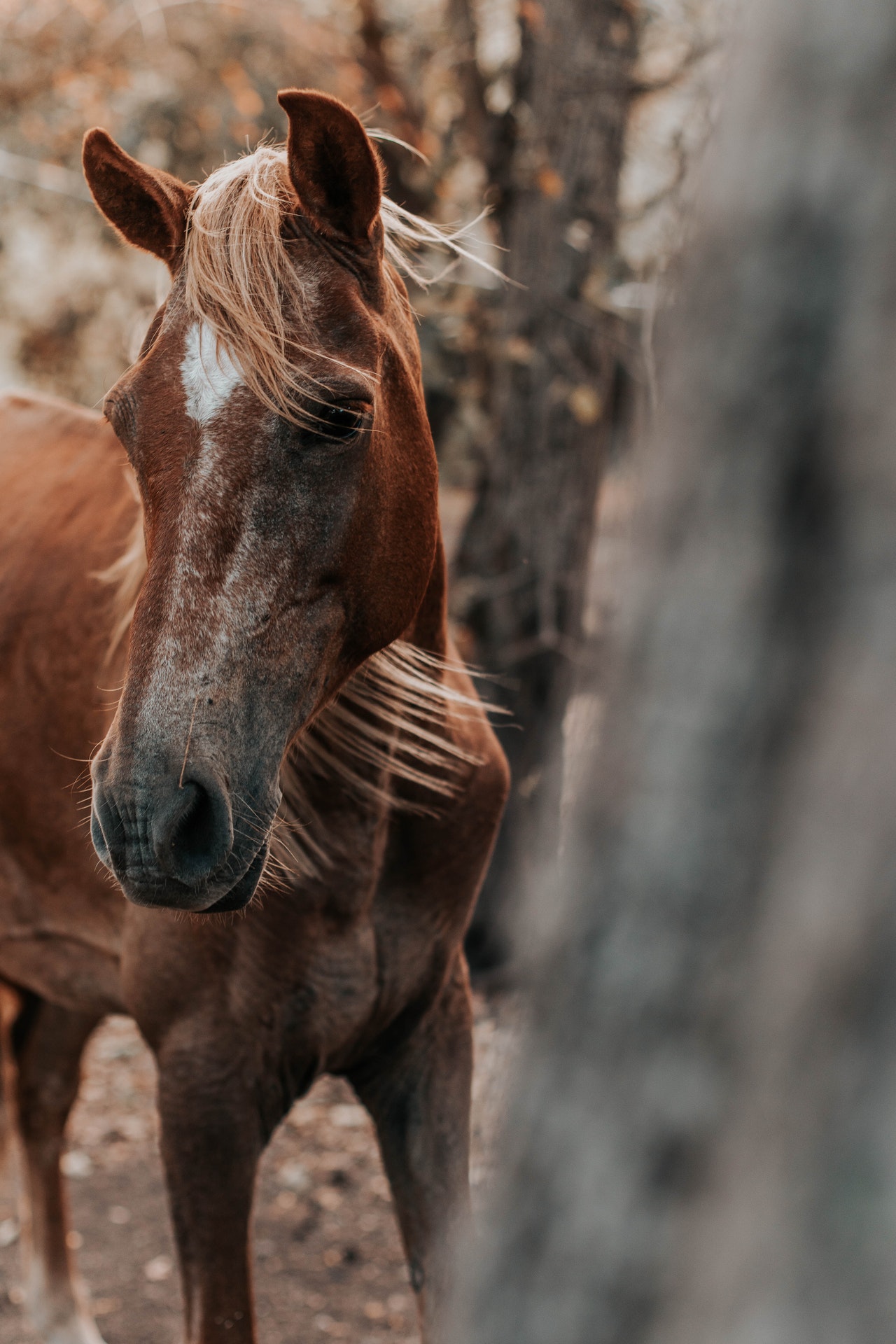
Standing at the corral fence, we were looking at the ugliest horse that I had ever seen. She was an older roan mare that my father-in-law, Jim Leibelt, had just adopted from the Bureau of Land Management Wild Horse Adoption Center in Burns.
She looked like she had just stepped off a Spanish galleon, a real mustang in every sense of the word. Her massive head dominated her features. It made her appear unbalanced, almost like a trout living in a stream with little or no food source. Long hair hung from her lower jaw, making her head look larger than it was. Her hooves were large and splayed out from a lifetime on the open range. Her ribs were countable, indicating that grass on that range was sparse.
She paced up and down the far fence of the corral, uneasy with our presence. Her experiences with people had likely been unpleasant. She would rest her head on the upper rail at times as if she was trying to gauge the height. Just in case she needs to jump out.
“Are you sure want to pregnancy check her, Jim? I asked.
“I would like know, just so we can make some plans for taking care of a foal,” Jim said.
“How do you think we are going to do that without getting killed?” I asked. “I don’t think I am going to be interested in standing behind her.”
“I figure we can run her in the chute,” Jim said.
“I am not much of a horse doctor, but I don’t think that would be a good idea,” I said. “She would tear herself up in there.”
“The other option is to run her into the crowding alley and throw a rope on her, and you can check her reaching over the fence,” Jim said.
“We can try it that way,” I said. “We might get lucky.”
Jim opened the gate into the alley, and she ran right in when he started over the fence on the far side of the corral. He closed the gate, and we pushed her up the alley toward the squeeze chute. Jim lassoed her and tied the rope to a post at the end of the alley.
All hell broke loose. When the mare realized she was tied, she fought the rope for all she was worth. She pulled back, throwing her feet in all directions. Her front hooves seemed to reach the top rail of the alley. This fight went on for a surprisingly long time before she choked herself enough to settle down.
The walkway on the outside of the alley fence allowed me easy access to her. The major problem was it was on her left side with her head to my left. That meant that I would have to check her with my right hand. I was almost blind with my right hand rectally. That was sort of a funny thing. I trained myself to do rectal exams with my left hand, leaving my right free for any other tasks that may be needed. I could almost see with my fingertips of my left hand, not so with my right hand.
With a lubed plastic sleeve on my right hand, I took a deep breath and leaned over the upper rail. The old mare had decided that she caught; she did not move as I inserted my hand into her rectum. I advanced my arm, halfway to my elbow my hand bumped right into a foal. Pregnant for sure, I swept my hand over the fetal head and feet. I would guess close to 6 months. Good enough for family work.
“Jim, she is about six months pregnant,” I said as I pulled my arm out and stood up, thankful for being in one piece. “That is a rough estimate, but pregnant for sure. Now we just have to get that rope off her.”
I had never been more thankful for a quick-release honda. Getting this rope off this mare without a quick-release would be difficult if not dangerous. I grabbed the short leather thong on the quick-release and gave it a good pull. Then I quickly ducked as the rope flew when the mare threw her head up and quickly backed out of the alley.
I was thankful that it was over. It was a little sad that she was not the only wild horse I would have to deal with in those early years. When BLM started adopting the wild horses gathered from the Eastern Oregon rangelands, it seemed everyone wanted a free horse.
***
I slowed the truck to a crawl as I made a couple of the sharp corners on Old Holley Road. I looked carefully for the driveway to the place on the corner. They had called to have a horse castrated.
A small group of people was in the pasture behind the barn, standing and talking while watching me pull my truck into the pasture.
“Is this where I am supposed to geld a horse?” I asked after I rolled down my window.
“Yes, this is the place, Doc,” Ed said.
“Where is the horse?” I asked.
“He is in the shed there,” Ed said, pointing to a small shed behind the barn.
“Well, let’s get him out here, this pasture looks like a good spot to do the surgery,” I said.
“Can’t do that, Doc,” Ed said. “He is sort of wild. I don’t think he has ever had a hand laid on him. We don’t have any facilities for handling a wild horse. We just offloaded him into that shed, and that has been his home for the last few days.”
Great, I thought, now I get the rest of the story. I don’t know what they expect me to do with a wild horse, free in a pen, and has never been touched by man.
I entered the shed, there was a large gray stallion, cautiously eating hay out of the feed rack. He glanced at me but did not seem concerned at my presence. My guess was he had been around people at some point in his life. Many wild horses on the range have gone wild from some of the ranches in the area.
Just the week before this call, I had read an article in Veterinary Medicine, a minor professional journal. This article was about sedating a horse in this circumstance. They suggested using a full ten cc of Acepromazine, a popular tranquilizer, in a syringe, squirted into the mouth of the horse. There would be rapid absorption through the oral mucus membranes, plus whatever he swallowed. It just might be the ticket with this guy.
Ed came over to the truck when I returned for my rope and a syringe full of Acepromazine.
“What do you think, Doc?” Ed asked. “Are you going to be able to handle this guy?”
“My first thought was just to leave,” I said. “You need to be a little more forthcoming with information when you schedule an appointment. But I do have a trick to try on this guy. If it works, we can maybe get the job done. If it doesn’t, you are on your own.”
I returned to the shed and offered the stallion a handful of grain. He quickly nibbled at it and nuzzled my hand for more.
“You know what grain is and where it comes from,” I said to the horse who was still nuzzling my hand.
I took another handful of grain and held out my hand for him, making him stretch his head through the feed rack to reach the grain. As he ate, I slipped the syringe into the corner of his mouth. He did not object. Then with a hard push, I shot the full dose into his mouth. He reared and pulled his head out of the feed rack, getting a good gash on the top of his head.
The reaction was rapid. Within a minute, his head was starting to hang down. Giving him a little more time for the Ace to work, I returned to the truck and got everything ready to anesthetize him and do the surgery.
Then I threw a rope around his neck and led a staggering horse out into the pasture.
Surgery was a breeze. Less than 2 grams of Pentathol was needed to put him under anesthesia. I laid him on his right side and pulled his left leg out of the way with a sideline. He was 4 or 5 years old, and his testicles needed a strong pull to break the cremaster muscles, but other than that, it was a standard castration. I removed the bottom of the scrotum and stretched the incision to allow for adequate drainage. Then I gave an injection of long-acting penicillin and his Tetanus vaccination. I didn’t want any complications with this guy.
“Doc, how would you recommend we tame this guy down?” Ed asked as we waited for him to recover.
“I would get a halter on him and a long chain to a heavy tire or something he can drag around the pasture for a few days,” I said. “This guy is not completely wild. He knows what grain is, and with a little work, he will tame right down. If you work with him several times a day, you will have him tamed down quickly. Then you can figure out which one of you are going to try to ride him.”
That proved to be adequate advice. The horse was dragging the wheel around the pasture for a week or two, and then Ed had him eating out of his hand. He became an excellent horse for them.
Photo Credit: Photo by Rodolfo Quirós from Pexels