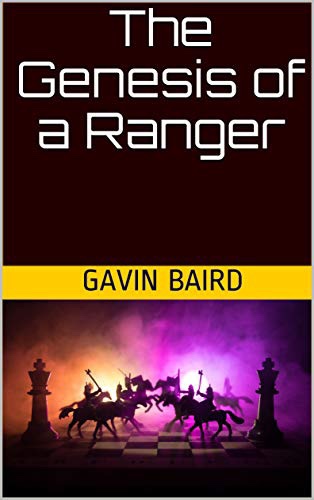
My Grandson, Gavin Baird, 17 years old, beat me to the presses. He published his first novel today. Congratulations, Gavin!
Cookie’s Litter

D. E. Larsen, DVM
“Dr. Larsen, This is Maude, from Brownsville,” Maude said into the phone. “Cookie, my best milk goat, is about ready to deliver. She is so large that she has been down for two days. Can I bring her up to your place so you can look at her?”
“That’s fine, Maude, you just need to know that we are not in the clinic yet,” I said. “We are still practicing out of our house on Ames Creek.”
“I think I can find it,” Maude said. “It doesn’t bother me, and Cookie is used to an old barn, so a garage won’t be a problem for her.”
When Maude arrived, and we got Cookie unloaded, her appearance was amazing. She had been down for two days because her abdomen was so massive, she could not support it standing. I was worried that she might even have a Hydrops Allantois, but I could easily palpate a couple of very active kids in the uterus.
The only time I had seen Hydrops was while I was in school at Colorado State University, in a cow bred to a Bison bull. In that cow, you could not palpate any fetus. And on C-Section, the calf was dead. Hydrops is common in cows bred to Bison bulls. The Beefalo’s calves come from Bison cows bred to a Bovine bull.
“We have some decisions to make, Maude,” I said. “If we wait for her to deliver, there is a good possibility that she will suffer significant musculoskeletal injury from being down for such a long time. If we do a C-section, we take a chance on the kids being early. That will mean that all of them may not survive.”
“You say, all of them,” Maude said. “How many do you think are in there?”
“I think a bunch,” I said. “I have seen 4 lambs in a ewe, and she was almost this big. There is about a 1 in 10,000 chance, and it might even be higher in the goat. There are at least 3 kids in there, I think there may be 4.”
“I think I am more worried about Cookie than I am about the kids,” Maude said. “It would be nice to get a bunch of kids out of her, but I want you to know that Cookie is the priority in this event.”
“So, I hear you say that you want to do a C-Section,” I said.
“Yes, that is what I want to do,” Maude said. “When can you do it?”
“Maude, I am just getting started here,” I said. “My days are not full, I can do it right now.”
“Good, can I stay and watch?” Maude asked.
“You are more than welcome to watch,” I said. “In fact, you might be put to work if we have 4 kids in there. I see you have a couple of bales of straw in the back of your pickup. Is there a chance we could use one of those to bed her down. She would be more comfortable than on the bare concrete.”
“That is what I brought them for,” Maude said. “Let me pull them out of the truck.”
We used one of the straw bales to bed Cookie down in the back of the garage while we set up for surgery. Sandy sets some chairs out for Maude and her driver.
“Once we get set up, things will go pretty fast,” I explained to Maude. “I will roll her up on her back, and we will clip and prep an area in front of her udder. I will make an incision, then we will start pulling kids out as fast as I can. If there are 4 of them, everybody will have a kid to take care as I close up things for Cookie.”
“I have never seen anything like this before,” Maude said. “I guess I will be okay. At least if there are kids to care for, I will have something to do.”
Paula had everything ready, so we rolled Cooked up on her back. Again, I was amazed at the size of her belly. It spread out in both directions.
“I don’t think she could roll off her back if she tried,” I said to Paula. “You better tell Sandy to get every spare towel she can find. We are going to spell all sorts of fluid out of this uterus.”
With the abdomen clipped and prepped, I made the incision on the ventral midline in front of the udder. My kids watched from the kitchen doorway, and Maude sort of stretched her neck to see better.
“I thought there would be more blood,” Maude said.
“As long as I can avoid these large milk veins coming from the udder, there should be very little blood,” I said.
I extended the incision through the linea alba, pulled the omentum forward, so it was out of the way. Then I reached in to grab the head of the first kid I encountered. I drew this head through the abdomen incision and incised the uterus carefully.
The kid’s head popped out of the incision and shook. I think she was ready to be out of there. Grabbing her neck, I pulled her the rest of the way through the incision. There was a rush of fluid that came with her. I handed her back to Maude. Maude was waiting with a towel.
“This kid is the same size as a single,” Maude said.
“No wonder she is as big as a house,” I said as I reached in and grabbed the second kid by the head also.
This kid came out fighting also. And like her sister, she was the size of a single.
“Two girls so far,” I said. “In a couple of years, you’re going to have so much milk you won’t know what to do with it.”
I reached in and grabbed a couple of hind legs in the far uterine horn. I tugged, and they did not move a lot. I felt close, I had one leg from two different kids. Correcting my error, I pulled the third girl out by her hind legs.
“Maude, there is another one in there,” I said. “And this one is another girl.”
Sandy stepped up, with the help of our girls, to take this kid. Maude had the first kid standing already. Everybody was busy now, and there were smiles all around. Nothing like baby goats to make people happy.
I reached in and pulled out the last kid, another girl.
“This probably sets some sort of a record. Quadruplets, and all females,” I said as I handed the last kid to Paula.
I started pulling as much of the fetal membranes out through the incision as I could. There is no way to take them all out with damaging the uterus. But I would pull out a bunch and cut them off with scissors. We had all the towels and straw soaked with uterine fluids.
“This is probably going to take as long to clean up this mess as it took for the surgery,” I said, more to myself than to anybody else.
I closed the single incision in the uterus. It was about a six-inch incision, sort of amazing that you could drag 4 kids through that incision. After returning the uterus to a normal position, I closed the Linea Alba with a sliding mattress suture using #2 Dexon. The external incision was closed in a conventional two-layer manner.
“Cookie, you are going have a flabby belly for a time,” I said as we rolled her off her back and made her comfortable on a clean spot in the straw. She wanted the kids, so Maude started handing them over to her one at a time. It didn’t seem to bother her at all to have all 4 of them to care for.
“What do you think we should do with her now, Doc,” Maude asked.
“I think we should milk her out and get some colostrum into the kids,” I said. “It is early enough that leaving the kids with her for the day will probably be the best. I will give her some IV Glucose and Calcium just to give her a little more energy. I am guessing that she isn’t going to be up until morning. I would like like to keep her until then. I don’t know if I can handle the 4 kids running around the house.”
“I will go home for the day,” Maude said. “I have a lot of chores waiting. I will get back here around 5:00 this afternoon if that is okay. I will take the kids home. That is not a big thing. I have plenty of colostrum in the freezer, and I don’t leave the kids with my milkers anyway.”
“That will work fine,” I said. “Then, we will just see what morning gives us with Cookie.”
Cookie was up and looking for both food and a milker when I checked her early the next morning. Luckily, Maude pulled into the driveway about when I was heading into the house to give her a call.
“I guessed that Cookie would be up and ready to be milked,” Maude said. “I figured you would appreciate getting her out of here early.
“I think she will be ready for the milking stand by the time you get home with her,” I said. “She should be good to go. I see she passed her membranes last night. Just keep an eye on her, and I will drop by to just glance at that incision in a couple of days. I generally leave those sutures in place for about 3 weeks, just to be safe.”
Cookie healed with no problems, and the kids became a great addition to Maude’s milking string.
Photo by Brenda Timmermans from Pexels.
Lambs and Crab Legs
Lambs and Crab Legs
D. E. Larsen, DVM
Gus Johansen came through the clinic door in a rush. His stocking cap was in his hand, and his gray hair was sticking out in every direction. Gus was a large man who came from Norway as a young man. He was a king crab fisherman who had a small sheep ranch a little way out of Enumclaw.
“Doc, I am glad I got you,” Gus said, almost out of breath. “I have a ewe that is ready to lamb. Her insides are pushing out. She is so large, there have to be 3 lambs in there. I have never seen a ewe so large.”
“Sounds like I should get a look at her,” I said. “I haven’t been to your place Gus, can you leave your address, and I can get out there this afternoon.”
“We brought her with us in the little trailer,” Gus said. “I hate to pressure you, Doc, but I have to leave to go fishing tomorrow. I can’t leave this problem for Ella to deal with alone.”
“Okay, pull around back, and we will unload her into one of the large dog runs,” I said. “I will be able to look at her in 20 minutes or so. I have to finish the morning treatments on a couple of dogs in the hospital here. The girls will get her cleaned up during the time.”
I sent Kathy out to help unload the ewe and get her rear end clipped and scrubbed. I was guessing he was talking about a prolapsed vagina. A ewe with large twins or triplets made it almost common for them to prolapse their vagina before delivery. They would just run out of room in their abdomen.
“Boy, your description was pretty close,” I said to Gus as I looked at the ewe. Her entire vagina was prolapsed, with the cervix bulging a little. There was content in this prolapse, maybe the bladder, some intestines, or maybe one of the lambs.
“Gus, it looks like she is pretty close to lambing,” I said. “She is dripping milk, and the mucus plug is gone from the cervix. If we are up against a wall, time-wise, it might be better to just take these lambs with a C-Section. There is a slight risk in doing that, these lambs could be early, and we could have problems saving them.”
“I was hoping you would take them now, Doc,” Gus said. “This is one of Ella’s favorite ewes. The lambs would be nice, but the ewe is our biggest concern. And I am going to be gone for at least 2 weeks. I want to make sure Ella doesn’t have to deal with this.”
“You have my home number,” I said. “Ella can call me any time if she has problems while you are gone. She needs to know that I am okay with her calling.”
Gus went back to the car to discuss the decision with Ella. This would make a busy morning for me, but it will be better than working with a hysterical Ella at midnight.
“I think we want you to do a C-Section, Doc,” Gus said. “Can you do that now?”
“Yes, we will do it right now,” I said. “I will only use local anesthesia, so she will be able to go home just about any time after we are done. If you and Ella want to stay and watch, that is fine.”
“Oh, no, you don’t want her here,” Gus said, jerking his head toward Ella in the car. “We will go home and do a few chores and get set up for a couple of lambs. Will you be done by noon?”
“This is not going to take me very long,” I said. “And I am going to get started right away. And Gus, my guess is there are 3 lambs.”
“That will be nice,” Gus said. “She is a good momma, but we might have to bummer one them. That will keep Ella busy while I am gone.”
“So, let’s get a surgery pack, towels, and a drape, gloves, and some Lidocaine,” I said to Kathy as Gus and Ella backed the trailer around so they could leave.
We rolled the ewe on her back and clipped and prepped her belly. I planned and ventral midline incision right in front of her udder.
It was quite a sight with her on her back. She had one large belly.
C-Sections on ewes are usually a snap. With the ventral midline approach, the lambs are within easy reach. The surgery is often brief.
With everything set up and the incision site blocked with Lidocaine, I made the incision. The incision was complicated by a large milk vein coursing its tortuous path right up the midline. I would have to dodge it through the entire procedure.
One lamb kicked me as soon as I entered the abdomen. I pulled his head up out of the incision and incised the uterus over his head. Grabbing him behind the ears, I pulled him out. He was shaking his head before I even let go of him.
I found another lamb in the same uterine horn as soon as I reached back into the uterus. I grabbed him by the hind legs and pulled him out of the same uterine incision. By now, we had all the girls from the office out to take a lamb as I handed him off.
I explored this right horn of the uterus to make sure there was not another lamb there. Sometimes I found it easier to make a second incision on the opposite uterine horn, but this time there was plenty of room to reach the left side. I immediately ran into the head of the third lamb.
“I knew there would be three of them with the size of this belly,” I said as I extracted the third lamb.
“You better check for another one,” Kathy said. “You know what happened to Dr. Jack a while back.”
I smiled as I handed off the third lamb.
“Yes, I will check, but the odds against having 4 lambs are pretty high.”
I ran my hand into the depths of the left uterine horn, trying to remove some of the membranes. And then this guy kicked me. I looked at Kathy and smiled.
“There is another one!” She said. “Can I have it? Please! Ella will be too busy with 3. They will never suspect there were 4.”
“Kathy, you know we could never do that,” I said as I pulled the 4th lamb out of the incision. “I would never be able to talk to Gus with a straight face.”
With all the pulling and tugging on the lambs, the vaginal prolapse had corrected itself.
“She is going to have so much room in this belly she won’t know what to do with it,” I said.
I closed the four-inch uterine incision with number 2 Dexon and the linea alba with the same suture, using a sliding mattress on the linea alba. After closing the skin, she was ready to go.
We rolled her over onto her side, and she just kept on going and landed on her feet. She immediately turned her attention to the lambs.
“You go in and give Gus a call,” I said to Kathy.
“They said they had chores to do,” Kathy said.
“That was just so they wouldn’t have to watch,” I said. “Ella will be home sitting by the phone. I bet it won’t ring twice.”
I was right, of course. Gus and Ella pulled into the driveway in less than 10 minutes. They were all smiles when they got out of the car. And then they noticed that there were 4 lambs.
“There were 4 lambs, and they are not tiny ones,” Gus said as Ella opened the gate and went in to hug the ewe and look at the lambs.
“Do you think she can raise all 4 lambs?” Ella asked.
“I would sure let her give it a try,” I said. “You might need to supplement them with a bottle, but they will benefit from being with mom. Supplement them with a little milk replacer and get them eating some pellets early; they will do better than if you make a bummer out of one or two of them.”
“Give me a call when you get home, Gus,” I said. “I will run out then and take the sutures out of her. It might be a day or two before she passes her membranes. You have Ella give me a call if she has any concerns about how things are going.”
“Oh, we brought you a bag of a little something and a bag for the girls, also,” Ella said as she retrieved a couple of full grocery bags from the back seat.
They loaded up and headed home as one happy group.
I looked in the bags as they pulled out of the driveway, two bags stuffed full of frozen king crab legs.
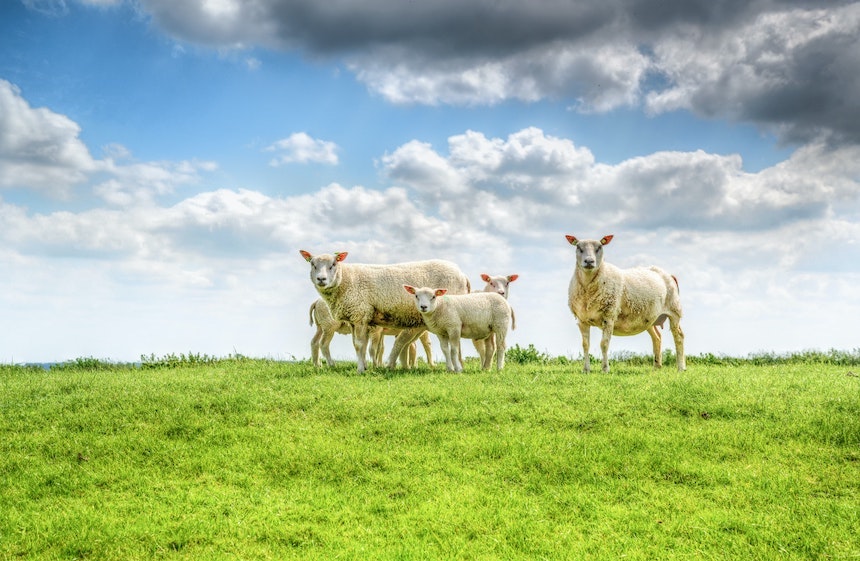
Photo by skitterphoto on Pexels
 Memoirs of a Country Vet