Choose Your Surgeon with Care

D. E. Larsen, DVM

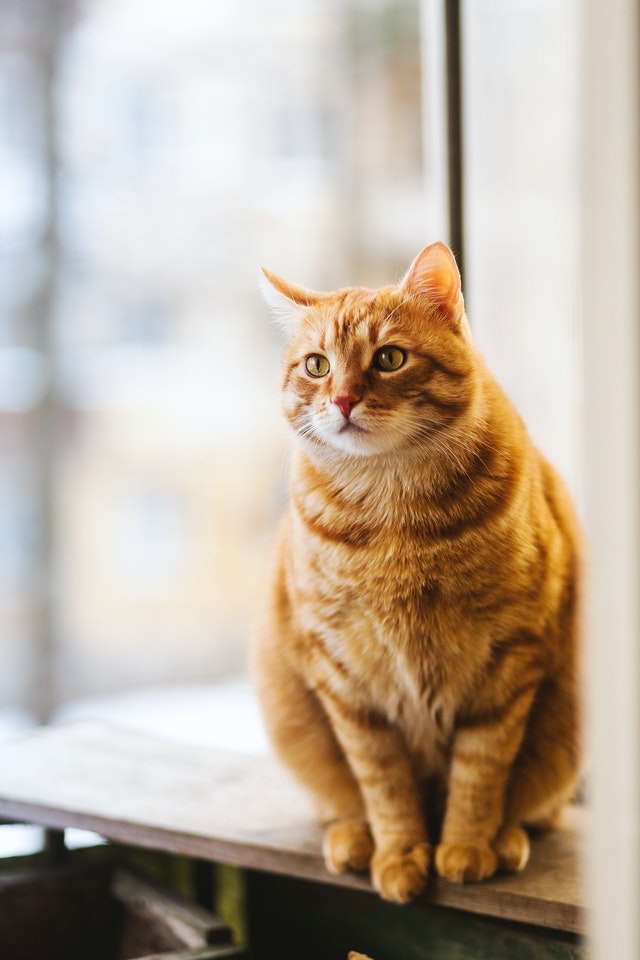
Marilyn carefully placed Dorie on the exam table. Dorie, a pretty, tabby and white female kitten, stood, unmoving, on the exam table. Her stance was rigid, not what I would expect to see in an 8-week old kitten. 

“She was fine yesterday when I brought her home,” Marilyn said. “I noticed she was a little reluctant to move last night, and she was a little painful when I handled her. But this morning, she will hardly move, and she cries out at the slightest touch.”

“Where did she come from?” I asked.

“I adopted her from a humane society over on the coast,” Marilyn said. “They insisted that they spay her before they would let her out the door. I pleaded with them to allow me to bring her to you, but they would not let her go.”

“She is pretty young for a spay,” I said. “But it is becoming a thing with the humane groups. They struggle with people not getting the surgery done.”

“I understand that,” Marilyn said. “But she is so tiny, waiting a few weeks would have been better. I tried to get them to call you as a reference, but they were adamant, they would not let her out the door without the surgery.”

I picked Dorie up as carefully as I could. She cried out with a soft cry. The incision looked fine. It was a very short incision, which means the surgery was done with a spay hook. Most veterinarians use a spay hook during a spay. It is a blunt hook instrument to retrieve the uterus during a spay. I virtually never used one, I always used a finger, something I learned from Dr. Ferguson, a surgical resident at CSU when I was there. It required a slightly longer incision, but that was of little consequence. Incisions heal from side to side, not end to end. I always felt more comfortable with a feeling finger retrieving the uterus, rather than a blind steel hook.

I tried to palpate her abdomen, very carefully. It was painful for her. Then I felt a swelling on the right side of the abdomen, near her back, about the size of a large grape. It was excruciating when I touched the swelling.

“She has something going on in the area where her right ovary was located,” I said. “I think I should open her up and see what is there.”

Marilyn agreed to an exploratory. I was unsure of what could be wrong. This was a pretty small kitten, I hoped I could solve the problem.

In surgery, I found a significant accumulation of fluid along the back. It was retroperitoneal, or behind the lining of the abdomen. I aspirated the fluid and explored the area carefully. The fluid had to be urine, but why was it there following a surgery. I investigated again, looking around the kidney carefully, and the ureter in the area. I could find nothing more.

We recovered Dorie, and she was like a kitten with the fluid gone. The area was not painful, but I would need to check her in the morning.

“I need to take her home for the night,” Marilyn said. “It has nothing to do with this clinic, it is just that she has been through so much in her young life, she needs some cuddling. I will have her back here the first thing in the morning.”

I did not have a restful night. I was going over Dorie’s surgery in my mind most of the night. If the fluid was urine, the surgeon who did the spay had to of ligated the ureter, that small tube that runs between the kidney and the bladder. If that was the case, the swelling would be there again in the morning.

I had never heard of a veterinary surgeon making that error. I am not even sure it is listed as a possible complication to that surgery. I did have a niece who suffered that very injury during a hysterectomy some years ago.

In the morning, Dorie was painful again. And the swelling had returned. 

“This swelling is back,” I said to Marilyn. “I have been up all night thinking about this problem. They had to of ligated her ureter, the tube between the kidney and the bladder. I can send you to Eugene for an ultrasound and some x-rays with a dye that will pass in the urine. We can confirm the problem.”

“Listen, Doc, I am a bleeding heart, and I love this little girl, but there are limits to what I can spend,” Marilyn said. “Is there anything else we can do?”

“We can remove her right kidney,” I said. “If I am correct, that will solve the problem.”

“If that is what it takes, let’s at least give her a chance to live,” Marilyn said.

So little Dorie went back to the surgery table. It was not a complicated surgery to remove the kidney. I also removed the ovarian pedicle where the ovary had been ligated. In doing so, I found the ureter in the mass. That confirmed my suspicion and allowed me to ligate the ureter so there would be no back leakage from the bladder.

Dorie recovered well, and despite having suffered through 3 surgeries in the last week, she was back to being a kitten. I saved the tissues in formalin, just in case I need to have a lab confirm my findings.

“I want to make sure that the veterinarian who did this to her, never does it to another kitten,” Marilyn said in a firm voice. “Can we do that?”

“We can get it investigated,” I said. “I am concerned that the humane society might have some charlatan doing their surgeries. I will send them a letter of inquiry and send a copy of that letter, and my surgery records, to the state examining board.”

“Thank you,” Marilyn said. “Do I need to do anything special for her?”

“I am sending you home with some antibiotics just to be safe, other than that, just make sure she is acting like a kitten,” I said. “She should be able to live a full life with one kidney. It might become an issue at the end of her life, but that should be a long time.”

I composed a letter to the humane society and forwarded a copy to the examining board. I had no idea what would happen from that letter.  In my letter, I explained Dorie’s problem. I expressed a need to determine if this was a surgical error or if there was a need for additional training for the surgeon.

It was a few days, and I got a call from the veterinarian who did the surgery. He was in his mid-seventies and working part-time doing surgery for the humane society. He had no problem saying it was his mistake. He was uncomfortable with doing surgery on these little kittens. 

“That will be the last surgery I do on these little kittens,” he said. “I don’t agree with the practice anyway, so this is going to be a good excuse for me not doing any more spays and neuters on the young kittens.”

At about the same time, the investigator from the examining board called to gather my opinion and to get information that went beyond my surgery records. He was most concerned about the age of the surgeon.

After the examining board completed their investigation, they determined there was no need for remedial action against the veterinarian. It was considered a surgical error. The veterinarian was not going to do any more early spay and neuters. The practice of early spays and neuters was not addressed and probably is still an unsettled topic.

“Marilyn, I talked with the veterinarian. He is not going to do any more early spays or neuters,” I said. “The examining board completed their investigation, and they are leaving it as a surgical error. They are not recommending any remedial action.”

“That is a little less than I was hoping for,” Marilyn said. “But at least they investigated it. Are you satisfied with their findings?”

“I think so, I think the veterinarian expressed enough remorse to me that he is not going to do any more young cats.”

Photo Credit: Photo by Pixabay from Pexels

Rambo and the Eagle

D. E. Larsen, DVM

Walking down the fifth fairway at Pineway, I was relieved that I could see ball. 

“At least I am not in the ditch,” I said to Jim as we parted toward our respective balls.

Dr. French had always told me that the if you are paying attention to your practice, you will never have the time to be a good golfer. I could see his point, I took Thursday afternoon off to play with the Pineway Men’s Club and most of the time with a group or two once on the weekend. But I really felt that athletes are born, not made. Of course, with work and coaching, we could improve and reach our potential, but some guys are just born with a ball in their hands. We all knew them, they were stars in little league, and they excelled on the basket ball court. They are the ones who didn’t go out for football until they were seniors, and they made all league. The coach always tries to take the credit, but it is just the way it is.

And my slice was a good illustration. I could beat just about anyone on any one hole. But I could never hold my concentration for the next hole.

I got to my ball, it was in the short rough, about a foot from the ditch that ran down the right side of the fairway. It was a position I knew well. I could reach the green from this position on this short 5 par hole. This position actually set me up well with my ball flight. There was a slight dogleg to the the left, with my slice, I liked to call it a fade, I could start my ball left of the hole and it would run up the front apron to the green. I just needed to fade the ball, not slice it.

As I addressed the ball, I caught sight of Jack Wright’s cart starting down the eighth fairway. Rambo, his little poodle mix, always rode on the back of the seat in Jack’s cart. Rambo had already spotted me. I could hear him throwing a fit from two fairways over. 

Jack loved it, and here he came in his cart with Rambo barking up a storm over his shoulder. Just what I needed to hold my concentration on this shot.

“Good morning, Doc,” Jack said over Rambo constant barking, louder now that they were parked just across the ditch. “How is your game this morning?”

“It has been pretty good so far,” I said. “With a little luck, I will reach this green in two.”

“Rambo spotted you and wanted to say hi,” Jack said with laugh. “I think you are the only person he knows on this entire course.”

“Yes, I notice that almost every Thursday,” I said. “I don’t know what the problem is, I have never done anything to him other than his shots and stuff.”

Jack chuckled again, “He just wants you to know what he thinks of you.”

“Well, I guess it is good to be loved by my patients,” I said.

“I’ll let you get back to your game, good luck, and fly that ball right at the stick for a change,” Jack said as he turned the cart and headed back to his fairway. Rambo on the back of the cart, facing me and barking as loud as he could.

I addressed the ball again, trying to think what it was that I had done to Rambo to make dislike me so much. Then trying to brush that thought away, I took a deep breath and started my back swing.

I swung with all my strength, and caught the ball perfectly. The ball seemed to hang on the club face briefly, then sprang into a high flight. This was my Ping 5 wood, my favorite club. Probably because I could hit the ball straighter with it than any of my other woods.

The ball started out on a line about 10 yards left of the green and then started to fade to the right. Then the fade became a slice and it was struck hard enough that distance was going to be more than usual for this club. I held my breath and leaned to the left, as if to guide the ball a little.

The green ran on a diagonal left to right and the hole was cut in the far back corner. I had hoped to land in the fairway and run the ball up on the green but this ball was going much more to the right than I had hoped. Then it came down, and stuck on back edge of the green, maybe 10 feet from the hole.

I perfect shot and it surprised everyone, including myself. “Maybe I should talk with Rambo more often,” I said to myself as I picked up my bag and started toward the green.

Bruce West was coming down the sixth fairway. He pointed at the ball near the pin and asked, “Whose ball is that?”

Jim pointed at me, “Larsen’s, good shot, don’t you think?”

“If he makes the putt,” Bruce replied.

I could still hear Rambo barking as I walked up on the green. He was out of the cart and standing under the trees over by the eighth green, only thirty yards away. He pounded his front feet with each bark in a little bounce, just to add emphasis to his distaste.

Jack had loaded him up and headed to the ninth tee box just as I addressed my putt. I was relieved that the barking was fading off in the distance. 

One small breath, and I stroked the putt, straight putt, right to the bottom of the hole. “Take that Bruce,” I said as I stepped quickly to hole to retrieve the ball.

Eagles were rare birds for me on the golf course.

Photo Credit: Photo by Markus Spiske from Pexels

What are the Odds

D. E. Larsen, DVM

The young heifer strained hard as I tried to explore the four feet presented at her vulva. I slid my arm into the vagina alongside the legs. I could determine that these were two front legs and two hind legs, but were they from two different calves?

“She has been straining like that all morning, Doc,” Ole said.

We are in a small barn, just out of Enumclaw. I had been out of school for a couple of months. “A complex delivery like this is not fair,” I think to myself.

“She doesn’t look big enough for this to be twins,” I said. “This has to be an abnormal calf. I am going to push it back into the uterus a little, that will allow me to explore it a little better.”

Ole did not reply, I am sure he is second-guessing his request for me to check the cow. All the Norwegians seemed to want Dr. Larsen these days.

I pushed on the feet with both hands. Slow, steady pressure was needed to push the calf back out of the birth canal. I knew there was a risk of rupturing the uterus if I was too aggressive.

Finally, the calf was out of the birth canal, and I could feel the entire calf. Confused for a moment, but then I was able to define this calf. The four feet surrounded the head, and there was somewhat of an apron of skin surrounding the feet and head. Reaching over this apron, I ran into the exposed intestines of the calf. And I could feel a severely contorted spinal column.

“Ole, this is a mess,” I said. “This is a schistosomus reflexus calf. That is a fetal monster. This calf is sort of inside out. He has an open abdomen and chest, and his back is bent backward. The good thing is he is small, I should be able to cut him into a couple of pieces and get him out.”

“That sounds pretty gruesome,” Ole said. “Have you done that before?”

“I have done a lot of fetotomies, but never on a calf like this,” I said. “This is one of those things that a veterinarian is supposed to see once in a lifetime. What are the odds of me having one this early in my career? Seems like it is not fair for me to have to deal with it in my first few months of practice.”

I am sure I can recall that a fetotomy on a schistosomus reflexus calf was supposed to be complicated. It probably depends on the cow and the calf and the situation. This proved easy, I dropped an OB chain over the back of the calf and was able to pull it up between all the legs and pull the OB wire around the calf. With a fetotome, I was able to saw the calf into two pieces in short order. With a little luck, this one cut also severed the head. I was able to extract the three sections with hand traction.

“That looked awful easy,” Ole said. “I thought you said it was going to be a mess.”

“I think we got a little lucky,” I said. “She is a small heifer, it was a small calf, and only one cut was necessary. It could have been a lot worse.”

“It could have been a lot worse,” I thought to myself. Here I am, some thirty years later, and it is a lot worse.

I stand on my tip-toes to reach a little deeper into the cow. When I reach a little deeper, I find intestines. This is a large cow in a muddy pasture, and it is going to be dark soon. This has to be a schistosomus reflexus, but the fetus is not fully reflexed. This would be an impossible fetotomy, even for me when I was a young man. This is going to be a C-section, and it will be best to be done over at the vet school, where there will be more than one set of hands.

“George, this is a mess,” I said. “She has an abnormal calf in her. It is called a schistosomus reflexus. The calf sort of bends in two, backward, and the belly and chest are open. This one does not feel like it is fully bent backward, it feels sort of spread out flat. I am not confident that I can get it out. The best option would be to take her over to college and let them do it.”

Convinced that I am done working on the cow, I clean up as George and Sharon discuss the referral option.

“Okay,” George says. “Let’s go ahead and take her over there.” 

“Let me give them a call and make sure they will be waiting for you,” I said.

We called and made the arrangements, and George and Sharon loaded the cow up in their stock trailer and headed for Corvallis.

The school concurred with my diagnosis and elected to do a C-section. They used general anesthesia, which is risky in cows that have not been held off of food and water for an adequate time.

They were successful in getting the abnormal fetus out. George described the calf as a spider calf, one heck of a looking thing. 

Unfortunately, the cow died during the night. I never got any paperwork on the referral, probably because the referral was done on an emergency basis, and no paperwork was involved. My guess was that it was a death associated with the anesthesia. Still, I am sure the surgery would have been a difficult one. So, who knows. 

This was one of those cases where a lot of work was done, and a lot of expense was incurred, and there was no happy ending. 

With two, once in a lifetime events, I figured I was done with these schistosomus reflexus calves. I mean, what are the odds of having three.

Then, a couple of months later, came a late-night call to look at a cow for Alex and Debbie. A large Black Angus cow was in labor and some distress with no progress. When I arrived, she was laid out flat and straining, with no evidence of any progress.

“She has been like this for the last hour, maybe a little longer, Doc,” Debbie said. 

I cleaned her up and got down behind her. Actually, for these large cows, the exam is easier when they were laid out flat. More manageable, for the exam, but it can be a little difficult to keep oneself clean and dry. Thankfully, I had a good pair of rain bibs, and she was on a good bed of straw.

It did not take long to make a diagnosis. It had only been a couple of short months since I had worked on George’s cow. The calf in this cow was close to the same, but it was fully relaxed with four feet presented to the birth canal.

“This is not good, Debbie,” I said. “This is a fetal monster. In a large cow like this, it will be difficult to section it enough to get it out. The better option would be to go to the vet school for surgery.”

“How much is that going to cost?” Alex asked. 

“I sent a cow over there a couple of months ago for the same problem,” I said. “I don’t know what the bill totaled to finally, but it was over a couple of thousand dollars, I think. And the cow died.”

“We are going to have to think about that,” Debbie said. “This is a purebred, but she is nothing special. Actually, she is not much more than a commercial cow. I don’t think a thousand dollars pencils out for her.”

“Do you think we could make hamburger out of her, Doc?” Alex asked.

“You could eat her if you were starving,” I said. “But now, I think you would find the meat unacceptable. She is under a tremendous amount of stress, and this uterus is probably infected by now. If we are not going to try to save her, we should put her out of her misery now.”

That was the decision that was made. In the end, the feelings for the cow, and relieving her pain and distress became more critical than salvaging a few dollars. Their son ran to the house and returned with a 9mm pistol.

“How do we do this?” the son asked. “Shot her between the eyes?”

“The likely hood of missing her brain is high if you shoot her between the eyes,” I said. “If you are going to shoot her there, you want to use a large caliber rifle. With this pistol, you want to shoot her behind her poll, on the back of the head. That way, if you are on the midline, you can’t miss the brain.”

With that instruction, it was done. It was probably the best outcome for the circumstances. It was definitely the best financial decision. Sometimes in food animal medicine, one has to cut your losses. What may be the best medical decision is not always the best financial decision.

Photo Credit: Photo by Chelsea Cook from Pexels

Schistosomus reflexus links (These may not be pleasant to view for some people):

https://medcraveonline.com/JDVAR/images/JDVAR-02-00045-g006&7.png

https://inpractice.bmj.com/content/inpract/14/4/204.full.pdf

https://onlinelibrary.wiley.com/doi/abs/10.1111/j.1751-0813.1996.tb09988.x