Fort Dix Transfer Company, December 1967

D. E. Larsen, DVM

I set my B-4 bag down on the walkway while I adjusted my collar and straightened my tie. I buttoned my coat. My uniform didn’t fit well after gaining 15 pounds on my 45 day leave at home following Korea. With a deep breath, I climbed the steps and entered the orderly room. There was a whole crew working on records in the back of the room, only the First Sergeant was at the front desk. 

The First Sergeant was older and looked like he ate nails for lunch. He was about my height, five-eight, thin, and his rough complexion told of a life of hardship, and many hours in the sun.

“Boy, am I glad to see you, Larsen,” the First Sergeant said. He was practiced at reading name tags.

“Good morning, Sergeant,” I said. “I am here to report for duty and transfer to Germany.” I extended my hand with my orders. “You act like you knew I was coming.”

“I knew an E-5 would walk through that door sooner or later,” the First Sergeant said. “I have an important job for you today. I want you to go get settled into the barracks and change into your fatigues. As an E-5, working for me today, you get a squad room in the barracks. Do you have a combination lock for the door?”

“Thank you, that will make my stay better,” I said. “And yes, I have a couple of locks in my bag.”

“You can lock your room, and your stuff will be secure,” the First Sergeant said. “Once you have changed, you hurry back over here, and we will discuss your job.”

This company was housed in a group of older World War 2 buildings. They were neat and well maintained, but older. Having a squad room would provide me some privacy. I had not lived in an open bay in a barracks since my early days in the Army. 

This company gathered troops for transport to Germany. They would assemble a planeload of soldiers over several days. Then make sure everyone got on the plane. Hopefully, my stay here would be a short one.

With my fatigues and combat boots on and a field jacket to give me some protection from the New Jersey December air’s chill, I headed back to the First Sergeant..

“Larsen, you are going over to the stockade and process Private Jones out of there and bring him back to me,” the First Sergeant said. “This kid is a deserter, he is a piece of scum, but my job is to put him on the plane tomorrow.”

The First Sergeant hands me a folder of paperwork and then reaches into the cabinet behind him and hands me a 45 with a belt and holster. 

“You put this on and sign for it over at the orderly desk,” the First Sergeant said.

I buckled the 45 on my hip, adjusted the fit, and found the paperwork to sign on the orderly’s desk. I picked up the folder and turned to head out the door.

“Do you want directions to the stockade?” the First Sergeant asked. 

“Yes, I guess that would be something I should know,” I said. 

“You walk out this door and turn right, the stockade is down that street about a half-mile, you can’t miss it,” the First Sergeant said.

I turned and started for the door again.

“And Larsen, this jerk has run before, if he runs, you shoot him,” the First Sergeant said. “That is why you have that 45. Do you understand.”

“Yes, Sergeant, I understand,” I replied as I walked out into the December air.

The walk to the stockade was just what I needed after the overnight flight I had from Portland. I am sure that my face was flushed when I stepped through the door to the stockade orderly room. I was one of several NCOs there to pick up an inmate. I handed my paperwork through the screened enclosure to the Sergeant on duty. 

One of the other guys noticed the Eighth Army patch on my field jacket and commented.

“How lucky does a guy get in this man’s army?” he asked. “Coming from Korea and going to Germany, how does that happen in today’s Army?”

“I guess I was in the right place at the right time,” I said. “I just asked for the assignment, and some clerk must have felt like doing a good deed that day. It is the clerks in personnel that run this Army.”

“For an E-5, you seem to have this Army figured out,” the guy said. “

“First Sergeant Scagliotti told me that when I was at Fort Devens,” I said.

The rest of the day was consumed with processing Private Jones out of the stockade. I had planned to sign a paper of two and take him back to the First Sergeant—no such luck. The out-processing was part of making these guys hope they were never returning to one of these places.

Private Jones was assigned a Drill Instructor to help him out process. There was a checklist that filled a full page, and the DI was on his ass the whole time. Private Jones was not allowed to walk anywhere. He had to run the entire time. From one station to the next, usually separated by a couple of buildings, we would run. Pick up is personal items, pack his clothes in his duffle bag. Then carry the duffle bag and run to the next building.

Finally, we were back in the stockade orderly room, and I finally had to sign for his release. I had begun worry that I would miss dinner, but there was just one signature here, and we started out the door.

The Sergeant in the orderly cage reminded me as I opened the door.

“Larsen, this scum has run before. If he runs, you shoot him,” the Sergeant said.

Private Jones was a little guy. Size-wise, he reminded me a bit of Don Miller, my friend who was killed in Vietnam in April. As we walked away from the stockade, he began to talk, and I don’t think he ever stopped. 

“They are going to send me to Germany to be in an infantry unit,” Jones said. “Look at me, I am too small to be in the infantry.”

“I would say you are pretty darn lucky,” I said. “You could be going to Vietnam to be in an infantry unit.”

And on and on it continued. The half-mile walk to the First Sergeant’s office seemed like 3 miles. We were finally there, and I opened the door and shuffled Jones into the office.

“Good job, Larsen,” the First Sergeant said. “Now you take Jones over to the mess hall and get dinner. You are both probably hungry.”

So, here I go, over to the mess hall with this little jerk who won’t shut up. We go through and fill our dinner trays. I realize how hungry I am. I had a couple of bites at the airport when I got off the plane early this morning.

After dinner, we return to the First Sergeant’s office.

“Okay, Larsen, you two are going to be on the same plane tomorrow,” the First Sergeant said. “Why don’t you keep track of him tonight. I will give you a set of handcuffs so you can cuff him to his bunk,”

“Now come on, Sergeant,” I said. “I think I have done enough, I am not going to sleep with this little chatterbox.”

“Okay, I will get somebody else to keep track of him tonight,” the First Sergeant said. “You have done more than could be expected. You turn in that 45 to the orderly desk, and I will see you tomorrow at roll call.”

The orderly gave me my travel orders when I turned in the 45. The flight was not leaving until late afternoon, and the roll call was at 2:00 PM. I was duty-free tomorrow morning. I could eat an early breakfast and rest in my room until lunch. Then I should be rested for the overnight flight to Germany.

Roll call was held in a large multipurpose room across the street from the First Sergeant’s office. They had us pretty much lined up by rank, in 4 columns. The room was full.

The Duty Sergeant would call a name from the list and wait for a “Yo!” When they came to Private Jones, there was no reply. The Duty Sergeant paused, then called the name again, still no response. 

As he called the name a third time, the First Sergeant came up and stood beside me. “Larsen, that little bastard ran again,” he said. “I should have made you keep track of him.”

“I’m not sure he would have been worth the bullet,” I said. “I sure wouldn’t want him in my squad if there was any fighting to be done.”

“I know,” the First Sergeant said. “But he needs to spend some time in that stockade before they wash him out of this man’s Army.”

After roll call, we loaded on a bus to the airport, then filed onto the troop plane for a flight to Germany. We had one stop in England and then flew on to Frankfurt. 

At the receiving station, they handed me a train ticket to Kassel and a bus ticket to the train station. No real instructions and I didn’t know a word of German. It was going to be a fun trip.

The System is Made to Work

D. E. Larsen, DVM

“Doc, I have a young heifer down in the barn,” Rob said into the phone. “She is awake and staining, almost like she is in labor, but nothing is happening, and she isn’t much over a year old.”

At least she is in a barn, I thought as I looked out the window at the snow falling. It had been snowing since the middle of the afternoon and it is eight o’clock now.

“Where do you have her, Rob?” I asked. I knew Rob lived on a hill outside of town. I had to put chains on the truck to get home this evening, Rob’s slope was steeper than our hill.

“She is in the old barn down by the road, below the house,” Rob said. “You should be able to get to it pretty well with your truck, especially if you have chains.”

“It will take me a few minutes to get around,” I said. “I should be there in about 30 minutes.”

  “What do you think could be wrong with her, Doc?” Rob asked.

“We will just have to wait for me to look at her,” I said. “But you know, if it looks like a horse, it is probably a horse. And if she looks like she is calving, she is probably calving.”

“Doc, she is only a long yearling,” Rob said. “How could she be calving. That would mean she would have to have been bred when she was 4 or 5 months old.”

“I know, Rob, it doesn’t sound likely,” I said. “But I have seen it a whole number of times. The system is made to work, you know.”

“Okay, I will be waiting at the barn,” Rob said. “You might want to bring a lantern if you have one. There are no lights in the barn.”

I pulled on coveralls, boots, and bundled up against the cold before stepping outside to check the truck. I wanted to be sure the water tank was full, and everything was ready for the call.

It was a little chilly, but Western Oregon seldom saw the severe cold that we would have in Colorado. Nonetheless, I need to be prepared to do a C-section on this heifer, in a cold barn, with no electricity, and no help other than Rob. If I remember correctly, Rob would not be much help after the first cut was made.

The snow was coming down heavy now. Large flakes filled the sky. There were nearly 8 inches at the house, Rob’s barn would be at a comparable elevation. I was glad that I had put chains on the truck earlier.

I could see Rob’s lantern in the barn’s doorway, and the gate across the driveway was open. It needed an extra foot on the gas peddle to pull the truck in close to the barn.

“I was able to get her up and moved into the haymow,” Rob said. “There is not much hay in there, and it is a lot cleaner. She is down again and not moving much.”

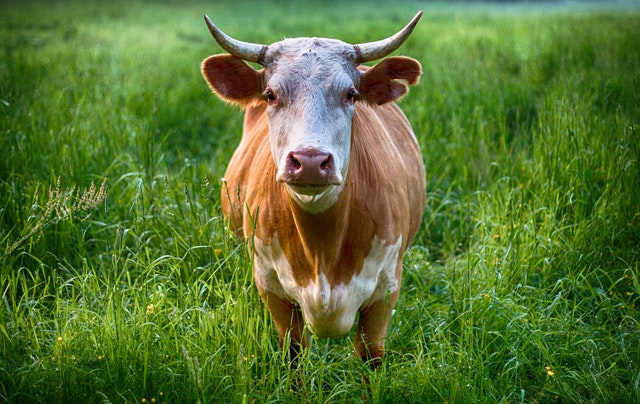
The heifer was small, maybe 14 months of age, certainly not old enough to be delivering a calf.

“Let me get a rope on her first,” I said. “I don’t want to have to chase her around this haymow if she decides to jump up.”

After tying her to a post, I started looking her over. She had some udder development, and her vulva was swollen and relaxed. I washed up her rear end and pulled on an OB sleeve. 

A vaginal exam revealed an open cervix and a nose of a calf. There was no room for even the head of the calf to enter the birth canal. I stuck a finger in the calf’s mouth. The tongue recoiled at my touch, the calf was alive.

“There is a live calf in there,” I said. “And there is absolutely no room for it in the birth canal. We are going to have to do a C-section.”

“Can you do it here,” Rob asked. 

“If we get enough light fixed up, I will be fine,” I said. “I have done it in far worse conditions.”

We rolled her up on her back and propped her there with a couple of bales of hay. I tied her hind legs together and stretched them back, tying them to a post. 

I was all set, the belly was clipped with my battery clippers, and I had completed a surgical prep. I laid out the instruments and did a local block on the proposed incision line. Then I laid out an extra syringe of Lidocaine, just in case I needed it.

I stripped out of my outer jacket, and I was glad that I had put on a vest. I could feel the cold on my bare arms. This is going to be a fast surgery, I thought to myself.

I picked up the scalpel, but before I could make the initial incision, Rob interrupted the calm.

“Doc, I have to run-up to the house to the bathroom,” Rob said. “Are you going to be alright here?”

“I am going to be fine,” I said. “It might be good if I have a hand to pull this calf up out of her, but it will be a small calf. Get back here if you can.”

My memory was correct, Rob was not one to be around when there was any blood. I guess it was better he was at the house than passed out down here.

The surgery went well. I kept the incision as short as I thought I could. The calf was kicking his hind legs as soon as I incised the uterus. I grabbed the legs, stood up, and pulled the calf out of the uterus. 

He flopped on the ground and shook his head. I don’t think he weighed 50 pounds, but he was a vigorous little thing.

With the short incisions, I had things closed up in short order. I released the heifer’s hind legs and moved the bales so she could roll over and rest on her sternum. She was a little surprised when I pulled the calf over under her nose. 

I cleaned myself up and put my jacket on again. The warmth was welcome. The heifer jumped up when I released the rope around her neck. Rob came through the back door of the barn about that time.

“How are things going?” Rob asked.

“You have a spunky little calf, and his mom seems to have some idea what she is supposed to do,” I said. “I would keep them in for a few days to make sure everything is going to be okay. I will get back up here when this snow melts and check her over. You call if you think I need to look at her before then.”

“How did this happen, Doc?” Rob asked.

“You have to separate the bull from the herd after breeding season,” I said. 

“Will, I guess I don’t have a breeding season,” Rob said. “There always seems to be a cow or two needs some extra time to get pregnant.”

“If you want to rest from calving, where you are not calving all year long, you have to cull those cows,” I said. “They might be good cows, but every year they will be a little later, and pretty soon you lose an entire year. Plus, when you get around to selling your calves, you will get a better price if they are all about the same age.”

“I guess you are right,” Rob said. “I just never thought that a heifer could get pregnant at 4 or 5 months of age.”

“Like I said before,” I said. “The system is made to work.”

Photo by Will Mu from Pexels

Always have Rabies at the Top of Your List

D. E. Larsen, DVM

“We have a cow coming in this morning for Necropsy,” Dr. Norrdin said. “The ambulatory people have been treating this cow all week, and it died this morning.”

“It should be a good time for it, we don’t have anything in the cooler to work on,” I said.

“This cow died with neurological signs,” Dr. Norrdin said. “I want you guys to be thoughtful during this necropsy. Especially you, Larsen, when you remove the brain. Do you have any idea what I might be talking about.”

I had talked with a classmate earlier in the week about this cow. He was working on the ambulatory service this summer. Colorado State University had to scramble to keep students in the clinic during the summer months to keep up with the workload.

This cow had been looked at by two different clinicians and their students on multiple occasions. The cow suffered from a progressive neurological deterioration. People had their hands in the cow’s mouth and into the back of her throat, trying to ensure there was no foreign body causing some swallowing difficulties.

“What kind of a differential diagnosis list should you be working within your mind when treating a neurological case?” Dr. Norrdin asked.

I had been lax during the summer and was not used to coming up with immediate answers. This job was sort of one to do the manual labor of the necropsy room. It obviously provided a tremendous learning experience but from observation, not rote memory from a textbook.

“I guess viral encephalitis would be on the list, along with secondary bacterial meningitis from any of the respiratory viruses,” I said.

“You came close with your first guess,” Dr. Norrdin said. “You should always have rabies on your list. It should be at the top of your list, even though you will not see it often these days. The reason is that if you miss that diagnosis and fail to take care of yourself, you end up dead.”

“That is probably a good point,” I said.

“So be thoughtful, and work with your mouth closed today,” Dr. Norrdin said. “Hopefully, that will not be the diagnosis. If it is, we will have a mess. There have been over a dozen guys with their arms down this cow’s throat in the past week. The clinicians have really dropped the ball on this case.”

When the truck with the dead cow backed up the loading dock, we shackled the cow’s hock and picked her up with the hoist. This allowed us to move her on the track to the middle of the necropsy room floor.

We started the necropsy under the direct supervision of Dr. Norrdin. This was unusual in its self, we seldom had direct supervision at this stage. Dr. Norrdin was very worried about a possible rabies case, and he wanted to make sure everything was carefully documented.

When it came time to remove the head, I moved it to the butcher block in the middle of the room. I had become an expert at removing the brain from all the animals this summer. It was a skill that I would probably seldom use in practice, but I enjoyed being the best at something on the job.

With the skull on the table, I first had to remove the skin and soft tissue on the top half of the head. Then, with a large cleaver, I started shaving the bone from the skull to reveal the braincase. 

Once the braincase was exposed, the accuracy of my strokes with the cleaver became more critical. Finally, I would be able to lift the top of the skull cap and expose the brain covered by the meninges—those layers of tissues that become inflamed in meningitis.

There were several specific snips to be made to free the brain. Once this was done, I could lift the intact brain out of the skull and place it on the dissection table. Most of the time, I would slice the brain in a prescribed manner. In half, separating the right and left side. Then slice each side into quarter-inch slices, looking for any abnormalities. This time, Dr. Norrdin took over at this point. He did all the work on the brain and disappeared into the lab with the pieces.

There are several levels of diagnostic testing to confirm rabies as a diagnosis. The diagnosis of rabies is made in several ways. The one that is fastest and considered the most reliable, if present, is finding Negri bodies in the part of the brain called the hippocampus.

By the next day, rabies was a confirmed diagnosis in the cow. Most of us students had received several doses of rabies vaccine during our freshman year of school. Because of that previous vaccination and a positive titer, I only had to have a single booster vaccine. The students who had carelessly had the hands and arms in the cow’s mouth during the week preceding her death had to go through a complete series of vaccinations. 

That was a lesson well learned. But then, there is just a little more to the story.

A long year later, I was in Enumclaw Washington, ready to do a necropsy on a large dairy cow. Standing in the middle of the field, I sharpened my necropsy knife, the same one used to necropsy the rabid cow. As I stood there, the farmer had a whole list of questions. We stood and talked for some time. The entire time during this conversation, I continued to sharpen my knife on the wet stone.

Don’t allow anyone to tell you that a sharp knife never cuts you. After standing there sharpening my knife for 15 minutes, I lifted the hind leg of the dead cow and started the cut through the skin on her belly. This knife slid through the skin like it was butter. My stroke was so smooth, the knife flew through the prescribed cut, continued out into the air, and buried into the muscle of my lower left leg. Going into my leg a full inch. Ouch!

I stopped and put a wrap on the wound before preceding with the necropsy. By the time I was done, my left boot was sloshing with blood.

I did make a trip to the doctor’s office. We laughed at my careless actions and decided to leave the wound open. Antibiotics and a light wrap should take care of things.

Then I mentioned that I had done a necropsy on a rabid cow with this knife a little over a year ago.

“What do you think?” the doctor asked. “I would think that it would not be a problem at this point in time.”

“Will, the knife has been washed since then, but never autoclaved,” I said. “I would think that any virus on it would be long since dead.”

“I would think so also,” said the doctor.

“I am sure I still have a positive titer, just for insurance,” I said.

I did live, by the way.

Photo by Pixabay from Pexels