Dottie

David E. Larsen, DVM

It was a warm afternoon as we crowded into the Large Animal Surgery class. In early fall, Colorado could still see some warm days. 

I was in my final year of Veterinary School, and this class was one of my most enjoyable. Of course, the fact that Dr. Annes was the instructor helped. He had become one of my favorite professors.

“Today, we are going to amputate a digit on a steer,” Dr Annes said. “This is an excellent salvage procedure for a steer with a fractured digit or severe disease in a single hoof claw. It will allow the steer to function well and continue to gain weight for several months, maybe up to a year or so, This is not a procedure to use on a cow or bull that has plans for a lifetime of production. The foot will not hold up for years following this procedure.”

We worked in teams of two, each with a lower leg gathered from the slaughterhouse in the last day or two. The procedure was easy, with the leg lying on the table. It would be more difficult with a live animal.

We did nerve blocks on the digital nerves, reflected the skin from the hoof to the pastern joint, and severed the digital bone using an OB wire saw at a sharp angle to make a smooth appearance on closure. After suturing the skin back over the exposed bone, it made a pretty good-looking foot with just one claw.

At the end of the class, Dr. Annes again cautioned us that this was a salvage procedure.

In Colorado, we were in the middle of cattle country. Feedlots were everywhere. It would be a valuable procedure in those feedlots. I put it in my memory but doubted I would ever need it.

***

After several years in Sweet Home, the practice was getting busy. It was a warm afternoon that was drawing to a close, and I was thinking about taking the kids swimming when Sandy came back and said that Ginger was on the phone.

“What does she have going on?” I asked.

“She has an old ewe with a sore foot,” Sandy said. “It has been a problem for some time, but now the ewe is not using the foot. She wants you to look at today.”

“Okay, it is probably just a foot rot,” I said. “I can run out there now, and we can still have time to take the kids to Foster Lake for a quick swim. Just make sure you get a good address and directions.”

Leaving Dixie to finish cleaning up the clinic from the busy afternoon, I grabbed the file from Sandy and headed to the truck. I got the truck turned around and ready to pull out onto the street. I opened the file to check the address. 

Forty-ninth Street, this is in the middle of town. It can’t be much of a sheep flock. Sweet Home had just completed the annexation of Foster and Midway. Keeping livestock in those areas was grandfathered in, with limitations based on adequate lot size.

Ginger stepped out of the small yellow house as I pulled into the driveway. I could see a lone ewe in the small lot behind the house. The ewe was holding up her right front foot.

“I am so glad you could come today,” Ginger said. “Dottie has been holding up her foot for the last week. She must be in terrible pain.”

“Is this something that just happened?” I asked.

“Oh no, she has been limping for months,” Ginger said. “It has just been part of her. I never gave it much thought. She is getting pretty old, you know.”

“No, I didn’t know,” I said. “How old is Dottie now?”

“I am not exactly sure,” Ginger said. “We got her as a young ewe when our daughter was in 4-H. That was almost twelve years ago. So she must be twelve or thirteen.”

“That’s pretty old for a sheep,” I said.

“I know she is old, but she is such a pet. We want to take care of her as long as we can,” Ginger said.

“Well, let’s get a look at her,” I said. “Are we going to be able to catch her?”

“She is so arthritic, she doesn’t move much,” Ginger said. “And now, with this foot problem, she hardly moves. But I will grab a little can of grain to make sure she stays in place.”

Dottie didn’t move when we approached her in her little pasture. I put a rope on her just in case we needed it when I looked at her foot. Ginger dumped the grain on the ground in front of Dottie, and she started lapping it up.

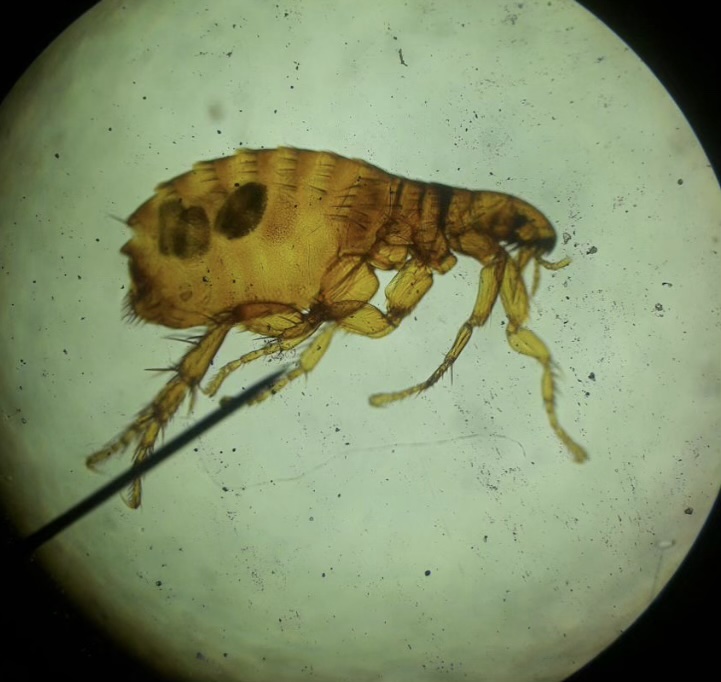
I did a quick exam while Dottie was eating the grain. Her wool was thick and soiled; she hadn’t been sheared in a few years. Her wool was full of keds (a wingless fly that parasitizes sheep). Palpating her chest wall, hiding under her thick wool, revealed prominent ribs. Dottie was quite thin, likely due to a heavy intestinal parasite load along with the keds.

I turned my attention to Dottie’s sore right front foot. I leaned into her to provide a little support as I pulled up her foot with my left hand. The hoof on her lateral claw was a mess. With my hoof knife, I cleaned away the debris and rot from the hoof. Once I removed the material, I was looking at the coffin bone. There was no saving this hoof.

I set the foot down and allowed Dottie to return to cleaning up her grain.

“Ginger, I’m not sure there is much I can do for Dottie,” I said. “When you feel her ribs under all this wool, she is skin and bones. Her wool is full of keds. Keds are wingless flies that spend their entire life in the wool, sucking blood from the sheep. I would guess she is also loaded with intestinal parasites unless you have been deworming her on a regular schedule.”

“We had no idea she had any problems,” Ginger said. “She always looked fine. But I guess we never handled her like you just did. I hope you are not suggesting we put her to sleep.”

Now, what am I going to do? Here I have an old ewe, skin, and bones, heavily parasitized, probably missing some teeth, and with a foot beyond repair. She has probably been out in this pasture for years and hardly looked at in that time, but now we will have to save her.

I thought for a moment before I spoke. My mind drifted back to Dr. Annes and his large animal surgery class. Could I buy Dottie a year or two using the salvage procedure Dr. Annes recommended for saving market steers?

“So, this is what will have to happen to give Dottie a chance at living another year or two,” I said. “First, we must get her sheared and treated for intestinal parasites and keds.”

I pulled Dottie’s head up and looked in her mouth. She was missing three incisor teeth. I turned her head so Ginger could see the missing teeth.

“We are not going to be able to replace those teeth,” I said. “So that will mean more grain and maybe some pelleted feed, like small alfalfa pellets or calf manna. And then we need to take care of Dottie’s feet.”

“The lateral hoof on her right front foot is beyond saving,” I said. “There is a salvage procedure to amputate that toe to remove the pain. Dottie will be light enough that it might work for her for a year or two. If she lives beyond that time, that foot will be a problem. Now, you have to know that this surgery is meant to be used to get injured market through a few months before they go to slaughter. It is not meant for use on animals that will live a long time. But it might just work for Dottie.”

“If that is what it takes to save Dottie, let’s do it,” Ginger said.

“This is going to cost more than you would pay to buy three or four pregnant young ewes,” I said.

“I don’t want a bunch of young ewes and lambs,” Ginger said. “I want to give Dottie a chance at another few years of life.”

“Just so you know the score,” I said. “And I said another year or two, not a few more years.”

“What do we have to do to get started?” Ginger asked.

“I am going to give her some injections today: a long-acting antibiotic, a deworming injection, and a Bo-Se injection,” I said. “You can call the office, and they will give you the name of someone who will shear Dottie for you. After you have her sheared, I will leave you some powder for the keds. Then, stop at the feed store and pick up some small alfalfa pellets. After that is all completed, I will come out and take care of Dottie’s feet.”

***

A couple of weeks later, I returned to take care of Dottie’s feet. After getting three years of wool removed, she was a different-looking animal. The pelleted feed was making a difference. Her ribs were visible but only slightly. She tried to move away from me as we approached, although she was still not using her right front foot.

I placed a rope on her just for insurance, and leaning over her from the left side, I grabbed her right flank and right armpit, lifted a bit, and dropped her on her left side.

I checked all her feet while I had her down. Surprisingly, there was little foot rot on her other feet. I cleaned them up some with my hoof knife and foot trimmer. Then, I concentrated on her right front foot.

There was very little change from my first exam. Dottie’s only chance was to amputate this diseased digit. I just hoped it would buy her some time.

I clipped the lower leg and foot with battery clippers and scrubbed the lower leg with Betadine Surgical Scrub. Then, I used three ccs of lidocaine to block each digital nerve. I scrubbed the entire lower leg and foot again while waiting to make sure the nerve block was working.

The remainder of the procedure was brief. I incised around the top of the lateral hoof and up both sides of the digit, then reflected the skin away from the bone. With a short piece of OB wire, I severed the pastern bone and closed the skin over the wound using interrupted nylon sutures.

I rinsed the scrub from the leg and helped Dottie to her feet. She stood on all four feet, and after I removed the rope, she walked away, using the right front foot normally.

***

The following week, Ginger was in the clinic to pay the bill and reported that Dottie was doing well and using her right foot. Ginger was well pleased.

 I checked Dottie two weeks after surgery. The incisions were well healed, and, just as Ginger had said, Dottie was walking normally. I observed Dottie in her pasture occasionally when I would drive by, and she continued to have no problems.

Unfortunately, Ginger and Dottie moved about a year later, and I lost track of them, so I have no idea how long Dottie survived with her salvaged foot. At least she had one good year. 

Photo Credit: Giovanna Kamimura on Pexels

Cat’s Sole Abscess

David E. Larsen, DVM

We had just finished dinner, and I opened the patio door so the girls could run off some energy in the backyard. I could see Ralph running in from the field out back. He loved the attention the girls gave him.

“You look a little tired,” Sandy said. “Maybe you should sit down. I can take care of cleaning the table. You clean Derek up a bit and keep track of him.”

I grabbed a washcloth and wrestled with Derek as I washed half his dinner off his hands and face.

“Things were a little busy today, but I’m not too tired,” I said as I lifted Derek out of his highchair. “I will take you up on the kitchen chores, however. I need to spend a minute with this guy.”

I settled into our recliner and balanced Derek on my knee. He was getting heavy enough that Sandy had to struggle to handle him. He had been almost ten pounds at birth, and he was growing like a weed,

I bounced Derek a couple of times, just enough to get a laugh out of him, and the phone rang.

Sandy looked around the corner at us, “Should I answer it?” she asked.

I bounced up and balanced Derek on my hip. I made my way over to the phone.

“Good evening,” I said. “This is Doctor Larsen. What can I do for you?”

“Oh, Doc, this is Wendy. I am so sorry to bother you, but Cat has hurt herself badly,” Wendy said. “She won’t set her right front foot down at all. She rears up if the tip of the hoof even touches the ground. I couldn’t get her out of her stall this evening.”

“Do you know what happened to her?” I asked.

“No, I rode her yesterday, and she seemed fine. I guess I thought she was a little lame when I put her up, but nothing that concerned me. And she has been in her stall all day. Do you think you could look at her tonight?” Wendy asked.

I knew that Wendy was attached to Cat. She planned to run her in some races this coming summer. I also knew that she overreacted to most injuries. I had been out late to look at some minor scratches before. But, if Cat was non-weight-bearing, I should get a look at her.

“It will take me a little time. We are just finishing dinner, and I have to give Sandy a hand with the kids, but I will be up there before too long,” I said.

“You can go now,” Sandy said as soon as I hung up the phone. “I can handle things here. If you go now, you will spend time with the kids before bedtime.”

“At least it’s not far,” I said. “I’ll put Derek in the playpen and get going.”

“Do you think it is something serious?” Sandy asked.

“Hopefully not,” I said. “If it is, Joe might end up with Wendy in the hospital.”

When I turned into the driveway, Wendy had all the lights on in the barn. She and Joe were waiting at the open barn door.

“I’m so glad you could come,” Wendy said. “I don’t think I could have slept with Cat in so much pain tonight.”

“What do you think?” Doc, Joe asked. “Is this something serious?”

“Well, I’ll wait till I get a look,” Joe said. “But most lameness in the horse is in the hoof. So we will start there.”

I grabbed my bag and hoof box and followed Joe and Wendy into the barn.

Cat was a young mare. She had a foal last year, but Wendy wanted to try running her on the track. She was fast. I had heard that story many times in my young career, and the trainers always had a reason why a horse didn’t do as well as the owner expected.

I stepped into the stall, and Cat nuzzled my shoulder but did not offer to move. At least she was a good horse to handle. I did a quick once over, checked her membranes, and listened to her chest. All the time, Cat stood still, holding her right front foot off the ground.

I knelt beside her right front leg and ran my hands down the leg to make sure there wasn’t an obvious fracture.

“What do you think, Doc?” Joe asked.

“Nothing obvious, Joe,” I said as I pulled my hoof box close. “I go over her hoof before we worry about anything else.”

I pulled out my favorite hoof knife and sharpened it with a few strokes of a round file. If this foot was so painful, I wanted to be able to clean it up with as little pressure as possible. 

I positioned myself beside Cat’s front leg, facing her rear, pulled the hoof up, and held it between my knees. I could feel Cat leaning heavily on me. She was tired from holding this foot off the ground.

I quickly cleaned the debris and dark sole material from the hoof, leaving me with a white sole to examine. I noticed that Cat had flinched a bit when I worked on the lateral half of the sole. When I looked closely, I could see a small dark crack in the middle of the lateral half of the sole.

I put down my knife and grabbed my hoof tester. I started on the medial side of the sole with only soft pressure. I started pinching the hook as I worked around to the lateral side.

I was not far from the midline when Cat first flinched. I moved the tester over to the crack. I touched the tester to the crack, and Cat pulled her hoof from between my knees and cried out a bit.

“I think I found the sore spot,” I said. 

“What’s going on, Doc?” Joe asked.

“She has an abscess in her foot. A sole abscess,” I said. “There is a little crack there. It could be from a puncture or landing on a sharp piece of gravel. It is unusual to be so painful in just one day, but we should be able to make things better for her right away.”

I stood up and stretched a little. I gave my hoof knife a few more strokes with the file.

“I am going to open this abscess,” I said. “It might be a little painful for Cat. I could sedate her, but then there is a chance that she could fall during the process.”

“What are you going to do, Doc?” Joe asked.

“I am going to try to open the abscess with one stroke of the knife,” I said. “With as painful as this hoof is, I am guessing that there is a large pocket of pus that is under pressure. You might see it fly across the stall when I open it. The first stroke is what is going to be painful, but when that pus escapes, there is going to be instant relief.”

I took the hoof between my knees again and positioned the hoof knife just in front of the small crack. I turned my head a little to get anything in my face. Then, with one decisive stroke, I dug a channel into the sole of the hoof.

There was a loud hiss, and puss flew to the back wall of the stall. The relief was instantaneous, and Cat didn’t have time to react to the pain of the stroke.

I released Cat’s hoof, and she sat it on the ground. 

“Oh my,” Wendy said. “That looks like an instant fix. I have never seen anything like that in my life. She must have been in so much pain.”

“We still have things to go,” I said. “I have to open the abscess a little better, and I will put a wrap on that foot for a couple of days. That, along with some antibiotics, should make things feel better fast. Oh, and we don’t want to forget a tetanus booster.”

“I had a guy telling me the other day that you give both a tetanus booster and a dose of tetanus antitoxin after an injury,” Joe said.

“The reason we vaccinate horses with tetanus every year is so we don’t have to use antitoxin after an injury,” I said. “I saw a horse die from a reaction to the antitoxin. Another veterinarian had given it. It happened a few years ago and was an unpleasant experience I will never forget.

“I don’t know what antibiotic you want to use, but I just bought a new bottle of Combiotic at the feed store,” Joe said.

“That will work fine, Joe,” I said. “I will give her a dose tonight, and then you can repeat it starting tomorrow. Give twenty ccs once a day. Give it ten ccs per injection site, probably easiest on the side of her neck.”

I finished opening the abscess and flushed it out. Then, I packed it with Betadine ointment and placed a wrap on the hoof.

“I will be back in two days to check this hoof,” I said as I gave the tetanus and Combiotic injections. “You call if Cat is not setting the foot down. I expect this to heal with no problems. And Wendy, it was good for you to call this evening.”

“I knew you would be busy with your young family, and I hated to call,” Wendy said. “But I can’t thank you enough for the work. And looking at Cat standing on her foot, I am sure she thanks you too.”

***

When I checked in on Cat two days later, she walked almost normally. Just a very slight limp was evident, something I doubt that Wendy could detect.

I removed the wrap, and the sole abscess appeared to be beginning to heal.

“If we do nothing at this point, this will heal fine,” I said as I let Cat’s hoof fall back to the ground. 

“I have a set of hoof boots if that would help,” Wendy said. “I have used them before, and Cat tolerates them fine.

“Those would be great for the next week or so,” I said. “I am going to consider Cat healed unless I hear from you. Leave her front hooves in boots for the next week and then look at that hole in her sole. I should be starting to fill in nicely by then. If you have any questions, give me a call.

***

Cat healed well and was on the track the following summer. As usual, Wendy found that other horses were also fast. Cat ran well but came home with no prize money.

Photo Credit – Luis Negron on Pexels

A Note to My Readers – I’m Back

I am back, sort of. With a new heart valve and multiple infusions for my myasthenia gravis, I am doing pretty well and pleased to be on this side of the grass.

I am hoping to publish a new story once a week at this point, probably on Fridays or Saturdays.

Recently, I have been working on getting my books available online. If you were not aware, Amazon canceled my account a couple of years ago. They were in the process of clearing out a bunch of bot accounts, and I got swept up in the process (along with a bunch of others).

So I had to make second editions out of my books by adding 10 new stories to each book. Then publishing them on IngramSpark.com. It was a bigger project than I imagined. Looking at the covers now, The Daughter’s Horse needs some corrections.

I also had to set up an Amazon Account for Sandy, so I could put the ebooks on Amazon. They are soon to be available there for $7.99. They will also be available on Amazon Select program where Amazon also free access to all enrolled ebooks for a monthly fee.

IngramSpark has all six books widely distributed. The are on Amazon, Barnes and Noble, Target, Walmart and most book stores. Online they are available for $14.99. 

IngramSpark also provides a direct purchase link that sells those books for $12.99. I will list those links here, but they are also available at docsmemoirs.com

https://shop.ingramspark.com/b/084?params=EbXYlJ12ViI6bTxmiMZF6JHfSKEBgCSZkc6gs8fhGCV

https://shop.ingramspark.com/b/084?params=hv8YS2wllEr8aFPj8Dv7jih9tVsSUgQMLrejIf3mAyQ

https://shop.ingramspark.com/b/084?params=lqhJZyTitcB0bTb6w6SWr2q2SkoJJHQo6mBmQ8rZ4X4

https://shop.ingramspark.com/b/084?params=U1fFGOkZBxX2lTgU6c3Hc8Uz2UCg66SozZaNCMXSKff

https://shop.ingramspark.com/b/084?params=xBsSoY0KbqvdZaDLEchRUfr2goJUZyxBLSzJ5zu1OND

πhttps://shop.ingramspark.com/b/084?params=JHl9Xr1T16g1AXWy2Nj7Jt3TTGVb0AQpWoMKUc4X97r