D. E. Larsen, DVM
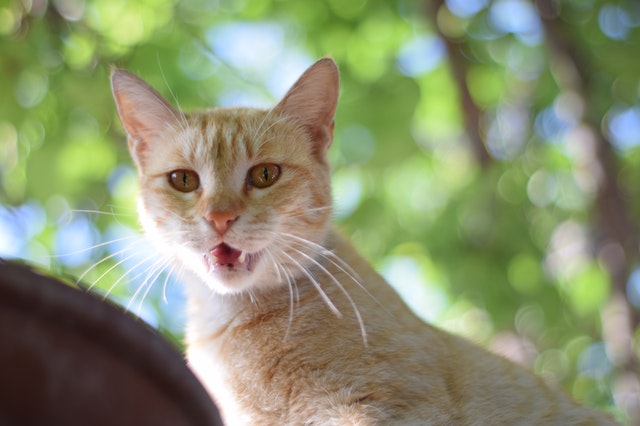
She came through the door in a rush, a young girl, probably in her early twenties, with a very limp, pale orange tabby cat in her arms.
She stopped at the counter. “I need to see the vet. This is an emergency,” she said, visibly trying to maintain her self control.
Under a lot of financial stress for a new clinic, this was one of our most difficult situations to handle. This patient was an obvious need for emergency care. Still, we were not in a place where we could provide a lot of expensive medical care without some assurance that we would get paid.
Sandy escorted her to the exam room, and Ruth was right there to check her status.
“I’ll get the Doctor,” Ruth said.
“We require payment at the time of service,” Sandy said.
“I have a credit card,” Valarie said.
I came into the exam room and lifted the lip on the cat, a year old female named Sissy, lying almost lifeless on the exam table.
“We have to be very gentle right now,” I said. “This kitty is hanging onto life with by thin straw.”
“This has happened before,” Valarie said. “She is positive for Feline Leukemia Virus. All she needs is a blood transfusion.”
“I wish it was that simple,” I said. “A transfusion will be like magic for her right now. But it will buy her very little time. She will be back here again, in the same condition. And one time, she will not survive the trip.”
“She does just fine after getting a transfusion,” Valarie said.
“That’s why she is here in this condition,” I said. “When was her last transfusion?”
“It was about 3 weeks ago,” Valarie said.
“The virus crowds out her normal bone marrow cells so she can’t make her own blood. These FeLV positive cats have a short time to live once we start to see symptoms. Sometimes it is dysfunctional bone marrow like this. Sometimes it is leukemia. Sometimes it is a nonfunctional immune system, and sometimes it is a lymphatic tumor in the chest or abdomen.”
“Can we just get some blood into her?” Valarie asked.
“Sure, we just happen to have a donor cat in the back today,” I said. “I just want you to know that this is not as simple as you seem to think. Any undue stress on this cat right now, and she will seizure and die, just like that.”
I wish I could say this case was unusual. But in the late 1970s and early 1980s, we would see cats in this condition often, maybe 2 or 3 times a week. The only thing unusual about this case was the cat was still alive.
Often, the client would storm through the door with a cat in a kennel. Throw the kennel on the exam table, and drag the cat out for an exam. With the trip’s stress and a PCV of about 6%, the cat would have a seizure and die right before their eyes.
We took Sissy into the back and placed an IV catheter. Her PCV (packed cell volume) was 6%. Low normal is 25%. I had only seen a handful of cats survive with a 6% PCV.
I sedated our donor cat with a small anesthetic dose and collected 60 ccs of blood into a syringe. Then I turned around and administered this out of the syringe into Sissy’s catheter. Sissy was back to life before half the syringe was administered.
When I sent Sissy home later that day, I again tried to caution Valarie that Sissy was a lucky cat today. And that this may not happen next time or the next.
“Valarie, Sissy looks good right now,” I said. “But she is running on borrowed time and borrowed blood. Likely, her bone marrow is not producing blood like it should. Two weeks from now, she will be in the same situation, and one time she will not survive.”
“She looks so good. I can’t thank you enough,” Valarie said as she picked Sissy out of the kennel and held her against her chest.
I am not sure if she didn’t hear me or just chose to ignore my thoughts. But she went out the door happy.
It was just like clockwork when Valarie rushed through the door two weeks to the day later.
This time we ran a PCV first. It was 4%.
“Valarie, I have never seen a cat that was alive with PCV of 4%,” I said.
“All she needs is some blood,” Valarie responded.
“Yes, some blood and some functional bone marrow,” I said. “We will try, but I have no confidence that she will live through the process.”
We took Sissy to the back treatment table. As predicted, she died while we were placing an IV catheter.
To say that Valarie left the clinic unhappy this time would be an understatement. Valarie left the clinic pissed off.
To her credit, Valarie came in the next day and apologized for her behavior.
“I was pretty unhappy yesterday,” She said. “I realize that you had warned me of Sissy’s status several times. I am sorry I acted the way I did.”
“We all get upset at times of stress,” I said. “Losing a pet is a hard thing. This Feline Leukemia Virus is tough. It is very prevalent around here.”
It was half a dozen years later when a vaccine for Feline Leukemia Virus became available. The vaccine immediately changed the landscape for Feline Leukemia Virus associated diseases.
Today that vaccine has fallen in use and in favor. It does have some problems. Those problems do not begin to compare with what was seen in the cat population before 1984. Those veterinarians who fail to endorse that vaccine were not practicing before 1984.

 Memoirs of a Country Vet